Stop and call for qualified help when plumbing water is near electrical equipment, sewage is entering occupied space, gas or burning odors are present, or a repair would require opening pressurized piping.
Finding water around your water heater can be concerning, especially when the unit is installed inside a utility closet, garage, laundry area, or another space near finished flooring and walls. A Valparaiso homeowner may first notice a small puddle, damp concrete, rust-colored streaks, water inside the drain pan, or an occasional drip from one of the pipes connected to the heater.
Even when the amount of water appears small, the problem should not be ignored. A water heater remains connected to the home's pressurized plumbing system. A slow leak can become more severe if a fitting loosens, a valve fails, or corrosion weakens the internal storage tank.
The location of the water does not always identify the source. Water leaking from a fitting at the top of the heater can travel down the side of the tank and collect underneath it. Moisture from an air-conditioning condensate drain, washing machine connection, plumbing pipe, or exterior wall can also be mistaken for a water heater leak.
Some water heater leaks can be repaired by replacing a connector, valve, or gasket. Other leaks indicate that the tank has corroded internally and must be replaced. A licensed plumber can determine the exact source and explain the available options before the leak causes additional damage.
The Most Common Causes of a Leaking Water Heater
One of the most common causes is a loose or deteriorated water connection. The cold-water inlet supplies water to the heater, while the hot-water outlet carries heated water into the home. The threaded fittings, pipe nipples, shutoff valve, and flexible connectors attached to these openings can loosen, corrode, or develop small leaks.
Water from a top connection may run along the outside of the tank. This can make it appear that the heater is leaking from the bottom when the actual problem is higher on the unit.
The temperature and pressure relief valve, often called the T&P valve, is another possible source. This safety valve is designed to release water when the temperature or pressure inside the tank becomes unsafe. A relief valve may leak because it is worn, but it may also be responding to excessive household water pressure, thermal expansion, or an overheating condition.
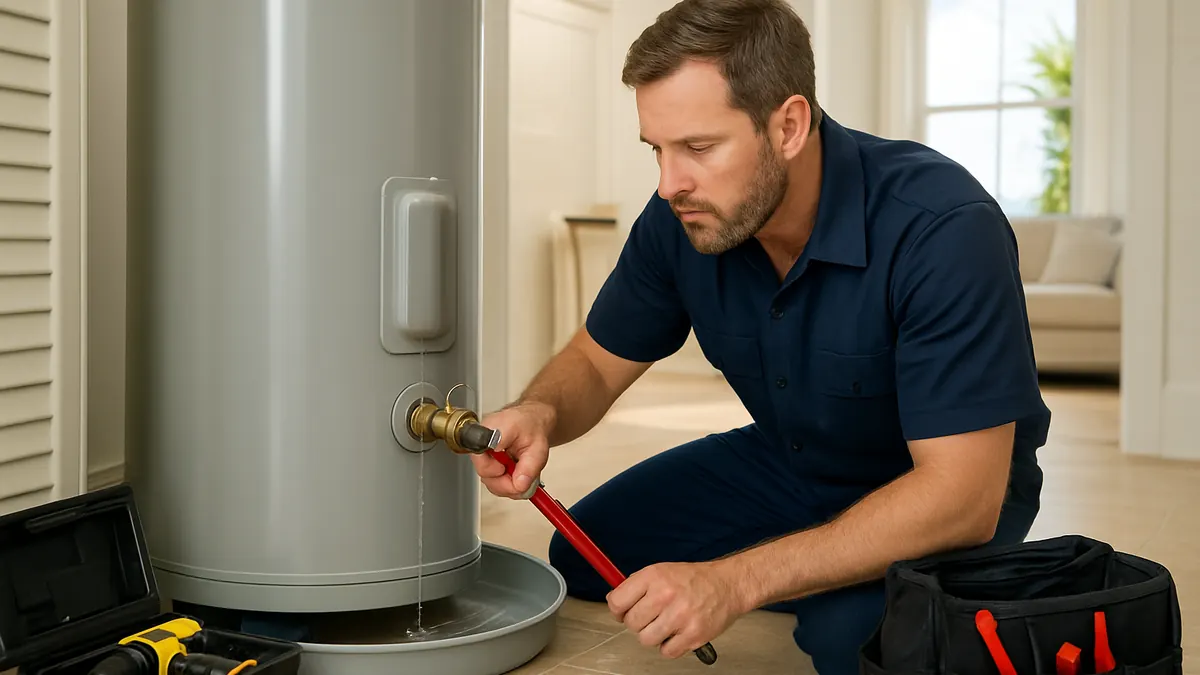
The drain valve near the bottom of the tank may also drip. This valve is used when the tank is flushed or drained for service. Sediment can prevent the valve from closing completely, and older plastic drain valves may crack or become brittle.
Electric water heaters can leak around a heating element gasket. The heating elements extend through the tank wall and are sealed with gaskets. When a gasket deteriorates, water may collect behind an access panel and run down the side of the heater.
Condensation can occasionally be confused with a leak, especially on gas water heaters or in humid utility spaces. Condensation usually appears during certain operating conditions and does not continue indefinitely. Persistent pooling should be inspected.
The most serious cause is internal tank corrosion. Traditional tank-style water heaters contain a steel storage tank protected by an interior lining and a sacrificial anode rod. As the unit ages, corrosion can eventually penetrate the tank. Water emerging from the lower tank seam or from beneath the heater often indicates that the tank has failed.
Safe Checks a Valparaiso Homeowner Can Perform
Begin with a visual inspection. Use a flashlight and examine the cold-water inlet, hot-water outlet, supply connectors, shutoff valve, T&P valve, discharge pipe, drain valve, tank body, and drain pan.
Avoid touching electrical wiring, gas components, or pipes that may be hot.
Dry the visible water with towels and observe where moisture returns. Placing dry paper towels beneath individual fittings can help identify a slow drip. Do not wrap or obstruct the T&P valve or its discharge pipe.
Check nearby equipment and plumbing. An air-conditioning condensate line, utility sink, washing machine hose, or plumbing connection inside the wall may be responsible for the water.
Look for signs that the leak has existed for some time. These can include:
- White mineral deposits
- Green or blue corrosion
- Rust-colored streaks
- Stained drywall
- Swollen baseboards
- Warped flooring
- Damp insulation
- Corrosion around fittings
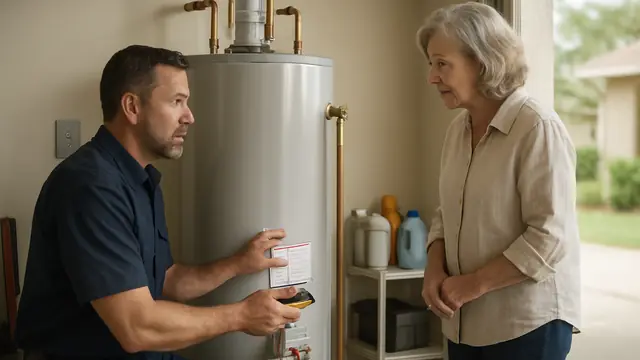
Homeowners can also check the approximate age of the water heater. The manufacturing date may be printed on the label or encoded in the serial number. An older tank with corrosion and water around the base is more likely to have an internal failure.
If water is actively spreading, the cold-water supply valve may be turned clockwise to reduce incoming water, provided the valve turns easily. Do not force a corroded or frozen valve.
For an electric water heater, the correct circuit breaker should be turned off if water is near electrical components. Never stand in water while operating a breaker or electrical disconnect.
What Homeowners Should Not Attempt
Do not cap, plug, or restrict the T&P valve discharge pipe. The relief valve is an essential safety device. Preventing it from operating can allow dangerous pressure to build inside the tank.
Do not attempt to patch a leaking tank with tape, epoxy, putty, caulk, or a tank-sealing product. Once the steel storage tank has corroded through, the tank is structurally compromised. Surface sealants do not restore its ability to hold heated water safely under pressure.
Avoid removing electrical access panels, heating elements, thermostats, gas valves, burners, or venting components unless you have the proper qualifications and testing equipment.
Do not repeatedly reset a circuit breaker that continues to trip. A tripping breaker may indicate water intrusion, damaged wiring, a failed heating element, or another electrical hazard.
Do not attempt to relight a gas water heater when there is standing water in the burner compartment or when you smell gas.
Homeowners should also avoid repeatedly opening and closing an old drain valve. A weakened drain valve can break or fail to reseal, creating a larger leak.
Signs That Make the Problem Urgent
A water heater leak becomes urgent when the amount of water is increasing, entering finished areas, or approaching electrical equipment.
Seek prompt professional assistance if you notice:
- Water spraying from a pipe or fitting
- A puddle that continues growing
- Water leaking through a ceiling
- Water entering walls or cabinets
- Steam near the heater
- Extremely hot water from the T&P discharge pipe
- Continuous relief-valve discharge
- A tank that appears swollen or deformed
- Gas odors
- Burning electrical smells
- Scorched wiring
- Soot around a gas burner
- Loud banging accompanied by leakage
- Water reaching outlets, wiring, or a breaker panel
If you smell gas, leave the immediate area and contact the gas provider or emergency services from a safe location. Do not operate switches, use open flames, or create a spark near the suspected leak.
How a Licensed Plumber Diagnoses the Leak
A licensed plumber begins by confirming that the water heater is actually the source of the moisture. The plumber traces the water to its highest visible point and checks nearby plumbing and condensate systems.
The inspection generally includes the hot- and cold-water connections, supply connectors, shutoff valve, T&P valve, discharge pipe, drain valve, heating element areas, tank seams, drain pan, and surrounding pipes.
The plumber may test the home's water pressure. Excessive pressure can damage water heater valves, supply lines, faucets, toilets, washing machine hoses, and other plumbing components.
Thermal expansion may also be evaluated. Water expands when it is heated. In a closed plumbing system, that expanded water needs a place to go. A properly sized and charged expansion tank can absorb the additional volume. A failed expansion tank can contribute to recurring relief-valve discharge.
Electric water heaters may be tested for leaking element gaskets, damaged thermostats, faulty wiring, and electrical safety. Gas water heaters may be inspected for burner condition, proper combustion, venting, gas connections, and signs of improper exhaust.
The plumber will also evaluate the age, condition, efficiency, and warranty status of the water heater before recommending repair or replacement.
Water Heater Repair Options
Not every water heater leak requires full replacement. When the tank itself remains structurally sound, the plumber may be able to repair the source.
Possible repairs include:
- Tightening or replacing a leaking connector
- Replacing a corroded shutoff valve
- Repairing a threaded fitting
- Replacing a leaking drain valve
- Replacing a defective T&P valve
- Replacing an electric heating element gasket
- Correcting excessive household water pressure
- Replacing a failed pressure-reducing valve
- Installing or replacing a thermal expansion tank
- Repairing nearby plumbing that was mistaken for a heater leak
A relief valve should not simply be replaced without investigating why it leaked. If high water pressure or thermal expansion caused the discharge, the new valve may begin leaking as well.
When Water Heater Replacement Is Necessary
When water leaks through the tank shell or lower seam, replacement is generally required. The internal storage vessel cannot be safely repaired.
Replacement options can include:
- Standard electric tank water heater
- Standard gas tank water heater
- High-efficiency storage water heater
- Heat pump water heater
- Tankless water heater
The most expensive option is not automatically the best option. A properly sized conventional tank may provide dependable service at a reasonable installation cost.
A heat pump water heater may reduce energy use when the installation area provides sufficient space, airflow, temperature conditions, and condensate drainage.
A tankless system may provide extended hot-water production and save floor space, but it must be sized for the home's simultaneous demand. Gas-line, venting, electrical, or water-piping changes may be required.
The right recommendation should reflect the number of occupants, number of bathrooms, hot-water usage, available utilities, installation space, efficiency goals, and budget.
Typical Factors Affecting Water Heater Costs
The cost of correcting a water heater leak depends on the source of the problem and the scope of work.
Important factors include:
- Repair versus complete replacement
- Water heater type
- Tank capacity
- Fuel source
- Efficiency rating
- Equipment accessibility
- Condition of existing valves and piping
- Water-pressure problems
- Expansion tank requirements
- Gas-line capacity
- Venting requirements
- Electrical circuit capacity
- Drain pan and drain-line installation
- Permit and inspection requirements
- Warranty coverage
- Removal and disposal of the old unit
- Emergency or after-hours service
- Existing water damage
A simple connector replacement on an accessible unit will generally involve less labor than replacing a heater in a confined closet with corroded valves, inadequate drainage, or utility modifications.
Prevention and Maintenance Guidance
Inspect the water heater several times each year. Look for moisture, rust, mineral deposits, loose connectors, and changes in the drain pan.
Tank-style water heaters should be flushed according to the manufacturer's recommendations and the property's water conditions. Sediment can reduce efficiency, create popping or rumbling noises, and increase stress near the bottom of the tank.
The sacrificial anode rod should be inspected periodically. This rod is designed to corrode before the steel tank does. Replacing a depleted anode rod may help extend the life of a tank that is still in good condition.
Have household water pressure tested. A pressure-reducing valve and thermal expansion tank should also be inspected when they are part of the system.
Replace aging flexible connectors and corroded shutoff valves before they fail. Confirm that the T&P discharge pipe remains properly installed and unobstructed.
A drain pan with an approved drain line can reduce damage if a small leak occurs. Water alarms and automatic shutoff valves provide additional protection, particularly when the heater is inside finished space or the home is left unoccupied for extended periods.
A leaking water heater does not always require immediate replacement, but the source should be diagnosed quickly. Early evaluation may preserve a less expensive repair option and prevent damage to the surrounding property.
About this guide: This resource provides general homeowner education, not a remote diagnosis. Actual conditions, code requirements, equipment, and safe repair options must be evaluated at the property.