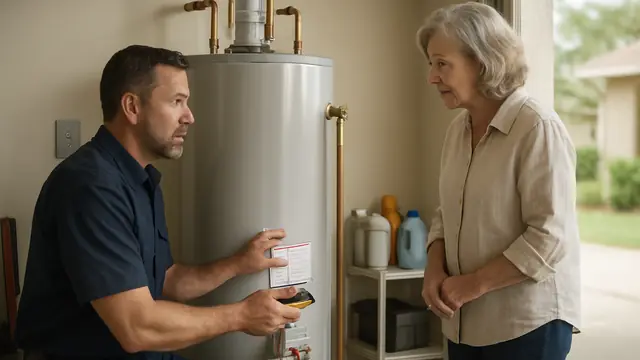
Stop and call for qualified help when plumbing water is near electrical equipment, sewage is entering occupied space, gas or burning odors are present, or a repair would require opening pressurized piping.
When more than one drain backs up in a Valparaiso home, the plumbing system is often experiencing a restriction in a shared drain or the main sewer line. A homeowner may notice bubbling toilets, slow sinks, dirty water rising in a shower, or laundry water returning through a bathtub.
A single clogged fixture is usually isolated near that fixture. When toilets, tubs, showers, and floor drains respond together, wastewater may be unable to travel through the main drainage path.
Multiple-drain backups create sanitation concerns and can damage flooring, cabinets, drywall, furnishings, and electrical systems. Continuing to use water can increase the overflow.
A licensed plumber should evaluate the system and identify whether the cause is debris, grease, wipes, roots, damaged piping, a septic problem, or another condition.
The Most Common Possible Causes
- A main sewer blockage can develop gradually as paper, waste, and debris collect inside the pipe.
- Grease from kitchen drains can cool, harden, and trap additional material.
- Wipes and hygiene products may remain intact and collect around roots or rough pipe surfaces.
- Tree roots can enter through cracks and loose joints. Root growth can eventually fill a large portion of the sewer.
- Older drainage piping may corrode or develop heavy scale. Cast iron can become rough and narrow internally.
- Pipes can crack, separate, settle, or collapse. Poor slope or a belly can prevent complete drainage.
- Foreign objects may enter through toilets and become lodged at turns or transitions.
- Properties with heavy or seasonal occupancy may reveal a partial blockage during periods of higher use.
- Septic-system conditions may include a full tank, clogged outlet filter, pump failure, damaged piping, or drain-field saturation.
Safe Checks the Homeowner Can Perform
- Stop using water in the property.
- Determine whether the backup affects one fixture group or the entire building.
- Observe the lowest fixtures. Tubs, showers, and floor drains often overflow first.
- Listen for gurgling and bubbling.
- Note whether washing machine discharge triggers the problem.
- Look outside for wastewater near a cleanout or septic area while avoiding contact.
- Notify property management if shared drainage may be involved.
- Keep children and pets away from contaminated water.
What the Homeowner Should Not Attempt
- Do not keep flushing toilets or running fixtures.
- Avoid chemical drain cleaners. They do not repair broken or root-filled pipes.
- Do not mix chemical products.
- Do not insert small snakes through random drains in an attempt to reach the main sewer.
- Avoid opening a pressurized cleanout without protective equipment.
- Do not operate sewer machines or hydro-jetting equipment without training.
- Do not climb on the roof to clear vents.
- Do not enter a septic tank or enclosed sewer area.
Signs That Make the Problem Urgent
Prompt service is needed when:
- Raw sewage enters the property
- Several fixtures become unusable
- Water reaches electrical components
- Sewage spreads into finished areas
- Strong sewer odors persist
- Wastewater affects neighboring units
- Sewage appears outdoors
- The backup returns repeatedly
- A septic alarm activates
- The property cannot be occupied safely
How a Licensed Plumber Diagnoses It
- The plumber reviews the symptoms and drainage layout.
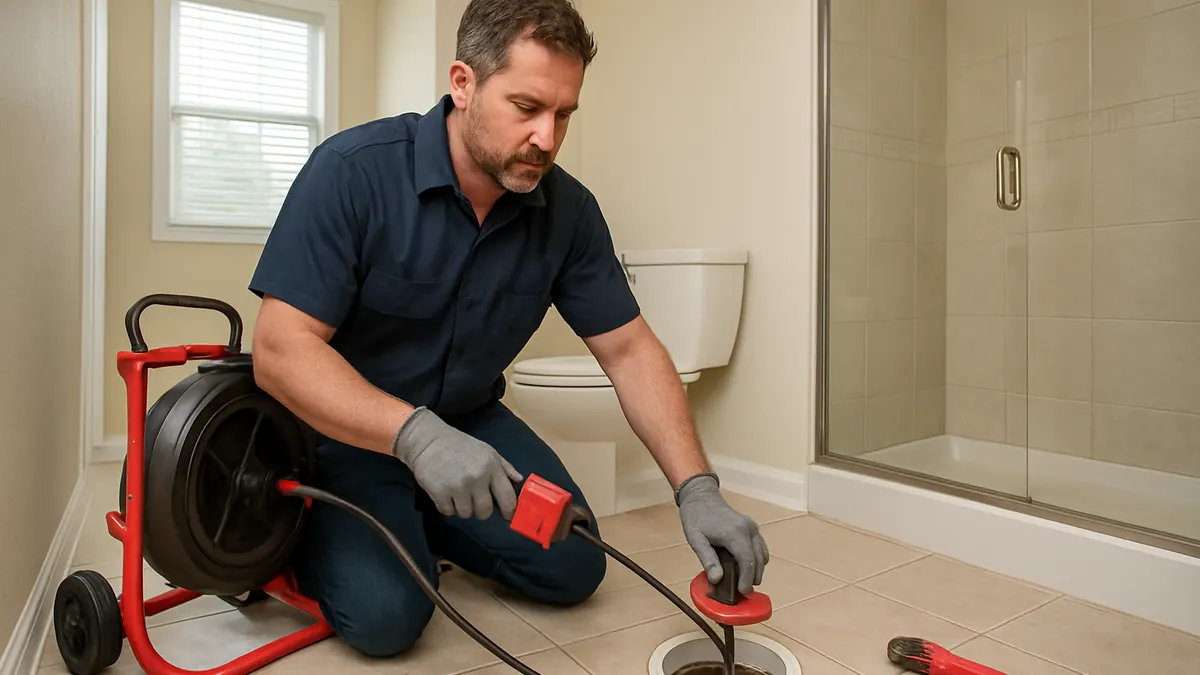
- An exterior cleanout may be used to access the main line. Professional cabling can restore flow and provide clues about the obstruction.
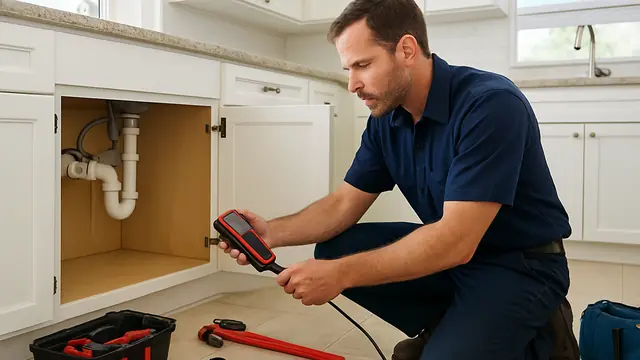
- After the line is cleared, a sewer camera may identify roots, grease, scale, cracks, offsets, bellies, or collapse.
- A locator identifies the camera's position and depth for targeted repair.
- The plumber may inspect branch drains individually if the symptoms are limited to one section.
- For septic properties, the tank, filter, pump, piping, and drain field may be evaluated.
Repair Options
- Mechanical drain cleaning may resolve a normal obstruction.
- Root cutting can restore flow where roots are present.
- Hydro jetting may remove grease and buildup from structurally sound piping.
- Cast-iron descaling may improve the interior opening.
- A spot repair may correct a damaged section without replacing the entire line.
- Trenchless lining may rehabilitate suitable piping.
- Pipe bursting may replace an underground sewer with limited excavation.
- Traditional excavation is appropriate for severe collapse or misalignment.
- Septic remedies may include pumping, filter cleaning, pump repair, or piping correction.
Typical Factors Affecting Cost
Costs depend on:
- Type and location of the blockage
- Cleanout access
- Sewer length and depth
- Pipe material
- Root or grease severity
- Camera and locating
- Jetting or descaling
- Structural damage
- Excavation and restoration
- Septic work
- Permits
- Emergency timing
- Cleanup needs
The least expensive service may restore flow, while a more complete cleaning or repair may reduce recurrence. The plumber should explain the purpose and expected durability of each option.
Prevention and Maintenance Guidance
- Dispose of grease and oil in the trash.
- Flush only human waste and toilet paper.
- Use strainers to catch hair and food.
- Keep construction material out of drains.
- Maintain access to the sewer cleanout.
- Arrange camera inspection for recurring backups.
- Address root intrusion based on the condition of the pipe.
- Maintain septic systems according to occupancy and system design.
- Avoid driving or building over drain fields and buried sewer piping.
- Early warning signs such as gurgling toilets, slow lower drains, and recurring odors should be evaluated before a complete backup occurs.
About this guide: This resource provides general homeowner education, not a remote diagnosis. Actual conditions, code requirements, equipment, and safe repair options must be evaluated at the property.