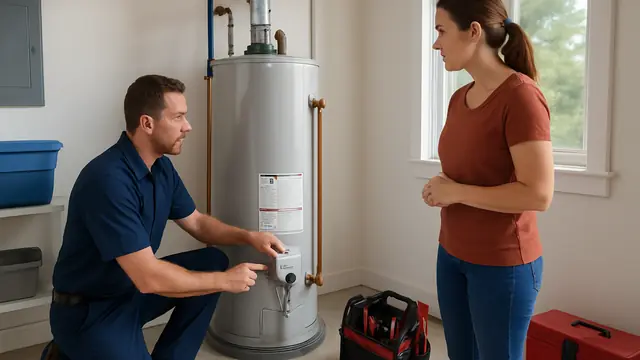
Stop and call for qualified help when plumbing water is near electrical equipment, sewage is entering occupied space, gas or burning odors are present, or a repair would require opening pressurized piping.
You hear water moving inside the toilet long after the flush is finished. Sometimes the sound is a continuous hiss. Other times, the bathroom becomes quiet and the tank suddenly refills several minutes later. In a WaterColor home, these signs mean the toilet is not sealing or shutting off properly.
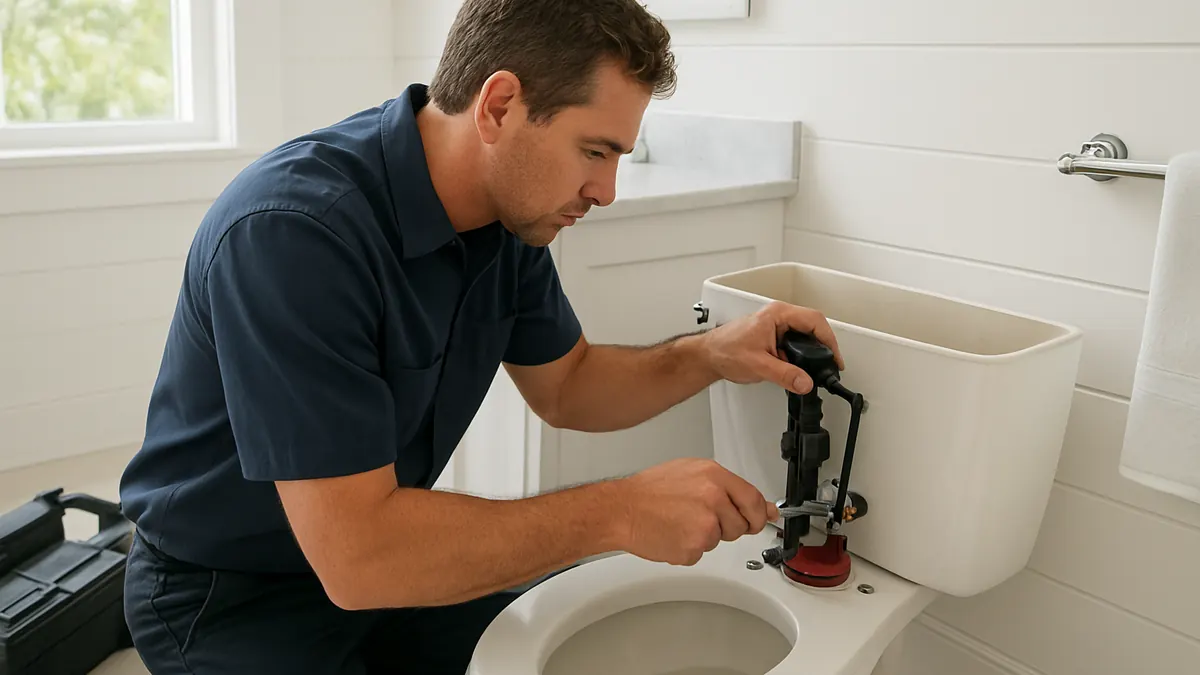
Lift the tank lid and place it on a towel. Flush once and observe what happens. If the water rises close to the top of the tank, gently turn the shutoff valve behind the toilet clockwise. Do not force a valve that is difficult to move. Most toilets can be repaired by correcting or replacing an internal component.
Why Does My Toilet Keep Running in WaterColor?
The flush releases tank water into the bowl. A seal closes the flush opening, the fill valve restores the water, and a float tells the valve when the tank is full.
Running occurs when the tank seal leaks or the fill system does not shut off. If the toilet runs continuously, water may be entering through the fill valve and flowing into the overflow tube. If the toilet becomes quiet and later refills on its own, water is probably leaking slowly from the tank into the bowl.
Common Mechanical Causes
The flapper is not sitting flat
A flapper is a flexible seal used in many toilet tanks. It can become warped, brittle, dirty, or misaligned. A chain that pulls sideways may also keep it from settling evenly.
The canister seal has deteriorated
Some toilets use a vertical canister or tower. A circular rubber seal at the bottom closes the flush opening. The seal can stretch, harden, or move out of position.
The handle or chain is binding
A chain that is too short may hold the flapper open. A chain that is too long can become trapped beneath the seal. A sticking handle may keep the chain under tension after the flush.
The water level is set too high
The float controls the final tank level. If it is set too high, the tank can continue filling until water flows into the overflow tube.
The fill valve is worn or obstructed
The fill valve contains moving parts that can wear out or collect debris. It may hiss, refill slowly, or fail to close.
The flush valve or overflow tube is damaged
A damaged sealing surface, deteriorated gasket, or cracked overflow tube can allow water to escape even when the flapper or canister appears closed.
Safe Checks Before Calling a Plumber
Remove the tank lid and watch one complete flush-and-refill cycle. Confirm that the handle returns to its normal position, the chain does not catch, and the flapper or canister closes squarely.
Watch the float rise. It should move freely without rubbing the tank wall, refill tube, or another component. The water should stop near the manufacturer's fill line and below the top of the overflow tube.
You can test for a quiet internal leak with food coloring. Add several drops to the full tank and wait fifteen to twenty minutes without flushing. If colored water appears in the bowl, the tank seal or flush-valve assembly is leaking.
Listen for the source. Water running into the overflow tube suggests a fill-valve or float issue. A faint trickle toward the bowl points more toward the flapper, canister seal, or flush valve.
Check the shutoff valve, supply line, tank bolts, and toilet base for moisture.
What You Should Not Attempt
- Do not pour drain-opening chemicals into the toilet. A running toilet is normally a mechanical tank problem, not a clogged drain.
- Do not force a shutoff valve with pliers. A corroded or weakened valve can break, turning a manageable toilet repair into an active water leak.
- Do not overtighten tank bolts, supply fittings, or plastic nuts. Porcelain can crack under uneven pressure, and plastic parts can split.
Avoid altering parts to make them fit. Do not add makeshift weights, sharply bend float components, or cut the chain without leaving proper slack. Replacement parts should match the toilet.
Signs That Make the Problem Urgent
Arrange prompt service if the tank water approaches the rim, the fill valve sprays, or the shutoff valve cannot stop the flow.
Water on the floor is urgent even when the toilet still flushes. Possible sources include the supply line, shutoff valve, tank bolts, tank-to-bowl gasket, cracked porcelain, or seal beneath the toilet.
Stop using a toilet that rocks, has a crack, repeatedly overflows, or causes wastewater to back up elsewhere.
A running toilet in a home that may be unoccupied should not be left operating. Shut off its supply only if the valve moves smoothly and does not leak.
How a Licensed Plumber Diagnoses the Problem
A licensed plumber determines whether the tank is leaking, overfilling, or both.
The inspection includes the handle, chain, flapper or canister gasket, fill valve, float, refill tube, overflow tube, flush-valve surface, tank bolts, shutoff valve, and supply line.
A dye test can confirm a slow tank-to-bowl leak. The toilet model may be identified to select compatible parts.
Repair Options Beginning With the Smallest Fix
- A small adjustment may solve the problem. The plumber may reposition the chain, correct the handle, adjust the float, or place the refill tube correctly.
- Cleaning debris from the sealing surface may allow an otherwise usable flapper or canister gasket to close.
- If a component is worn, the plumber may replace only the flapper, canister seal, handle, fill valve, supply line, or shutoff valve.
- When multiple tank components are deteriorated, a tank rebuild may be more reliable than making repeated individual repairs.
Complete toilet replacement is generally considered when the porcelain is cracked, the fixture is unstable, parts are unavailable, or recurring failures make further repair impractical.
Factors That Affect Repair Cost
Cost depends on the failed component, toilet design, part availability, and access. A basic adjustment or standard seal replacement differs from a specialty canister or complete tank rebuild.
A defective shutoff valve, leaking supply line, corroded bolts, difficult tank removal, or the need to reset the toilet can increase labor.
Prevention and Maintenance Guidance
- Remain nearby until the toilet finishes refilling after a flush. It should stop and remain quiet.
- Investigate a new hiss, trickle, slow refill, or unexplained refill cycle early.
- Avoid harsh chemical tablets in the tank unless the manufacturer specifically approves them. Some products can weaken rubber seals and plastic parts.
- Check guest bathrooms and toilets that are not used frequently. Flush them, verify that the water stops, and look around the supply connection and base for moisture.
Choose the Repair That Matches the Cause
If you are asking, "Why does my toilet keep running in WaterColor?" identify whether the sound is constant or returns after the tank has become quiet. That pattern helps distinguish a fill-system problem from a leaking tank seal.
Persistent running, rising water, exterior moisture, or a failed shutoff valve requires professional attention. The solution may be an adjustment, replacement component, tank rebuild, or complete replacement when justified.
About this guide: This resource provides general homeowner education, not a remote diagnosis. Actual conditions, code requirements, equipment, and safe repair options must be evaluated at the property.