Building a home in Freeport gives you a chance to make smart comfort decisions before the walls are closed up and the trim is finished. One of the most important is the air conditioning system. In Northwest Florida, AC is not an extra feature. It is a major part of how your home feels, how much you spend on utilities, and how well indoor humidity is controlled through long, hot seasons.
For homeowners searching for new construction air conditioning in Freeport, FL, it helps to know what the process should look like from the beginning. A well-planned system is more than an outdoor unit and a thermostat. It includes load calculations, duct design, equipment selection, airflow planning, drainage, insulation coordination, and setup that fits the way homes are built in Freeport and throughout Walton County.
If you are building a primary residence, vacation property, or rental home, here is what to expect and what to watch for during a new construction AC project.
Why new construction AC matters so much in Freeport
Freeport homes deal with long cooling seasons, high humidity, salt air exposure from the coastal region, and weather swings that can put extra pressure on HVAC equipment. Even when temperatures are not extreme, moisture in the air can make a home feel sticky and uncomfortable if the system is oversized, poorly balanced, or badly installed.
New construction is the best time to get these details right. Once a home is finished, changing duct routes, resizing returns, or correcting poor airflow can become expensive and disruptive. A custom system designed for the house from the start usually performs better than a one-size-fits-all setup.
Local service matters because builders and homeowners in Freeport are not dealing with the same conditions as inland markets. Equipment sizing, attic conditions, insulation levels, and humidity control all need to reflect local climate realities. That is one reason many property owners prefer to work with a company that understands how homes in this area are actually built and used.
What happens during the planning stage
Load calculations come first
A proper new construction air conditioning job should begin with a load calculation, often called a Manual J. This estimates how much cooling the home needs based on square footage, insulation, windows, orientation, ceiling height, air leakage, and other factors. Bigger is not always better. An oversized AC may cool too quickly without running long enough to remove humidity, which can leave a home clammy.
In Freeport, humidity control is a major part of comfort. A system that is too large may short cycle, while one that is too small may struggle on the hottest days. Accurate sizing helps balance temperature, moisture removal, and efficiency.
Duct design should match the home layout
Good ductwork design is just as important as equipment choice. Supply vents, returns, trunk lines, and branch runs should be planned around the actual floor plan. Rooms with more sun exposure, large windows, or higher ceilings may need different airflow than interior rooms.
In new homes, this stage is also where contractors can prevent common comfort complaints such as hot upstairs bedrooms, weak airflow at distant vents, and noisy returns. If ductwork is treated like an afterthought, those problems can follow the home for years.
Equipment options are reviewed
Homeowners are often given choices on efficiency levels, system types, thermostat controls, and indoor air quality add-ons. Depending on the home, the project may involve a central split system, multiple systems for different zones, or smart controls that help manage occupancy and energy use. Vacation rentals and second homes may benefit from controls that allow remote monitoring and scheduling.
If you are comparing options, it also helps to think ahead. Some homeowners who are building now choose features that support easier future upgrades, including compatibility with smart thermostats and improved filtration. For existing homes that eventually age out of their current systems, air conditioning replacement becomes the next step, but new construction gives you the chance to start with better design from day one.
What installation should include
Rough-in work before walls are closed
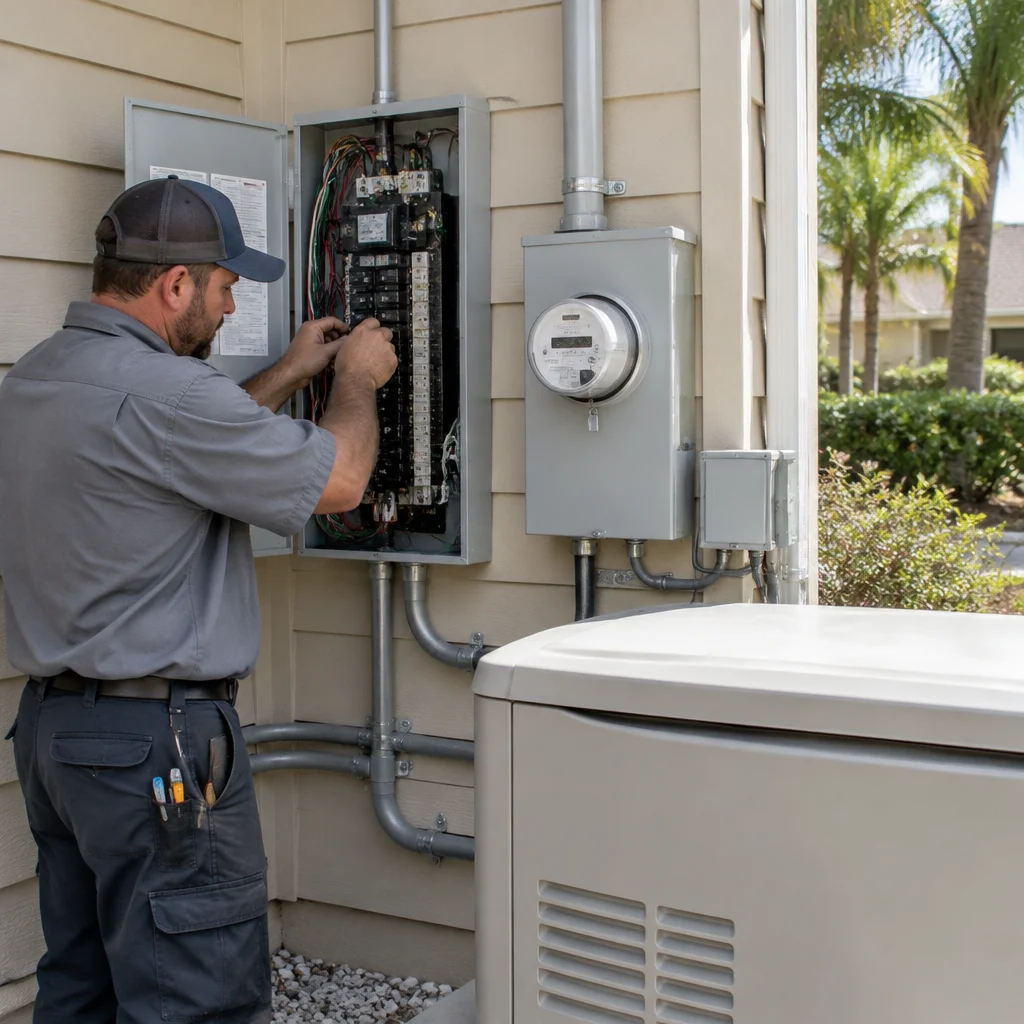
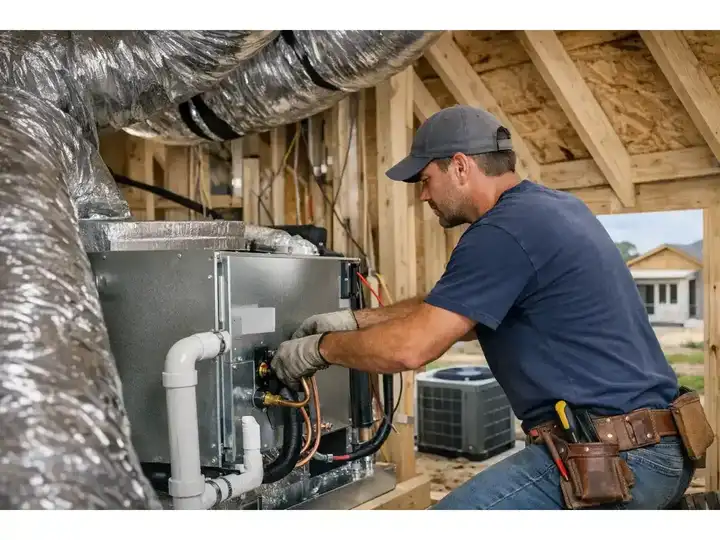
During construction, the HVAC team usually completes rough-in work before drywall. This includes duct installation, line sets, drain lines, vent placement, and equipment supports. This phase needs coordination with framing, plumbing, and electrical trades so components are not squeezed into poor locations or blocked by later work.
Drain line routing is especially important in Florida. Condensate has to be managed correctly to reduce the risk of water damage, backups, and moisture issues. If drainage is ignored or poorly sloped, it can create preventable service calls after move-in.
Setting the indoor and outdoor equipment
Once the home is ready, the indoor air handler and outdoor condenser are installed and connected. Placement matters. Outdoor units need proper clearance for airflow and service access. Indoor components should be accessible enough for future maintenance, filter changes, and inspections.
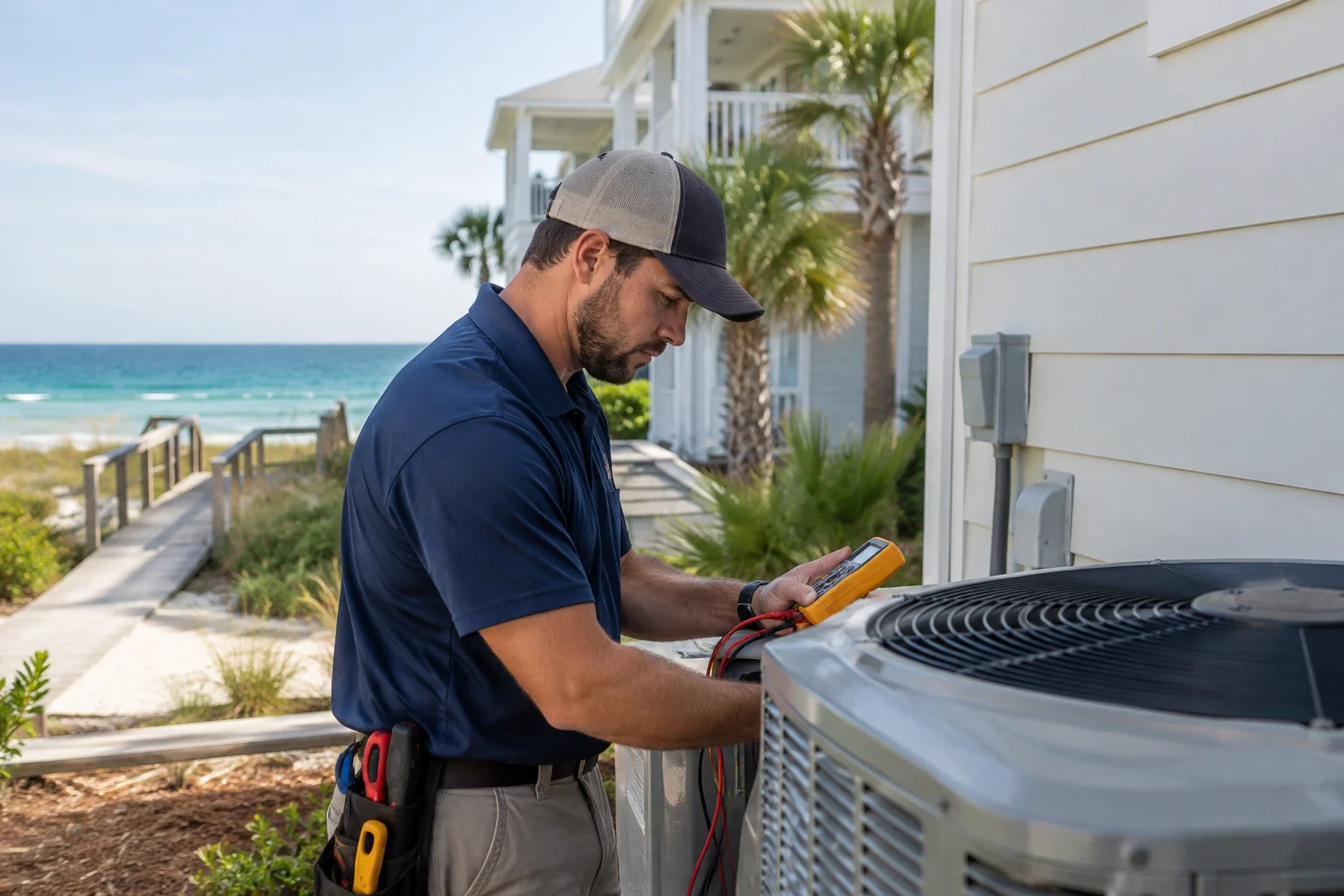
In coastal and near-coastal parts of Walton County, exposure to salty air can affect equipment over time. While Freeport is inland compared with beachfront communities, local conditions still make durability and maintenance planning important.
Startup and testing
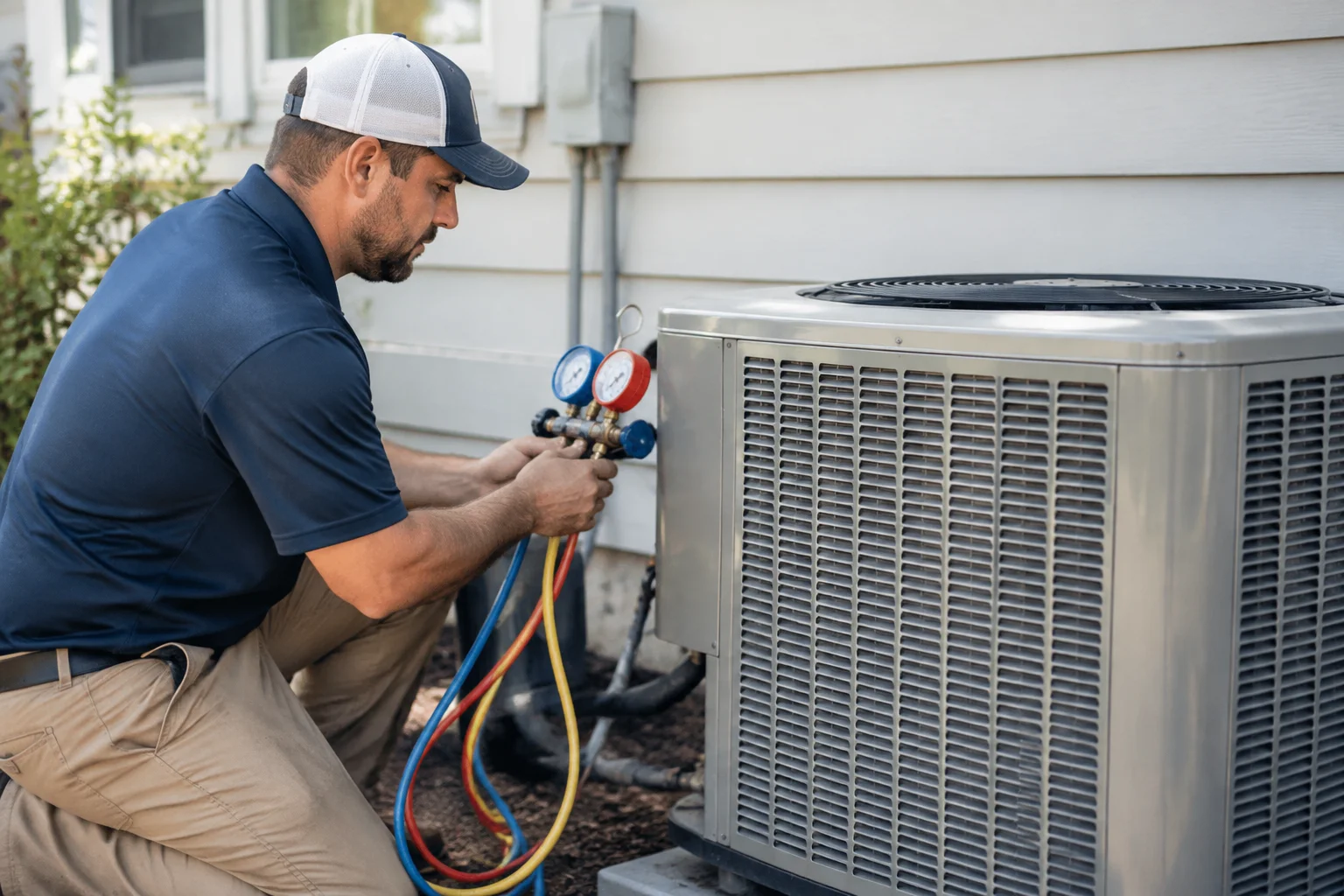
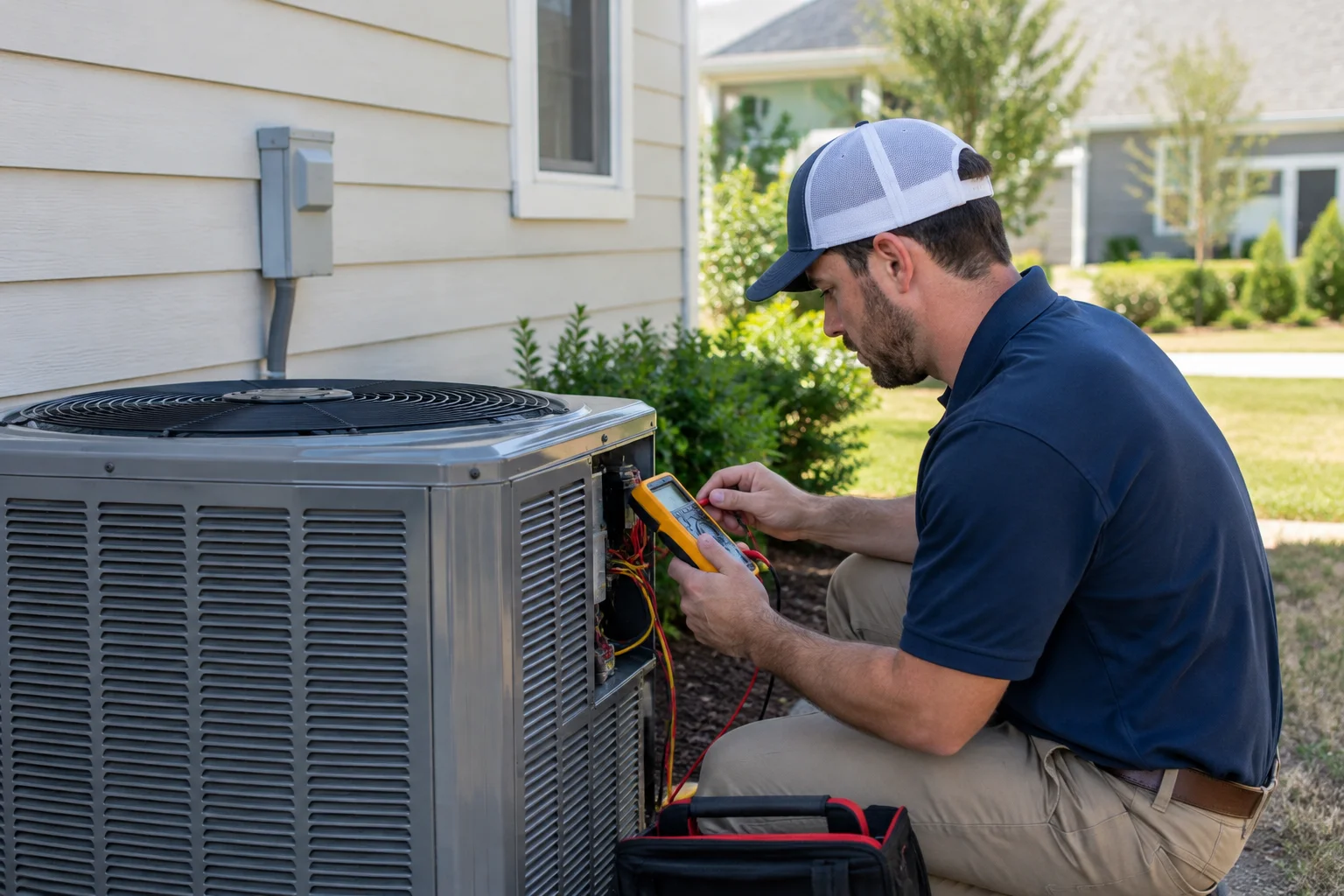
A new system should not simply be turned on and left alone. Startup should include refrigerant charge verification, airflow testing, thermostat setup, drain checks, and performance confirmation. This is where many hidden issues can be caught early, before they become comfort complaints.
A quality installation should also include a walkthrough so the homeowner understands how to operate the thermostat, change filters, recognize warning signs, and schedule future service. New construction systems still need maintenance, even when everything is brand new.
Common issues homeowners should watch for
Even in a new home, AC problems can show up if the design or installation was rushed. Some of the most common signs include:
Uneven temperatures
If one room stays warmer than the rest, airflow may be unbalanced, duct sizing may be off, or the home may need zoning adjustments. This often shows up in bonus rooms, upstairs bedrooms, and spaces with heavy sun exposure.
High indoor humidity
If the house feels cool but damp, the system may be oversized, the fan settings may be incorrect, or the home may have leakage issues. In Freeport, moisture control is just as important as cooling capacity.
Weak airflow
Poor airflow can point to duct restrictions, bad register placement, undersized returns, or installation errors. It can also reduce efficiency and make the system work harder than necessary.
Loud operation
Whistling vents, rattling ducts, or booming startup sounds are not something you should just expect from a new system. Noise often points to airflow or installation problems that can usually be corrected.
Drainage concerns
Water near the indoor unit, a clogged condensate line, or signs of moisture around the system should be addressed quickly. In some homes, plumbing and drainage maintenance can overlap with HVAC moisture issues, which is why homeowners also sometimes need nearby services such as clogged pipes and drain services.
Causes behind new construction AC problems
When a new system underperforms, the root cause is often one of a few familiar issues.
Improper sizing
This is one of the biggest problems in residential HVAC. Systems chosen by rule of thumb instead of real calculations may run poorly from the start.
Poor duct layout
Even efficient equipment cannot perform well if the duct system is undersized, kinked, leaking, or badly routed through the home.
Construction changes during the build
Sometimes floor plan changes, framing revisions, or late design decisions affect vent placement and equipment access. If the HVAC plan is not updated, comfort can suffer.
Lack of testing and balancing
Without proper final testing, a system may technically operate but still deliver uneven airflow, poor humidity control, or preventable energy waste.
Local climate demands
Homes in Freeport need systems that can handle heat and moisture for much of the year. What works in a drier climate may not provide the same comfort here.
Solutions that make a new system work better
Custom design instead of generic sizing
The best solution starts before installation. A custom design based on the home itself usually leads to better comfort, lower energy use, and fewer complaints after move-in.
Balanced airflow and proper returns
Each room needs the right amount of conditioned air, and the home also needs enough return airflow to keep the system stable and efficient. This is one reason inspections matter, even for newer systems. If performance questions come up after move-in, an air conditioning inspection can help identify whether airflow, drainage, or setup needs adjustment.
Humidity-focused setup
In Freeport, comfort is not just about temperature. Proper fan settings, equipment sizing, and installation details all support better moisture removal. That can help reduce musty smells, indoor discomfort, and strain on finishes and furnishings.
Smart controls and zoning where needed
Larger homes, multi-story layouts, and vacation properties may benefit from zoning or smart thermostats. These features can improve comfort and energy management, especially when occupancy changes throughout the week.
Prevention and maintenance after the home is finished
New construction AC systems are not maintenance-free. Once the home is occupied, routine care protects both comfort and warranty coverage.
Change filters regularly
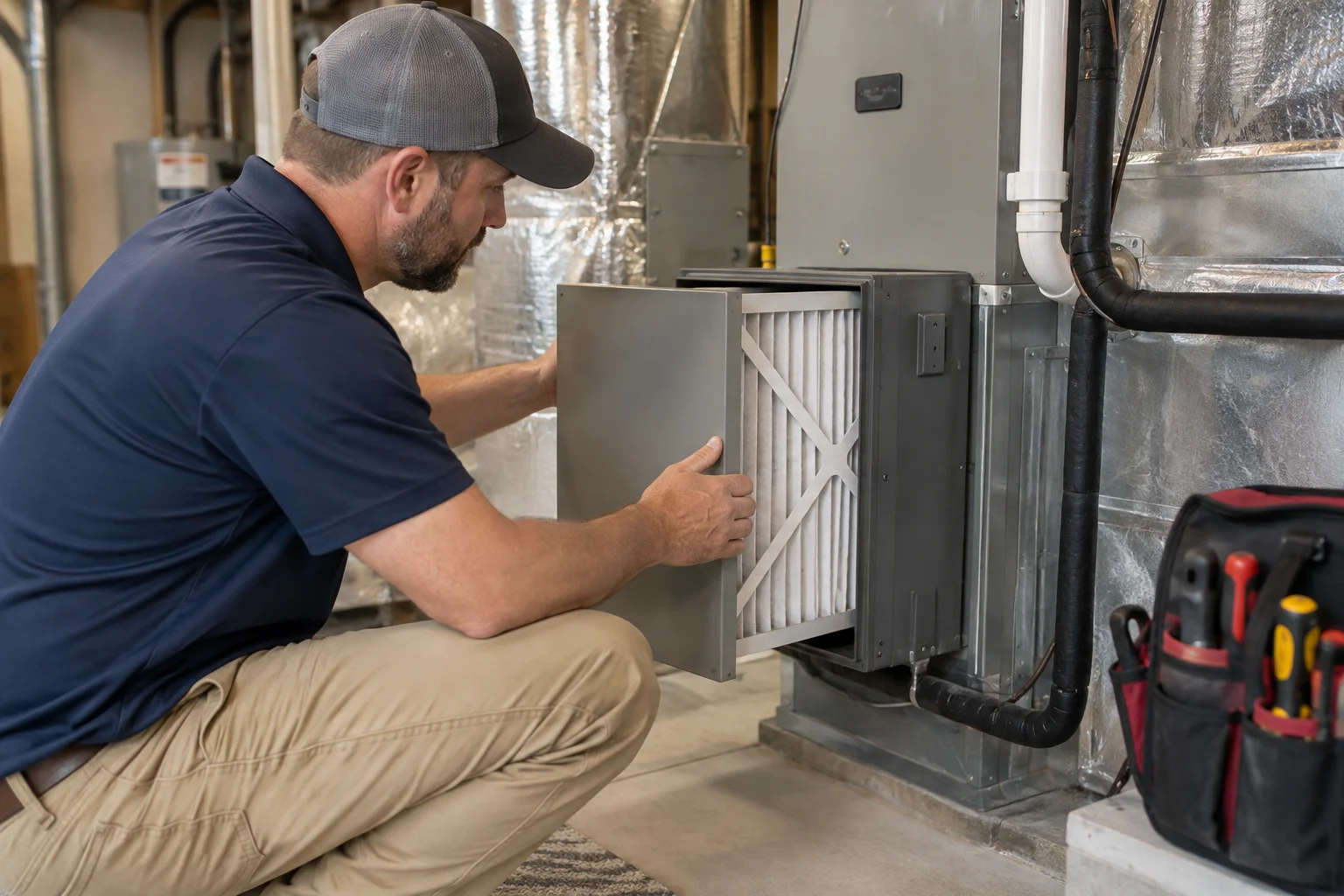
Dirty filters restrict airflow and can affect performance quickly, especially during long Florida cooling seasons.
Keep the outdoor unit clear
Leaves, grass, and landscaping should be kept away from the condenser so it can reject heat properly.
Schedule professional maintenance
Seasonal service helps catch refrigerant issues, drainage problems, electrical wear, and airflow concerns before they become expensive repairs.
Pay attention to humidity and noise
Do not ignore signs that something feels off just because the house is new. Sticky indoor air, weak airflow, or unusual sounds can point to issues that are easier to fix early.
Homeowners in the area often think about HVAC only during summer, but winter comfort still matters. Even in Florida, cool spells can make reliable heating services important for year-round comfort.
When to call a professional
You should contact an HVAC professional if your new home has hot and cold spots, poor humidity control, frequent cycling, weak airflow, drainage problems, thermostat issues, or unexpectedly high energy bills. Those are not problems to brush aside as normal settling issues.
It also makes sense to call a professional if you are still in the planning phase and want a second opinion before installation begins. Catching a design issue early is much easier than correcting it after drywall and finishes are complete.
For homeowners building in Freeport, local experience matters because climate, construction style, and property use all affect system performance. A primary residence may have different needs than a short-term rental or seasonal home. A local team can help match the system to the property instead of installing a generic setup.
Why local knowledge makes a difference in Freeport
Freeport continues to grow, and new homes in the area range from full-time family residences to investment properties and custom builds. That variety means there is no single HVAC approach that works for every project. Homes with open floor plans, high ceilings, large windows, or bonus spaces need careful design. Properties used as rentals may need durable controls and dependable humidity management between guest stays.
Working with a contractor familiar with Freeport and the wider Walton County area can help avoid common local problems, from excess attic heat to moisture concerns and seasonal demand on equipment. That local perspective also helps when coordinating with builders, meeting code requirements, and choosing solutions that make sense for the region.
If you like learning how local conditions affect mechanical systems, you may also find it useful to read How Local Weather Affects Commercial HVAC Repair in Destin, FL and What to Expect From Commercial HVAC Repair in Upper Grand Lagoon, FL. While those articles focus on commercial properties, they show how Gulf Coast weather influences HVAC performance across nearby communities.
And because whole-home comfort depends on more than one system, some Freeport homeowners also look into related topics such as Why Water Heater Services Matters for Homes in Freeport, FL and Tips for Avoiding Emergency Property Management Plumbing Services in Rosemary Beach, FL. New construction planning works best when heating, cooling, plumbing, and drainage are all considered together.
When new construction air conditioning is designed and installed the right way, homeowners get more than cool air. They get better humidity control, steadier temperatures, improved efficiency, and fewer surprises after move-in. That is what people searching for new construction air conditioning near them in Freeport are really looking for: a system built for the home, the climate, and the way the property will actually be used.
Find New Construction Air Conditioning in Freeport, FL
If you need New Construction Air Conditioning in Freeport, FL, visit our local service page or contact A Superior Mechanical today.
Map of Freeport, FL
Frequently Asked Questions
How early should AC planning start for a new home in Freeport, FL?
Air conditioning planning should start early in the design or pre-construction phase. That allows time for proper load calculations, duct layout, equipment selection, and coordination with framing, plumbing, and electrical work before the walls are closed.
What size AC system does a new construction home need?
The right size depends on the home's square footage, insulation, windows, layout, ceiling height, air leakage, and sun exposure. A professional load calculation is the best way to determine sizing. In Freeport, humidity control is also a major factor, so oversizing can create comfort problems.
Why is humidity control so important in Freeport homes?
Freeport's warm, humid climate can make a home feel damp even when the temperature looks normal on the thermostat. A properly designed and sized system helps remove moisture effectively, improving comfort and helping protect indoor finishes and air quality.
Can a new construction AC system still have problems after installation?
Yes. Even new systems can have issues such as uneven airflow, poor drainage, incorrect thermostat setup, oversized equipment, or duct design problems. If a new home feels uncomfortable, a professional inspection can help identify the cause.
Related Articles
Photo Gallery