Fort Walton Beach homeowners are adding electric vehicles at a steady pace, and that means more questions about EV charger installation, panel capacity, circuit loading, and long term electrical reliability. In a coastal city where salt air, storms, humidity, and older construction all play a role, the condition of a home’s electrical system matters just as much as the charger itself.
Whether you live in an older beach cottage, a mid century home, or a newer build with a garage ready for charging, the same basic issue comes up: can the electrical system safely support the added demand? A charger may look simple on the wall, but it can expose weak panels, undersized wiring, loose connections, or code issues that were easy to overlook before an EV entered the picture.
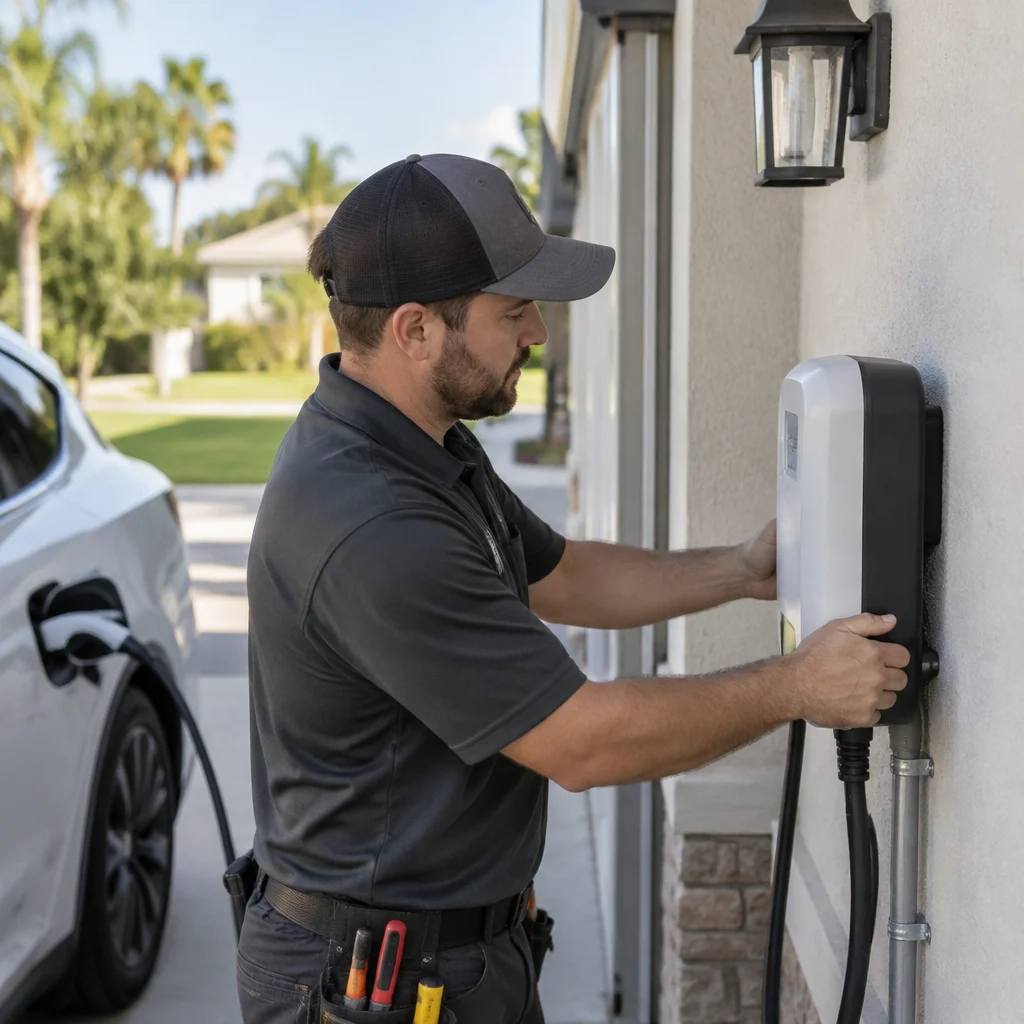
If you are comparing options for EV charger installation in Fort Walton Beach, FL, it helps to understand what can go wrong and why local electrical service matters from the start. A proper installation is not just about plugging in a unit. It is about making sure the home, the circuit, and the charging equipment all work together safely.
Why older homes can struggle with EV charging
Older homes in Fort Walton Beach often have electrical systems that were designed long before EVs, home offices, high efficiency appliances, and larger entertainment setups became common. Many still rely on panels that are near capacity or wiring that has been modified over the years through remodels, additions, and patchwork repairs.
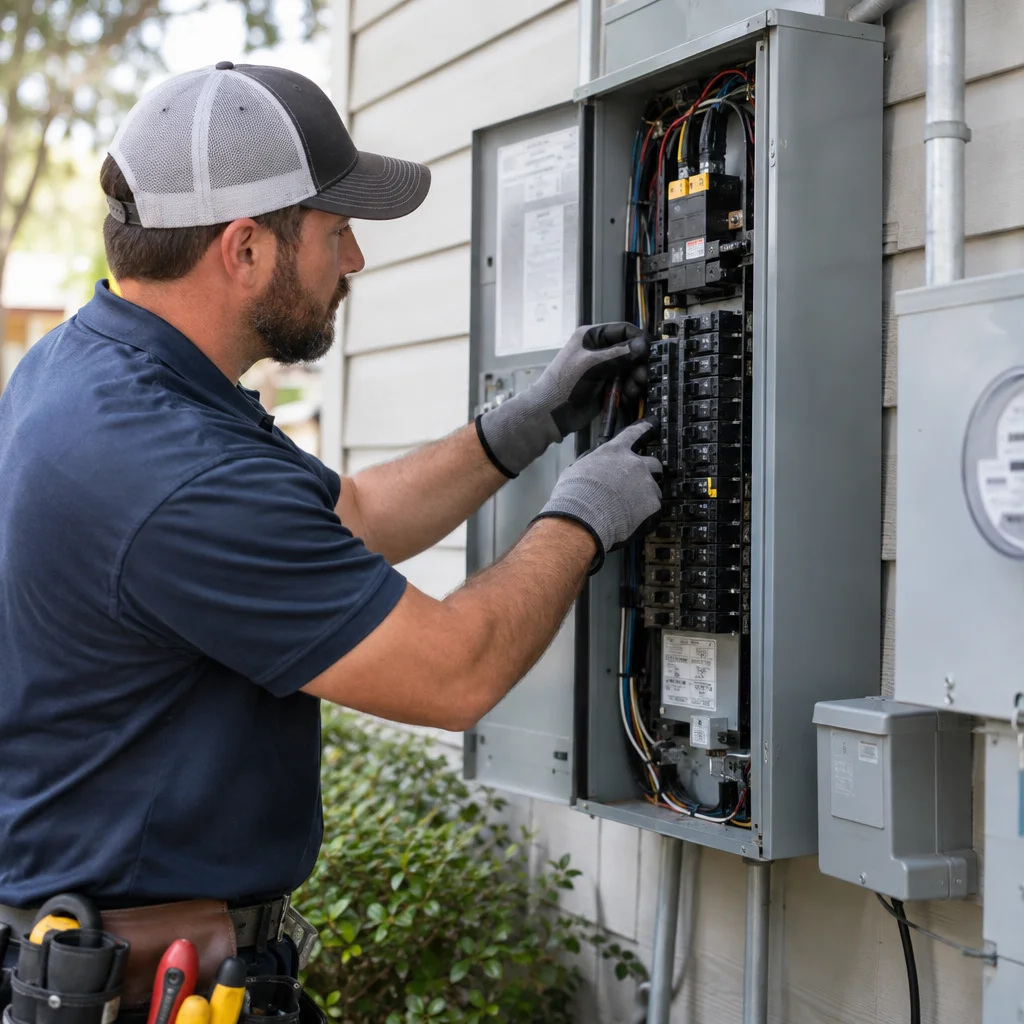
That does not automatically mean an older home cannot support charging. It does mean the system needs a careful look. A dedicated circuit is usually required, and in many cases the panel must be evaluated for spare capacity, proper grounding, and breaker sizing. If the home has outdated wiring, double tapped breakers, mixed wire types, or corrosion from coastal moisture, the charger can become the load that reveals the problem.
Homeowners searching for electrical panel and upgrades often discover that EV charging is only part of the issue. The panel may need replacement, the service may need to be increased, or the branch circuit may need to be rerouted to avoid overloading an already stressed system.
Common older home trouble points
Older Fort Walton Beach homes often have one or more of these concerns:
• Panels with limited open spaces for a new breaker
• Aluminum or aging copper wiring that needs inspection
• Outlets and switches that have loosened over time
• Grounding systems that do not meet current standards
• GFCI protection that is missing where it should be present
• Signs of heat, rust, or moisture inside the electrical panel
These issues can affect more than charging. They can also show up as flickering lights, tripped breakers, warm outlets, or a need for breaker panel repair near me searches after a charger starts drawing power. If the system is already fragile, the charger may push it past the point where repairs are enough.
Why newer homes are not automatically problem free
Newer construction in Fort Walton Beach usually has better wiring practices, modern breakers, and more capacity than older homes. That said, newer does not always mean ready for an EV charger without adjustments. Builders often install electrical systems based on standard residential demand, not the extra load of a Level 2 charger.
In newer homes, the challenge is often less about outdated materials and more about load management, layout, and code compliance. A garage may not have the right dedicated circuit, the panel may be full, or the builder may have left limited room for future expansion. Add a second EV, a hot tub, upgraded kitchen appliances, or a backup generator, and the electrical system can fill up quickly.
Homeowners searching for dedicated circuit installation near me are often surprised to learn that a charger should not share power with other high demand equipment. The circuit needs to be sized for the charger, installed correctly, and protected according to manufacturer instructions and local code.
Newer homes still need careful planning
Even in a newer house, an EV charger can cause issues if the electrical load is not reviewed first. The most common problems include:
• A panel that is technically modern but already full
• A charger installed on a circuit that was not designed for continuous load
• Poor placement that makes wiring runs too long or too exposed
• Inadequate surge protection in storm prone coastal conditions
• Missing coordination with other equipment such as ceiling fans, lighting, or a generator transfer setup
That is why a local electrician should review the home’s actual use, not just the age of the structure. A newer home may need a panel upgrade, a subpanel adjustment, or a dedicated line before the charger is added.
What shortens the life of electrical systems in coastal Florida
Fort Walton Beach weather is part of the story. Salt air, humidity, thunderstorms, and power fluctuations all place extra stress on electrical components. Even well installed systems wear faster when they are exposed to moisture and repeated surges.
Loose connections are one of the biggest reasons electrical systems age early. A connection that is slightly loose at the panel, receptacle, or charger can create heat every time the charger runs. Over time, that heat damages insulation, weakens breaker performance, and can lead to burnt terminals or failed equipment.
Moisture is another concern. Coastal air can work its way into outdoor enclosures, garage walls, and exterior outlets. If the installation does not use the right weather resistant materials, corrosion can affect receptacles, breakers, and grounding components. This is also why smoke detector installation and routine electrical inspections matter. Small electrical problems often show up as safety issues before they become major failures.
Storm season adds another layer of risk. Lightning and utility disturbances can damage chargers, panels, and connected electronics. Homes without proper surge protection may see repeated stress on the same circuits, which is one reason homeowners often pair charger work with battery backup systems or whole home surge protection.
How EV chargers expose hidden electrical issues
An EV charger draws power for long periods, which makes weak points easier to spot. A light switch or a small outlet may only use power briefly, but a Level 2 charger can run for hours. That continuous demand reveals problems that may have gone unnoticed for years.
Homeowners sometimes first notice a charger issue through a tripped breaker, a warm plug, a fault light on the charger, or a sudden slowdown in charging speed. In other cases, the charger works, but the home starts showing side effects like dimming lights, buzzing breakers, or outlets that stop holding a connection properly.
When an outlet repair near me search points to a bigger wiring issue, the charger may be the reason the problem finally surfaced. The same is true for electrical safety starts with the details in Fort Walton Beach homes. Small defects matter more when the electrical load is steady and high.
Warning signs that should not be ignored
Some warning signs call for immediate attention from an electrician:
• Burning smell electrical repair near me concerns around the panel or charger
• Breakers that trip repeatedly when the charger runs
• Hot outlets, warm wall plates, or discolored covers
• Flickering lights repair near me searches tied to charger use
• Charger faults, failed startup, or inconsistent charging speeds
• Buzzing sounds from the panel or receptacle
• Rust, corrosion, or water intrusion near electrical equipment
These symptoms can point to overloaded circuits, poor grounding, loose terminations, or a panel that needs repair or replacement. In some cases, the fix is straightforward. In others, the home needs a more complete upgrade before charging can continue safely.
Code compliance matters more than many homeowners realize
EV charger installation is not a simple appliance swap. It has to meet electrical code requirements for load calculations, breaker sizing, conductor sizing, grounding, and GFCI protection where required. Local permitting and inspection rules also matter, especially for homes in Okaloosa County where electrical work must stand up to both code and coastal conditions.
A charger installed without the right protections can create nuisance trips, reduce equipment life, or create a safety hazard. That is why homeowners should avoid guessing on wire size or breaker selection. A proper installation should account for the charger manufacturer’s instructions, the home’s service size, and the actual condition of the panel.
If a home is already due for whole home rewiring, that should be addressed before or alongside the charger project. If the panel is outdated, electrical panel and upgrades may be the smarter long term choice than forcing a charger onto an undersized system.
Solutions that protect the charger and the rest of the house
The best EV charger installations in Fort Walton Beach start with a full electrical review. That includes the service panel, existing branch circuits, grounding, visible wiring condition, and the location where the charger will be mounted. From there, the electrician can determine whether the home needs a dedicated circuit, a panel upgrade, a surge protection device, or additional repairs.
In some homes, the solution is a simple dedicated circuit installation and a properly mounted charger. In others, the work may include outlet repair, breaker replacement, or correcting code issues before the charger is energized. Homeowners who also want gfci outlet repair near me or electrical panel replacement near me service often benefit from bundling the work so the system is evaluated as a whole.
Lighting and comfort upgrades can be handled at the same time too. If you are already improving the garage or driveway area, it may make sense to add outdoor lighting installation near me, ceiling fan wiring near me support, or dimmer switch installation near me work while the electrician is already on site.
Good planning helps electrical systems last longer
Long term reliability comes from matching the load to the system. That means using the right breaker, the right wire size, proper grounding, weather rated equipment where needed, and surge protection that can handle local storm activity. It also means not stacking too many high demand devices on the same panel without a plan.
For some homes, the right answer includes a generator or backup power strategy. A portable generator hookup near me search may lead to a safer setup for outages, while others may need a more permanent solution. If the home already relies on several large loads, a charger should be integrated with the rest of the electrical system instead of added as an afterthought.
Why local electrical service makes a difference in Fort Walton Beach
Local electricians understand the mix of older homes, coastal exposure, storm concerns, and modern power demand that shape electrical work in Fort Walton Beach. That matters for EV charger installation because the job is never just about the charger. It is about how the home has aged, how it has been remodeled, and how much capacity remains in the system.
Homeowners looking for a residential electrician near me often need help with more than one issue at once. A charger project may uncover the need for switch repair, lighting installation, wiring repair, or a closer look at the panel. The same electrician who installs the charger should be able to explain whether the home needs code corrections, surge protection, or an emergency repair before the new load is added.
That is especially important in rental properties and homes that have been updated in stages. A garage addition, kitchen remodel, or new appliance circuit can leave the electrical system pieced together in ways that are not obvious until the charger is installed. Working with a local team across Okaloosa County helps keep the installation consistent with the home’s actual electrical demands.
A thoughtful EV charger installation protects the charger, the panel, and the rest of the house. It also reduces the chance that a small issue turns into a larger repair later. For Fort Walton Beach homeowners, that kind of planning is what keeps an electrical system dependable through storms, humidity, and the growing demand of modern living.
If your home is ready for charging, or if a charger install has already exposed weak spots in the system, A Superior Mechanical can help with safe, code compliant electrical solutions designed for local conditions and long term performance.
Find EV Charger Installation in Fort Walton Beach, FL
If you need EV Charger Installation in Fort Walton Beach, FL, visit our local service page or contact A Superior Mechanical today.
Map of Fort Walton Beach, FL
Frequently Asked Questions
Do older Fort Walton Beach homes always need a panel upgrade for EV charger installation?
Not always, but many older homes need at least a panel evaluation. If the panel is full, outdated, or showing signs of wear, an upgrade may be needed before a Level 2 charger can be installed safely.
Can a newer home still have problems with EV charger installation?
Yes. Newer homes can still have full panels, limited dedicated circuits, or load issues if the electrical system was not designed for EV charging. A load calculation helps determine whether upgrades are needed.
What electrical problems can shorten the life of an EV charger?
Loose connections, moisture intrusion, poor grounding, voltage issues, and repeated breaker trips can all shorten charger life. Coastal weather in Fort Walton Beach can make surge protection and proper installation even more important.
Should an EV charger have its own circuit?
In most homes, yes. A dedicated circuit helps prevent overloads and keeps the charger from sharing power with other appliances or outlets. This is especially important for Level 2 charging.
When should I call an electrician during an EV charger project?
Call an electrician if the panel is crowded, breakers trip, outlets feel warm, lights flicker, or you notice burning smells or corrosion. Those are signs the electrical system needs attention before charging continues.
Related Articles
Photo Gallery