In Freeport, homeowners deal with more than heat, humidity, and storm season. Water quality is another everyday issue that can affect plumbing, appliances, and even how comfortable a home feels. Hard water often goes unnoticed at first, but over time it can leave scale on fixtures, shorten the life of water heaters, and make routine cleaning harder than it should be. That is why water softening services in Freeport, FL deserve more attention than they usually get.
A Superior Mechanical helps homeowners and businesses across Freeport and the surrounding Walton County area with water softener installation, repair, replacement, and maintenance. If your home has stubborn spots on dishes, rough-feeling laundry, or buildup around faucets, those are not just cosmetic annoyances. They can be early clues that your water is putting extra stress on your plumbing system.
Why hard water shows up so often in Freeport
Northwest Florida homes often rely on groundwater and local supply conditions that can carry higher levels of minerals such as calcium and magnesium. Those minerals are what make water “hard.” In a humid place like Freeport, where homes often work hard to stay comfortable year-round, mineral buildup can create a second layer of wear on plumbing and equipment that is already running frequently.
Hard water does not usually cause an obvious emergency on its own. Instead, it creates slow, steady problems. Scale builds inside pipes, water heaters lose efficiency, soap stops rinsing cleanly, and fixtures start showing cloudy residue. For homeowners, that means higher utility costs, more maintenance, and more frustration with everyday tasks.
Small hard water problems that should not be brushed off
Scale on faucets, showerheads, and glass
If you keep cleaning white or chalky residue from fixtures and glass, hard water may be the reason. That residue is mineral scale. It is especially common on showerheads, kitchen faucets, and anywhere water dries on a surface. Over time, scale can clog openings and reduce water flow.
Soap that will not rinse away
Hard water reacts with soap and detergent, which makes it harder to get a clean rinse. Homeowners often notice this as sticky film on skin, dull laundry, or dishes that still look cloudy after washing. It is a common complaint in homes that do not have a water softener.
Appliances working harder than they should
Water heaters, dishwashers, washing machines, and ice makers all perform better with softened water. Without it, mineral deposits can collect inside the equipment. That can lead to slower heating, reduced efficiency, and more frequent repairs. If your home already depends on systems that run often in Freeport’s warm climate, protecting them matters.
Dry skin and rough-feeling laundry
Hard water is not the only cause of dry skin, but it can make the problem worse. It can also leave towels and clothes feeling stiff after washing. Many homeowners notice the difference after a softener is installed because soap and detergent rinse more thoroughly.
How water softening helps protect a home
A properly sized and maintained water softener reduces the minerals that cause scale and residue. That helps plumbing fixtures, appliances, and pipes last longer. It also makes routine cleaning easier because soap works the way it should.
In practical terms, that can mean fewer mineral stains, better water pressure at fixtures, and less stress on systems that are expensive to replace. For homes in Freeport, where plumbing and HVAC equipment often run hard through the hotter months, reducing scale can be a smart way to lower wear across the house.
Water softening can also support other home systems. For example, if scale is affecting a water heater, that can have a ripple effect on hot water delivery and energy use. Homeowners who are already thinking about why water heater services matters for homes in Freeport, FL should also consider how water quality affects heater performance over time.
Signs your water softener may need service
Even homes that already have a softener can run into trouble if the system is not maintained properly. Salt bridges, clogged valves, worn resin, and incorrect settings can all reduce performance. Watch for these signs:
- Scale returns on faucets and showerheads
- Soap does not lather well
- Water feels different after the softener
- Salt levels drop unusually fast or barely change at all
- Appliances begin showing mineral residue again
- Water pressure seems lower at certain fixtures
These issues do not always mean the softener has failed, but they do mean it needs attention. A professional inspection can tell whether the system needs cleaning, adjustment, repair, or replacement.
When repair is enough and when replacement makes more sense
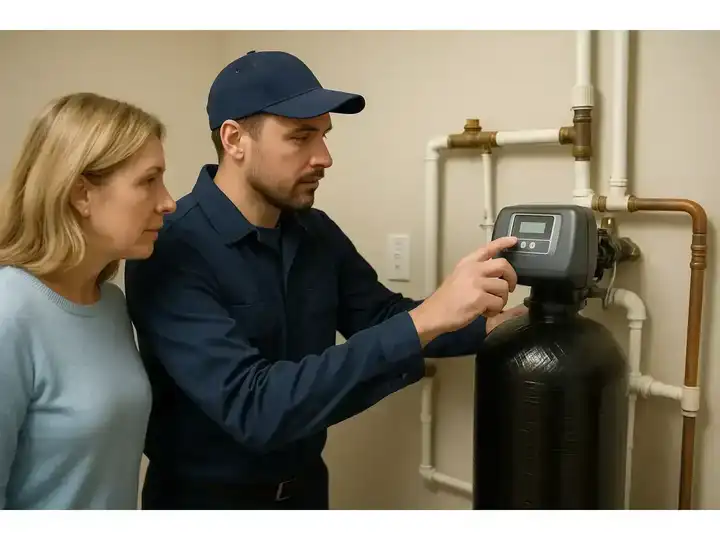
Some water softener problems are simple. A clogged injector, a stuck valve, or a salt bridge can often be corrected without replacing the whole unit. In other cases, the system may be undersized for the household, outdated, or worn out from years of use. That is when replacement becomes the better long-term choice.
Homeowners in Freeport often make the most practical decision by looking at the age of the system, the level of mineral buildup returning in the home, and how often the unit needs service. If the softener is struggling to keep up, it may be time to explore water softening services in Freeport, FL that include repair and replacement options tailored to the home.
Why local service matters in Walton County
Water softening is not one-size-fits-all. Homes in Freeport can vary widely, from newer construction to older properties with different plumbing layouts and water demands. A local plumber who works in Walton County understands those differences and can recommend a system that fits the home rather than a generic setup that may not perform well.
Local service also matters because conditions in the area affect maintenance needs. Humidity, seasonal usage, and the type of plumbing already in place can all influence how a softener performs. A technician familiar with the area can spot problems faster and help prevent repeat issues. That is especially helpful for homeowners who also manage other home systems, including commercial HVAC maintenance, air conditioning replacement, or plumbing installation on a property with mixed needs.
Maintenance habits that keep a softener working well
Water softeners do not usually need constant attention, but they do need regular care. A few simple habits can keep the system performing better for longer:
- Check salt levels regularly
- Keep the brine tank clean and dry around the outside
- Watch for salt bridges or clumps
- Schedule periodic inspections
- Make sure the system is sized for the home’s water use
Maintenance is especially useful in homes where plumbing issues tend to show up in more than one place. For example, a homeowner who is already trying to avoid costly surprises may also appreciate reading tips for avoiding emergency plumbing replacement in Freeport, FL. Water quality is one of the quieter factors that can influence those outcomes.
How water softening fits into year-round home comfort
Freeport’s climate puts steady demand on home systems. Air conditioners run often, water heaters stay busy, and plumbing fixtures see daily use in humid conditions. Hard water adds extra strain to that picture. A softener helps reduce mineral buildup so the rest of the home can function more efficiently.
That connection matters because homeowners usually notice comfort problems before they notice the cause. A fixture that sprays unevenly, a hot water system that seems slower, or laundry that never feels fully clean can all trace back to hard water. Taking care of the water quality can improve how the whole house feels and operates.
For families trying to keep a home running smoothly through Florida weather, the same mindset applies to other systems too. Homeowners who are planning upgrades or trying to prevent breakdowns may also find value in tips for avoiding emergency air conditioning repair in Freeport, FL and what to expect from new construction air conditioning in Freeport, FL. Preventive care tends to cost less than waiting for a failure.
When to have a professional take a look
If you see scale returning quickly, your softener is making unusual noises, or water quality seems to have changed, it is time to have the system checked. A professional can test the water, inspect the unit, and confirm whether the issue is with the softener itself or with another part of the plumbing system. In some cases, hidden leaks or pressure problems can affect water quality and should be addressed as well. That is where services like leak detection and slab leak repair can become relevant.
Homes in Freeport deserve water that supports the plumbing instead of wearing it down. If hard water has become part of your daily routine, A Superior Mechanical can help with service that matches the home, the water conditions, and the needs of local homeowners. Professional water softening services can make a noticeable difference in comfort, maintenance, and long-term system performance.
For homeowners in Freeport and throughout Walton County, addressing hard water early is one of the simplest ways to protect fixtures, appliances, and plumbing from avoidable wear.
Find Water Softening Services in Freeport, FL
If you need Water Softening Services in Freeport, FL, visit our local service page or contact A Superior Mechanical today.
Map of Freeport, FL
Frequently Asked Questions
How do I know if my Freeport home has hard water?
Common clues include white scale on faucets, soap that does not lather well, cloudy dishes, and stiff laundry. A water test can confirm mineral levels.
Can a water softener help my water heater last longer?
Yes. Softened water can reduce mineral buildup inside the tank or heat exchanger, which may improve efficiency and help extend equipment life.
How often should a water softener be serviced?
It depends on the system and household water use, but many homeowners benefit from an annual inspection along with regular salt checks.
Is water softener repair better than replacement?
If the problem is a worn part, salt bridge, or setting issue, repair may be enough. If the unit is old, undersized, or failing often, replacement may be the better option.
Related Articles
Photo Gallery