In Wright, FL, storm readiness is not just about shutters, batteries, and a generator. It also starts with the electrical systems that help a home stay safe when weather turns fast. Smoke detectors and carbon monoxide detectors play a bigger role than many homeowners realize, especially in coastal homes that deal with humidity, salt air, power interruptions, and heavier electrical demand from modern appliances and charging equipment.
For homeowners, vacation property owners, and small businesses in Wright and across Okaloosa County, reliable detection equipment is part of practical electrical protection. It helps catch danger early, supports code compliance, and gives families time to respond when storms, outages, or equipment failures create unsafe conditions. A Superior Mechanical provides smoke detector and carbon monoxide detector services in Wright, FL for homes and commercial properties that need dependable protection.
Why coastal weather changes the conversation
Wright homes live with conditions that can be harder on electrical systems than many inland neighborhoods. Salt air can corrode metal parts over time. Humidity can affect electrical connections. Storms can cause utility flicker, surges, and outages that expose weak wiring, aging breakers, and outdated panels. When those conditions show up together, it becomes even more important to have detectors that are installed correctly and tested regularly.
Smoke detectors are not only for fire protection after a visible flame starts. They also help catch early warning signs from overloaded circuits, failed devices, and electrical faults. Carbon monoxide detectors matter just as much because generators, fuel-burning appliances, and attached garages can create dangerous conditions during and after storms. A home that loses power may rely on backup equipment, and that makes detector placement and wiring more important, not less.
How modern homes use detectors as part of the electrical plan
In newer homes, detectors are often hardwired into the electrical system with battery backup. That setup gives more consistent protection than a pile of standalone units scattered through the house. When installed correctly, hardwired detectors can stay active during normal operation, then continue working during an outage if the backup battery is healthy. That is a major advantage in Wright, where storm outages are part of life.
Modern homes also have more electrical load than older homes. Between HVAC systems, kitchen appliances, lighting, ceiling fans, entertainment equipment, EV chargers, and smart devices, circuits work harder than they used to. That extra demand can reveal weak points in panels, breakers, outlets, switches, and wiring. If your home has frequent breaker trips, dimming lights, or outlets that feel warm, it may be time for an electrical device upgrade or a broader inspection of the system that supports your detectors.
Homeowners searching for electrician near me or licensed electrician near me often start with a simple detector issue, but the real need may be deeper. A detector that chirps repeatedly, loses power, or fails to sync with the rest of the system can point to wiring issues, a bad circuit, or an aging panel that should be evaluated by an electrical contractor near me.
Older homes, remodels, and the hidden electrical gaps
Wright has plenty of older homes and remodeled properties where the electrical system was updated in stages. That can leave gaps in coverage. Some rooms may have newer wiring while others still rely on older circuits. Additions and renovations can create new load demands without enough support from the panel. In some cases, older homes may still have outdated wiring methods or equipment that no longer match current safety expectations.
If you are dealing with older construction, it is worth asking whether your detector system is truly integrated with the rest of the home. A detector may be mounted in the right place, but if the circuit is poorly wired, the backup battery is weak, or the home has grounding issues, it may not provide the level of safety you expect. Homeowners searching for home rewiring near me or knob and tube wiring replacement near me usually need broader electrical help, but detector installation is often part of that same safety conversation.
Remodels can also create problems if new rooms, kitchens, or garages were added without updating detector placement. A finished attic, enclosed porch, or bedroom addition should be checked for proper smoke coverage and carbon monoxide protection. The same is true when a garage is converted to living space or when a basement gets new appliances and outlets.
What can go wrong with smoke and carbon monoxide detectors
Detectors fail for reasons homeowners can see and reasons they cannot. Dust, age, dead backup batteries, loose mounting, and corrosion can all create problems. In coastal areas, humidity and salt exposure can shorten the useful life of electrical devices. Hardwired detectors can also fail if the circuit is damaged or if the panel has loose connections.
Some warning signs are obvious. Frequent chirping, random alarms, blinking lights that do not match the manufacturer guide, or detectors that do not respond to test buttons all deserve attention. Less obvious signs include detectors that are over 10 years old, units that were painted over, or systems that were installed during a remodel and never checked again.
If a detector issue appears alongside breaker trips, outlet problems, or flickering lights, the problem may not be the detector itself. It may be part of a larger electrical issue that needs electrical installation, outlet and switch work, or targeted repair. When an outlet repair near me search points to a bigger wiring issue, a full inspection is often the safer next step.
Storm prep should include the detector system
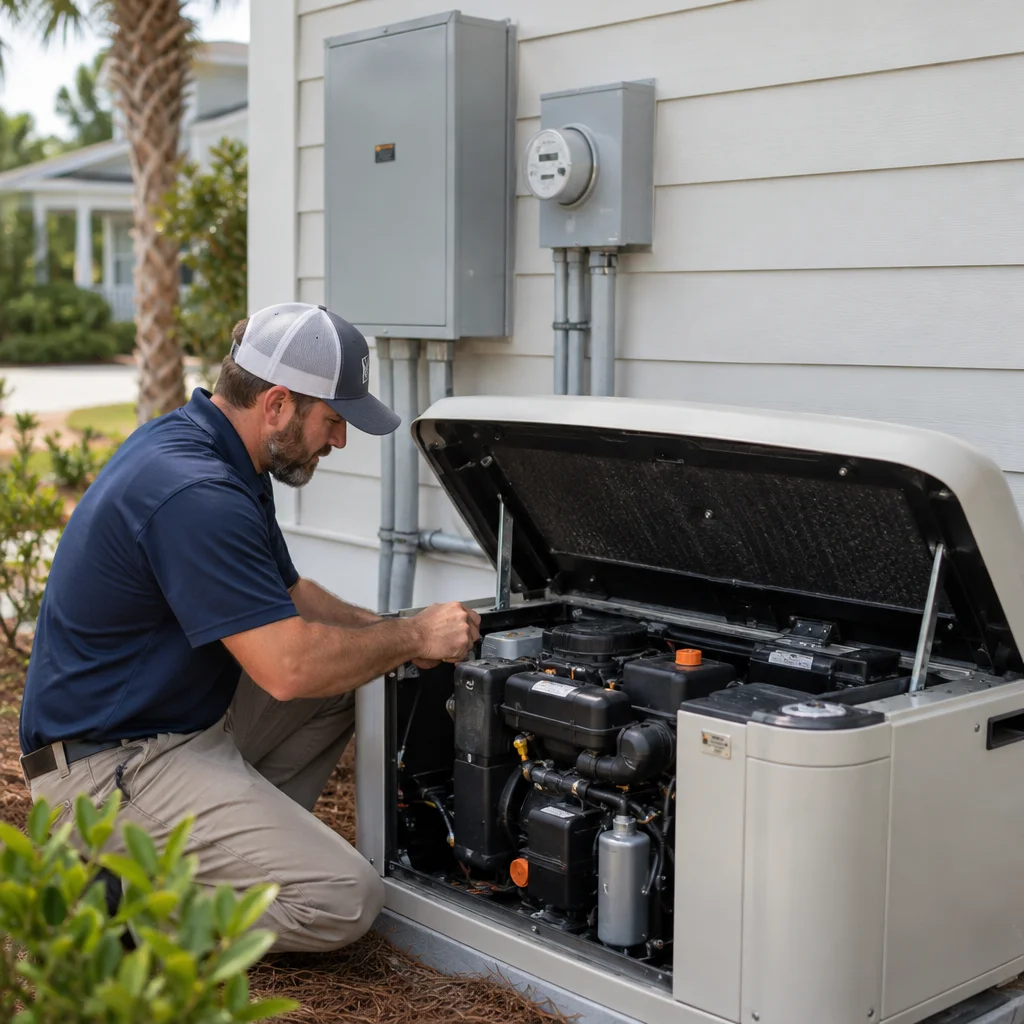
Before hurricane season or a strong coastal storm, homeowners should think about more than flashlights and bottled water. Detectors should be tested, batteries checked, and hardwired units inspected for age and function. If your home uses a generator, make sure the transfer equipment and backup power plan are installed correctly. A poorly planned generator setup can create hazards that detectors may need to warn you about, especially if exhaust or fuel storage is involved.
For homes that rely on backup power, dedicated circuits for appliances can also reduce overloads and help keep critical equipment more stable during outages. That matters for refrigerators, sump systems, internet equipment, and medical devices. It also matters for detector reliability, because a strained electrical system is more likely to trip a breaker or create unstable conditions.
Storm prep is also a good time to ask about generator transfer switch installation near me, whole home surge protector near me, and surge protector installation near me if your home has experienced repeated outages or voltage spikes. Surge protection helps defend the electrical system, while detectors help warn you when something still goes wrong.
Code compliance, grounding, and local electrical safety
Smoke detectors and carbon monoxide detectors are not just convenience items. They are part of code-aware home safety. Proper spacing, correct placement, circuit integration, and battery backup all matter. In homes with additions, garage conversions, or updated kitchens, a code correction may be needed to bring the system into line with modern expectations.
Grounding and bonding also matter because unstable electrical systems can create nuisance issues and, in some cases, more serious safety risks. If a panel, branch circuit, or device box has not been checked in years, an electrical inspection can uncover issues before they become emergencies. That is especially useful for homeowners searching for electrical panel upgrade near me or fuse box replacement near me, because detector work often uncovers bigger service needs.
In older homes, code corrections may include replacing outdated devices, improving grounding, adding GFCI protection in appropriate areas, or correcting circuit labeling at the panel. If you are already planning lighting installation near me, dimmer switch installation near me, or usb outlet installation near me, it is smart to include detector placement and electrical safety checks in the same visit.
Where detectors fit with the rest of the home electrical system
Smoke and carbon monoxide detectors are only one part of a safer electrical setup. They work best when the rest of the home is in good shape. That includes secure wiring, properly sized breakers, protected outlets, and a panel that can handle current demand. If the home has a detached garage, workshop, hot tub, or EV charger, those loads should be on the right circuits and evaluated for safety.
Homeowners who are planning a level 2 ev charger installation near me or garage ev charger wiring near me should ask about panel capacity and detector placement at the same time. New loads can affect the whole system. The same is true for range outlet installation near me or hot tub wiring near me, both of which require careful circuit planning and code compliance.
For homes with frequent electrical issues, the answer may be more than one repair. It may involve panel work, outlet upgrades, wiring corrections, and detector replacement as a coordinated safety plan. That is where a local electrician familiar with Wright homes and coastal conditions can make a real difference.
Practical maintenance that keeps detectors ready
Most homeowners can test detectors monthly and replace batteries when needed, but that only covers part of the job. Hardwired systems should still be checked for age, wiring integrity, and proper operation. Units should be replaced when they reach the end of their service life, even if they still beep during a test. Manufacturers usually recommend replacement after about 10 years for smoke detectors, and carbon monoxide detectors may have different replacement timelines depending on the model.
It is also smart to keep detectors free of dust and to avoid painting over them during interior updates. If you are doing a remodel or replacing ceiling fans, lighting, or switches, that is a good time to have a professional verify detector placement and wiring. A homeowner searching for lighting installation near me or electrician near me may be surprised how often detector issues show up during those same projects.
Vacation rentals and rental properties deserve extra attention because guests may not know how the system works. In those cases, reliable detector placement, visible test results, and clear electrical labeling can reduce risk and help property owners stay ahead of maintenance problems.
When a professional visit makes sense
Some detector problems are simple, but many are tied to deeper electrical concerns. If alarms keep chirping after battery changes, if multiple detectors are failing at once, or if a hardwired unit loses power, it is time to bring in a professional. The same is true if you notice burning smells, tripping breakers, buzzing panels, dead outlets, or lights that flicker when large appliances start.
Those symptoms may point to a bad breaker, aging wiring, overloaded circuits, or a panel that needs attention. In some homes, the fix could be as targeted as breaker repair or outlet repair. In others, it could involve a larger service upgrade or a full inspection by a 24 hour electrician near me if there is an immediate safety concern.
A Superior Mechanical helps Wright homeowners keep these systems working together. From detector installation and replacement to electrical repairs, code corrections, and maintenance, local service matters because the climate, construction mix, and storm exposure in Wright are not the same as they are elsewhere. A well-planned electrical system supports safer living every day, and it becomes even more important when the weather turns rough.
If you are updating a home, adding new appliances, or checking storm readiness, it is a good time to look at the whole system, not just the detectors. That may include smart electrical planning for Wright homes, dedicated appliance circuits, or a broader safety review that brings the panel, outlets, wiring, and detectors into alignment.
Find Smoke Detectors and Carbon Monoxide Detectors in Wright, FL
If you need Smoke Detectors and Carbon Monoxide Detectors in Wright, FL, visit our local service page or contact A Superior Mechanical today.
Map of Wright, FL
Frequently Asked Questions
How often should smoke detectors and carbon monoxide detectors be replaced in Wright homes?
Most smoke detectors should be replaced about every 10 years, while carbon monoxide detectors follow the manufacturer’s replacement schedule. Coastal humidity, salt air, and power issues can make regular testing even more important.
Can hardwired detectors still work during a power outage?
Yes, if they have battery backup and the batteries are in good shape. That is one reason hardwired systems are a strong choice for Wright homes that deal with storms and outages.
Why do my detectors chirp after a storm or outage?
Chirping can mean a low backup battery, a wiring problem, or a detector that is nearing the end of its life. If several units act up at once, the issue may be tied to the circuit or panel and should be checked by a professional.
Do I need an electrician to install or replace detectors?
For hardwired systems, yes. A licensed electrician can verify proper wiring, circuit support, backup power, and code compliance. That is especially important in older homes, remodels, and properties with other electrical upgrades.
Related Articles
- Smart Electrical Planning for Wright Homes: Panels, Wiring, Outlets, and Prevention
- How Electrical Wear and Tear Shapes Commercial New Construction in Wright, FL
- Keeping Wright Homes Powered Safely With Dedicated Appliance Circuits
- A Practical Guide to Smarter Commercial Plumbing Maintenance in Wright, FL
Photo Gallery