Do not remove an electrical panel cover, touch exposed conductors, bypass protection, or repeatedly reset a fault. Keep clear of smoke, sparks, burning odors, hot equipment, standing water near electricity, and downed lines, then call qualified help.
You may first think about surge protection after a thunderstorm, a brief power flicker, or the sudden failure of an expensive appliance. Perhaps the television restarted, the Wi-Fi router stopped working, or an air-conditioning control board failed even though the breaker never tripped. For a homeowner in 30A, those symptoms can point to a voltage surge: a very brief spike of electrical energy moving through the home's wiring.
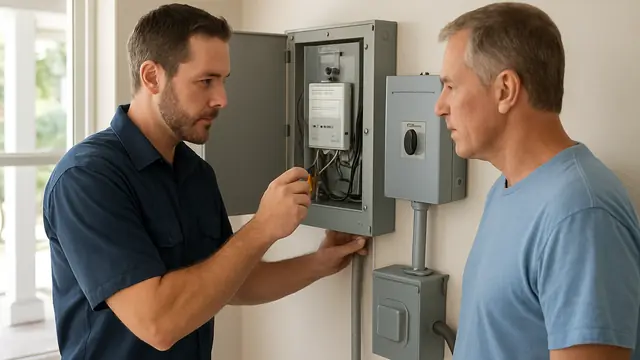
The safest immediate action is to unplug sensitive electronics if storms are approaching and only if you can do so without touching wet surfaces or damaged equipment. Do not open the electrical panel. A whole-home surge protector is connected at or near the main panel, where it can divert much of the excess voltage before that energy reaches appliances and electronics.
What Whole-Home Surge Protection Actually Protects
Whole-home surge protection helps protect equipment connected to the electrical system from short-duration voltage spikes. That includes HVAC equipment, major appliances, televisions, computers, routers, garage-door openers, pool controls, smart switches, lighting controls, and appliance circuit boards.
Modern homes contain more electronic controls than many homeowners realize. A surge may destroy a component immediately, but repeated smaller surges can also weaken electronics over time. The result may be random error codes, intermittent operation, or premature failure.
A whole-home device can also reduce stress on breakers, wiring insulation, and connected equipment. It does not make the home immune to electrical damage, but it adds a valuable first layer of defense.
Common Sources of Electrical Surges
Lightning is an important source of surge damage, especially during Florida thunderstorms, but it is not the only one.
A nearby lightning strike can send energy through utility lines, communication wiring, or the ground. A properly installed whole-home device can reduce the surge entering through the electrical service, although no device can guarantee protection from a direct strike.
Utility switching and power restoration can also create brief voltage changes. Large motors inside the home, including air conditioners, pumps, and refrigerators, can create smaller internal surges when they start and stop.
Because surges can begin outside or inside the home, effective protection often uses both a panel-mounted device and quality plug-in protectors for sensitive electronics.
Safe Checks a Homeowner Can Perform
You can look for warning signs without removing a panel cover.
Notice whether devices have recently reset, lost programming, or stopped working after a storm or outage. Blinking clocks, repeated router failures, damaged chargers, unexplained appliance error codes, or several failed electronics may suggest a power-quality event.
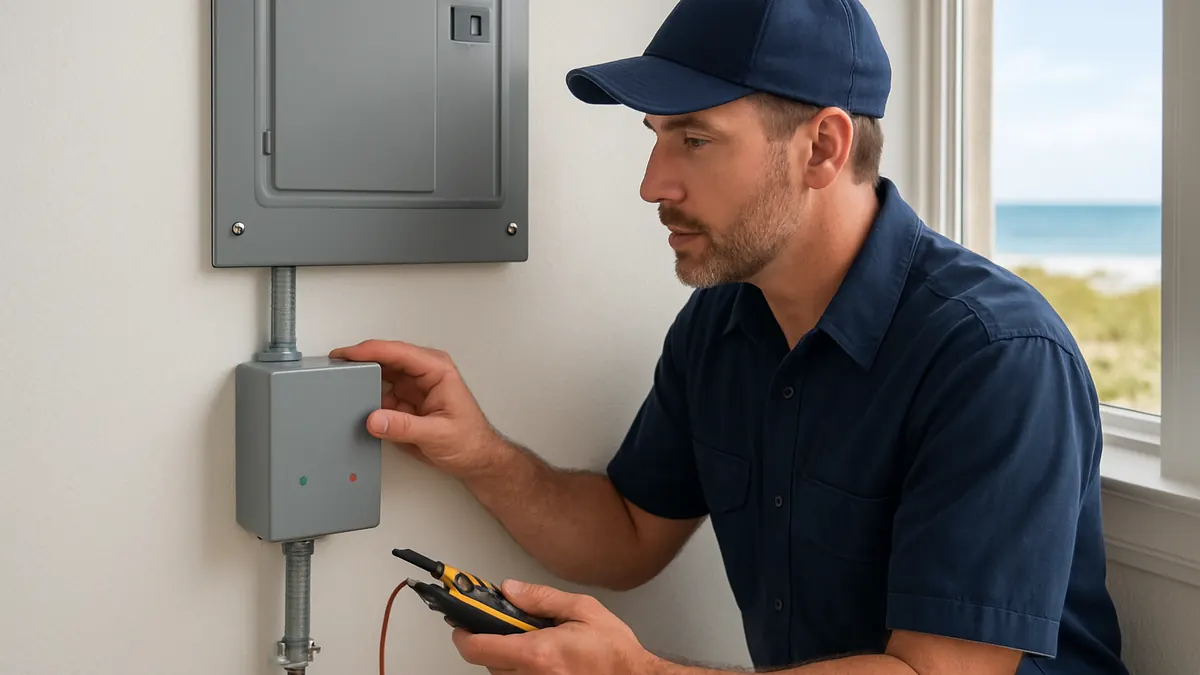
Look at the electrical panel only from a safe distance. Some whole-home surge protectors have visible status lights on the panel or on a small enclosure beside it. An illuminated light often means protection is active, but indicator meanings differ by manufacturer. Read the label rather than assuming.
Check plug-in strips for damage, discoloration, or a failed protection light. A basic power strip is not necessarily a surge protector.
If you smell burning, hear buzzing, see scorch marks, or notice heat around the panel, stop checking and call a licensed electrician.
What You Should Not Attempt
Do not remove the electrical panel cover. Service conductors inside may remain energized even when the main breaker is off. Contact can cause severe shock or burns.
Do not install a whole-home surge protector in an empty breaker space yourself. Correct installation requires matching the device to the electrical system, following the manufacturer's instructions, using the proper connection method, and keeping conductors appropriately short.
Do not assume a plug-in strip protects the entire home. It only protects connected equipment, and inexpensive strips may provide little more than additional outlets.
Do not repeatedly reset breakers after a storm. A breaker that will not stay on may indicate damaged equipment, a short circuit, or another fault that needs diagnosis.
Signs the Problem Is Urgent
Prompt electrical service is important when there is a burning odor, buzzing or crackling, melted plastic, scorch marks, repeated breaker trips, shocks from appliances, or several devices failing at once.
Lights that suddenly become unusually bright and then dim can indicate a serious voltage or neutral problem rather than an ordinary surge. Turn off sensitive equipment if it is safe and contact an electrician promptly.
A surge protector with a failed status light should also be evaluated. Surge protective devices can wear out after one major event or many smaller events.
How a Licensed Electrician Diagnoses the System
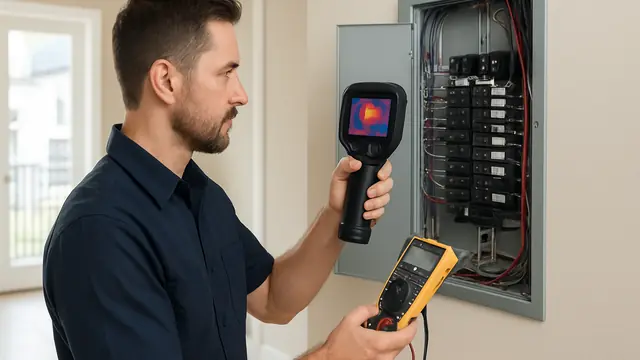
An electrician begins by asking what happened and when. The timing of a storm, outage, utility interruption, or appliance failure helps distinguish a surge from a loose connection, overloaded circuit, failing breaker, or utility-side problem.
The electrician inspects the service equipment, panel condition, available breaker spaces, grounding and bonding, and any existing surge device. Grounding and bonding matter because the protector needs an effective path to divert excess energy.
Repair and Protection Options
The least invasive step may be replacing worn or inadequate plug-in surge protectors for computers, televisions, and networking equipment.
The next step is installing or replacing a whole-home surge protective device at the main panel. Some devices mount externally, while others use breaker spaces. The correct choice depends on the panel, electrical service, available room, and manufacturer requirements.
A layered approach usually provides better protection. The panel device reduces much of the incoming surge, and point-of-use protectors further limit what reaches sensitive electronics.
If the panel is damaged, obsolete, overcrowded, or incompatible, limited corrections may be needed. A complete panel replacement should not be automatic. It is appropriate only when the panel's condition, capacity, compatibility, or safety issues justify it.
Protection may also be considered for cable, internet, satellite, or other communication lines because surge energy can enter through more than the electrical service.
What Affects the Cost
Cost depends on the device type and rating, panel design, available breaker space, access, wiring condition, and whether grounding or bonding corrections are needed.
A straightforward installation in an accessible panel is less involved than work in a crowded, damaged, corroded, or difficult-to-reach panel. Multiple panels, generators, detached structures, and communication-line protection can increase the scope.
The electrician should explain the device rating, warranty, installation method, and any additional work before installation begins.
Prevention and Maintenance
Check the surge protector's status indicator periodically and after major storms or power events. Follow the manufacturer's replacement guidance. A surge protector is partly sacrificial; it absorbs or redirects energy and may eventually lose effectiveness.
Use quality point-of-use protectors for valuable electronics. Avoid overloading power strips or plugging one strip into another. Keep the panel dry, accessible, and clear of stored items.
Have the electrical system inspected if the home experiences repeated electronic failures, unexplained resets, or frequent breaker trips. Surge protection works best with sound wiring, proper grounding and bonding, and secure electrical connections.
Protecting Your 30A Home
What does whole-home surge protection actually protect in 30A? It helps defend appliances, electronics, HVAC controls, lighting systems, and other connected equipment from brief voltage spikes that can cause immediate or gradual damage. It does not prevent outages or guarantee protection from every lightning event, but it can significantly reduce risk when properly selected, installed, and maintained.
If electronics have failed after storms, the protection indicator is no longer active, or your home has no panel-level protection, the next step is a licensed electrical evaluation.
About this guide: This resource provides general homeowner education, not a remote diagnosis. Actual conditions, code requirements, equipment, and safe repair options must be evaluated at the property.