Do not remove an electrical panel cover, touch exposed conductors, bypass protection, or repeatedly reset a fault. Keep clear of smoke, sparks, burning odors, hot equipment, standing water near electricity, and downed lines, then call qualified help.
The power goes off then comes back. The refrigerator resumes humming, and the air conditioner starts. Later, you discover that the television will not turn on, the garage-door opener has lost its settings, or the HVAC thermostat is blank. That sequence can indicate a voltage surge associated with a storm or power restoration.
Stop using any device that smells burned, feels unusually hot, or shows visible damage. Unplug sensitive equipment only when the outlet and area are dry and undamaged. Do not open the electrical panel; whole-home surge protection connects directly to the distribution system and requires a licensed electrician.
The Direct Answer: What Does Whole-Home Surge Protection Protect?
Whole-home surge protection helps reduce brief spikes of excessive voltage before they reach equipment throughout the property. It can help protect HVAC components, major appliances, televisions, computers, routers, smart-home controls, lighting systems, door openers, pumps, and other connected loads.
Many modern appliances contain circuit boards, sensors, and displays that can be damaged by an instant of excessive voltage.
It does not keep power on during an outage, correct low voltage, repair loose wiring, prevent overloads, or guarantee protection from a direct lightning strike.
What a Surge Can Look Like Inside the Home
A severe event may leave a device dead, trip breakers, or create a burned odor. A smaller event may cause repeated clock resets, smart-device failures, intermittent television problems, HVAC communication faults, or failed chargers.
These symptoms do not prove that a surge occurred. Loose connections, appliance defects, neutral problems, and utility voltage issues can look similar. Problems beginning after lightning, an outage, or power restoration deserve attention.
Common Causes of Surges
Nearby Lightning
Lightning can induce voltage on utility lines or other conductors without striking the home itself. Surge energy may enter through the electrical service, cable line, internet equipment, or another connected path.
Utility Switching and Service Restoration
Grid switching and service restoration can create brief spikes that sensitive electronics cannot tolerate.
Motors and Compressors
Air conditioners, refrigerators, pumps, and other motor-driven equipment can produce smaller internal surges as they switch on and off. These events happen more frequently than major external surges.
Faulty Connections or Equipment
Loose neutrals, utility faults, generator problems, or damaged components can create abnormal voltage. The underlying fault still requires correction.
Safe Checks Before Calling an Electrician
Begin with observation rather than disassembly.
Note which devices were affected and whether the event followed a storm, outage, generator transition, or large appliance startup. Check whether problems are limited to one circuit or occur throughout the home.
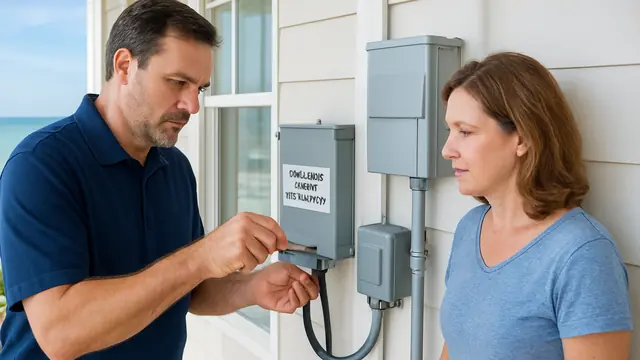
If a whole-home protector is visible beside or on the panel, look for its status lights without opening the enclosure. A failed or dark indicator may mean the protective components are no longer active. Indicator meanings vary, so use the label or manufacturer information.
Inspect plug-in surge protectors for cracks, melting, discoloration, or missing protection lights. Replace damaged units and stop using any strip that feels hot.
Do not repeatedly reset a breaker or reconnect equipment that immediately trips the circuit.
What You Should Never Attempt
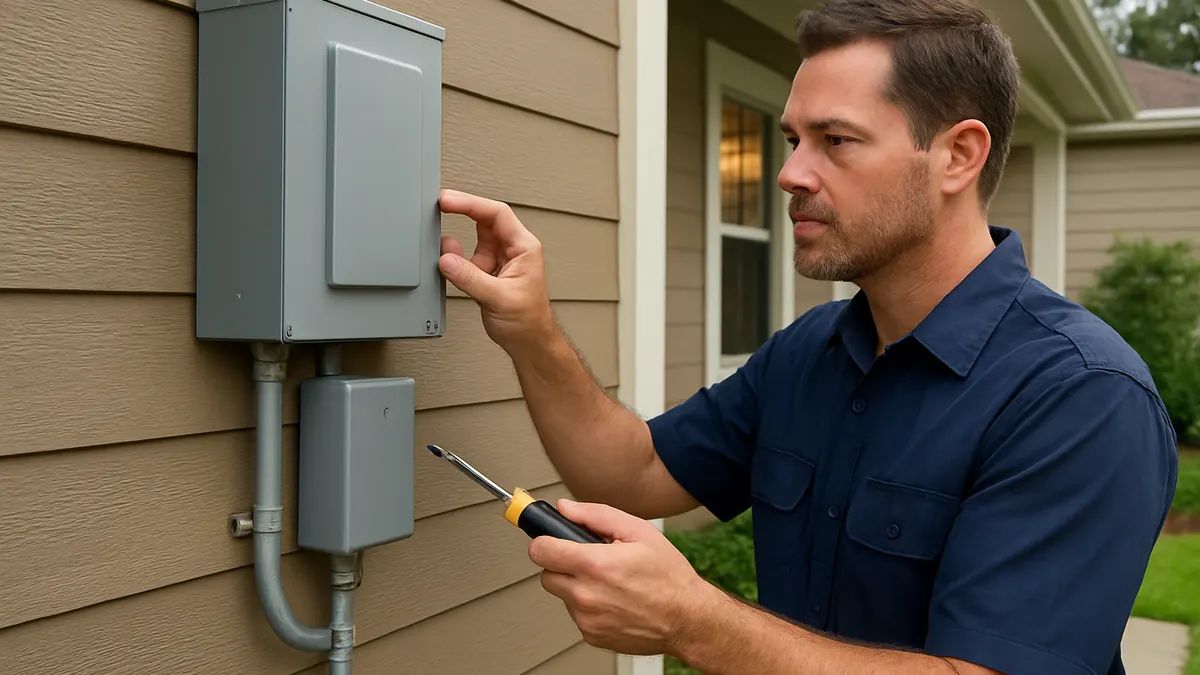
Do not remove the panel cover, loosen panel screws, touch service conductors, or install a surge protector in an empty breaker position. Turning off the main breaker does not necessarily de-energize every component inside the service equipment.
- Never install a larger breaker to stop tripping; it can allow wiring to overheat.
- Do not rely on a power strip unless it is specifically marked as a surge protective device. Even a legitimate plug-in protector only covers the equipment connected to it.
- Replacing one damaged appliance does not solve a continuing voltage, neutral, grounding, or connection problem.
Signs That Make the Problem Urgent
Disconnect power to affected equipment if it is safe and call promptly when you notice burning odors, smoke, melted plastic, scorch marks, buzzing, crackling, arcing, or unusual heat.
Treat widespread brightening and dimming of lights as urgent. That pattern may indicate a loose neutral, which can cause different circuits to receive incorrect voltage. It is more serious than a momentary flicker caused by an appliance starting.
Several failed electronics after one event, a breaker that will not remain on, shocks from appliances, or visible storm damage also require prompt evaluation. When there is active smoke or fire, leave the area and contact emergency services.
How a Licensed Electrician Diagnoses the Cause
The electrician first determines whether the symptoms fit a one-time surge, repeated internal disturbances, a loose connection, or an ongoing utility problem.
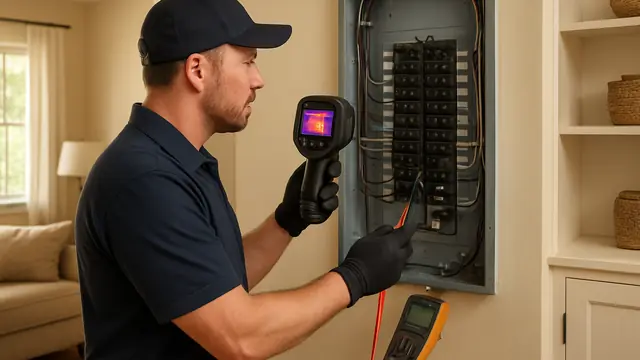
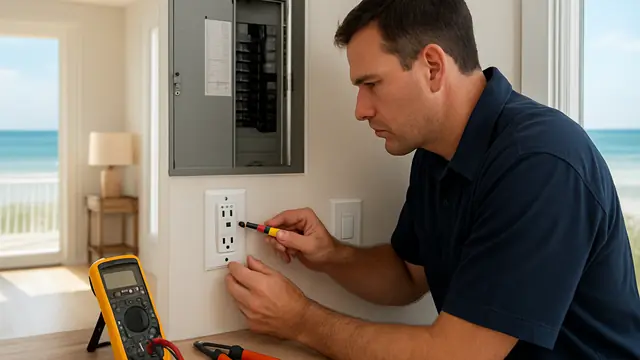
The inspection may include voltage measurements and checks of the neutral, grounding, bonding, panel condition, and available device connections.
If protection is already installed, the electrician verifies the device rating, status, breaker connection, conductor routing, and installation location. Surge devices generally perform better when their connecting conductors are short and direct.
Secondary panels, generator equipment, or HVAC disconnects may also be inspected. Utility involvement may be recommended if the problem appears to originate outside the home.
Repair Options From Least to Most Invasive
The least invasive option is replacing failed plug-in protectors and using properly listed units for sensitive electronics. This step is useful but does not provide panel-level protection.
Next, an electrician may install a whole-home surge protector at the main service or distribution panel. The device may connect through a dedicated breaker or another approved method, depending on the equipment.
If a whole-home protector is present but no longer active, replacing that device may restore protection without other major work. Loose or poorly routed connections may sometimes be corrected.
Grounding, bonding, neutral, and wiring defects should be repaired when found.
Panel replacement is the more invasive option and should be recommended only when justified by damage, unsafe modifications, serious deterioration, inadequate capacity, or incompatibility. Installing surge protection alone does not automatically mean the entire panel must be replaced.
Typical Factors Affecting Cost
The cost depends on the protector type and capacity, the main panel design, breaker availability, access, conductor routing, and the condition of the existing electrical system.
Crowded or damaged panels, difficult access, multiple panels, generators, detached buildings, or grounding corrections can increase the scope.
Prevention and Maintenance Guidance
Check the whole-home device's status lights periodically and after major storms or outages. Surge protectors can wear out because their internal components absorb repeated electrical stress.
Use point-of-use protection for sensitive electronics and replace it when the indicator shows protection is lost.
Keep the main panel accessible, dry, and free from stored materials. Schedule an electrical inspection when electronic failures become frequent, lights behave abnormally, breakers repeatedly trip, or the home has no known surge protection.
Protecting a Blue Mountain Beach Home
What does whole-home surge protection actually protect in Blue Mountain Beach? It helps reduce damaging voltage that can reach appliances, HVAC components, electronics, smart controls, lighting systems, and other connected equipment. It is not a solution for every electrical fault, but it is an important layer of protection when combined with proper grounding, sound wiring, and point-of-use devices.
If a recent power event damaged equipment, several devices are behaving abnormally, or the existing surge protector no longer shows active protection, schedule a licensed electrical evaluation.
About this guide: This resource provides general homeowner education, not a remote diagnosis. Actual conditions, code requirements, equipment, and safe repair options must be evaluated at the property.