Do not remove an electrical panel cover, touch exposed conductors, bypass protection, or repeatedly reset a fault. Keep clear of smoke, sparks, burning odors, hot equipment, standing water near electricity, and downed lines, then call qualified help.
The lights blink during a storm, the internet equipment reboots, and the oven clock starts flashing. Then a few weeks later, a smart thermostat stops responding or an appliance displays an unfamiliar error code. In Alys Beach, where a home may contain numerous electronic controls and connected systems, even a brief voltage spike can affect more equipment than expected.
A safe first step is to unplug valuable portable electronics before severe weather arrives, provided there is no visible damage or moisture near the outlet. Do not touch the electrical panel or attempt to add a surge device yourself. Whole-home surge protection is installed at the main electrical service or distribution panel so that excess voltage can be diverted before it spreads through the branch circuits.
What Whole-Home Surge Protection Actually Protects
A whole-home surge protective device helps shield electrical and electronic equipment from very fast increases in voltage. These spikes may last only fractions of a second, but they can exceed the level that sensitive components are designed to tolerate.
The device can help protect hardwired and plug-in equipment throughout the home, including air-conditioning controls, kitchen appliances, laundry equipment, televisions, computers, networking hardware, lighting controls, door operators, pumps, and smart-home systems.
A surge protector reduces damaging voltage; it does not create an absolute barrier. A direct lightning strike may exceed its capacity, and surge energy can enter through communication lines. Whole-home protection works best with proper grounding and point-of-use protection.
Why Small Surges Matter
A major surge may cause immediate failure, a tripped breaker, a burned component, or a device that will not turn on. Smaller surges are harder to recognize.
Repeated electrical stress can weaken electronic circuit boards. A refrigerator may show intermittent errors, a dimmer may flicker, a router may reset, or an HVAC control board may fail earlier than expected.
Where Surges Come From
Lightning and Storm Activity
Lightning does not need to strike the home directly to create a surge. A nearby strike can energize utility equipment, communication lines, or the ground. The resulting voltage may travel into a building through connected conductors.
Utility Operations
Grid switching, equipment faults, and power restoration can produce brief electrical disturbances. These events are often outside the homeowner's control.
Equipment Inside the Home
Motors and compressors can create smaller surges as they start and stop. Air conditioners, refrigerators, pumps, and other large loads are common examples. These internal events are usually less dramatic than lightning but may occur repeatedly.
Generator or Equipment Transitions
Generator transitions can also create disturbances. Surge protection is not a substitute for correct generator wiring and transfer equipment.
Safe Checks You Can Make
Start by writing down what happened. Note whether the event followed a storm, outage, generator operation, or large appliance starting. Record which devices reset or failed. This information can help an electrician find a pattern.
Check visible surge-protection indicators without opening any covers. A panel-mounted device may have one or more lights showing whether protection remains active. The label or manufacturer instructions explain what each light means.
Look at plug-in protectors used for televisions, computers, and networking equipment. Replace units that are cracked, discolored, hot, or showing a failed protection indicator. Confirm that the product is actually labeled as a surge protector; ordinary power strips do not provide the same function.
If several outlets or appliances behave abnormally, stop troubleshooting and call an electrician.
What Homeowners Should Not Attempt
Never remove the cover from the main panel. Energized service components may be present even after the main breaker is switched off.
Do not install a panel-mounted surge protector based only on the fact that it fits physically. The device must be compatible with the electrical system and installed using the required breaker, conductor size, connection method, and placement.
Do not bypass a failed device, replace a breaker with a larger one, or repeatedly reset a breaker that trips. These actions can conceal a fault and increase the risk of overheating.
Surge protection does not correct overloaded or improperly wired circuits.
When the Situation Requires Urgent Service
Call promptly if you notice smoke, burning odor, sizzling, buzzing, arcing, melted plastic, scorch marks, or heat at the panel, receptacle, or appliance connection.
Multiple devices failing at the same time can indicate a significant surge or a broader voltage problem. Lights that become abnormally bright, dim, or uneven throughout the home may point to a loose neutral or utility issue. That condition can expose some circuits to damaging voltage and should not be treated as a routine flicker.
A whole-home protector with no active status light also needs attention. The device may have sacrificed itself during an event and may no longer be providing protection.
How a Licensed Electrician Diagnoses the Problem
The electrician reviews the event history and inspects the service equipment without assuming that every electronic failure was caused by a surge. Loose connections, failing breakers, damaged receptacles, overloaded circuits, appliance defects, and utility voltage issues can produce similar symptoms.
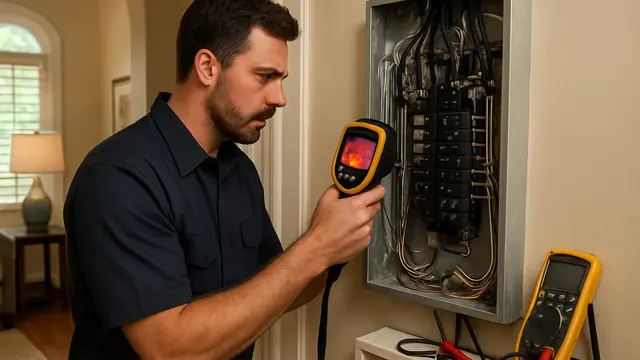
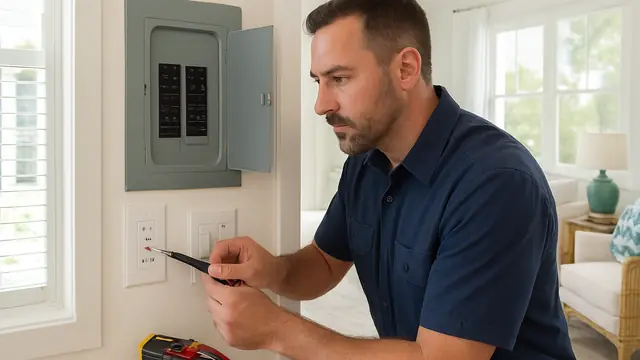
Testing may include voltage measurements and inspection of grounding, bonding, neutral connections, and panel condition.
If a surge device is already installed, the electrician verifies its condition, rating, connection, conductor length, and compatibility. Long or poorly routed leads can reduce a device's effectiveness because surge current needs a short, direct path.
Protection and Repair Options
The least invasive improvement is replacing outdated plug-in protectors with properly listed units for sensitive electronics.
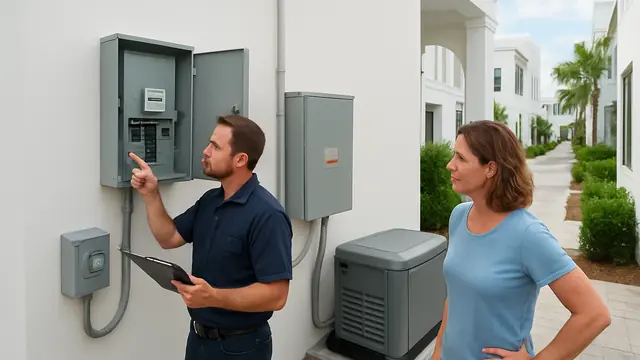
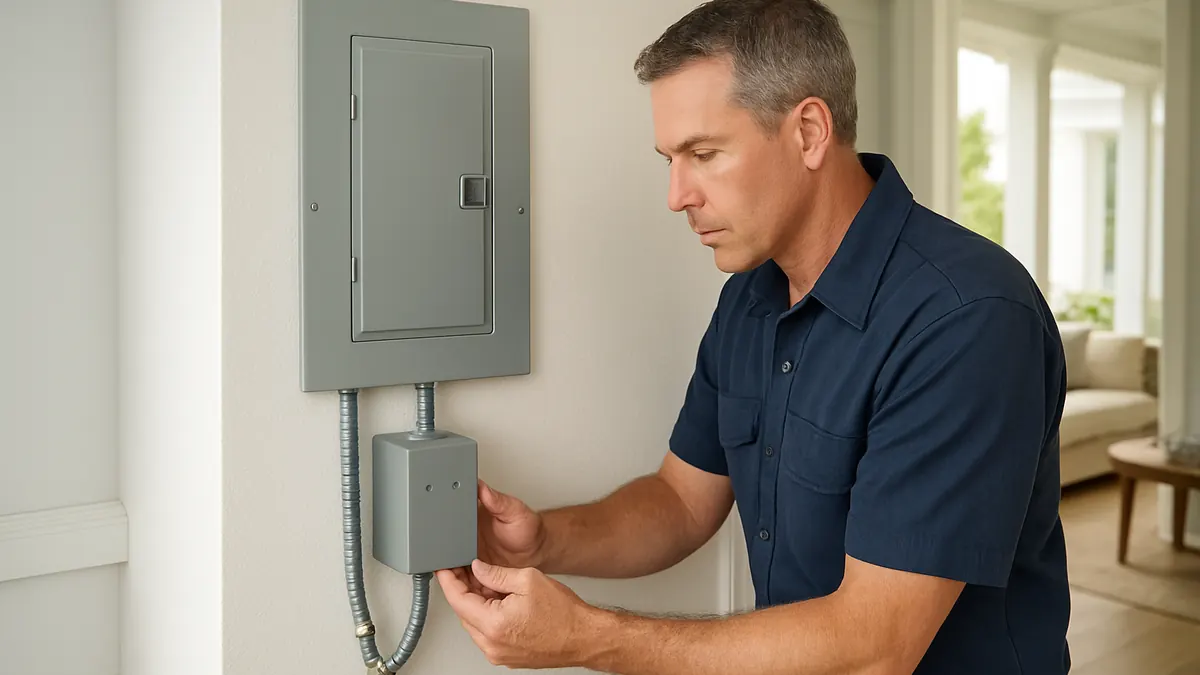
A whole-home surge device can then be installed at the main panel or service equipment. Depending on the system, the device may mount beside the panel or connect through designated breaker spaces.
If a protector already exists, replacement or correcting an unsuitable installation may be all that is needed.
Panel repair or replacement is considered only when actual conditions require it, such as damage, severe corrosion, inadequate capacity, unsafe modifications, or incompatibility with the needed equipment. Surge protection alone does not automatically require a new panel.
Factors That Affect Cost
The total depends on the protector's design and rating, panel compatibility, breaker availability, access, conductor routing, and whether grounding or bonding corrections are needed.
An installation may be more involved when there are multiple panels, limited space, generator equipment, detached structures, or additional communication lines to protect.
Maintenance and Prevention
Look at the device's indicator lights periodically and after significant storms or outages. Replace the protector when the manufacturer's indicator or instructions show that protection has been lost.
Continue using point-of-use protection for computers, entertainment systems, and networking equipment. Unplug highly valuable portable devices before major storms when it is safe and practical.
Keep the electrical panel unobstructed and dry. Schedule an inspection when unexplained resets, early appliance failures, flickering, or repeated breaker trips occur. Good surge protection depends on healthy grounding, bonding, wiring, and connections.
Making the Right Next Decision in Alys Beach
What does whole-home surge protection actually protect in Alys Beach? It helps reduce damaging voltage reaching appliances, HVAC controls, lighting systems, electronics, networking equipment, and other connected devices. It is most effective as part of a complete electrical system with correct grounding, sound connections, and point-of-use protection where needed.
If your home has experienced unexplained electronic failures, repeated resets, storm-related damage, or a failed surge-protector indicator, have the system evaluated before another event exposes the equipment again.
About this guide: This resource provides general homeowner education, not a remote diagnosis. Actual conditions, code requirements, equipment, and safe repair options must be evaluated at the property.