Do not remove an electrical panel cover, touch exposed conductors, bypass protection, or repeatedly reset a fault. Keep clear of smoke, sparks, burning odors, hot equipment, standing water near electricity, and downed lines, then call qualified help.
A hurricane watch has been issued, the wind is rising, and the lights in your 30A home have flickered twice. You may be wondering whether to unplug everything, shut off the main breaker, or test the generator one more time. Flickering during severe weather can mean utility voltage is becoming unstable, but it may also expose a loose connection or another problem inside the home. The safest immediate action is to stop using any outlet or appliance that is hot, sparking, buzzing, or giving off a burning smell. Unplug sensitive electronics while conditions remain safe, and never approach an electrical panel that is wet or damaged.
Check for Existing Electrical Warning Signs
Walk through the home before conditions deteriorate. Look for warm outlets, frequently tripping breakers, dimming lights, scorched plugs, broken outdoor receptacle covers, damaged generator cords, or moisture around the panel.
A warm outlet may have a loose connection. A breaker that repeatedly trips may be responding to an overload, short circuit, ground fault, or failing appliance. Water staining near electrical equipment is especially concerning because moisture can corrode components and create a shock hazard.
Safe Hurricane Electrical Checks for Homeowners
Charge Essential Equipment
Charge phones, battery packs, flashlights, weather radios, and batteries for necessary medical devices. Use battery lanterns instead of candles during an outage to reduce fire risk.
Locate and Label the Electrical Panel
Every adult in the home should know where the main panel is located. Confirm that breakers are clearly labeled for important loads such as the refrigerator, air conditioner, garage door opener, and medical equipment.
A breaker is a protective switch that turns a circuit off when electrical current becomes unsafe. Clear labeling helps you disconnect the correct circuit without guessing.
Inspect Outdoor Equipment Visually
From a safe position, inspect exterior outlets, lighting, air-conditioning equipment, pool equipment, and generator connections. Covers should close securely, cords should be intact, and loose objects should be removed from around equipment.
Do not remove covers or open cabinets. Internal electrical testing should be handled by a qualified electrician.
Unplug Sensitive Electronics
Computers, televisions, routers, gaming systems, and smart-home devices can be damaged by voltage spikes. A voltage spike is a brief rise in electrical pressure. Unplugging these devices before severe weather reduces their exposure.
Whole-home surge protection adds protection, but it does not make equipment immune to every surge or direct lightning event.
Make Generator Safety a Priority
Never connect a portable generator to a regular household outlet. This dangerous practice, called backfeeding, can send electricity toward utility lines and endanger workers, neighbors, and occupants.
Operate portable generators outdoors according to the manufacturer's instructions and away from doors, windows, vents, garages, and enclosed spaces. Carbon monoxide cannot be seen or smelled.
Use outdoor-rated cords that can safely carry the connected load. A properly installed transfer switch or approved interlock prevents utility power and generator power from feeding the home at the same time.
Do not experiment with a generator connection as a storm approaches. If the setup is unclear, have a licensed electrician inspect it before use.
What Homeowners Should Not Attempt
Do not remove the panel cover, tighten service connections, repair damaged wiring, or work while standing on wet ground. Turning off the main breaker does not necessarily remove power from every part of the panel.
Never touch a fallen line, a tree resting on a line, or a nearby metal fence that might be energized. Keep others away and contact the utility or emergency services.
Do not run indoor extension cords outside, place cords under rugs, connect multiple power strips together, or use damaged cords.
When the Electrical Problem Is Urgent
Keep your distance and seek help if you notice:
- Smoke, sparks, crackling, or a burning odor
- Water entering the panel, meter, or electrical equipment
- Scorched outlets or melted plugs
- A breaker that trips immediately after one reset
- A damaged service mast, meter enclosure, or overhead line
- Electrical tingling from an appliance or metal surface
- Some lights becoming unusually bright while others dim
Uneven brightening and dimming can indicate a damaged service connection. Unplug sensitive electronics and avoid major appliances until the utility or an electrician evaluates the problem.
How a Licensed Electrician Diagnoses Hurricane Readiness
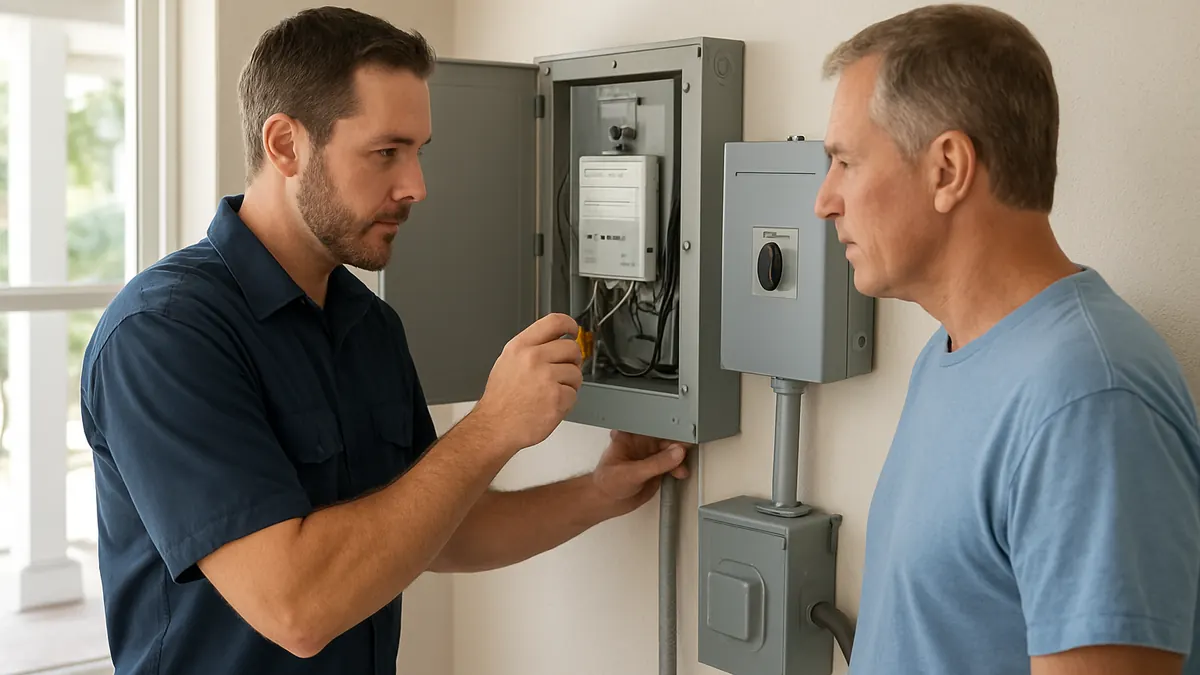
An electrician visually inspects the service equipment, panel, grounding and bonding, outdoor receptacles, visible wiring, surge protection, and generator connection. Grounding and bonding help fault current travel along a safer path and reduce voltage differences between metal components.
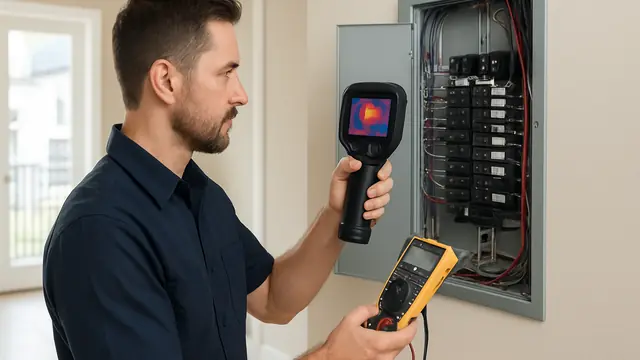
The electrician may test voltage, inspect breakers, check for loose or overheated connections, and evaluate corrosion or moisture damage. Thermal imaging may help locate unusual heat. Generator transfer equipment can be tested to confirm that backup and utility power remain separated.
The objective is to identify the actual weak point rather than recommend unnecessary replacement.
Repair Options, Beginning With the Least Invasive
A minor repair may involve replacing a broken weatherproof cover, correcting a loose receptacle connection, replacing a defective breaker after testing the circuit, or repairing a damaged generator cord.
Additional options include replacing an unsafe outdoor device, correcting grounding or bonding, adding a dedicated circuit, replacing failed surge protection, or installing an approved generator inlet and transfer device.
Panel or service replacement may be appropriate when equipment is severely corroded, physically damaged, unsafe, obsolete, or unable to support necessary loads. Replacement should follow a complete diagnosis.
Factors That Affect Electrical Repair Cost
Cost depends on the type and location of damage, accessibility, equipment condition, permit requirements, generator needs, water exposure, and whether utility coordination is required.
Replacing an exterior outlet cover is very different from repairing a service mast or meter enclosure. Hidden heat or corrosion damage may not become visible until equipment is safely opened. A written scope should identify what is being repaired and why.
What to Do During and After the Storm
- Do not enter a flooded room to reach a breaker. If power fails, turn off or unplug major appliances so they do not all restart simultaneously.
- When power returns, restore loads gradually. Watch for unusual sounds, odors, heat, or repeated breaker trips. Do not repeatedly reset a breaker that will not stay on.
- After the storm, photograph visible damage from a safe location. Electrical equipment that became wet or submerged should be inspected before use.
Prevention and Maintenance
Schedule known repairs before hurricane season. Keep the panel directory readable, replace damaged outdoor covers, test GFCI receptacles monthly, inspect generator cords, and maintain the generator according to its manufacturer.
A GFCI, or ground-fault circuit interrupter, shuts off power when electricity leaks from its intended path. If it will not test or reset, leave the circuit off and arrange an inspection.
Review the household outage plan yearly. Keep utility, electrician, insurance, and emergency contact information available without relying on internet access.
Complete Your Northwest Florida Hurricane Electrical Checklist in 30A
The best time to complete a Northwest Florida hurricane electrical checklist in 30A is before wind, rain, and outages begin. Correct known defects, protect sensitive equipment, confirm generator safety, and know which warning signs require immediate distance and professional assistance.
About this guide: This resource provides general homeowner education, not a remote diagnosis. Actual conditions, code requirements, equipment, and safe repair options must be evaluated at the property.