Do not remove an electrical panel cover, touch exposed conductors, bypass protection, or repeatedly reset a fault. Keep clear of smoke, sparks, burning odors, hot equipment, standing water near electricity, and downed lines, then call qualified help.
A tropical storm warning has been issued, rain is moving inland, and the exterior lights at your Camp Creek home blink off and back on. A brief flicker can come from utility switching or wind affecting power lines, but repeated flickering may also reveal a loose connection, overloaded circuit, or damaged equipment. The safe immediate action is to unplug sensitive electronics, stop using any outlet or switch that is hot, buzzing, sparking, or discolored, and stay away from wet electrical equipment. Do not open the panel or attempt repairs as weather conditions worsen.
A Northwest Florida hurricane electrical checklist in Camp Creek should help you reduce electrical damage, use backup power correctly, and recognize when a symptom requires a licensed electrician.
Start With Problems That Already Exist
Hurricanes often expose weaknesses that were already developing. Before the storm arrives, consider recent breaker trips, flickering lights, intermittent outlets, warm wall plates, or appliances that make lights dim when they start.
A breaker trips when current exceeds safe limits or a fault is detected. A loose connection creates resistance and heat. Do not assume these symptoms are normal because power still works. An electrician can determine whether the problem involves one device, a circuit, or the electrical service.
Complete Safe Checks While Conditions Are Calm
Identify Essential Circuits
Make sure the panel directory identifies the refrigerator, kitchen, bedrooms, air-conditioning equipment, exterior outlets, and essential medical or communications equipment.
Accurate labels help you turn off a problem circuit without guessing. They also help a family member, caretaker, or property manager respond while you are away.
Look at the Panel From the Outside
Check the panel exterior for rust, water stains, a loose door, discoloration, buzzing, unusual heat, or a burning smell. Do not remove the cover. Incoming service wiring can remain energized even after the main breaker is off.
If the panel is damp, hot, damaged, or making noise, keep others away and arrange professional service.
Inspect Outdoor Electrical Devices Visually
Look for cracked receptacle covers, loose fixtures, damaged cords, and objects that could strike air-conditioning disconnects, generators, or other equipment.
Store portable cords and appliances indoors. Do not wrap energized equipment in plastic or tape over broken equipment as a repair.
Charge and Protect Necessary Devices
Charge phones, power banks, flashlights, weather radios, and batteries for essential medical devices. Unplug televisions, computers, routers, and other sensitive electronics before severe conditions arrive.
A voltage surge is a sudden increase in electrical pressure. Surge protection can reduce damage from many surges, but no device stops every lightning or utility event.
Review Generator Safety Before the Outage
A portable generator must operate outdoors, away from doors, windows, vents, garages, and enclosed spaces. Its exhaust contains carbon monoxide, a gas that cannot be seen or smelled.
Never connect a generator to a regular wall outlet. This practice, called backfeeding, can energize utility lines, damage equipment, and expose workers or neighbors to lethal voltage.
A properly installed transfer switch or approved interlock prevents utility power and generator power from feeding the home together. Use outdoor-rated cords sized for the connected load, and do not exceed the generator's capacity.
Test the generator before hurricane conditions begin. If it trips, runs unevenly, or has an unfamiliar connection, stop rather than improvising.
What Homeowners Should Not Attempt
- Do not remove the panel cover, replace a breaker, tighten service connections, splice damaged wiring, or open a meter enclosure.
- Do not climb near service lines or trim branches close to conductors. Keep away from fallen lines and from fences, trees, puddles, or metal objects touching them.
- Do not use indoor cords outdoors, place cords under rugs, connect multiple power strips together, or use cords with missing ground pins.
Electrical Signs That Make the Situation Urgent
Treat these conditions as urgent:
- Smoke, sparks, popping sounds, or a burning odor
- Water entering the panel, meter, disconnect, outlet, or appliance
- A hot switch, receptacle, breaker, or plug
- A breaker that trips immediately after one reset
- Lights becoming unusually bright while others dim
- Tingling or shocks from appliances, plumbing fixtures, or metal surfaces
- A damaged service mast, meter enclosure, or service cable
- A carbon-monoxide alarm sounding while a generator operates
Uneven brightening and dimming may indicate a damaged neutral connection. The neutral helps stabilize voltage. Turn off large appliances, unplug sensitive equipment, and contact the utility or an electrician.
How a Licensed Electrician Diagnoses Hurricane-Related Problems
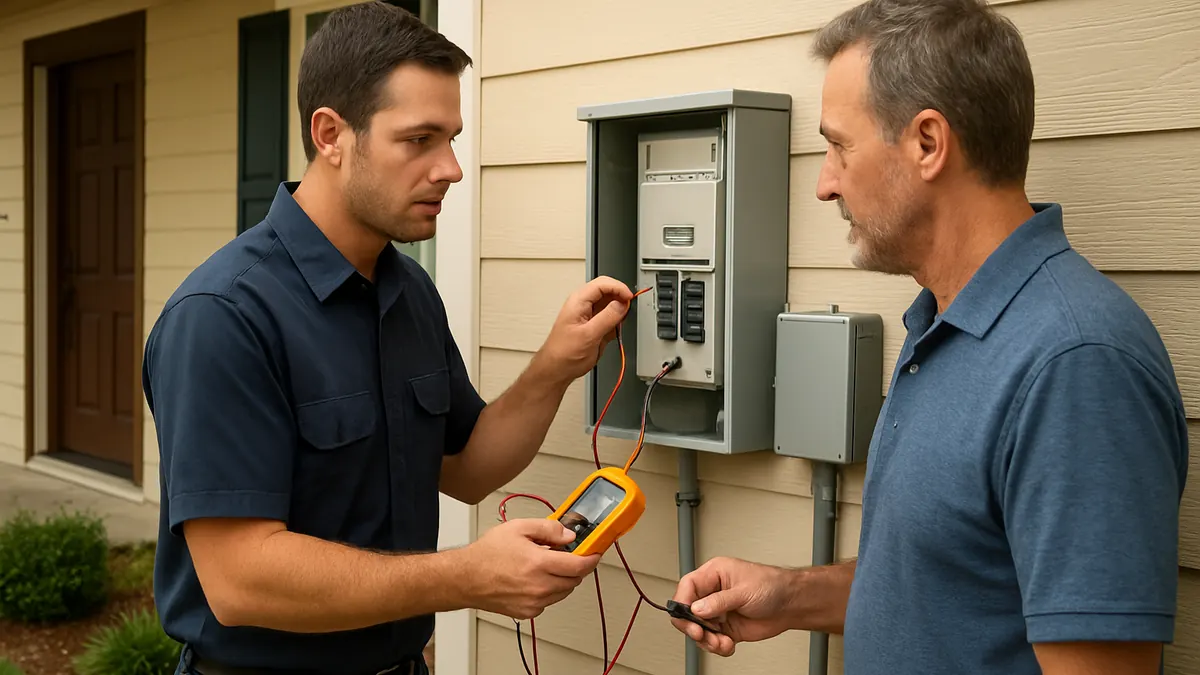
The electrician asks when the problem started, which circuits were affected, whether water entered, and whether a generator was used.
The inspection may include the service entrance, panel, breakers, grounding and bonding, visible wiring, outdoor receptacles, surge protection, and generator transfer equipment.
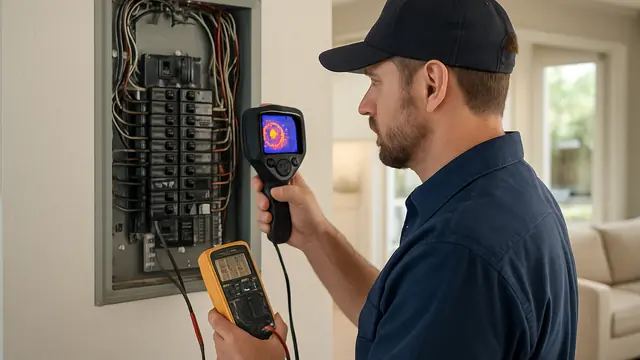
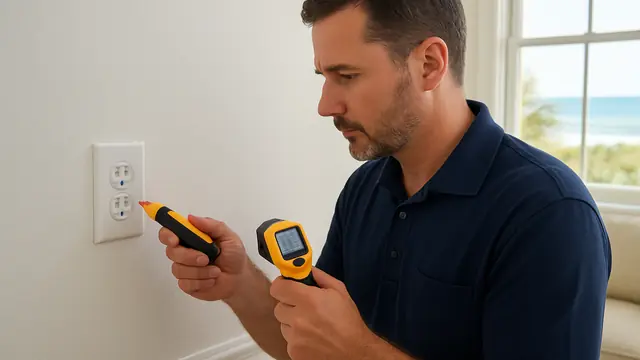
Voltage measurements can identify supply problems. Connection testing can reveal looseness or overheating, and thermal imaging may locate hidden heat. The electrician also determines whether the source is inside the home or on the utility side.
Repair Options From Least to Most Invasive
The least invasive repair may be replacing a broken weatherproof cover, failed receptacle, damaged cord, or defective GFCI after testing the circuit.
Other repairs can include correcting a loose connection, replacing a damaged breaker, repairing grounding and bonding, adding a dedicated circuit, replacing failed surge protection, or installing approved generator transfer equipment.
Panel, feeder, meter enclosure, or service replacement may be necessary when equipment is physically damaged, severely corroded, overheated, contaminated by water, obsolete, or unable to support required loads safely.
Factors That Affect Electrical Repair Cost
Cost depends on the damaged component, accessibility, water exposure, corrosion, required testing, permits, generator configuration, and whether utility coordination is needed.
Replacing an exterior receptacle is different from repairing a service mast or water-damaged panel. Hidden damage may not appear until equipment is safely opened and tested.
What to Do When Power Returns
- Leave major appliances off initially. Restore loads one at a time so every appliance does not start simultaneously.
- Watch for repeated breaker trips, flickering, unusual sounds, burning odors, heat, or appliances that operate differently. Do not repeatedly reset a breaker that will not stay on.
- If equipment became wet, do not energize it because the surface looks dry. Moisture and contamination may remain inside.
Prevention and Maintenance
Before each hurricane season, test GFCI receptacles, review panel labels, inspect outdoor covers, service generators, and replace damaged cords. Have recurring flickering, warm outlets, or breaker trips diagnosed before severe weather.
Keep smoke and carbon-monoxide alarms operating with backup batteries. Maintain a written list of utility, electrician, insurance, and emergency contacts.
Complete Your Northwest Florida Hurricane Electrical Checklist in Camp Creek
A complete Northwest Florida hurricane electrical checklist in Camp Creek should identify existing concerns, protect sensitive equipment, confirm generator safety, and establish clear outage steps. Address flickering, warm devices, breaker trips, damaged outdoor covers, and unsafe generator connections before severe weather. After the storm, treat moisture, partial power, abnormal heat, burning odors, and repeated trips as reasons to stop and seek professional help.
About this guide: This resource provides general homeowner education, not a remote diagnosis. Actual conditions, code requirements, equipment, and safe repair options must be evaluated at the property.