Do not remove an electrical panel cover, touch exposed conductors, bypass protection, or repeatedly reset a fault. Keep clear of smoke, sparks, burning odors, hot equipment, standing water near electricity, and downed lines, then call qualified help.
You arrive home with a low battery after a day of driving and plug your EV into a standard 120-volt outlet. By morning, the vehicle has gained some range, but not enough for the next day's schedule. A Level 2 charger would solve the slow-charging problem, yet the electrical panel is already serving air conditioning, water heating, cooking equipment, laundry appliances, and other household loads.
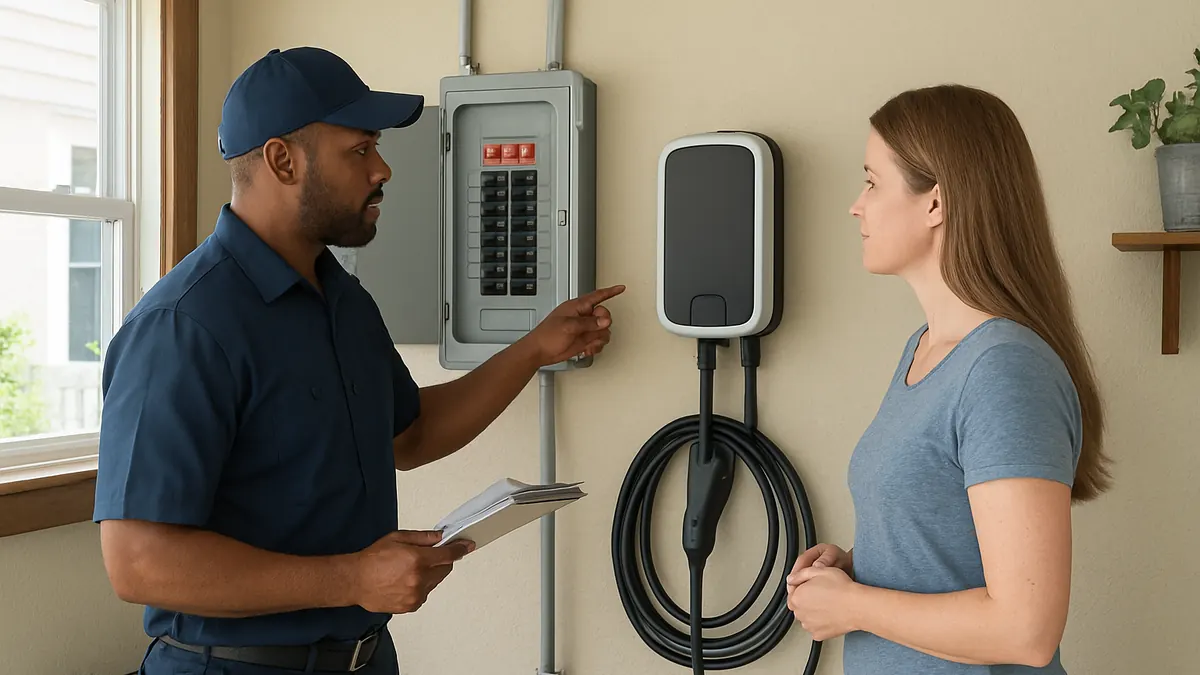
The immediate question is: can your electrical panel support a Level 2 EV charger in Grayton Beach? Until that is confirmed, use only vehicle-manufacturer-approved charging equipment and avoid extension cords, improvised adapters, or unidentified 240-volt receptacles. Before installing a faster charger, have a licensed electrician inspect the panel and perform a load calculation. That calculation determines whether the electrical service has enough usable capacity for the charger while the rest of the home operates normally.
Can Your Electrical Panel Support a Level 2 EV Charger in Grayton Beach?
It may be able to support one without a complete service upgrade. The answer depends on four main questions: how much power the home already uses, how much charging power you actually need, whether the panel has suitable breaker space, and whether the wiring route to the vehicle can be installed safely.
A 200-amp main breaker does not guarantee approval, and a smaller service does not automatically rule out Level 2 charging.
Why Level 2 Charging Places a Significant Load on the Panel
A Level 2 charger normally operates on a 240-volt circuit. Unlike a toaster or microwave that runs briefly, an EV charger may draw power continuously for several hours. Electricians treat that sustained demand carefully when sizing the breaker, conductors, and related equipment.
The charger's advertised maximum output is not always necessary. A lower setting may still replace the range you use each day.
Common Reasons the Panel May Need Attention First
The Home Has Limited Remaining Electrical Capacity
Central cooling, electric heat, electric water heating, ranges, dryers, pool equipment, pumps, and other fixed appliances all affect the calculation. Even when these loads do not operate at full power at the same moment, they must be accounted for according to recognized electrical rules.
There Is Not Enough Breaker Space
Most residential Level 2 charger circuits use a two-pole breaker that occupies two adjacent panel positions. A panel can have enough electrical capacity but no approved space for the new breaker.
Existing Equipment Has Defects
Loose connections, heat damage, corrosion, or improper breakers may need correction before a charger is added.
The Charger Is Far From the Panel
A long route to a garage, carport, or driveway can require larger conductors, conduit, trenching, wall penetrations, or weather-resistant equipment. Distance affects both installation complexity and voltage-drop planning.
The Selected Charger Is Larger Than the Home Needs
Some homeowners choose the highest-output charger available without considering daily mileage. A lower approved setting can still provide dependable overnight charging with less demand on the service.
Safe Checks You Can Perform Before Scheduling Service
Keep the panel cover closed. Photograph the panel exterior, main breaker, equipment label, breaker directory, proposed charger location, and the path between the panel and parking area.
Record the EV and charger models, the charger's maximum and adjustable settings, and whether it is hardwired or plug-in. List major electric loads and estimate your daily mileage and overnight parking time.
What a Homeowner Should Not Attempt
Do not remove the panel cover or meter enclosure. Parts of the service equipment may remain energized even when the main breaker is turned off.
Do not replace the main breaker with a larger one. A larger breaker does not create capacity and may leave service conductors or equipment inadequately protected.
Do not use a dryer-outlet adapter, household extension cord, homemade splitter, or old 240-volt receptacle without professional verification. The outlet shape alone does not confirm conductor size, grounding, breaker rating, or condition.
Do not increase the charger's current setting later without confirming that the circuit and service were designed for the higher load.
Signs That Make the Situation Urgent
Stop charging if the connector, receptacle, cable, breaker, or charger becomes unusually hot. Burning odors, melted plastic, discoloration, buzzing, crackling, sparks, repeated breaker trips, or frequent charger faults require prompt attention.
Have the panel evaluated quickly if lights flicker when charging begins, the main breaker trips, the enclosure feels warm, or corrosion or moisture is visible.
If there is smoke, active arcing, or fire, stay away from the equipment and call emergency services.
How a Licensed Electrician Diagnoses Charger Capacity
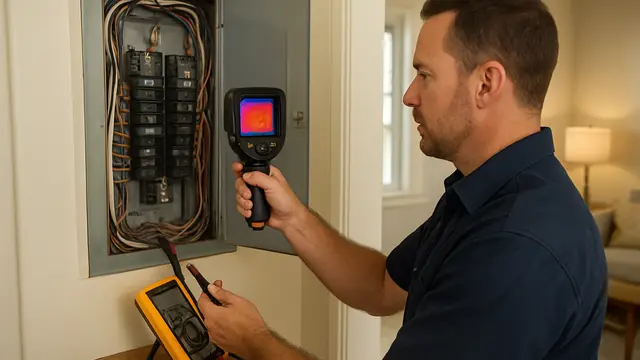
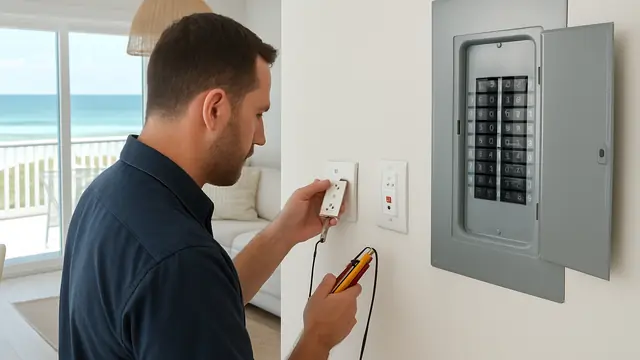
The electrician verifies the electrical service rating, panel rating, main breaker, available breaker positions, approved breaker types, grounding and bonding, and overall equipment condition.
The electrician then performs a load calculation. Adding breaker ratings is not a substitute because those numbers do not represent the home's expected demand.
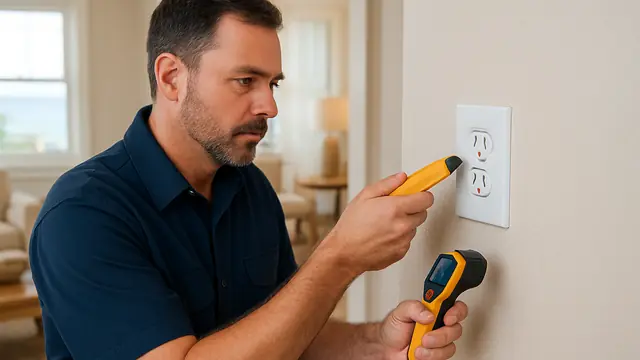
The wiring route is evaluated for length, conductor size, mounting, weather exposure, and physical protection. Any existing 240-volt circuit must be traced and verified from breaker to receptacle.
Repair and Installation Options, Starting With the Least Invasive
The simplest solution may be a new dedicated circuit with the charger configured at a moderate output. This often provides far more overnight range than Level 1 charging without using the charger's maximum setting.
If the panel has adequate capacity but lacks breaker space, an approved panel reconfiguration or subpanel may solve the distribution problem. A subpanel creates additional circuit positions but does not increase the utility service capacity.
Approved load management may reduce or pause charging when household demand is high. Panel repair or replacement may be needed when equipment is damaged, overcrowded, or incompatible.
A complete service upgrade is considered when the load calculation shows inadequate capacity and lower-output charging or load management cannot meet the homeowner's needs.
Typical Factors That Affect Cost
Cost depends on charger output, breaker and conductor size, panel condition, available spaces, circuit length, wall and ceiling access, conduit, trenching, outdoor exposure, charger mounting, permitting, inspection, and possible utility involvement.
Load management, a subpanel, panel work, and planning for a second EV can change the scope. The estimate should identify charging output, circuit rating, required repairs, and optional work.
Prevention and Maintenance Guidance
Use the charger only at the approved setting. Keep the connector clean and dry, support the cable, and prevent it from being pinched, driven over, or exposed to standing water.
Inspect for cracks, looseness, heat marks, discoloration, or corrosion. Stop using the charger if trips, faults, or unusual heat recur, and obtain another load review before adding a second EV.
Get a Definite Answer Before Installing the Charger
Can your electrical panel support a Level 2 EV charger in Grayton Beach? It may already support the charging rate you need, or the practical solution may involve a lower setting, load management, breaker-space changes, panel repair, or a service upgrade.
The right decision comes from a physical inspection, load calculation, and design based on your driving needs.
About this guide: This resource provides general homeowner education, not a remote diagnosis. Actual conditions, code requirements, equipment, and safe repair options must be evaluated at the property.