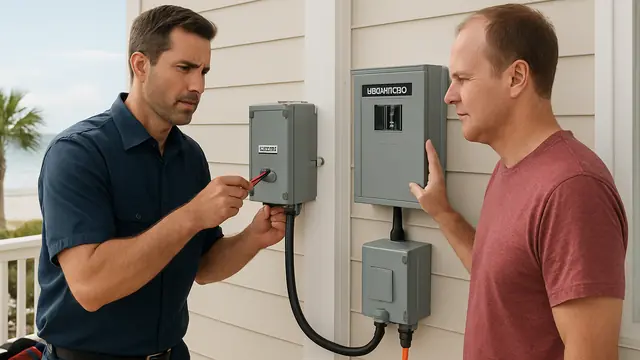
Do not remove an electrical panel cover, touch exposed conductors, bypass protection, or repeatedly reset a fault. Keep clear of smoke, sparks, burning odors, hot equipment, standing water near electricity, and downed lines, then call qualified help.
You unplug a floor lamp, television, vacuum, or phone charger in your Grayton Beach property and notice that the electrical outlet feels warmer than the wall around it. The device may have worked normally, and there may be no smoke, sparks, or breaker trip. Even so, the heat deserves attention. An outlet usually feels warm because electricity is meeting resistance at a loose connection, worn receptacle, damaged plug, or heavily loaded circuit.
The safest immediate action is to unplug everything from the receptacle and stop using it. If the outlet feels hot, smells burnt, buzzes, crackles, sparks, shows discoloration, or has melted plastic, turn off the correct breaker if you can do so safely. Do not remove the cover plate or handle the wiring. A licensed electrician should inspect the outlet before it is used again.
Why a Warm Outlet Is Different From a Warm Charger
Some phone chargers and power adapters produce mild heat, but it should usually be concentrated in the device. The receptacle should remain close to the temperature of the surrounding wall.
Unplug the device and let the area cool. If the outlet stays warm or heats again with different equipment, the problem is more likely inside the receptacle or circuit.
Common Causes of a Warm Electrical Outlet
Loose Wires or Terminal Connections
Electrical conductors connect to screws, clamps, or approved connectors inside the wall box. When a terminal loosens, current travels through a smaller contact area and creates resistance.
Resistance converts electrical energy into heat. A loose point can also cause arcing, which occurs when electricity jumps across a small gap instead of flowing through a solid connection. The outlet may continue working while the damage progresses.
Worn Receptacle Contacts
Inside the outlet are metal contacts that grip the blades of a plug. Repeated use can weaken them. A plug may droop, slide out easily, or work only when the cord is positioned a certain way.
Poor contact can generate heat and small arcs that pit the metal. Once an outlet no longer grips plugs securely, replacing it is safer than continuing to use it.
High Electrical Demand on a Shared Circuit
Hair dryers, portable heaters, countertop ovens, air fryers, irons, vacuums, and portable cooling equipment draw substantial current. A high-demand appliance may reveal a weak connection that stays cool under smaller loads.
The outlet may share a branch circuit with other receptacles or lights supplied by one breaker. Devices elsewhere may contribute to the total load. Power strips add plug spaces, not circuit capacity.
A Defective Appliance, Plug, or Cord
Bent plug blades, a loose plug body, frayed insulation, a failing charger, or an internal appliance problem can create heat and transfer it into the receptacle.
If the same device makes different outlets feel warm, stop using it. Do not keep moving it around the home to test it.
Improper Wiring or Earlier Heat Damage
A poor splice, damaged conductor, unsuitable connection method, loose push-in connection, or crowded electrical box can overheat. The front may look normal even when wiring behind it is discolored or brittle.
Safe Checks a Grayton Beach Homeowner Can Perform
Unplug every connected device and let the outlet cool. Without removing the cover, inspect the receptacle for yellowing, brown marks, soot, cracks, distortion, or melted plastic.
Look at the plug and cord that were in use. Watch for bent blades, black marks, looseness, exposed wire, or a plug body that became unusually hot. Do not test visibly damaged equipment in another receptacle.
Think about what was running when the warmth appeared. Note whether a hair dryer, vacuum, countertop appliance, or several chargers were operating. Also note any flickering lights, buzzing, intermittent power, or breaker activity.
If the outlet remains warm while empty, turn off the clearly identified breaker if it is safe. An empty receptacle can still carry current to downstream outlets.
What You Should Not Attempt
Do not remove the faceplate, pull the receptacle from the box, tighten terminals, or test exposed conductors without proper training and equipment. A breaker label may be inaccurate, and some boxes contain more than one circuit.
Do not spray cleaner into the outlet, bend plug blades, tape a loose plug in place, or wedge furniture against a cord. Avoid using an extension cord as a permanent bypass. Never replace a tripping breaker with a larger one.
Signs That Make the Situation Urgent
A receptacle that is hot enough to be uncomfortable needs prompt attention. Burning or fish-like odors, buzzing, popping, crackling, sparks, smoke, melted plastic, scorch marks, or repeated breaker trips make the problem urgent.
Flickering lights, power that cuts in and out, or heat that continues with nothing plugged in can indicate a deteriorating connection. Turn off the circuit when safe and leave it off until inspection.
If you see active smoke or fire, leave the property and call emergency services. Do not use water on energized electrical equipment.
How a Licensed Electrician Diagnoses the Outlet
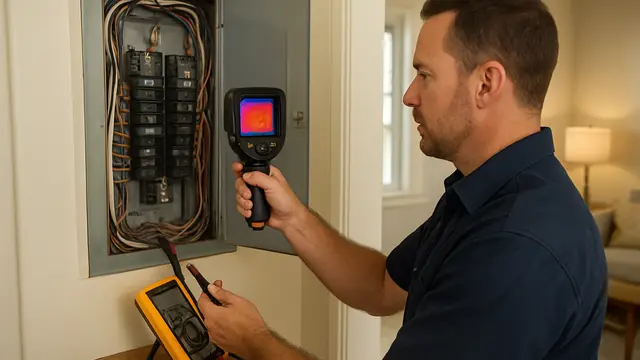
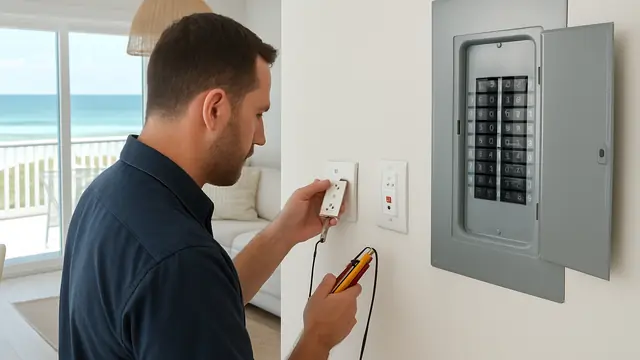
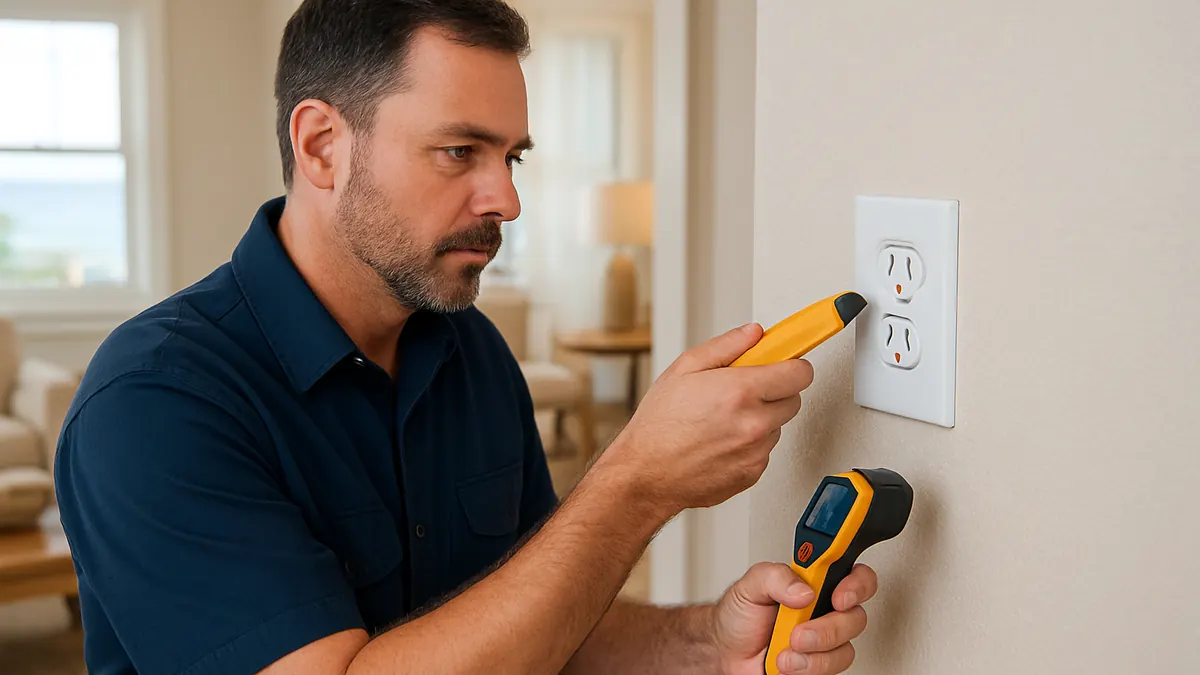
The electrician will ask what was connected and whether other outlets or lights were affected. Testing may include voltage, amperage, grounding, temperature, and voltage drop.
Voltage drop is a reduction in voltage caused by resistance along a circuit. An abnormal measurement can help locate a loose or damaged connection.
After de-energizing and verifying the circuit, the electrician inspects the receptacle, terminals, splices, insulation, grounding, and box. Nearby outlets and the panel connection may also be checked.
Repair Options From Least to Most Invasive
The least invasive correction may be removing a defective charger, cord, or appliance from service. If the outlet is worn and the wiring is undamaged, replacing the receptacle and securing the conductors may solve the problem.
A loose terminal or splice can be remade with approved connectors. Heat-damaged devices, connectors, and limited conductor ends may need replacement.
When excessive demand is involved, the electrician may recommend using appliances on different circuits or installing a dedicated circuit for high-demand equipment. More extensive repairs can include replacing damaged cable, correcting the box, or repairing a breaker or panel connection.
A warm outlet does not automatically mean the property needs complete rewiring.
Factors That Affect Repair Cost
Cost depends on diagnostic time, access, outlet type, wiring condition, and the extent of heat damage. Replacing one accessible receptacle is less involved than tracing an intermittent fault through several devices.
GFCI or AFCI protection, concealed cable damage, panel work, multiple affected outlets, or a new dedicated circuit can add labor and materials.
Prevention and Maintenance Guidance
Replace outlets that no longer hold plugs firmly. Remove damaged chargers, cords, and appliances from service. Avoid operating several high-wattage devices through the same adapter or power strip.
In a vacation home or rental, ask guests, cleaners, and property managers to report warm faceplates, loose plugs, buzzing, discoloration, flickering, or repeated breaker trips. A device should not simply be moved to another outlet without reporting the original symptom.
Take the Next Safe Step
What causes an electrical outlet to feel warm in Grayton Beach may be a worn receptacle, loose wire, defective appliance, high circuit demand, or hidden heat damage. Unplug connected equipment, turn off power when warning signs are present, and do not reuse the outlet simply because it cools. A licensed electrician can identify the source and recommend the least invasive safe repair.
About this guide: This resource provides general homeowner education, not a remote diagnosis. Actual conditions, code requirements, equipment, and safe repair options must be evaluated at the property.