Do not remove an electrical panel cover, touch exposed conductors, bypass protection, or repeatedly reset a fault. Keep clear of smoke, sparks, burning odors, hot equipment, standing water near electricity, and downed lines, then call qualified help.
The sky is darkening, rain is blowing sideways, and the lights in your Grayton Beach home begin to pulse whenever the air conditioner starts. A brief flicker can come from a utility disturbance, but repeated dimming may also point to a loose electrical connection, an overloaded circuit, or a voltage problem affecting the home. The safest immediate action is to turn off large appliances, unplug sensitive electronics, and stay away from any outlet, panel, or device that is wet, hot, buzzing, or giving off a burning smell. Do not remove an electrical cover or attempt a repair while the storm is approaching.
A Northwest Florida hurricane electrical checklist in Grayton Beach should help you prepare before landfall, use backup power safely, and recognize warning signs after the storm.
Begin With the Electrical Symptoms You Already Notice
Hurricanes do not create every electrical problem from nothing. They often expose conditions that were already developing.
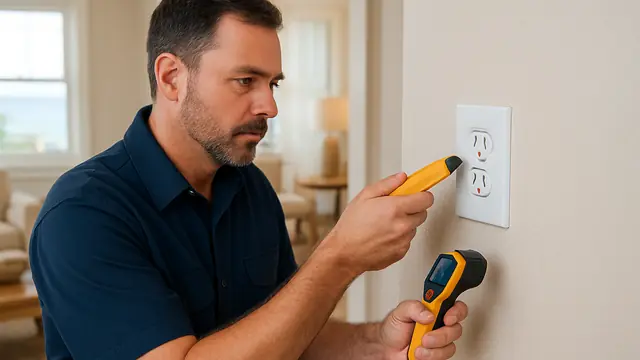
Pay attention to outlets that feel warm, breakers that trip more than once, lights that flicker in several rooms, switches that crackle, or plugs that fit loosely. A loose connection can create resistance, which produces heat. An overloaded circuit carries more electrical current than the wiring or breaker is intended to handle.
Safe Checks to Complete Before the Storm
Confirm That the Electrical Panel Is Accessible
Remove storage that blocks the panel. Every responsible adult should know where it is and how the breakers are labeled.
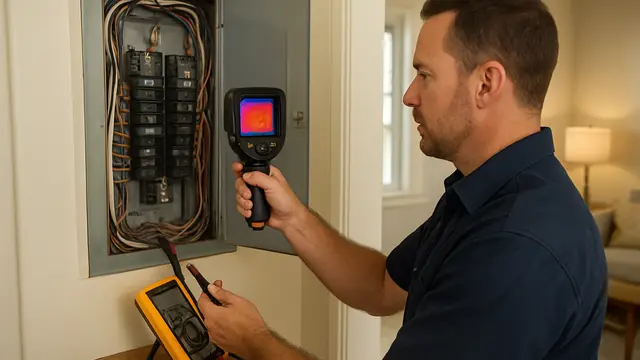
Look only at the exterior. Watch for rust, water stains, discoloration, unusual warmth, buzzing, or a burning odor. Do not remove the panel cover. Incoming utility conductors can remain energized even when the main breaker is turned off.
Review Breaker Labels
Identify circuits serving the refrigerator, air-conditioning equipment, kitchen, bedrooms, exterior outlets, garage, and any essential medical devices. Clear labels help you turn off the correct circuit without guessing.
Test Accessible GFCI Receptacles
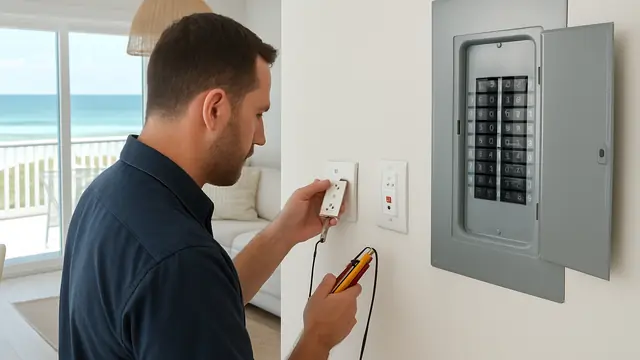
A GFCI, or ground-fault circuit interrupter, is designed to shut off power when electricity begins leaking from its intended path. Test accessible GFCIs before weather deteriorates.
If a GFCI will not reset in dry conditions after connected devices are unplugged, leave it off. Moisture, a downstream fault, missing incoming power, or a failed device may be responsible.
Inspect Outdoor Equipment Visually
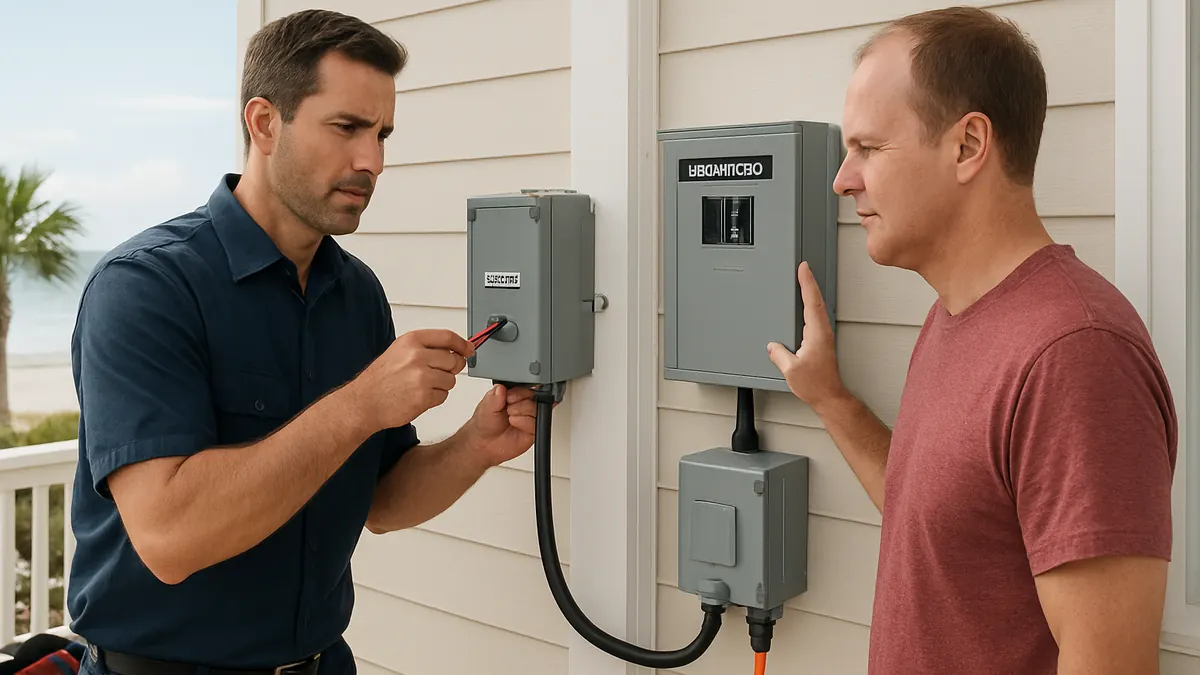
Check exterior receptacle covers, lighting, air-conditioning disconnects, generator connections, and cords from a safe position. Move portable electrical items indoors.
Protect Electronics From Voltage Changes
Unplug computers, televisions, routers, gaming systems, chargers, and other nonessential electronics before severe weather arrives. When power lines are damaged or electricity is restored, voltage can rise or fluctuate.
A whole-home surge protector can reduce damage from many voltage spikes, but it cannot guarantee protection from every lightning strike or utility event. Unplugging sensitive equipment adds another layer of protection.
Prepare the Generator Before the Outage
Portable generators must operate outdoors and away from doors, windows, vents, garages, and enclosed areas. Carbon monoxide in generator exhaust is invisible and odorless.
Never connect a generator through a wall outlet, dryer outlet, or homemade cord. This is called backfeeding. It can energize utility lines and expose lineworkers, neighbors, and occupants to lethal voltage.
Use an approved transfer switch or interlock system that prevents utility power and generator power from feeding the home at the same time.
Test the generator before the storm, not during it. If the connection is unclear, stop and arrange an inspection.
What Homeowners Should Not Attempt
- Do not remove a panel cover, replace a breaker, tighten service connections, splice storm-damaged wiring, or open the meter enclosure.
- Do not stand in water while operating switches or unplugging equipment. Never enter a flooded room to reach the panel.
- Do not touch fallen lines, branches resting on lines, or fences, vehicles, and puddles that may be energized. Keep everyone away and contact the utility or emergency services.
Do not repeatedly reset a breaker. One reset may be reasonable only when the panel is dry, undamaged, and the connected loads have been turned off. If the breaker trips again, leave it off.
Signs That Make the Electrical Problem Urgent
Treat the following conditions as urgent:
- Smoke, sparks, popping, or a strong burning odor
- Water entering the panel, meter, disconnect, receptacle, or appliance
- A hot outlet, switch, breaker, plug, or cord
- A damaged service mast, meter enclosure, or utility line
- Shocks or tingling from appliances, faucets, or metal surfaces
- Some lights becoming unusually bright while others dim
- A breaker that trips immediately after one reset
- A carbon-monoxide alarm sounding while a generator is operating
Bright and dim lights at the same time may indicate a damaged neutral connection. The neutral helps keep voltage balanced. Turn off major appliances and seek help promptly.
How a Licensed Electrician Diagnoses the Problem
A licensed electrician begins with the timeline. The electrician asks when the symptom started, whether water entered, which circuits were affected, and whether a generator was used.
The inspection may include the service entrance, panel, breakers, grounding and bonding, outdoor devices, surge protection, and generator transfer equipment. Grounding and bonding provide intended paths for fault current and reduce dangerous voltage differences between metal components.
Voltage measurements can identify supply problems. The electrician also determines whether the problem is inside the property or on the utility side.
Repair Options From Least to Most Invasive
A minor repair may involve replacing a broken weatherproof cover, damaged cord, failed GFCI, worn receptacle, or defective switch after the circuit is tested.
Other options include repairing a loose connection, replacing a damaged breaker, correcting grounding or bonding, installing a dedicated circuit, replacing failed surge protection, or correcting an unsafe generator connection.
Panel, feeder, meter enclosure, or service replacement may be necessary when equipment is burned, water-damaged, severely corroded, physically damaged, or no longer able to operate safely.
Factors That Affect Electrical Repair Cost
Cost depends on the damaged component, accessibility, diagnostic time, water exposure, corrosion, permit requirements, equipment availability, and whether utility coordination is required.
Hidden damage may not become clear until the equipment is safely opened and tested.
What to Do After Power Returns
- Turn large appliances off before restoration when possible. Reconnect loads gradually after power appears stable.
- Watch for flickering, buzzing, heat, odors, repeated breaker trips, or motors that hum without starting. Turn off any equipment that behaves abnormally.
- Do not energize equipment that became wet simply because the surface looks dry. Moisture and contamination may remain inside.
Prevention and Maintenance Guidance
Before each hurricane season, test GFCIs, review panel labels, inspect outdoor covers, replace damaged cords, maintain generator equipment, and confirm carbon-monoxide alarms have battery backup.
Have recurring flickering, warm outlets, loose plugs, and breaker trips diagnosed early.
Complete Your Northwest Florida Hurricane Electrical Checklist in Grayton Beach
A complete Northwest Florida hurricane electrical checklist in Grayton Beach should address existing warning signs, outdoor equipment, surge protection, generator safety, and power restoration. Prepare while conditions are calm, avoid improvised electrical repairs, and treat moisture, repeated trips, partial power, heat, or burning odors as reasons to stop and call a professional.
About this guide: This resource provides general homeowner education, not a remote diagnosis. Actual conditions, code requirements, equipment, and safe repair options must be evaluated at the property.