Do not remove an electrical panel cover, touch exposed conductors, bypass protection, or repeatedly reset a fault. Keep clear of smoke, sparks, burning odors, hot equipment, standing water near electricity, and downed lines, then call qualified help.
The storm may last only a few minutes, but the electrical effects can appear later. A Grayton Beach homeowner might notice that the television will not turn on, the Wi-Fi router keeps rebooting, the air-conditioning thermostat is blank, or the refrigerator shows an error code. When several unrelated devices act differently after the same storm or brief power interruption, a voltage surge is one possible explanation.
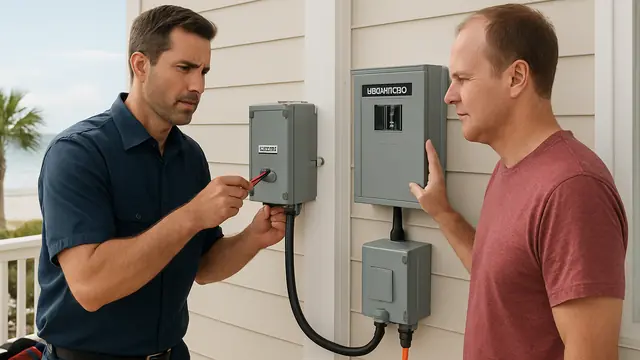
The safest immediate action is to stop using any appliance or electronic device that smells burned, feels unusually hot, or makes a crackling sound. Unplug portable equipment only if the outlet, plug, and surrounding area are dry and undamaged. Do not remove the electrical-panel cover or touch a panel-mounted surge device. Whole-home surge protection is connected at or near the main electrical panel and should be evaluated by a licensed electrician.
What Does Whole-Home Surge Protection Actually Protect?
Whole-home surge protection helps reduce short bursts of excessive voltage before that energy reaches equipment throughout the house. It can help protect air-conditioning controls, refrigerators, ranges, washers, dryers, televisions, computers, routers, smart thermostats, lighting controls, garage-door openers, pumps, and other equipment supplied by the protected panel.
Modern household equipment often contains circuit boards, digital displays, sensors, and communication modules. A large surge may cause immediate failure. A smaller surge may weaken components and later produce intermittent errors, lost settings, unexplained resets, or premature failure.
The device does not keep the power on during an outage, and it cannot guarantee protection from a direct lightning strike. Its purpose is to divert or limit surge energy so connected equipment is less likely to receive damaging voltage.
Common Causes of Voltage Surges
Nearby Lightning Activity
Lightning does not need to strike the home directly. A nearby strike can place substantial energy on utility lines, communication cables, or the ground. That energy may enter through the electrical service or another connected system.
Utility Switching and Power Restoration
Utilities switch equipment and restore service after outages. These events can create brief voltage disturbances that affect sensitive electronics even when no breaker trips.
Large Motors and Compressors
Air conditioners, refrigerators, pumps, and other motor-driven equipment can create smaller internal surges when they start and stop. These events are less dramatic than lightning but happen more often.
Loose Connections or Neutral Problems
Abnormal voltage can also result from a loose neutral, failing service connection, generator problem, or utility fault. A surge protective device will not repair those conditions.
Safe Checks a Homeowner Can Perform
Write down which devices were affected and what happened before the symptoms appeared. Note whether there was lightning, an outage, a generator transfer, or the startup of a large appliance. This timeline helps an electrician separate a possible surge from an appliance failure or wiring defect.
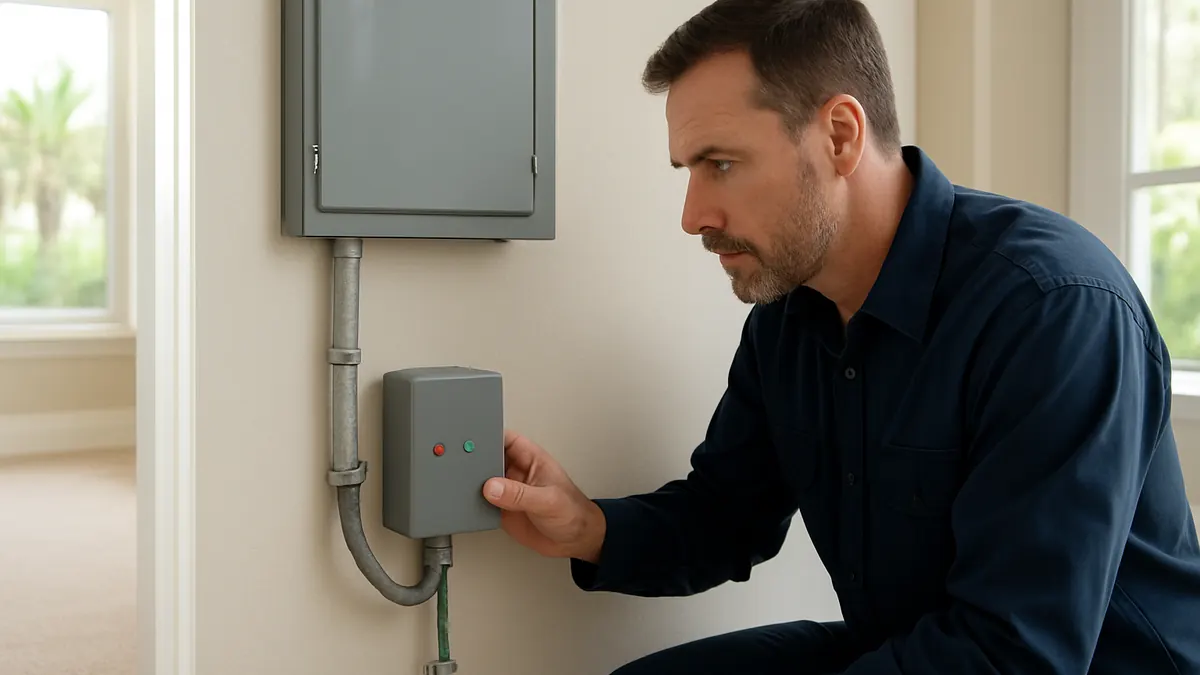
If a whole-home surge protector is visible beside the panel, look at its status lights without touching the device. Many protectors use lights to show active protection. A dark or warning indicator may mean the protective components are no longer working, but the exact meaning depends on the manufacturer.
Inspect plug-in surge protectors for melting, discoloration, cracks, unusual heat, or a failed indicator light. Confirm that a strip is labeled as a surge protector because a basic power strip may only provide extra outlets.
What You Should Not Attempt
Do not open the main panel. Service conductors may remain energized even when the main breaker is switched off.
Do not install a whole-home surge protector simply because there appears to be an empty breaker space. The device must be compatible with the panel and installed with the correct breaker, conductor size, routing, grounding, and bonding.
Do not replace a tripping breaker with a larger breaker or repeatedly reset a breaker after a storm. A damaged appliance, short circuit, or wiring fault may be present.
Do not assume surge protection will fix flickering lights, low voltage, loose wiring, or overloaded circuits. Those are separate problems that require diagnosis.
Signs That Make the Problem Urgent
Call a licensed electrician promptly if you notice a burning odor, smoke, melted plastic, scorch marks, crackling, buzzing, arcing, or unusual heat near the panel, an outlet, a switch, or an appliance connection.
Lights that become unusually bright in one area while dimming in another can indicate a loose neutral. That condition may expose circuits to incorrect voltage and damage multiple appliances.
Several devices failing at once, a breaker that will not remain on, shocks from appliances, or a surge protector showing failed status also require prompt service. If there is active smoke or fire, leave the area and contact emergency services.
How a Licensed Electrician Diagnoses the Cause
The electrician begins with the sequence of events. The timing of storms, outages, equipment startups, and failures helps determine whether the problem was a one-time surge or an ongoing voltage issue.
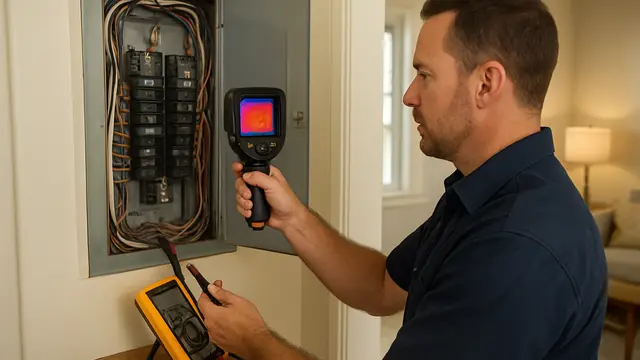
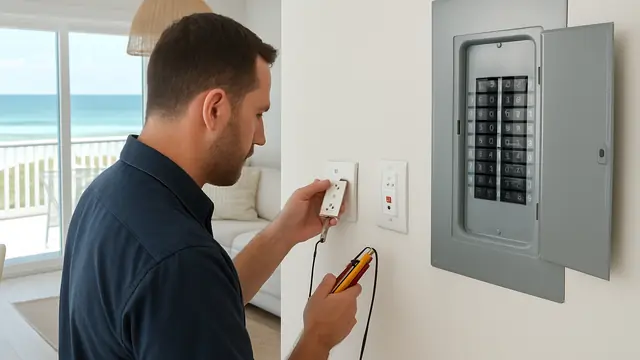
Testing may include service voltage, neutral stability, grounding, bonding, breaker connections, and panel condition. The electrician looks for loose conductors, overheated components, damaged breakers, or improper modifications.
If a protector is already installed, the electrician checks its status, rating, connection method, conductor length, and placement. Short, direct conductors generally help a surge protector work more effectively because surge current needs an efficient path away from the home's circuits.
Repair Options From Least to Most Invasive
The least invasive step may be replacing worn plug-in protectors with properly listed units for televisions, computers, and network equipment.
If the house lacks panel-level protection, a compatible whole-home surge protector can be installed at the main service or distribution panel. Some models mount beside the panel, while others connect through designated breaker spaces.
If an existing protector has reached the end of its service life, replacing only that device may restore protection. Poor conductor routing or loose connections may also be corrected.
Grounding, bonding, neutral, and wiring defects should be repaired when found. A complete panel replacement should be recommended only when the panel is damaged, unsafe, seriously deteriorated, overcrowded, or incompatible with necessary equipment.
Factors That Affect Cost
Cost depends on the protector type and rating, panel design, available breaker space, access, conductor routing, and condition of the electrical system. Multiple panels, generator equipment, detached structures, difficult access, or grounding corrections can increase the scope. Protection for communication lines may be considered separately.
Prevention and Maintenance Guidance
Check the whole-home protector's status indicator periodically and after major storms or outages. Surge protective components can wear out after one severe event or many smaller events.
Use quality point-of-use protectors for valuable electronics. Replace damaged units or those that no longer show active protection. Avoid plugging one power strip into another or overloading strips.
Keep the electrical panel dry, accessible, and free of stored items. Have repeated resets, recurring electronic failures, unusual light behavior, or frequent breaker trips evaluated instead of assuming they are normal.
Protecting Your Grayton Beach Home
What does whole-home surge protection actually protect in Grayton Beach? It helps reduce damaging voltage reaching appliances, HVAC controls, electronics, lighting systems, smart devices, and other connected equipment. It is not a substitute for sound wiring, proper grounding, or professional repairs, but it is an important layer of protection.
If several devices failed after the same event, the home has no known panel-level protection, or the existing protector no longer shows active status, schedule a licensed electrical evaluation.
About this guide: This resource provides general homeowner education, not a remote diagnosis. Actual conditions, code requirements, equipment, and safe repair options must be evaluated at the property.