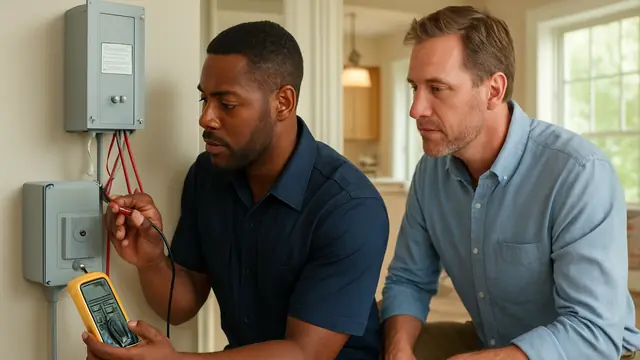
Do not remove an electrical panel cover, touch exposed conductors, bypass protection, or repeatedly reset a fault. Keep clear of smoke, sparks, burning odors, hot equipment, standing water near electricity, and downed lines, then call qualified help.
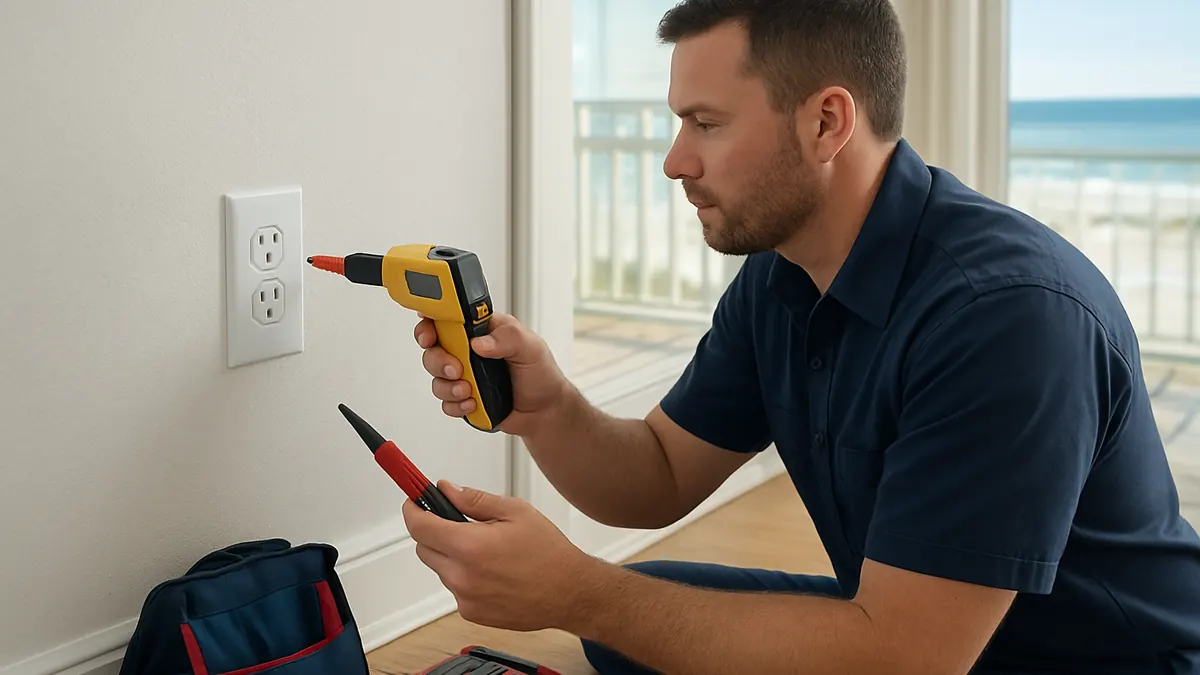
You may first notice the problem in a vacation rental kitchen, behind a television, or beside a bed where guests have several chargers connected. The outlet cover feels warm, the plug may seem loose, or the wall plate looks slightly discolored. Even if the device still works, a warm receptacle can indicate heat from the equipment, a failing connection, an overloaded circuit, or damage hidden inside the electrical box.
Unplug the connected equipment and stop using the outlet. If it is hot, buzzing, sparking, smoking, discolored, or producing a burning smell, turn off the circuit breaker if the panel is safely accessible. Leave the circuit off and contact a licensed electrician. Property owners and managers should also keep guests from using the receptacle until it has been evaluated.
Why an Outlet Can Become Warm
Multiple Devices on One Receptacle
Several devices grouped on one receptacle can expose a worn outlet or loose terminal. A power strip adds spaces but does not increase circuit capacity.
A Loose-Fitting Plug
Frequent plug use can weaken the contacts inside an outlet. A plug that sags or falls out can arc across a small gap, producing heat and damage.
Heat From Chargers and Power Supplies
Chargers and electronic power supplies may become warm during normal operation.
Unplug the device and allow the outlet to cool. If the warmth follows the device, the equipment may be the source. If the outlet stays warm or heats with multiple devices, professional inspection is appropriate.
Loose Wires or Splices
A terminal or wire connector can loosen and create a smaller, hotter path for current. The fault may be in this box or another device on the circuit.
High-Wattage Appliances
Hair dryers, heaters, cooking appliances, and vacuums draw substantial current and may expose a connection that seems normal under a small load.
Damaged Cords, Adapters, or Extension Cords
A bent plug blade, loose cord cap, damaged extension cord, or overloaded adapter can transfer heat to the wall outlet.
Safe Checks for Owners, Guests, and Property Managers
Unplug the device by holding the plug body rather than pulling the cord. Keep the outlet unused while it cools.
Without removing the cover plate, look for:
- Dark marks or discoloration
- Melted, warped, or cracked plastic
- A loose plug fit
- Buzzing, crackling, or popping
- A hot-plastic or burning odor
- Flickering lights
- Intermittent power
- A breaker that trips during use
Inspect the appliance plug and cord for bent blades, darkened metal, softened plastic, or damaged insulation.
Record what was connected and keep guests or cleaners from using the outlet until it is checked.
What Should Not Be Attempted
- Do not remove the receptacle, open the box, tighten terminals, or replace the device unless you are qualified. Electrical boxes may contain shared conductors or unexpected voltage.
- Never install a higher-amperage breaker to stop tripping. The breaker is sized to protect the wiring. Increasing its rating can allow the conductors to overheat.
- Do not tape a loose plug in place, use the other half of the receptacle, or rely on an extension cord as a permanent workaround.
- Do not repeatedly press the reset button on a warm or damaged GFCI outlet. Repeated tripping means the circuit or connected equipment needs diagnosis.
Signs That Require Urgent Action
The problem is urgent when the outlet is too hot to touch, smoke is visible, plastic has melted, or a burning odor is present.
Sparks, popping sounds, scorch marks, repeated breaker trips, a plug fused to the outlet, or heat spreading into the wall also require immediate attention.
If there is active smoke or fire, evacuate and call emergency services. Do not use water on an electrical fire. Turn off the breaker only when the panel is safely accessible and there is no smoke around it.
How a Licensed Electrician Diagnoses a Warm Outlet
The electrician begins by identifying the equipment connected to the receptacle and the other loads on the circuit.
After power is shut off and verified, the receptacle is removed for inspection. The electrician checks the contacts, terminal connections, wire ends, splices, insulation, grounding path, and electrical box.
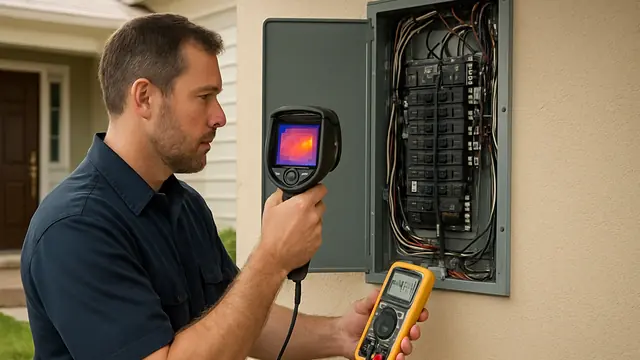
Testing may include voltage, polarity, grounding, circuit tracing, load measurement, and voltage-drop testing. A voltage drop under load can reveal a weak connection that looks normal when the circuit is idle.
Repair Options From the Least Invasive Reasonable Fix
If a charger, appliance, cord, or plug is defective, removing that equipment from service may be the first solution.
When the receptacle is worn but the conductors remain sound, the electrician may replace the outlet and make secure connections. A loose splice can often be remade with the proper connector.
Damaged wire ends may sometimes be trimmed and reterminated if enough safe conductor remains.
If cable insulation is damaged outside the box, the affected section may require replacement. A dedicated circuit may be appropriate for equipment that regularly places too much demand on a general-purpose circuit.
Broader work can include repairing a neutral connection, replacing a defective breaker, correcting a panel termination, or redistributing circuit loads. Complete rewiring should be considered only when testing finds widespread unsafe conditions.
Factors That Affect Cost
Cost depends on whether the problem is limited to one receptacle or extends into concealed wiring.
Accessibility, wall construction, the number of affected devices, cable damage, panel capacity, and the need for a dedicated circuit all influence the scope.
Prevention for Homes and Vacation Rentals
- Replace receptacles that no longer grip plugs securely. Remove damaged power strips, cords, adapters, and chargers from service.
- Avoid operating several high-wattage appliances on the same circuit. Provide suitable outlets for common equipment rather than depending on extension cords or stacked adapters.
- During turnover checks, look at outlets behind beds, televisions, and appliances for looseness, discoloration, or heat damage.
Pay attention to guest reports of buzzing, hot smells, flickering, or breaker trips. Small warnings are easier to address before they become service interruptions or larger repairs.
Protect the Property Before the Outlet Is Used Again
What causes an electrical outlet to feel warm in Panama City Beach may be a heat-producing device, frequent plug use, a loose terminal, overloaded circuit, or damaged wiring. Remove the outlet from service, keep occupants from using it, and have a licensed electrician determine the safest repair.
About this guide: This resource provides general homeowner education, not a remote diagnosis. Actual conditions, code requirements, equipment, and safe repair options must be evaluated at the property.