Do not remove an electrical panel cover, touch exposed conductors, bypass protection, or repeatedly reset a fault. Keep clear of smoke, sparks, burning odors, hot equipment, standing water near electricity, and downed lines, then call qualified help.
You are considering a home in Panama City Beach when several small electrical details begin to stand out. An exterior receptacle has a cracked cover, a bathroom GFCI will not reset, and lights briefly flicker when a large appliance starts. Those symptoms may come from a failed device, loose connection, moisture exposure, circuit loading, or another electrical condition that deserves a closer look.
The safest immediate action is to stop using any hot, sparking, damaged, or wet electrical device and leave repeatedly tripping breakers off. Do not open the panel or remove outlet covers yourself. An electrical inspection checklist before buying a Northwest Florida home in Panama City Beach should help you understand safety, weather exposure, circuit protection, electrical capacity, and likely repair priorities before closing.
Begin With Exterior Electrical Equipment
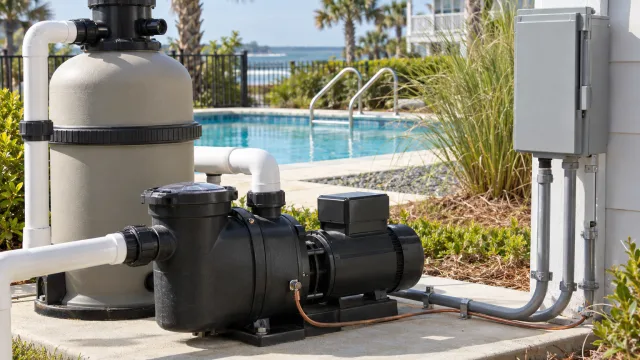
Exterior electrical components are exposed to weather and physical wear. From a safe distance, review accessible receptacles, lighting, disconnects, conduit, service equipment, and protective covers.
Document cracked covers, loose fittings, missing seals, open holes, corrosion, or water staining. A damaged weather cover may need a simple replacement, while moisture or corrosion that reaches terminals can require more extensive work.
Never touch meter equipment, service conductors, damaged boxes, or exposed exterior wiring. These conditions should be evaluated by a licensed electrician.
Review the Main Panel and Any Subpanels
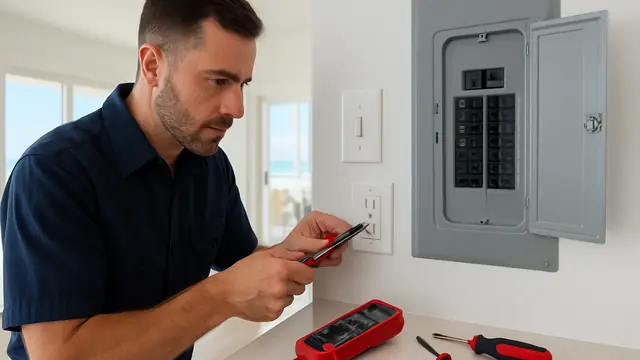
The main panel distributes power throughout the home. The electrician checks the enclosure, breakers, conductor connections, grounding, bonding, labeling, and signs of overheating or moisture.
The electrician also looks for incompatible breakers, open spaces, damaged breaker handles, and connections that do not match the equipment requirements.
Confirm That the Service Supports Your Plans
A home can operate normally today but have limited capacity for future additions. Tell the electrician if you plan an EV charger, hot tub, additional refrigeration, workshop equipment, electric cooking equipment, or another high-demand load.
A load calculation estimates expected electrical demand. Counting empty breaker spaces is not enough.
If more capacity is needed, options can include a dedicated circuit, load-management equipment, or a properly designed subpanel. A full service upgrade is considered when calculated demand or equipment condition makes smaller options unsuitable.
Inspect Outlets, Switches, and Lighting
Inside the home, note how electrical devices look and behave. Receptacles should not be loose, scorched, cracked, buzzing, or unusually warm. Switches should operate consistently without sparks or crackling.
A working three-prong outlet may still have an open ground or reversed polarity. Reversed polarity means the hot and neutral conductors are connected incorrectly. An open ground means the intended safety grounding path is not effective.
Light flickering also needs context. A brief change when a large motor starts may have one cause, while repeated or whole-house flickering may point to a loose connection, voltage problem, or service issue.
Verify GFCI and AFCI Protection
Ground-fault circuit interrupters, or GFCIs, reduce shock risk by shutting off power when current leaks through an unintended path. Arc-fault circuit interrupters, or AFCIs, detect certain dangerous electrical arcs.
A GFCI that refuses to reset may be defective, miswired, without incoming power, or responding to a downstream fault. The circuit should be diagnosed before simply replacing parts.
Review Additions and Remodeling Work
Look for exposed splices, open junction boxes, unsupported cable, extension cords used permanently, unusual adapters, or added equipment without an obvious dedicated circuit.
Safe Checks the Buyer Can Perform
You can collect meaningful information without dismantling equipment:
- Operate accessible lights, fans, and switches.
- Note dead outlets, flickering, buzzing, or unusual warmth.
- Look for broken covers, melted plastic, and discoloration.
- Review the panel directory without opening the panel.
- Test GFCI buttons only with permission.
- Ask whether breakers have tripped repeatedly.
- Check whether exterior electrical covers close securely.
- List major electrical equipment you may add later.
A basic outlet tester can reveal certain wiring problems, but it cannot identify every loose connection or hidden defect.
What You Should Not Attempt
- Do not remove the panel cover, open disconnects, pull outlets from boxes, or touch exposed conductors. Do not investigate wiring inside wet or corroded equipment.
- Never replace a tripping breaker with a larger size. Breakers protect wiring from excessive current, and an oversized breaker can allow conductors to overheat.
- Do not repeatedly reset a breaker or GFCI. If it trips again, leave it off and have the cause diagnosed.
Signs That Make the Problem Urgent
Prompt professional attention is warranted for smoke, sparks, burning odors, melted insulation, repeated breaker trips, hot or discolored receptacles, crackling sounds, shocks from fixtures, water inside electrical enclosures, or severe corrosion around connections.
Keep people away from an active hazard. Qualified personnel may need to disconnect power before inspection or repair.
How a Licensed Electrician Diagnoses the System
The electrician reviews known symptoms, prior electrical work, and how you expect to use the property. The inspection then combines visual evaluation with targeted testing.
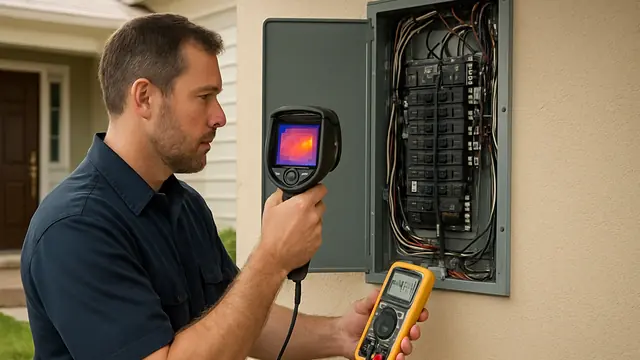
Tests may include voltage, polarity, grounding continuity, GFCI operation, circuit loading, and temperature differences that can reveal poor connections. Breaker ratings are compared with conductor sizes, and grounding and bonding are reviewed.
Intermittent flickering or power loss may require circuit tracing and testing while equipment operates. The goal is to identify the cause instead of replacing components by trial and error.
Repair Options Starting With the Least Invasive
Many findings can be corrected with focused repairs. Examples include replacing a damaged weather cover, securing a loose receptacle, correcting polarity, replacing a failed GFCI, closing an open junction box, repairing an accessible connection, or updating panel labels.
If a branch circuit is damaged or overloaded, the electrician may replace a cable section, redistribute appropriate loads, or install a dedicated circuit.
Panel work may involve a compatible breaker or corrected termination. Panel replacement becomes reasonable when equipment is damaged, internally corroded, incompatible, or no longer serviceable. A service upgrade may be recommended when a load calculation confirms insufficient capacity.
Factors That Affect Cost
Cost depends on the number of defects, diagnostic time, accessibility, equipment type, circuit length, parts availability, permit requirements, utility coordination, and any finish repair needed after wiring access.
Ask for the estimate to separate immediate safety work from reliability repairs and optional upgrades.
Prevention and Maintenance After Closing
Keep exterior electrical covers intact and closed. Avoid directing water toward electrical equipment. Test GFCIs according to manufacturer guidance, replace loose devices promptly, and keep the panel directory current.
Avoid permanent extension-cord use. Before adding major electrical equipment, confirm the service and circuit capacity.
Call for service when new flickering, buzzing, unusual heat, burning odors, or repeated trips appear.
Use the Inspection to Avoid Electrical Surprises
An electrical inspection checklist before buying a Northwest Florida home in Panama City Beach should evaluate more than whether the lights turn on. Exterior equipment, GFCI protection, panel condition, grounding, circuit performance, and future capacity all matter.
Do not assume that a recently updated interior means the electrical work behind it is equally sound. Document symptoms, avoid energized or wet equipment, and ask a licensed electrician to begin with the least invasive safe repair before recommending larger upgrades.
About this guide: This resource provides general homeowner education, not a remote diagnosis. Actual conditions, code requirements, equipment, and safe repair options must be evaluated at the property.