Do not remove an electrical panel cover, touch exposed conductors, bypass protection, or repeatedly reset a fault. Keep clear of smoke, sparks, burning odors, hot equipment, standing water near electricity, and downed lines, then call qualified help.
Your EV is parked at a home, condominium, or vacation property in Panama City Beach, and the regular wall outlet is not charging fast enough between trips. You may have found a 240-volt receptacle in the garage or near the parking area and wondered whether a Level 2 charger can simply be plugged into it. You may also be concerned because the electrical panel is inside a utility room, shared equipment area, or location far from the vehicle.
A matching receptacle does not confirm that the circuit is suitable for repeated EV charging. The safe immediate action is to use only approved charging equipment according to its instructions. Do not use a household extension cord, improvised adapter, or shared appliance circuit. If a plug, outlet, breaker, or charger becomes hot, stop charging and arrange an electrical inspection.
Can Your Electric Panel Support a Level 2 EV Charger?
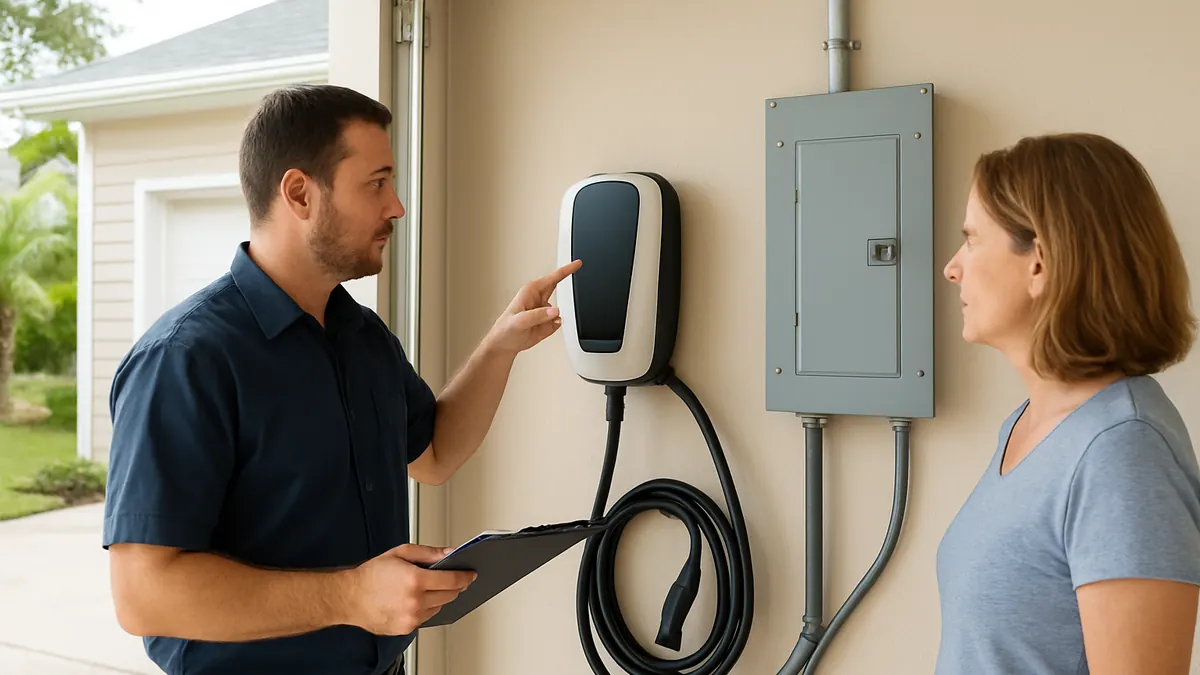
A Level 2 charger generally uses a dedicated 240-volt circuit. The amount of electrical capacity required depends on the charger's operating amperage, not merely the brand or advertised maximum speed.
A 32-amp charger commonly requires a 40-amp circuit. A 40-amp charger commonly requires a 50-amp circuit, and a 48-amp charger commonly requires a 60-amp circuit and is often hardwired. The equipment instructions and applicable electrical requirements control the final design.
Common Reasons the Installation May Require Additional Work
The property's electrical demand is already substantial
Air conditioning, electric water heating, cooking appliances, dryers, pools, spas, elevators, and other equipment can contribute to the property's electrical demand. A panel can operate normally while having limited calculated capacity for another large load.
The charger is not near the electrical panel
Parking arrangements can make the wiring route more challenging. The circuit may need to pass through finished areas, exterior walls, common areas, underground conduit, or a detached garage. Longer runs can affect conductor size and voltage drop.
An existing receptacle is not designed for this use
A receptacle may be worn, loosely connected, improperly protected, or supplied by wiring that is unsuitable for the proposed charger. Some existing 240-volt circuits serve specific appliances and should not be repurposed without a complete evaluation.
The panel has no approved breaker space
Level 2 chargers normally require a two-pole breaker. A visually open space may not be usable, and an unsupported compact breaker is not an acceptable solution.
Special Planning for Condominiums and Shared Properties
A condominium or shared property can involve more than the electrical panel inside the individual unit. The parking space may be supplied from common electrical equipment, or the proposed wiring route may cross shared areas.
Before installation, the owner may need to determine who controls the panel, meter, parking area, walls, ceilings, and raceways involved. Association procedures, property documents, permits, and contractor access may affect the project. These administrative questions do not replace the electrical evaluation, but resolving them early can prevent designing a circuit that cannot be routed as planned.
Safe Checks the Property Owner Can Perform
Without removing any electrical covers, photograph the main breaker, panel label, breaker directory, and visible breaker layout. Record whether the panel serves only the residence or is part of a larger electrical arrangement.
Find the vehicle's maximum Level 2 charging rate and the charger's available amperage settings. Note whether the charger is intended to be plug-in or hardwired and whether it is listed for the planned indoor or outdoor location.
Estimate the distance from the panel to the parking space. Identify finished walls, common areas, drive lanes, underground sections, or other obstacles. For a condominium, locate available association guidance related to electrical work and parking-area changes.
What You Should Not Attempt
- Do not remove the panel cover or touch internal wiring. Portions of the equipment may remain energized even when the main breaker is turned off.
- Do not install a larger breaker to prevent tripping. Breakers protect conductors from excessive current, and oversizing one can allow dangerous overheating.
- Do not run extension cords across balconies, walkways, drive lanes, doors, or common areas. Do not use an unapproved splitter on a dryer or range circuit.
- Never mount indoor-only equipment outdoors. Do not continue charging through a loose, cracked, corroded, discolored, or hot receptacle.
Signs That Require Prompt Electrical Service
Stop charging if the breaker trips repeatedly, the charger reports recurring wiring faults, or the plug and receptacle become noticeably hot.
Burning odors, buzzing, crackling, melted plastic, scorch marks, significant flickering, visible arcing, or unusual heat at the panel are urgent warning signs. Corrosion or moisture around electrical equipment also requires evaluation before a charger is added.
If smoke or fire is present, leave the area and contact emergency services. Do not attempt to extinguish energized electrical equipment with water.
How a Licensed Electrician Diagnoses the Property
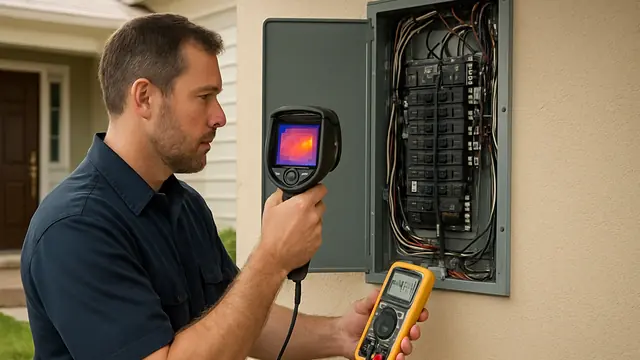
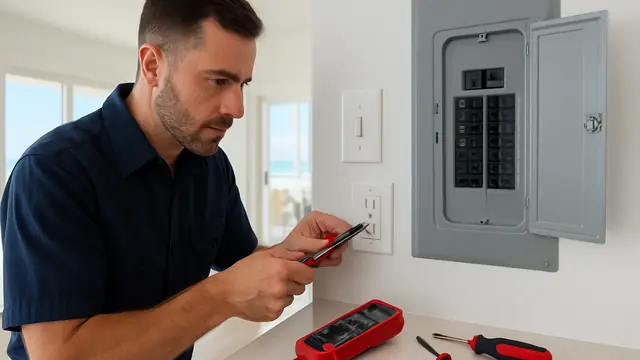
The electrician identifies the service and panel ratings, approved breaker types, available spaces, and panel condition. Connections, conductors, grounding, bonding, enclosure integrity, and signs of heat or corrosion are inspected.
A load calculation then determines whether the electrical service can accommodate the proposed charger. It accounts for general demand, major appliances, heating and cooling, and the charger's sustained load.
The electrician compares the vehicle's charging limit with the proposed equipment. The wiring route is evaluated for length, accessibility, conductor size, physical protection, outdoor exposure, and any common property involved.
Repair and Installation Options
The least invasive option may be a lower charger setting. A 16-, 24-, or 32-amp Level 2 charger can provide useful overnight charging with less demand than a 40- or 48-amp unit.
Approved energy-management equipment may allow charging to reduce or pause when other loads are high. This can sometimes avoid a service upgrade.
If capacity is adequate but breaker space is unavailable, an electrician may install a subpanel or use another manufacturer-approved arrangement. A subpanel adds spaces but does not increase service capacity.
Specific repairs may include a new breaker, corrected termination, replacement receptacle, new conductor run, or hardwired connection. Panel replacement may be appropriate when equipment is unsafe or unsuitable. A service upgrade is considered when calculated demand cannot be accommodated by the existing system or an approved management method.
Typical Factors Affecting Cost
Cost depends on charger output, wiring distance, conductor size, wall and ceiling access, exterior raceway, trenching, parking configuration, physical protection, and plug-in versus hardwired installation.
Additional factors include panel repairs, load management, a subpanel, service changes, metering needs, permits, inspections, and work in shared areas. A long route to an assigned parking space can be more involved than a charger mounted beside a residential garage panel.
Prevention and Maintenance Guidance
Choose listed equipment suitable for the actual location. Keep the charging cable out of walkways and drive lanes, and protect it from tires, doors, sharp edges, standing water, and landscaping equipment.
Inspect the charger, cable, connector, plug, and receptacle for cracks, looseness, corrosion, discoloration, or heat. Report recurring faults promptly rather than repeatedly restarting the charger.
Plan the Charger Around the Property, Not Just the Vehicle
Can your electric panel support a Level 2 EV charger in Panama City Beach? The answer may depend on the individual panel, a shared electrical system, the parking-space location, and the route between them. A lower charging rate, managed charging, targeted repairs, a new circuit, or a service upgrade may be appropriate. A licensed evaluation identifies the safest practical option before equipment is purchased or property surfaces are altered.
About this guide: This resource provides general homeowner education, not a remote diagnosis. Actual conditions, code requirements, equipment, and safe repair options must be evaluated at the property.