Do not remove an electrical panel cover, touch exposed conductors, bypass protection, or repeatedly reset a fault. Keep clear of smoke, sparks, burning odors, hot equipment, standing water near electricity, and downed lines, then call qualified help.
You arrive at a Panama City Beach vacation property after a hurricane and find that the power is on, but the pool equipment is silent, an outdoor receptacle is dead, and the air conditioner displays an error. Those symptoms may come from tripped protective devices, wind-driven rain, surge damage, or a problem with the utility supply. Keep guests and family members away from wet equipment, unplug sensitive electronics, and do not keep resetting breakers or GFCIs that immediately trip again.
A Northwest Florida hurricane electrical checklist in Panama City Beach should help owners protect occupied homes, second homes, and vacation rentals before the storm, communicate clearly during an evacuation, and inspect the property safely after conditions improve.
Create a Property-Specific Electrical Plan
Start by identifying the main panel, exterior disconnects, generator equipment, and breakers for refrigeration, HVAC systems, water heaters, pool or spa equipment, garage doors, and essential lighting.
Create a written shutdown and restart plan for guests, caretakers, or property managers.
Unplug nonessential electronics before an evacuation.
Common Hurricane Electrical Problems Near a Coastal Property
Wind-Driven Rain in Outdoor Equipment
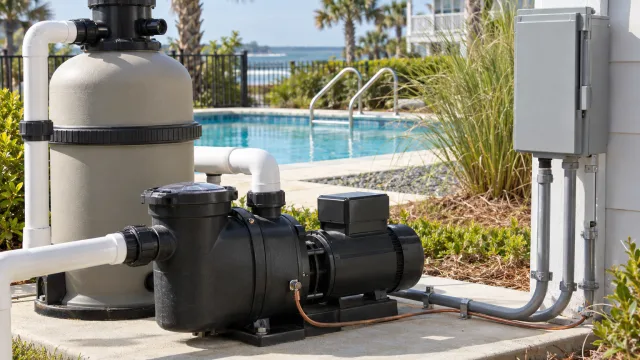
Exterior receptacles, pool equipment, lighting, HVAC disconnects, and generator inlets depend on intact covers and enclosures. A loose cover or cracked box can allow moisture to reach energized components.
Corrosion and Delayed Failure
Moisture can corrode terminals and connections. Corrosion raises resistance and heat, so delayed failure is possible.
Voltage Surges and Power Restoration
Lightning, damaged utility lines, and switching operations can cause short voltage spikes. Electronic controls in HVAC, appliances, and pool equipment can be vulnerable.
Damage to Service Equipment
Wind, debris, or structural movement can bend a service mast, loosen a weatherhead, damage the meter enclosure, or strain the conductors attached to the building.
Unsafe Generator Use
Portable generators can create both electrical and carbon-monoxide hazards. Backfeeding household wiring through a receptacle can energize utility lines and bypass normal safety protections.
Safe Checks Before the Hurricane
Inspect visible outdoor equipment without opening covers or touching service components. Look for cracked boxes, loose conduit, missing screws, damaged in-use covers, hanging fixtures, or corrosion.
Test accessible GFCI receptacles using their test and reset buttons. GFCI means ground-fault circuit interrupter. It shuts off power when electrical current leaks along an unintended path, which is especially important around water.
Test alarms and charge emergency devices.
Unplug nonessential electronics.
Safe Checks After Returning
Approach the property carefully and look for downed lines, a damaged service mast, displaced meter equipment, or wires touching fences, trees, or structures. Treat all wires as energized.
- Do not walk through standing water when receptacles, cords, appliances, pool equipment, or electrical panels may be involved.
- Visually inspect exterior equipment before operating it.
- Inside, check for burning odors, buzzing, sizzling, heat, discoloration, or moisture. If any of these signs are present, leave the circuit off.
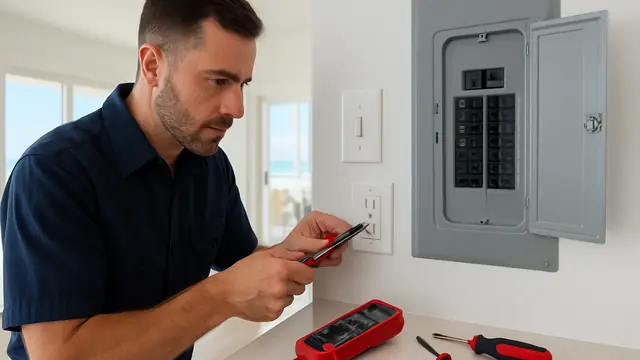
- A breaker may be reset once only if the panel is dry, no damage is visible, and connected loads are unplugged. If it trips again, stop.
What the Homeowner or Property Manager Should Not Attempt
- Do not remove the panel cover, open the meter enclosure, or tighten service connections. Energized components may remain live even when the main breaker is off.
- Do not energize equipment that was flooded, soaked, or physically displaced. A dry exterior does not prove that internal components are safe.
- Never connect a generator through a dryer, range, or ordinary wall receptacle. Use approved transfer equipment or a listed interlock installed for the specific panel and generator.
- Do not place a generator in a garage, under an enclosed balcony, near a stairwell, or close to doors, windows, and air intakes. Exhaust can enter occupied areas.
Signs That Require Urgent Action
Smoke, sparks, visible arcing, exposed conductors, melted plastic, or water inside a panel require immediate attention.
A hot breaker, receptacle, switch, cord, or disconnect should remain off.
Partial power is also serious. Lights that become unusually bright in one area and dim in another may indicate a loose or damaged neutral. That condition can expose appliances to unsafe voltage.
A shock or tingling sensation from a faucet, railing, outdoor shower, pool component, appliance, or metal surface is an emergency warning. Keep people away from the area.
How a Licensed Electrician Diagnoses the Damage
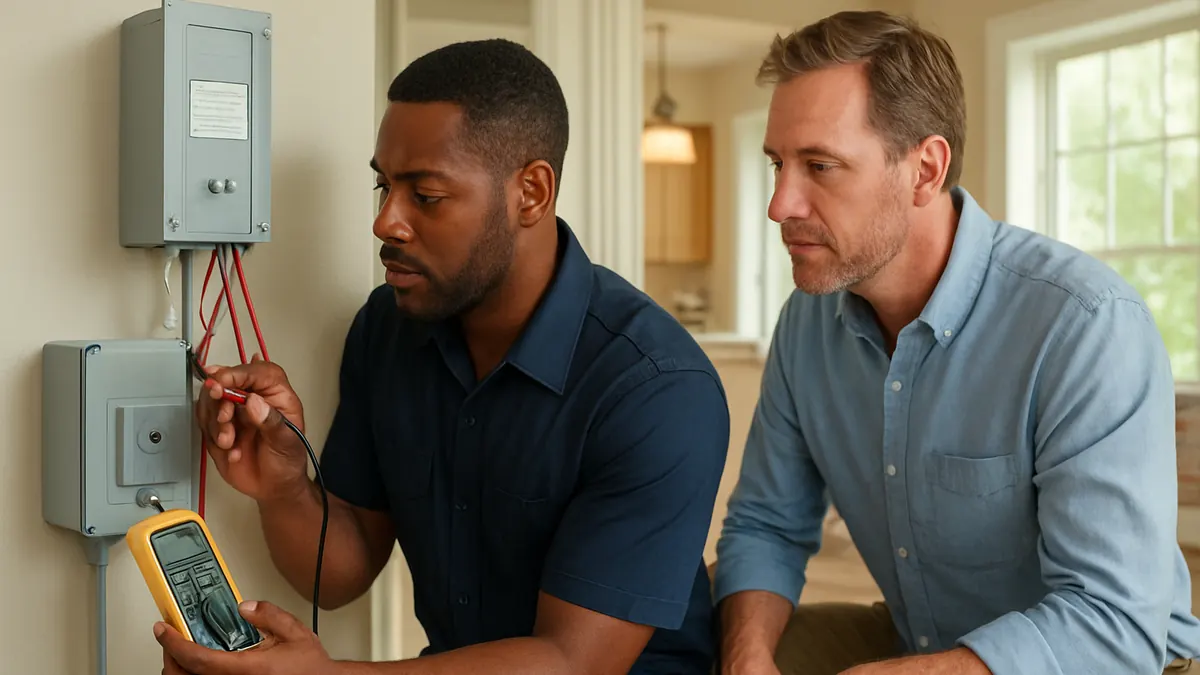
A licensed electrician determines whether the problem is on the utility side, in the service entrance, inside the panel, on one branch circuit, or within connected equipment.
The inspection may include the service equipment, grounding, outdoor circuits, HVAC disconnects, generator equipment, and water-exposed locations.
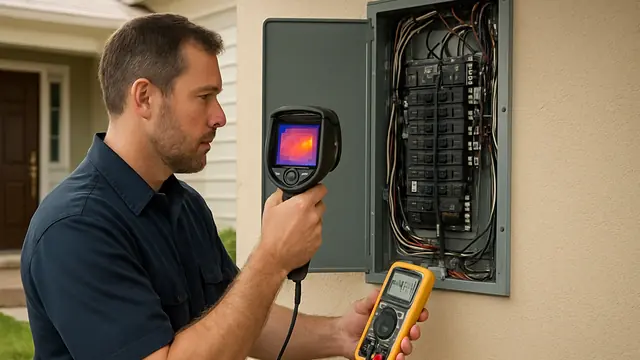
Voltage testing can identify low voltage, high voltage, imbalance, or a damaged neutral. GFCI and AFCI protective devices may also be tested. AFCI means arc-fault circuit interrupter and helps detect dangerous electrical arcing.
If moisture is suspected, the electrician may isolate the affected circuit and inspect devices, wiring, and enclosures before re-energizing them.
Repair Options Beginning With the Least Invasive
- A minor repair may involve replacing a broken weatherproof cover, failed GFCI receptacle, damaged switch, loose fixture, or worn generator cord.
- Localized damage may require one new breaker, outdoor disconnect, junction box, surge protective device, contactor, or section of cable.
- If pool equipment, HVAC controls, appliances, or pumps were damaged by a surge or water, individual components may be repaired or replaced after testing.
More extensive damage may require replacement of the service mast, meter enclosure, service conductors, contaminated breakers, or complete electrical panel. Full replacement is considered when equipment is severely corroded, physically damaged, obsolete, or no longer dependable.
Factors That Affect Repair Cost
Cost depends on the number of affected systems, location of the damage, equipment accessibility, and whether the repair involves one circuit or the electrical service.
Permits, utility coordination, part availability, and emergency access can also affect cost.
Prevention and Maintenance Guidance
Before hurricane season, correct loose exterior fixtures, cracked covers, rusted boxes, warm receptacles, flickering lights, and breakers or GFCIs that trip repeatedly.
Consider layered surge protection. Whole-home surge protection helps reduce surges entering through the service, while point-of-use protection can add protection for selected electronics.
Review shutdown instructions and emergency contacts with anyone responsible for the property.
After every major storm, inspect the property even if the power appears normal. Watch for delayed corrosion, intermittent devices, warm equipment, nuisance tripping, and unexplained control-board failures.
Homeowner FAQs
Should I turn off pool equipment before evacuating?
Follow the equipment manufacturer's instructions and the property's established storm plan. Do not approach a wet panel or disconnect during severe weather.
Can guests reset a tripped breaker?
A breaker may be reset once only when the area is dry, no damage is visible, and loads have been unplugged. Repeated tripping requires professional evaluation.
Is outdoor equipment safe once the rain stops?
Not necessarily. Moisture may remain inside boxes, motors, controls, and disconnects. Damaged or water-exposed equipment should be inspected first.
Can a portable generator run the air conditioner and pool pump?
Only if the generator, transfer equipment, wiring, and load calculation are designed for those demands. Motors can require substantial starting current.
Why did an appliance fail several days after the storm?
A surge, moisture, corrosion, or a weakened connection can cause delayed failure. The timing does not rule out storm-related damage.
Does whole-home surge protection protect everything?
It reduces many incoming voltage spikes but cannot prevent damage from flooding, direct lightning, physical impact, or every possible electrical event.
Complete the Panama City Beach Hurricane Electrical Checklist
A Northwest Florida hurricane electrical checklist in Panama City Beach should include documented shutdown procedures, protected outdoor equipment, safe generator practices, working alarms, surge protection, and a careful post-storm inspection before guests return.
Do not reopen a property with wet equipment, repeated breaker trips, partial power, burning odors, or damaged service components. Addressing those conditions first protects occupants and reduces the chance of additional equipment damage.
About this guide: This resource provides general homeowner education, not a remote diagnosis. Actual conditions, code requirements, equipment, and safe repair options must be evaluated at the property.