Do not remove an electrical panel cover, touch exposed conductors, bypass protection, or repeatedly reset a fault. Keep clear of smoke, sparks, burning odors, hot equipment, standing water near electricity, and downed lines, then call qualified help.
The lights flicker during a storm, the power drops for only a moment, and everything appears to return normally. Later, the thermostat has lost its settings, the television will not turn on, and the refrigerator display is flashing an error code. For a Pretty Bayou homeowner, several unrelated electronic problems appearing after the same event can point to a voltage surge or another electrical service problem.
The safest immediate action is to unplug any device that smells burned, feels unusually hot, makes buzzing sounds, or shows visible damage. If a breaker trips again after one reset, leave it off. Do not remove the electrical panel cover or reconnect expensive electronics while lights are still changing brightness. When multiple systems are affected, a licensed electrician should evaluate the home before replacement equipment is installed.
Whole-home surge protection reduces the excess voltage reaching equipment throughout the house. It cannot prevent every electrical failure, but it provides an important first layer of protection for appliances, electronics, and hardwired controls.
What Whole-Home Surge Protection Actually Protects
A whole-home surge protective device is normally connected at the main electrical panel or service equipment. When a brief spike in voltage enters the system, the device redirects much of that energy toward the grounding system instead of allowing the full surge to travel through every branch circuit.
It can help protect:
- Air-conditioning systems, heat pumps, thermostats, and control boards
- Refrigerators, ranges, dishwashers, washing machines, and dryers
- Televisions, computers, chargers, routers, and modems
- Security systems, cameras, smart doorbells, and automation equipment
- Garage-door openers, dimmers, fans, and LED lighting components
- Water-heater controls, pumps, and other hardwired devices
The protection applies to equipment supplied through the panel. Cable, satellite, telephone, antenna, and network lines may require separate protection.
Why Electronic Equipment Is Vulnerable
Modern equipment uses sensitive circuit boards, sensors, and communication modules. A surge can exceed their normal voltage range in a fraction of a second. Damage may be immediate, delayed, or cumulative after repeated smaller events.
Common Causes of Voltage Surges
- Lightning is the source most homeowners recognize, but a direct strike is not required. A nearby strike can energize utility or communication lines.
- Utility switching and power restoration can create brief voltage transients. The lights may only blink while sensitive electronics experience a sharp spike.
- Surges can also begin inside the home. Compressors, pumps, refrigerators, and other motor-driven equipment can create smaller disturbances when they start and stop.
Not every electronic failure is caused by a surge. A loose neutral, damaged service conductor, poor grounding, overheated breaker, or failing connection may create similar symptoms. Surge protection will not correct those defects.
Safe Checks a Homeowner Can Perform
Note whether the problem followed a storm, outage, utility interruption, or startup of a large appliance. Identify whether affected devices are on one circuit or throughout the house.
Inspect visible plugs, cords, receptacle faces, and equipment housings for melting, dark marks, cracks, or a burned odor. Stop using damaged equipment.
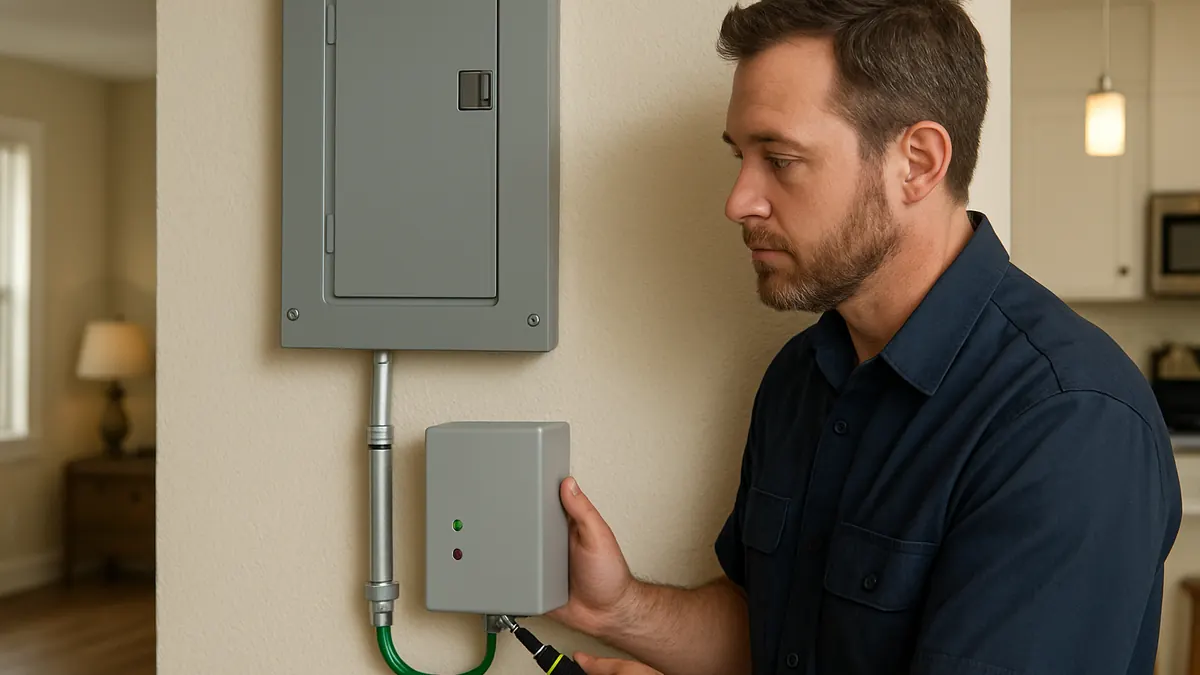
If a whole-home surge protector is installed, check only its external status indicator. Do not remove the panel cover. A green light often indicates active protection; a red light, no light, or alarm may indicate a fault.
Check plug-in strips for a separate "protected" indicator. A strip may continue supplying power after its protective components have failed.
You may reset a normal breaker once if it is not hot, damaged, buzzing, or connected to wet equipment. If it trips again, leave it off.
What You Should Not Attempt
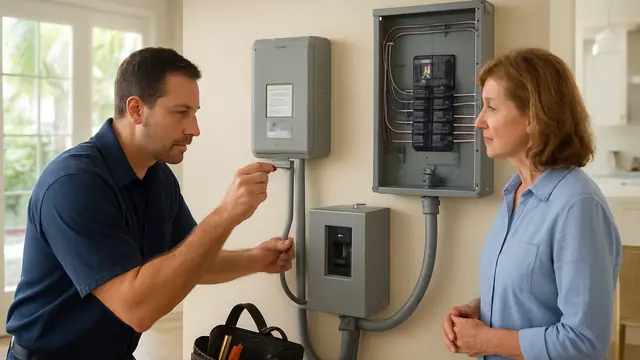
Do not install or replace a panel-mounted surge protector yourself unless properly qualified. Portions of the service equipment may remain energized even when the main breaker is off.
- Do not replace a tripping breaker with one of a higher amperage. Breaker size is matched to the wiring, and increasing it can allow conductors to overheat.
- Do not create an improvised grounding path to a pipe, fence, or other metal object. Grounding and bonding must be installed correctly for safety and effective surge protection.
- Do not move breakers, double-lug terminals, or force an incompatible device into a crowded panel. Do not reconnect valuable equipment while voltage remains unstable.
Signs That Make the Problem Urgent
Prompt service is needed when several devices fail together, the protector shows a fault, or electronics continue failing.
Urgent warning signs include smoke, sparks, a burning odor, buzzing or crackling from the panel, melted plugs, scorched receptacles, a hot panel cover, repeated breaker trips, or a shock from an appliance.
Lights that become very bright in one area and dim in another can indicate a loose neutral. That condition may expose some circuits to excessive voltage. If smoke or fire is present, leave the area and contact emergency services.
How a Licensed Electrician Diagnoses the Issue
The electrician reviews which devices failed, whether the event followed an outage or storm, and whether symptoms affect one circuit or the wider service.
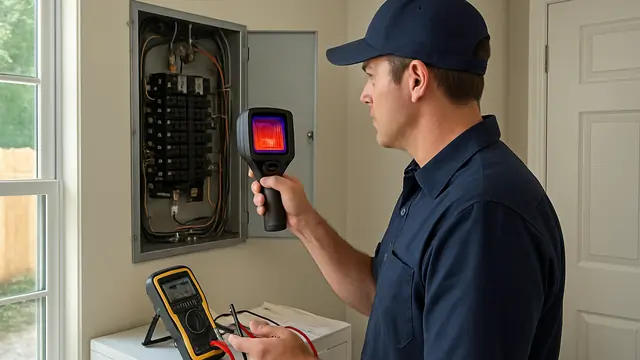
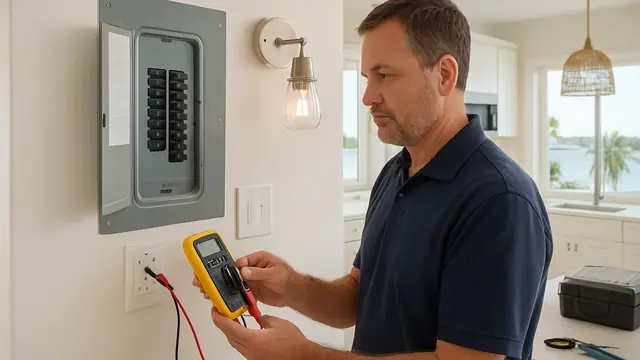
Testing may cover incoming voltage, neutral stability, panel connections, breakers, grounding, bonding, and affected circuits. The electrician also looks for heat damage, loose conductors, corrosion, and arcing.
If a surge protector is present, the electrician checks its status, rating, breaker connection, compatibility, physical condition, and conductor routing. Short, direct conductors generally improve performance.
Repair Options From Least Invasive to Most Extensive
The least invasive solution may be replacing a failed plug-in protector when the electrical system tests normally.
If an existing whole-home device has exhausted its protective components, replacing only that unit may restore protection. The panel may remain serviceable.
If the home has no panel-level protection, a compatible breaker-mounted or externally mounted device may be installed. When breaker space is limited, approved arrangements or a separate enclosure may be considered.
Loose neutrals, damaged breakers, grounding defects, overheated connections, or compromised wiring should be repaired. Surge protection cannot make those conditions safe.
Panel replacement may be appropriate when equipment is unsafe, severely damaged, obsolete, heavily corroded, or unable to support a compliant installation. It should follow inspection.
Factors That Affect Cost
Cost depends on the device type and rating, panel condition, breaker space, installation method, accessibility, grounding and bonding, permit requirements, and related repairs.
A sound, accessible panel usually requires less work than one needing service or grounding repairs. The estimate should separate required safety work from optional upgrades.
Prevention and Maintenance Guidance
Use layered protection. A whole-home device works at the panel, while listed point-of-use protectors add another layer for televisions, computers, and network equipment.
Check the whole-home device's indicator regularly and after storms or outages. Replace plug-in protectors when their protection light goes out.
Keep the panel dry, accessible, and free of stored items. Schedule an inspection when you notice recurring flickering, breaker trips, buzzing, overheating, or repeated electronic failures.
Protect the Systems Your Home Uses Every Day
What does whole-home surge protection actually protect in Pretty Bayou? It helps reduce the voltage reaching HVAC controls, appliances, lighting components, smart-home systems, televisions, computers, internet equipment, and other devices supplied through the main panel.
If multiple systems failed together, the protector shows a fault, or lights are changing brightness, begin with a professional diagnosis. The appropriate solution may be replacing one protective device, correcting a connection, repairing grounding, addressing a neutral problem, or installing panel-level surge protection.
About this guide: This resource provides general homeowner education, not a remote diagnosis. Actual conditions, code requirements, equipment, and safe repair options must be evaluated at the property.