Do not remove an electrical panel cover, touch exposed conductors, bypass protection, or repeatedly reset a fault. Keep clear of smoke, sparks, burning odors, hot equipment, standing water near electricity, and downed lines, then call qualified help.
Understand the Electrical System Behind Your Cooling
In Santa Rosa Beach, long cooling seasons make reliable electrical connections especially important. A typical central air conditioner has an outdoor condenser and indoor equipment, often supplied by separate circuits. The thermostat controls operation through a low-voltage circuit, but that control circuit does not remove hazardous voltage from the equipment. A blank thermostat, silent outdoor unit, or stopped blower can have several causes, so the symptom alone does not identify an electrical supply problem.
The electrical path generally includes a branch-circuit breaker, supply wiring, a disconnect, and connections inside the equipment. Some disconnects also contain fuses. The indoor blower or air handler has its own electrical requirements, and electric heating components can add substantial demand. Knowing that these are separate parts helps homeowners describe a problem accurately without opening equipment or assuming that one switch makes the entire system safe.
What the Outdoor Disconnect Does and Does Not Do
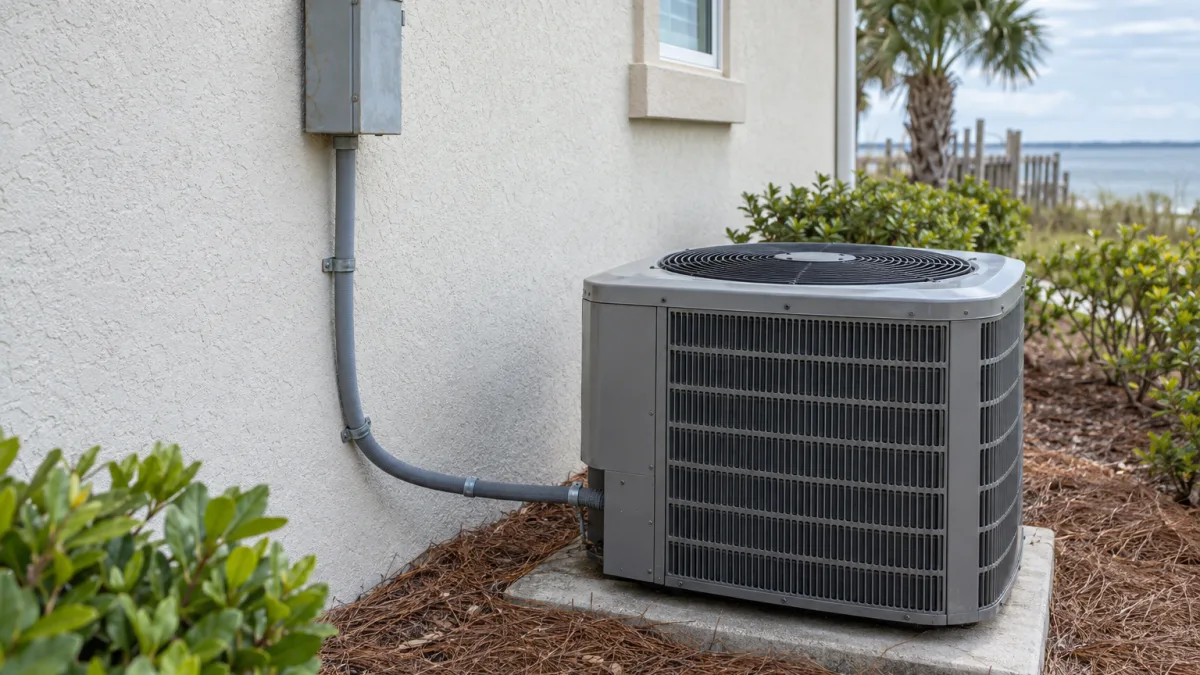
The outdoor disconnect provides a way for a technician to isolate the equipment from its electrical supply during service. Depending on the installation, it may use a switch, removable pullout, or another approved arrangement. Its location and accessibility matter because service personnel need to identify and operate the correct device. It should not be hidden behind dense landscaping, blocked by storage, or made inaccessible by a new fence or equipment enclosure.
A disconnect is not an invitation to inspect the wiring yourself. Parts on the supply side may remain energized even when the disconnect is off, and capacitors inside cooling equipment can retain stored energy. Turning off the thermostat is also not electrical isolation. Homeowners should leave covers closed and let qualified professionals isolate the appropriate circuits, verify the absence of voltage, and address stored energy before working. Never remove a pullout or cover simply to look for corrosion.
How Humidity and Salt Air Affect Outdoor Connections
Salt air and persistent humidity can accelerate deterioration of exposed electrical enclosures, fittings, and connections. Vulnerable areas include damaged coatings, missing fasteners, poorly supported conduit, and openings where fittings no longer seal properly. An enclosure intended for outdoor use still depends on correct installation and an intact cover. Rust does not automatically mean that internal components have failed, but visible deterioration deserves attention before the protective enclosure loses its integrity.
From a safe distance, look for a loose or hanging disconnect box, an open cover, cracked conduit, or a damaged flexible connection between the disconnect and condenser. Do not touch deteriorated components to test their strength. Irrigation should not routinely spray electrical equipment, and landscaping should preserve service access. Painting over damage or covering the box with a plastic bag does not restore protection and can conceal problems or trap moisture.
Recognize Warning Signs That Need Prompt Attention
A burning odor near the disconnect, visible scorching, crackling, or smoke calls for immediate attention. Stay clear of the equipment and keep others away. If there is smoke, fire, or active arcing, move to a safe location and call 911. Do not use water, approach the disconnect to shut it off, or open an enclosure to investigate. The priority is personal safety, not saving the cooling system or finding the failed part.
Less dramatic symptoms also warrant service: a new buzz from the disconnect, intermittent operation, or an outdoor unit that repeatedly tries and fails to start. Some operating sounds are normal, but a new or changing sound should be reported. Record what you observed without touching equipment, including whether the indoor blower continued running. A thermostat can be set to off when safely accessible, but that does not make damaged electrical components safe to approach.
Treat Trips and Post-Outage Problems as Diagnostic Clues
An air conditioner circuit that trips may have a supply-wiring problem, damaged equipment wiring, a failed motor or compressor, or another fault. Repeatedly resetting the breaker can reenergize damaged equipment and obscure an important warning. Leave a tripped cooling-system circuit off until it is evaluated, particularly when the trip occurred with an unusual sound or odor. Do not install a larger breaker or different fuse to keep the system running.
After a utility interruption, some systems delay restarting to protect the compressor. Follow the equipment manufacturer's guidance rather than rapidly switching the thermostat on and off. If cooling does not return, note whether other parts of the property have normal power. Abnormally bright or dim lights, partial power, or problems across several unrelated circuits may point beyond the air conditioner. Report broader supply symptoms to the utility and an electrician rather than repeatedly attempting an AC restart.
What Professional Electrical Troubleshooting Should Cover
A licensed electrician can evaluate the branch circuit, disconnect, conductor condition, protective devices, and equipment supply connections within the scope of the work. The evaluation may include checking voltage under appropriate operating conditions, examining for heat damage, and confirming that wiring and protection match the equipment requirements. A normal voltage reading with the system idle does not necessarily rule out a connection problem that appears only when the compressor starts or runs.
An HVAC technician may also be needed to assess capacitors, contactors, motors, compressor condition, controls, and mechanical causes of abnormal operation. The two trades sometimes need to coordinate because an electrical symptom can originate inside the cooling equipment. A useful diagnosis identifies the failed component, the likely cause, and any related damage. Replacing a visibly burned disconnect without checking why it overheated may leave an equipment fault or damaged conductor unresolved.
Check Electrical Requirements Before Replacing the AC
A replacement condenser with the same cooling capacity does not automatically have the same electrical requirements. Before installation, the contractor should compare the proposed equipment's voltage, phase, minimum circuit ampacity, and maximum overcurrent protection requirements with the existing circuit. These ratings help determine conductor sizing and allowable protection. The condition and suitability of the disconnect, fuses where used, fittings, and final connection also need review rather than automatic reuse.
Air-conditioning circuits have equipment-specific sizing rules, so homeowners should not judge compliance from a general household wire-and-breaker chart. A breaker that appears large relative to the conductors is not, by itself, proof of an unsafe installation. Conversely, years of successful operation do not establish that the circuit is correct. Ask the contractor to document compatibility using the equipment nameplate, installation instructions, applicable requirements, and actual wiring conditions before the replacement goes into service.
Account for Indoor Equipment and Heat Pump Heating
Electrical planning should include the indoor air handler, not just the outdoor unit. Some air handlers contain electric resistance heat, which may use separate or multiple electrical supplies. A heat pump's auxiliary heating demand can differ considerably from its cooling demand. When equipment is replaced or electric heat is added, the contractor needs to verify the complete indoor and outdoor configuration, including any approved heater kit and its required circuits.
This matters in Northwest Florida even when heating receives less attention than cooling. An installation that cools normally may still have a problem that appears when auxiliary heat operates during colder weather. Ask which operating modes will be tested at commissioning and whether the existing electrical capacity supports the proposed configuration. If an upgrade changes the connected load, an electrician should determine whether a load calculation or other electrical changes are necessary.
Build Safe Electrical Checks Into Property Maintenance
Homeowner maintenance should focus on observation and access, not internal electrical work. Keep stored items away from the disconnect and preserve the equipment clearances specified by the manufacturer and applicable requirements. Avoid pressure washing electrical enclosures or spraying cleaners into fittings. During routine HVAC service, ask whether visible electrical deterioration was found and whether an electrician should inspect the supply side. An HVAC maintenance visit does not necessarily include a complete branch-circuit evaluation.
For a seasonal home or vacation rental, schedule needed repairs before occupancy rather than relying on guests to report a developing problem. A property manager can maintain a dated record of unusual noises, shutdowns, service findings, and completed repairs. Exterior photographs taken without opening equipment can help document changes in corrosion or physical damage. Inspection frequency should reflect equipment condition, exposure, manufacturer guidance, and professional recommendations rather than an assumed universal replacement schedule.
Plan the Service Visit and Define the Repair Scope
When requesting service, describe whether the problem affects cooling, heating, the indoor blower, or only the outdoor unit. Share when it occurs, whether a breaker tripped, and whether there was a recent equipment replacement or utility interruption. Provide model information from existing paperwork if available, but do not remove covers to locate it. For managed properties, arrange authorized access to both indoor and outdoor equipment and identify who can approve additional diagnostic work.
Ask the contractor to explain whether the proposed work addresses only the disconnect or also damaged wiring, fittings, protective devices, and equipment connections. Confirm who will handle any required permit or inspection and how operation will be checked afterward. For Santa Rosa Beach homeowners, A Superior Mechanical can be a point of contact for evaluating electrical concerns alongside HVAC issues. The repair scope should follow the findings, not an assumption that every cooling failure requires rewiring or equipment replacement.
About this guide: This resource provides general homeowner education, not a remote diagnosis. Actual conditions, code requirements, equipment, and safe repair options must be evaluated at the property.