Do not remove an electrical panel cover, touch exposed conductors, bypass protection, or repeatedly reset a fault. Keep clear of smoke, sparks, burning odors, hot equipment, standing water near electricity, and downed lines, then call qualified help.
Why a Water Heater Needs an Electrical Safety Check
An electric water heater combines a substantial electrical load with a plumbing appliance that may operate unnoticed for years. Reliable hot water does not prove that its supply wiring, connections, or disconnect are in good condition. A loose connection can deteriorate while the heater still works, and a replacement tank can have different electrical requirements from the appliance it replaces.
For Santa Rosa Beach homeowners and property managers, the useful approach is to treat the heater and its electrical supply as one system. Northwest Florida humidity can contribute to corrosion in damp equipment spaces. Seasonal occupancy can also leave developing problems undiscovered. Whether you are investigating lost hot water or replacing an aging unit, have the appliance requirements and existing circuit evaluated together.
Identify the Heater Before Planning Electrical Work
Conventional electric storage heaters use resistance elements inside a tank. Many residential models operate on a dedicated 240-volt circuit, but that is not a universal specification. Heat-pump water heaters use a compressor to move heat into the water and may also contain resistance elements for higher demand. Their voltage, connection method, and backup-heating requirements vary by model.
Keep the model number, installation manual, and a photograph of the accessible exterior rating plate for your contractor. Do not remove an access cover to look for information. Tank size alone does not establish electrical demand. Two heaters with the same gallon capacity can require different circuits. Likewise, a more efficient model does not automatically need a smaller breaker or qualify for connection to an ordinary receptacle.
Recognize Warning Signs and Know When to Stop
Stop using the heater and arrange professional evaluation if you notice a burning-plastic smell, crackling, visible scorching, damaged supply wiring, or corrosion around electrical connections. A shock or tingling sensation from the tank, plumbing, or nearby fixtures is urgent. Do not touch the equipment again to confirm the symptom, and keep other people away. Smoke or active fire calls for evacuation and a 911 call.
A breaker that trips repeatedly or a heater that repeatedly loses power also needs diagnosis. Do not keep resetting protection or replace a breaker with a larger one. If the heater’s clearly identified breaker is accessible from a dry, safe location, switching it off can stop operation while you arrange service. Do not approach wet electrical equipment or cross standing water to reach a switch or panel.
Lost Hot Water Is Not Always a Supply-Circuit Problem
Cold water, slow recovery, or inconsistent temperature can have several causes. Possibilities include a failed heating element, a thermostat problem, an internal safety control opening, a wiring defect, or a plumbing issue. On many two-element storage heaters, the controls normally operate the elements in sequence rather than together. A failed lower element can therefore leave some hot water available without proving that the appliance is healthy.
Tell the service provider whether the water never heats, runs out sooner than usual, or changes temperature unexpectedly. Note whether a breaker operated and whether other equipment was affected during a utility interruption. Leave internal reset buttons and wiring compartments to the technician. Restoring a tripped internal limit without finding why it opened can conceal a control failure or overheating condition.
What a Professional Electrical Diagnosis Should Cover
A licensed electrician can compare the heater’s rating and installation instructions with the installed circuit. The review may include conductor size and condition, breaker type and rating, connection integrity, grounding, and the disconnect arrangement. Safe diagnosis requires isolating power and verifying that the equipment is de-energized before exposed components are handled. Measurements requiring energized equipment belong to qualified professionals using appropriate precautions.
Depending on the symptoms and the technician’s scope of work, testing may distinguish a supply-voltage problem from a failed element, insulation leakage, or defective control. Loose or heat-damaged terminations should be evaluated for damage beyond the immediately visible connection. An electrician and a qualified water-heater service professional may need to coordinate. Ask for an explanation of the fault and the required repair, not simply confirmation that hot water has returned.
Verify the Existing Circuit Before Replacing the Tank
A like-for-like replacement still deserves an electrical review. The new heater’s nameplate and instructions determine its supply requirements, together with applicable installation rules. Existing wiring should not be accepted solely because it powered the old unit. Damaged insulation, unsuitable splices, an incorrect breaker, or deterioration at the connection point can remain hidden until the equipment is disconnected.
Ask the contractor whether the replacement changes voltage, electrical input, or the required branch-circuit arrangement. A larger tank does not necessarily draw more power, while a similar-looking model may. If a different circuit is needed, the electrician should evaluate the wiring route and available electrical capacity. Increasing breaker size without confirming conductor suitability and equipment requirements is not an acceptable shortcut.
Keep Disconnects, Connections, and Service Access Suitable
A water heater needs an approved way to disconnect its electrical supply for service. The acceptable arrangement depends on the installation and applicable requirements. It may involve a nearby disconnect or an appropriately lockable breaker arrangement. A thermostat setting or an app’s off command is not a substitute for electrical isolation. Ask the electrician to explain which device isolates the heater and make sure the circuit identification is accurate.
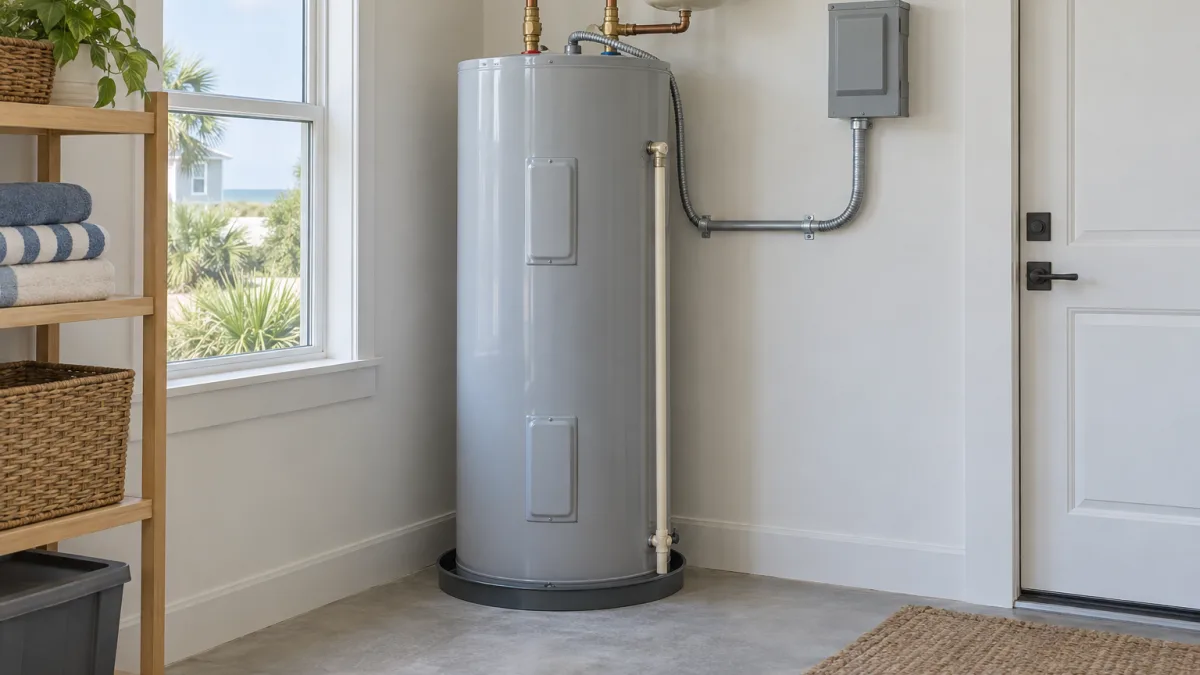
Electrical connections also need appropriate enclosures, covers, fittings, and protection from physical damage. From a safe position, homeowners can notice a missing cover, a loose exterior cable fitting, or storage pressing against the supply wiring. Do not move or tighten electrical components yourself. Keep access to the heater, disconnect, and service compartments clear so a technician can work without climbing over stored belongings.
Plan Heat-Pump or Tankless Conversions Separately
A heat-pump water heater can change more than energy use. Model selection affects electrical supply, service clearances, airflow, condensate drainage, and sound. Some models use a lower-power 120-volt supply; others require 240 volts and can use resistance heating during high demand. Have the contractor evaluate the selected model rather than assume that every heat-pump heater can reuse the same electrical connection.
An electric tankless conversion is a different project from replacing a storage tank. Whole-home units can require substantial electrical capacity and multiple dedicated circuits, depending on their design. The electrician should complete the necessary load assessment before equipment is ordered. In Walton County homes with several simultaneous hot-water demands, the plumbing design and electrical design need to support the same intended use.
Account for Damp Locations and Seasonal Occupancy
Humidity and moisture deserve attention wherever the heater is installed. In coastal settings, salt-laden air can also contribute to deterioration where equipment is exposed to it. Rust on a cabinet does not by itself identify an electrical fault, but corrosion near a connection enclosure or disconnect warrants assessment. Equipment and enclosures must suit their actual location; an ordinary indoor component should not be assumed suitable for a damp or exposed space.
For a seasonal home or vacation rental, include the heater area in routine property checks. Look for leaks, damaged covers, blocked access, and changes in normal operation without touching electrical connections. Follow the manufacturer’s instructions for vacation settings, shutdown, and return to service. Never restore power to a storage heater that may have drained until a qualified person confirms it is properly filled and ready to operate.
Coordinate Electrical and Plumbing Work Before Installation
Before authorizing a replacement, establish who is responsible for disconnecting and reconnecting power, correcting circuit defects, and completing any required permits or inspections. Confirm that the contractor performing electrical work is appropriately licensed for that work. Plumbing readiness does not establish electrical readiness, and a completed electrical connection does not establish that the tank is full or the plumbing installation is complete.
At handoff, request the model information, operating instructions, a description of electrical repairs, and clear identification of the shutoff location. Ask which symptoms require shutting the heater down and whom to call for appliance versus supply-circuit problems. For managed properties, keep this information with maintenance records and provide guests only with normal operating guidance. Internal resets, exposed wiring, and repeated breaker trips should never become guest troubleshooting tasks.
About this guide: This resource provides general homeowner education, not a remote diagnosis. Actual conditions, code requirements, equipment, and safe repair options must be evaluated at the property.