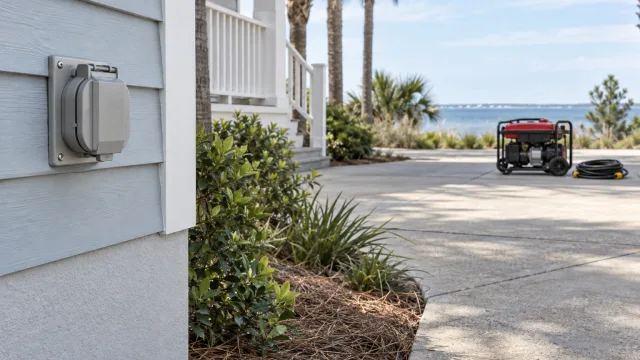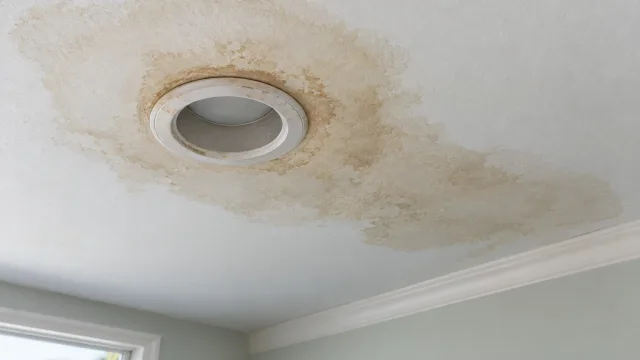
Do not remove an electrical panel cover, touch exposed conductors, bypass protection, or repeatedly reset a fault. Keep clear of smoke, sparks, burning odors, hot equipment, standing water near electricity, and downed lines, then call qualified help.
Why Dock Electricity Needs Specialized Attention
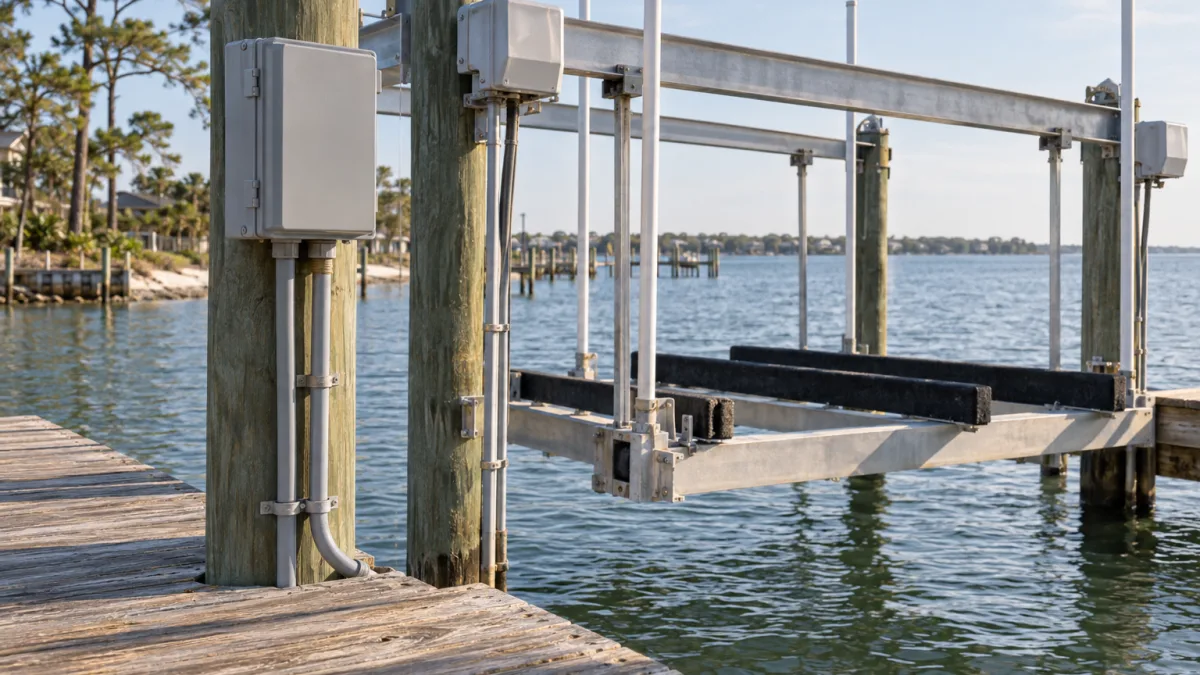
A dock combines electrical equipment with water, exposed metal, moving machinery, and people who may be barefoot or wet. That combination deserves a different approach from an ordinary outdoor receptacle. For Santa Rosa Beach properties with docks or boat lifts, electrical planning should account for the entire installation, including the shore-side supply, wiring along the dock, lift equipment, receptacles, and any connection supplying a boat.
Northwest Florida humidity, salt air, intense sunlight, and storms can deteriorate equipment even when it still operates. Changing water levels and dock movement add mechanical stress that a stationary installation may not experience. Neither saltwater nor freshwater should be treated as safe around potentially energized equipment. The absence of a shock, visible spark, or tripped breaker does not establish that a dock installation is sound.
Recognize Conditions That Require Immediate Shutdown
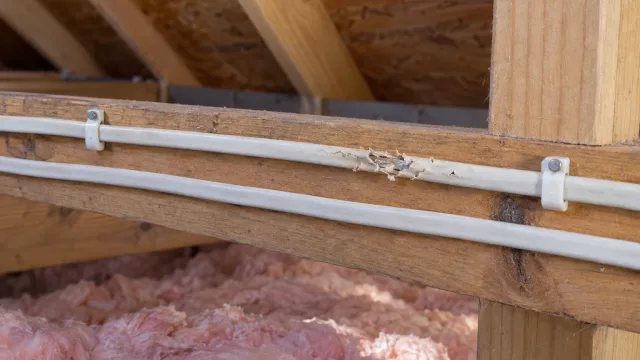
Treat any tingling sensation from a lift control, boat, ladder, railing, or other dock component as an urgent electrical warning. Other stop-use conditions include exposed conductors, broken electrical enclosures, scorched plugs, buzzing accompanied by a burning smell, or wiring pulled loose from its supports. Keep people away from the dock and nearby water. Disconnect power only if you can reach a known shutoff from a safe, dry location without approaching the suspected hazard.
If someone is being shocked or is struggling in water where electricity may be involved, call 911 and do not enter the water. Do not touch the person or nearby metal while the source may remain energized. Follow emergency dispatcher instructions. A breaker that has not tripped is not proof that the water or equipment is safe, and restoring power should wait until qualified professionals have evaluated the problem.
Separate Boat Lift Power From Shore Power
A boat lift circuit powers machinery that raises and lowers a vessel. Shore power supplies electrical equipment aboard a boat through a purpose-designed connection. Those functions have different equipment and protection considerations. An ordinary dock receptacle is not automatically an appropriate shore power source, and a connection that physically fits does not establish electrical compatibility. Improvised adapters can introduce hazards rather than solve a mismatch.
Before requesting electrical work, identify the lift manufacturer and model, motor information, existing controls, and whether the boat needs shore power. Share anticipated changes, such as replacing the lift or bringing in a different vessel. The electrician needs actual equipment requirements, not just a description of boat size. Problems involving a boat's onboard wiring may also require a qualified marine electrician, working in coordination with the professional responsible for the dock supply.
Plan the Circuit Around Distance and Starting Loads
The route from the electrical supply to the dock can be long, and that distance matters. A lift motor may struggle when voltage drops excessively under load, even though a nearby light still appears normal. Slow operation, humming without movement, or inconsistent lifting can have electrical or mechanical causes. Repeatedly operating a struggling lift can worsen damage and should not replace a diagnosis.
A licensed electrician evaluates the motor load, starting characteristics, supply voltage, circuit length, conductor sizing, and overcurrent protection together. A lift with multiple motors needs an assessment of how those motors operate, not assumptions based on one nameplate. Adding a receptacle or another powered accessory also requires review. A larger breaker is not an acceptable shortcut for a circuit that cannot properly serve its equipment.
Choose Equipment for the Actual Waterfront Exposure
Outdoor equipment is not all interchangeable. Dock components may face wind-driven rain, salt deposits, persistent dampness, sunlight, and occasional water exposure beyond ordinary weather. Enclosures, fittings, wiring methods, receptacles, and supports must suit their specific locations and intended use. A cover that looks substantial may still be unsuitable for the connection beneath it or may fail to protect a receptacle while a cord is plugged in.
Corrosion can affect internal connections before a housing looks severely damaged. Rust streaks, green deposits, cracked seals, missing fasteners, and brittle covers justify professional evaluation, especially when deterioration appears at cable entries. Painting over corrosion or applying household sealant is not an electrical repair. Proper replacement also depends on compatible materials, secure mounting, and installation methods that manage moisture without unauthorized modifications to the enclosure.
Understand What Ground-Fault Protection Can and Cannot Do
Ground-fault protection detects certain unintended current paths and disconnects power. It is particularly important around water, but the appropriate devices and arrangement depend on what the installation supplies. General-use receptacles, lift equipment, and marine shore power do not necessarily use identical protection. A licensed electrician should determine the requirements that apply to the installation rather than copying equipment from a neighboring dock.
Repeated protective-device operation may indicate moisture intrusion, damaged wiring, motor insulation trouble, a faulty cord, or a problem aboard a connected boat. Never bypass protection to keep a lift or boat powered. A successful test-button operation checks a function of that device; it does not certify the entire dock. Testing should follow manufacturer instructions and should not require homeowners to open enclosures, handle wet equipment, or approach damaged connections.
Account for Dock Movement and Mechanical Wear
A floating dock moves with water levels and waves, while a fixed dock may still shift or flex. Gangways, hinges, and transitions between shore and dock create points where wiring can be stretched, crushed, or rubbed. Boat lift cables and moving parts introduce additional opportunities for contact. An installation needs a wiring method and routing arrangement designed for those movements, not simply a loose length of cable.
From a safe, dry location, owners can watch for sagging conduit, detached supports, displaced boxes, or cords trapped against moving components. Do not pull wiring back into place or fasten it with improvised hardware. Changes to decking, lift equipment, or dock configuration can unintentionally damage electrical work. Include an electrical review when planning structural repairs, even if the electrical equipment is expected to remain in its original location.
Know What a Professional Dock Inspection Should Address
A useful inspection follows the power path rather than looking only at the receptacle nearest the boat. The electrician evaluates the supply circuit, accessible disconnecting means, wiring condition, equipment suitability, protective devices, and grounding and bonding provisions. Grounding and bonding have specific roles in fault protection; neither makes damaged equipment safe to use. Depending on the scope, the evaluation may also identify concealed areas that need further access.
Diagnostic work may include voltage measurements under load, protective-device testing, leakage-current evaluation, and insulation testing where appropriate for the equipment. Sensitive components may need to be isolated before certain tests. The professional should explain whether the likely fault is in the property wiring, lift equipment, shore power cord, or boat. Ask for findings that distinguish immediate hazards from maintenance concerns and document any portions of the system that could not be evaluated.
Set Clear Rules for Owners, Guests, and Property Managers
For seasonally occupied properties and vacation rentals, dock electrical safety depends partly on consistent operating rules. Guests should not improvise boat connections, use extension cords as permanent dock power, or repeatedly reset a device that shuts off. Restrict lift operation to authorized users who understand the equipment. Access to controls should follow the manufacturer's recommendations without obstructing an emergency disconnect or other required safety access.
Keep the location of the safe shore-side shutoff and emergency contact information in the property instructions. Maintenance records should identify the equipment served, previous faults, repairs, and any unresolved restrictions. During vacancy, establish who checks for visible storm damage and who can authorize an inspection. Housekeeping staff and guests should report unusual operation or damaged equipment rather than being asked to diagnose electrical faults.
Review the Installation After Damage or Equipment Changes
Arrange professional evaluation after flooding, significant dock movement, lightning-related damage, a boat impact, or suspected electrical submersion. Equipment that dries out is not necessarily safe to reenergize. Water can leave conductive contamination and damage internal parts, while an impact can strain wiring without breaking its outer covering. Keep affected equipment out of service until a professional determines what requires replacement, testing, or further investigation.
Also schedule a review before installing a different lift motor, adding shore power, or substantially altering the dock. Ask who will confirm applicable Walton County permitting and inspection requirements, coordinate with the lift installer or marine electrician, and document the finished work. Inspection frequency should reflect equipment instructions, exposure, condition, and use. Between visits, report changes promptly instead of waiting for an annual appointment when a warning sign appears.
About this guide: This resource provides general homeowner education, not a remote diagnosis. Actual conditions, code requirements, equipment, and safe repair options must be evaluated at the property.