Do not remove an electrical panel cover, touch exposed conductors, bypass protection, or repeatedly reset a fault. Keep clear of smoke, sparks, burning odors, hot equipment, standing water near electricity, and downed lines, then call qualified help.
Grounding and Bonding Are Related, but Different
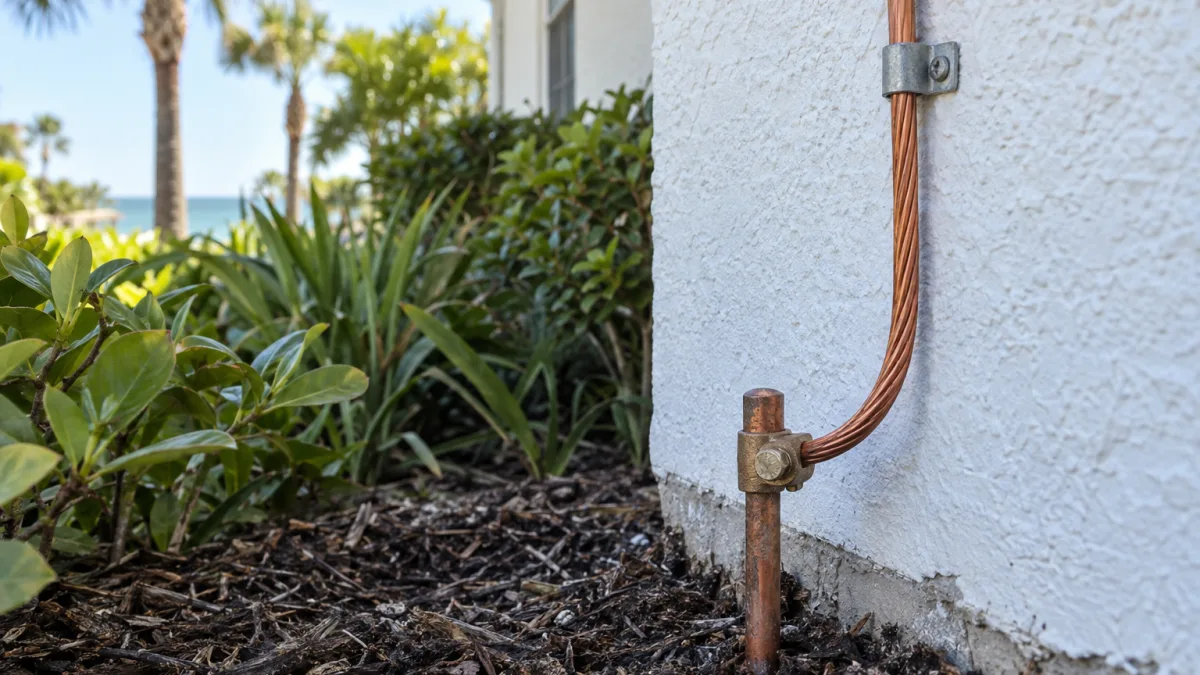
Grounding and bonding are easy to overlook because most of their connections are hidden or outside everyday living spaces. Grounding connects an electrical system to earth through an approved grounding electrode system. Bonding electrically connects conductive parts that should remain at substantially the same electrical potential. Along with equipment grounding conductors, these connections help create a dependable path for fault current so protective devices can operate when certain electrical failures occur.
For Santa Rosa Beach homeowners, the practical question is whether these safeguards remain intact after years of repairs, equipment replacements, and exposure. A home can have working lights and appliances while a protective connection is missing or deteriorated. In Walton County’s coastal environment, moisture and salt exposure can affect vulnerable connections, especially outdoors. Understanding the distinction helps owners ask better questions without opening equipment or attempting electrical tests themselves.
Why a Ground Rod Alone Does Not Protect Every Circuit
A ground rod is not a universal escape route for dangerous electricity. If a damaged wire energizes an appliance’s metal case, the intended fault-current path generally runs through equipment grounding and bonding connections back toward the electrical source. A sufficiently low-impedance path allows enough current to flow for the appropriate protective device to disconnect power promptly. Earth by itself is generally too resistive to provide that dependable clearing path for an ordinary household branch circuit.
This is why adding a rod does not fix an ungrounded receptacle, a broken equipment grounding conductor, or an incorrect wiring connection. Different grounding components serve different purposes, and a repair must address the actual defect. If someone proposes an extra ground rod as the complete answer to shocks or ungrounded outlets, ask how the circuit’s fault-current path will be evaluated. The explanation should connect the proposed work to the diagnosed problem.
Warning Signs That Deserve Prompt Attention
A tingling sensation from an appliance, metal faucet, or other conductive surface is not normal. It can indicate leakage current, an energized metal part, or another electrical fault. Stop using the affected equipment and keep others away. Do not touch the surface again to confirm the sensation, and do not use a handheld tester around wet fixtures as a homeowner troubleshooting exercise. Have a licensed electrician determine the source before anyone resumes use.
Other reasons to request an evaluation include a visibly broken exterior grounding wire, a disconnected clamp, or substantial corrosion at an accessible connection. Observe only from a safe position; do not move, tighten, or reconnect anything. If there is smoke, active sparking, or fire, leave the area and contact emergency services. If someone is receiving an electrical shock, do not touch them while they may still be in contact with the source.
What Two-Prong and Three-Prong Outlets Can Tell You
A two-prong receptacle may indicate an older circuit without an equipment grounding conductor, but appearance alone cannot establish the wiring arrangement. Likewise, a three-prong receptacle does not prove that a usable ground exists. Someone may have changed the device without correcting the underlying circuit. An electrician needs to evaluate the wiring method and connections rather than assuming that the number of slots establishes whether the outlet provides an equipment grounding path.
A GFCI can reduce shock risk by detecting a current imbalance, including on certain circuits without an equipment ground. It does not create that missing ground. Where applicable requirements permit a GFCI-based replacement, required markings and equipment instructions still matter. Another unsafe shortcut is connecting the receptacle’s grounding terminal to its neutral terminal. That improper connection can put current on exposed metal and may fool a basic plug-in tester into reporting an apparently normal result.
Plumbing Changes Can Affect Electrical Protection
Metal water piping may have electrical bonding connections, and qualifying underground metal water pipe can also be part of a grounding electrode system. These are related but distinct functions. Replacing sections of metal pipe with plastic, relocating piping, or removing old components can interrupt an existing electrical connection. The plumbing may operate perfectly afterward even though the electrical protection needs attention. Neither water flow nor the absence of leaks confirms that bonding remains effective.
Before a repipe or major water-service change, tell the plumber about any visible electrical connections to the piping and arrange electrical coordination when needed. Do not assume an existing clamp is obsolete just because its purpose is unclear. A licensed electrician can determine what the piping currently does, whether continuity will change, and what protection must remain. This planning is especially useful during renovations when several trades work on the same house at different times.
How Coastal Exposure Changes the Maintenance Conversation
Santa Rosa Beach’s humidity and salt air can accelerate corrosion on exposed metal, particularly where moisture repeatedly collects or dissimilar materials meet. A grounding or bonding connection must be mechanically secure and electrically suitable, not merely present. Surface appearance does not reliably establish its condition. A connection that looks weathered may still function, while a concealed or apparently intact connection may have a defect that requires professional examination.
Landscaping, exterior repairs, and storage can also damage or obscure protective conductors. Soil changes may expose wiring previously protected from contact, and exterior work can dislodge connections. During ordinary property checks, look for obvious changes without digging, pulling wires, or removing covers. After flooding or significant physical damage, arrange an electrical assessment before affected equipment is used again. Drying out an electrical connection does not establish that it is safe.
What a Professional Grounding and Bonding Evaluation Includes
An electrician starts with the concern, the home’s alteration history, and the affected equipment. Useful background includes previous shocks, outlet replacements, repiping, additions, and any known damage to exterior conductors. The inspection may cover accessible grounding electrodes, conductor routing, connections to metal systems, and equipment grounding paths. With appropriate safety procedures, the electrician also evaluates where neutral and grounding conductors connect and where they must remain separate in that particular electrical arrangement.
Testing depends on the suspected defect. The electrician may use continuity measurements, voltage measurements, or other specialized methods to evaluate protective paths and locate unwanted current. Some tests require circuits to be isolated or equipment disconnected to avoid misleading readings. No single outlet tester verifies an entire home’s grounding and bonding. Likewise, a measurement related to the earth connection does not establish that every appliance and receptacle has a sound equipment grounding path.
The Repair Should Match the Actual Defect
Possible repairs include replacing a damaged conductor, correcting an improper connection, restoring required piping bonds, or improving an inadequate grounding electrode arrangement. An ungrounded branch circuit may require a different solution, such as an approved grounding retrofit or new circuit wiring. The right approach depends on the existing installation, the equipment being served, and applicable requirements. Avoid treating every grounding concern as the same project or assuming that a whole-house rewire is automatically necessary.
Ask for an explanation that identifies the defect, describes the recommended correction, and states what will be verified afterward. A useful estimate distinguishes immediate safety work from optional improvements and identifies any access limitations. If concealed wiring prevents a complete assessment, that uncertainty should be explained. After repairs, retain the work description and any inspection documentation. These records help future electricians understand what changed without relying on an owner’s memory or an unlabeled photograph.
Review Protective Connections When Equipment Changes
Equipment replacements and additions can expose grounding or bonding deficiencies that were previously unnoticed. New HVAC equipment, a detached building, or changes to electrical distribution may require a review of existing protective connections. The goal is not simply to make the new equipment run. The installation must also provide the appropriate fault-current path and avoid unintended paths through piping, structural metal, or other conductive components.
Before approving work, ask who will evaluate the existing grounding and bonding, what electrical work is included, and whether other trades need to coordinate. Supply any records of earlier modifications. If a proposed project relies on an existing circuit, ask whether that circuit’s grounding arrangement is suitable for the new equipment. Planning these questions early can prevent a finished installation from needing to be reopened because a protective connection was overlooked.
Build a Practical Record for an Occupied or Seasonal Home
There is no single homeowner inspection interval that fits every grounding and bonding installation. Age, exposure, prior alterations, and known defects all influence the recommendation. Ask the electrician to suggest a follow-up plan based on the actual property. Between visits, keep accessible areas clear and note visible damage or changes after exterior work. Do not apply coatings, cleaners, or corrosion treatments to electrical connections unless the work is directed and performed by a qualified professional.
For a seasonally occupied home or vacation rental, give the property manager a simple reporting rule: any shock or tingling complaint takes the affected equipment out of use until evaluated. Record which equipment was involved, whether the area was wet, and what work occurred recently, without recreating the incident. Keep electrical and plumbing service records together. That information helps a licensed electrician distinguish an appliance problem from a wider grounding or bonding defect.
About this guide: This resource provides general homeowner education, not a remote diagnosis. Actual conditions, code requirements, equipment, and safe repair options must be evaluated at the property.