Do not remove an electrical panel cover, touch exposed conductors, bypass protection, or repeatedly reset a fault. Keep clear of smoke, sparks, burning odors, hot equipment, standing water near electricity, and downed lines, then call qualified help.
Why Hidden Rodent Damage Deserves Electrical Attention
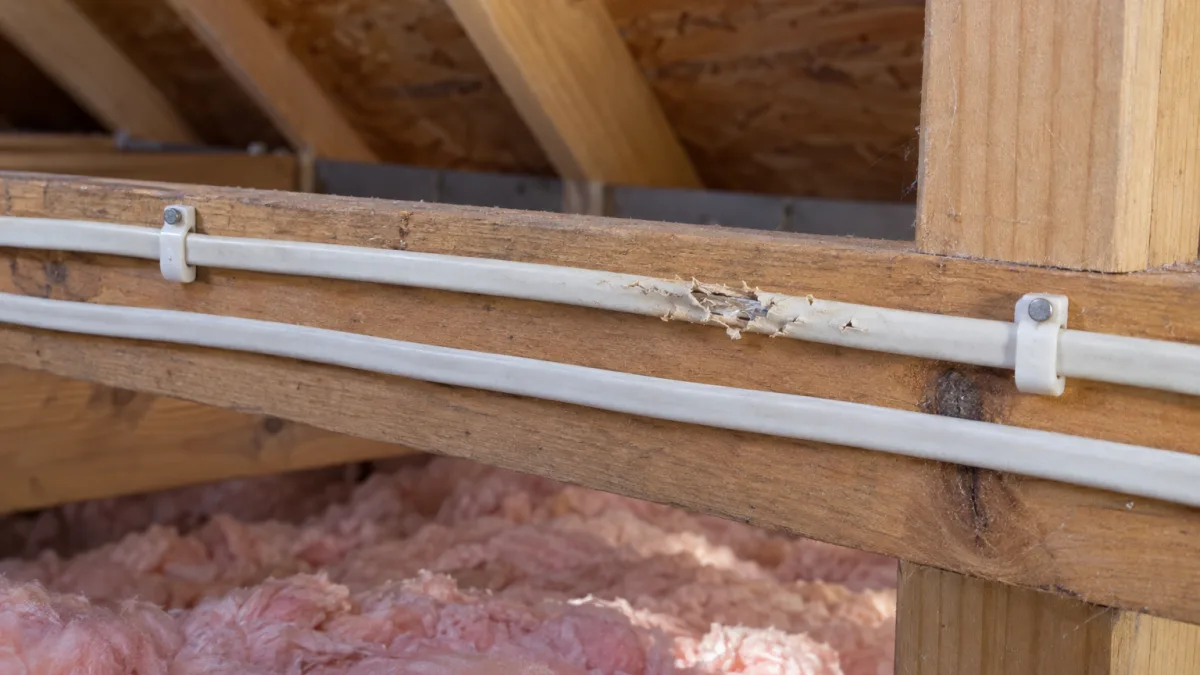
Rodents can chew electrical cable in attics, wall cavities, garages, and other concealed spaces. The concern is not simply that something may stop working. Damaged insulation can leave conductors vulnerable to contact with other conductors or nearby conductive materials. A damaged circuit may continue operating, so working lights and receptacles do not establish that wiring is safe. Finding rodents does not prove electrical damage, but it creates a reason to investigate affected areas.
For Santa Rosa Beach homeowners, seasonal occupancy can leave attic noises or other changes unnoticed between visits. Northwest Florida’s heat also makes attic access physically demanding, while humidity or roof leaks can introduce separate problems around wiring. Those conditions do not establish the cause of a defect. The practical response is to have a licensed electrician assess suspected cable damage and a pest professional address the animals and their access points.
What Chewing Can Do to an Electrical Cable
Many residential cables have an outer jacket surrounding individually insulated conductors and, depending on the cable type, a grounding conductor. Chewing may affect only the outer jacket, penetrate conductor insulation, or damage the metal conductor itself. These are different conditions requiring different evaluations. A surface photograph usually cannot establish the depth of damage, particularly when the underside of the cable or a section beneath insulation is not visible.
Exposed conductors can create shock or short-circuit hazards. A partially severed conductor may also develop localized heating under load. A breaker does not identify every damaged cable, and a circuit does not have to trip before a defect becomes dangerous. Conversely, a tripped breaker alone does not prove rodents caused the problem. The electrician needs to determine the physical condition of the wiring rather than infer safety from whether power remains available.
Signs Worth Reporting, Without Disturbing the Area
Possible pest activity includes scratching sounds, droppings, nesting material, or gnaw marks on stored belongings and building materials. Electrical clues may include newly unreliable power, unexplained equipment shutdowns, or a burning odor. These observations are most useful when reported together with their locations and timing. For example, power trouble in a room below an attic area where pest activity was found helps focus an investigation, but it does not establish a diagnosis.
Visible tooth marks or missing material on a cable warrant professional evaluation even when everything still operates normally. Do not move the cable, lift nearby insulation, or reach behind equipment for a closer look. Avoid disturbing droppings or nesting material, which can present health hazards. Photographs taken from an already accessible, safe location can help with scheduling, but obtaining a picture is never worth entering a cramped or contaminated space.
When to Stop Using the Area and Get Immediate Help
Smoke, flames, visible sparking, or a strong electrical burning smell call for an immediate safety response. Keep people away, leave the building if fire is suspected, and call 911 from a safe location. Do not enter an attic to search for the source, and do not use water on electrical equipment. A suspected electrical fire is not a situation to monitor while waiting for a routine repair appointment.
If there is no active emergency but damaged wiring is visible, keep occupants and pets away and contact a licensed electrician promptly. A clearly identified circuit may be switched off only if the breaker panel is safely accessible and shows no heat, smoke, water exposure, or other hazard. Do not remove a panel cover, touch damaged wiring, or repeatedly reset a breaker. Turning something off is a precaution, not proof that every nearby conductor is de-energized.
What to Gather Before the Electrician Arrives
Prepare a short history of the issue: when pest activity was first noticed, where evidence appeared, and whether electrical symptoms started around the same time. Include any recent roof work, attic equipment service, pest treatment, or insulation work. These details may help distinguish chewing from other physical damage. Existing photographs and written observations from a pest professional are useful, especially if they identify the location without requiring someone to disturb wiring again.
Identify rooms or equipment affected by a shutdown, including refrigeration, security systems, medical equipment, and equipment serving the property. Tell the electrical company about access restrictions, heavy contamination, or an attic that requires special arrangements. Do not use extension cords to restore a suspected damaged circuit or bypass a protective device. If an outage affects essential equipment, discuss a safe temporary plan with the appropriate professional rather than improvising a connection.
How an Electrician Investigates Suspected Damage
The investigation generally begins with the reported symptoms, accessible wiring routes, and evidence of animal activity. The electrician identifies relevant circuits, isolates power as needed, and verifies safe conditions before examining conductors or connections. Inspection may include nearby junction boxes, cable supports, and equipment connections. Damage in one visible spot can justify looking farther along the same route, but the scope depends on access and what the initial findings reveal.
Electrical testing may help identify open conductors, shorts, or insulation problems. Where appropriate, an electrician may use insulation-resistance testing after disconnecting equipment that could be affected by the test. No single test proves that every concealed cable is free of physical damage. A useful assessment explains what was inspected, what was tested, which areas remain inaccessible, and whether additional access is needed before the electrician can recommend a complete repair.
What a Proper Wiring Repair Should Address
The repair depends on the cable type, damage depth, location, and condition of nearby wiring. Damaged cable may need replacement between suitable connection points. If a splice is appropriate, it must use an approved method and enclosure as applicable to that installation. Ordinary junction boxes generally need to remain accessible rather than disappear behind drywall or insulation. Household tape, a cord connector, or an improvised patch is not a homeowner repair for chewed building wiring.
Ask the electrician to explain how the proposed work removes the damaged portion and whether cable routing, support, or protection should change. Where replacement wiring passes through vulnerable areas, suitable protection may reduce exposure, but there is no universal covering that makes every installation rodent-proof. The repair should conclude with appropriate checks before the circuit returns to use. Ask whether permits or inspections apply to the specific scope rather than assuming every repair has identical requirements.
Coordinate Electrical Repairs With Pest Control
Electrical repair and pest control solve different parts of the problem. An electrician evaluates and repairs wiring; a qualified pest professional identifies animal activity and plans removal and exclusion. Replacing cable without addressing ongoing access can leave new wiring vulnerable. Removing rodents without assessing known cable damage leaves the electrical concern unresolved. Neither service should be treated as a substitute for the other.
Sequence the work around safety and access. An immediate electrical hazard may need isolation before pest cleanup or other attic work begins. Pest professionals can then coordinate removal, exclusion, and sanitation with the electrical repair schedule. If contaminated insulation needs removal, discuss how workers will avoid disturbing wiring and when the electrician should return. Entry-point repairs must also preserve required ventilation and clearances. Do not pack material around electrical equipment or seal openings without understanding their purpose.
Reduce Repeat Damage Without Creating New Hazards
Long-term prevention starts with the pest professional’s findings about access and attractants. Secure food sources, reduce unnecessary stored clutter, and follow recommendations for repairing building openings. Keep access to electrical equipment clear so future inspections do not require moving piles of belongings. These steps support prevention and visibility, but they do not replace follow-up when fresh evidence appears. A quiet attic is not, by itself, confirmation that an infestation has ended.
Avoid spraying repellents, applying coatings, or wrapping cables with materials not approved for the installation. Such measures can hide damage, affect heat dissipation, or interfere with later inspection. For Santa Rosa Beach properties, repair roof and exterior-envelope defects through the appropriate trades, particularly where an opening may admit both animals and weather. Schedule follow-up based on the documented problem, the pest-control plan, and any inspection limitations, not an unsupported promise that one treatment permanently protects the wiring.
Keep Clear Records for Seasonal Homes and Rental Properties
For a seasonally occupied home or vacation rental, designate who receives pest reports and who can authorize electrical service. Housekeepers and property managers should report noises, odors, visible debris, and equipment problems, not enter attics or investigate cables. If an electrician leaves a circuit off, communicate that restriction to everyone responsible for the property. A turnover deadline is not a reason to restore power before the affected circuit has been evaluated and repaired as needed.
Keep the electrician’s findings, repair invoice, available photographs, pest-exclusion records, and any inspection documentation together. Record which areas were inaccessible and whether another visit is recommended after cleanup or access work. Before returning affected areas to normal use, confirm the completed electrical work and any remaining restrictions with the electrician. These records help the next technician distinguish a new problem from an old one and give remote owners a practical basis for follow-up decisions.
About this guide: This resource provides general homeowner education, not a remote diagnosis. Actual conditions, code requirements, equipment, and safe repair options must be evaluated at the property.