Do not remove an electrical panel cover, touch exposed conductors, bypass protection, or repeatedly reset a fault. Keep clear of smoke, sparks, burning odors, hot equipment, standing water near electricity, and downed lines, then call qualified help.
1. Why a Water Leak Needs an Electrical Evaluation
A roof leak, failed supply line, or overflowing air-conditioning drain can turn an ordinary repair into an electrical safety problem. Water may travel along framing, pipes, and cables before appearing at a ceiling stain or wall opening. The visible wet spot may be several feet from the original leak, and electrical connections along that path may have been exposed even when nearby lights still work.
For Santa Rosa Beach homeowners, Northwest Florida humidity can make enclosed materials slow to dry. Seasonal occupancy can also allow a small leak to remain unnoticed. Neither condition automatically means wiring must be replaced, but both make a careful assessment important. Fixing the water source and evaluating affected electrical equipment are separate tasks. A dry ceiling, a working receptacle, or the absence of a tripped breaker does not establish that the installation is safe.
2. Keep People Away Before Trying to Save Equipment
Treat water dripping from a light fixture, switch, receptacle, or electrical enclosure as a reason to stop using the affected area. Keep people and pets away from wet surfaces and anything electrical nearby. Do not touch the fixture, operate a wet switch, unplug a wet cord, or place a container where reaching it would bring you close to electrical equipment. Do not enter standing water to reach a breaker panel or appliance.
Call a licensed electrician promptly and describe where the water is appearing. If there is smoke, active sparking, fire, or a suspected energized wet surface, leave the area and call 911. Do not approach a wet, damaged, or inaccessible panel to shut off power. An electrician or the utility may need to arrange safe disconnection. When you are uncertain whether the approach or equipment is dry and safe, stay back rather than attempting a shutdown.
3. Notice Warning Signs Without Testing the Circuit
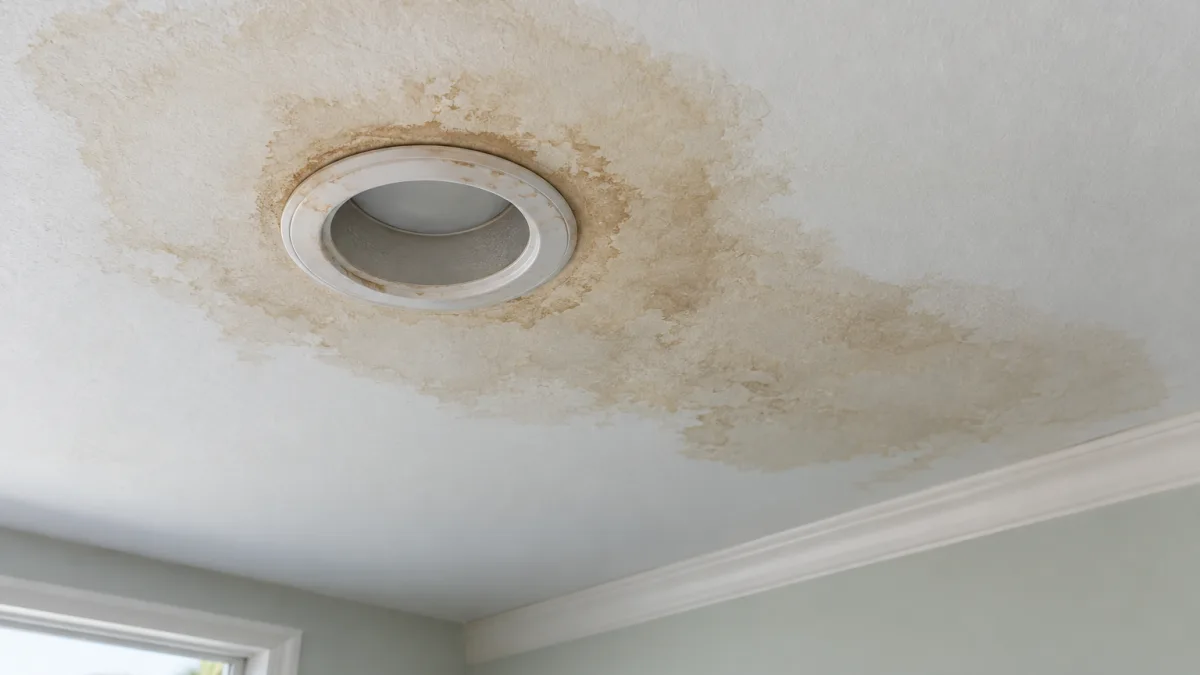
Visible water is only one clue. Discoloration around a ceiling fixture, rust streaks below a box, a damp wall near a receptacle, or moisture inside a fixture lens all deserve attention. A new buzzing sound, electrical burning odor, intermittent operation, or protective device that trips after a leak raises the urgency. These observations help an electrician identify the affected area, but they do not reveal the full extent of damage.
Do not repeatedly reset a breaker or ground-fault protective device to see whether the problem has cleared. Avoid turning a suspect light on for a quick check. Water-related faults may be intermittent, and equipment can operate despite corrosion or damaged insulation. Record what happened before you stopped using the circuit, including which devices were operating and when the leak began. If someone feels a shock or tingling from equipment, stop access immediately and seek emergency help when warranted.
4. Document the Leak and Coordinate the Trades
From a safe, dry location, photograph visible staining, dripping, and affected rooms. Note when the leak was discovered, how long it may have continued, and whether its source was a roof, plumbing line, drain, or appliance. Tell the electrician about any breaker trips, unusual odors, or equipment behavior. For a vacant property, provide the last known date without damage rather than assuming the leak started the day it was found.
Coordinate the electrician with the plumber, roofer, HVAC technician, or restoration contractor handling the water source. Electrical hazards should be addressed before workers open wet assemblies or place drying equipment near suspect circuits. Drying fans and dehumidifiers also need a safe power source, not an extension cord connected to an affected outlet. Insurance documentation may be useful, but do not postpone urgent safety action while waiting for claim instructions. Save inspection findings and replacement records with the repair file.
5. What a Licensed Electrician Should Evaluate
The evaluation begins with the leak history, the likely water path, and safe isolation of affected equipment. After establishing safe working conditions, the electrician can inspect accessible boxes, connections, fixtures, cables, and enclosures along that path. Water can collect inside a ceiling box or enter a wall cavity without leaving an obvious mark on the device below it. Depending on the construction, coordinated access through drywall or another finish may be necessary.
Diagnostic work may include checking connections and grounding continuity, assessing insulation condition, and performing appropriate electrical tests. The methods depend on the wiring and connected equipment; some tests require sensitive electronics to be disconnected first. A single successful outlet test cannot establish the condition of an entire concealed circuit. Ask the electrician to explain what was inspected, what remains inaccessible, and whether further access or manufacturer guidance is needed before deciding which components can remain.
6. Understand Why Drying Is Not Always Enough
Water can leave mineral deposits, dirt, and other contamination after the visible moisture disappears. Corrosion may affect contact surfaces, terminals, springs, and protective mechanisms. A device that resumes working after drying may still have compromised insulation or unreliable internal parts. Household fans, heaters, cleaning sprays, and additional drying time are not substitutes for an electrical assessment, and homeowners should not open devices to clean their interiors.
Receptacles, switches, circuit breakers, and electronic protective devices exposed to water internally generally require replacement rather than field drying and reuse. Certain larger equipment may have manufacturer-authorized evaluation or reconditioning options, but those are professional decisions, not a general salvage rule. Exposure matters: a damp wall beside a box is different from water entering that box, and brief contact with clean water differs from immersion in contaminated water. The electrician should apply manufacturer guidance and recognized water-damage evaluation practices to the actual equipment.
7. Evaluate Wiring, Fixtures, and Electronics Separately
Not every cable near a leak automatically needs replacement. The decision depends on the wiring type, its permitted environment, the extent of exposure, whether water entered the cable assembly, and the condition of its insulation and terminations. Wiring intended for dry locations should not be assumed suitable after saturation or submersion. Conversely, a stain on nearby drywall alone does not prove that the cable inside the wall was damaged.
Fixtures and electronic equipment need their own evaluation. Water entering a recessed light, LED driver, dimmer, smart control, or appliance connection can affect parts that are not visible from the room. Replacing a bulb or decorative trim does not address damage inside the assembly. Where a panel or other major distribution equipment has taken in water, the scope and urgency increase substantially. Keep that equipment off-limits and let the electrician coordinate any necessary utility involvement, replacement, permitting, and inspection.
8. Restore Power Only After the Repair Is Complete
Safe restoration involves more than waiting until building materials feel dry. The water source needs to be corrected, affected electrical components evaluated, required replacements completed, and the installation checked before the affected circuits return to service. Any required inspections must also be coordinated. Restoration and electrical contractors should agree on sequencing so that wall or ceiling repairs do not conceal connections or wiring still awaiting evaluation.
Ask for a clear explanation of which circuits are safe to use and which must remain out of service. An electrician may be able to isolate an affected branch circuit while leaving unrelated portions of the property operational, but that depends on the actual damage. Do not use temporary cords to bypass an unresolved problem. If staining returns, a burning odor develops, or equipment behaves differently after restoration, stop using the affected equipment and report the change rather than assuming it is part of drying.
9. Plan Carefully for Vacant Homes and Rental Turnovers
An unoccupied Santa Rosa Beach home may have little information about when a leak began. Smart water sensors and regular property checks can shorten the time between a leak and its discovery, but they do not certify electrical safety. During routine visits, look for new ceiling stains, damp cabinets, musty odors, and signs of condensate overflow. Keep these checks visual and accessible; property staff should not remove electrical covers or enter wet attics.
For vacation rentals, do not make guest readiness depend only on finished drywall or a working light. Give cleaners and maintenance staff written restrictions for affected rooms and equipment until the electrician clears them. If essential circuits remain unavailable or hazardous areas cannot be secured, delay occupancy until the situation is resolved. Maintain one repair record containing the leak source, electrical findings, completed work, and any follow-up requirements so that the next manager does not have to reconstruct the incident.
10. Reduce Repeat Exposure and Keep Useful Records
Prevention starts with maintaining the systems that carry or shed water. Address roof and flashing defects, plumbing seepage, and HVAC condensate drainage problems before they recur. In humid coastal conditions, condensation also deserves investigation, especially when it appears repeatedly near electrical equipment. Salt-bearing water or floodwater adds contamination concerns and should never be treated as equivalent to an ordinary clean-water drip.
During repairs, ask whether equipment placement, a recurring water path, or an enclosure problem needs correction rather than simply replacing the same damaged part. Keep electrical equipment accessible and avoid storing belongings where they conceal leaks or block safe access. Before closing the project, request documentation identifying replaced components, any remaining limitations, and signs that should trigger another visit. A Superior Mechanical can evaluate water-related electrical concerns in Santa Rosa Beach and help coordinate the electrical portion of a repair with the other work involved.
About this guide: This resource provides general homeowner education, not a remote diagnosis. Actual conditions, code requirements, equipment, and safe repair options must be evaluated at the property.