Do not remove an electrical panel cover, touch exposed conductors, bypass protection, or repeatedly reset a fault. Keep clear of smoke, sparks, burning odors, hot equipment, standing water near electricity, and downed lines, then call qualified help.
1. Extra Plug Openings Do Not Mean Extra Power
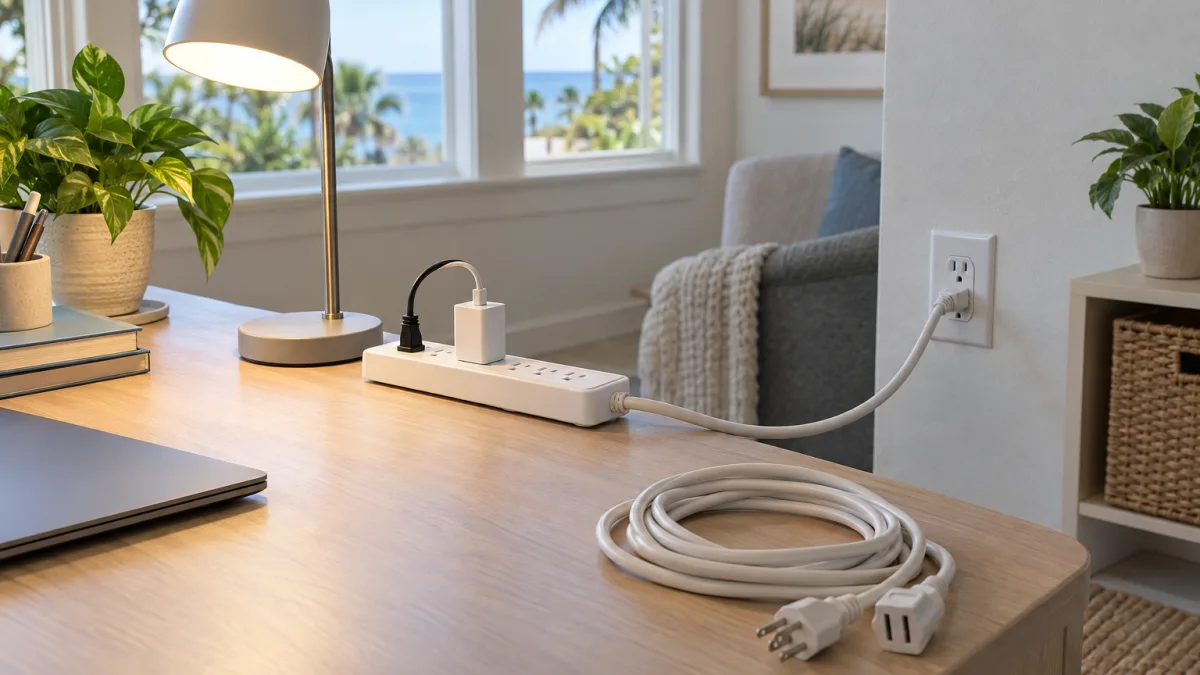
A power strip can make a desk or entertainment center more convenient, but it cannot increase the capacity of the circuit supplying it. An extension cord moves the connection point without adding capacity, either. The wall receptacle, branch circuit, cord, and connected equipment each have limits. A setup can exceed one of those limits even when several openings on the strip remain unused and the circuit breaker has not tripped.
In Santa Rosa Beach homes, temporary connections may linger after furniture moves, seasonal visits, or changes in rental furnishings. Heat, humidity, and salt exposure also matter where cords sit on porches, in garages, or near open exterior doors. The useful question is not simply whether something turns on. It is whether the connection suits the equipment, location, and length of time it will remain in service.
2. Know What Each Device Actually Does
A basic power strip provides multiple receptacles from one plug. Some have an internal overload device, but that feature does not make every appliance suitable for connection. A surge-protective strip adds protection against certain brief voltage disturbances within its ratings. Neither device supplies backup power. A switch or illuminated light alone does not establish that a strip provides surge protection, overload protection, or any particular safety feature.
An uninterruptible power supply, or UPS, contains a battery that can support selected electronics during a utility interruption. Its output and runtime are limited, and its connection instructions may prohibit extension cords or additional strips. Treat each product according to its own manual. For ordinary household power strips, use a suitable wall receptacle directly rather than connecting through another strip or extension cord. Never remove a grounding pin to make a plug fit.
3. Select Cords for the Load, Length, and Location
Choose an extension cord with a legible electrical rating, suitable environmental markings, and certification from a recognized independent testing laboratory. Match it to the equipment’s instructions and current requirements. Appearance alone is unreliable: a thick jacket does not necessarily mean large internal conductors. A cord advertised as heavy duty still needs to be checked against the actual load and intended use. Avoid products with missing ratings or unclear origins.
Length matters because longer cords can cause more voltage drop, especially with substantial loads. Use the shortest suitable cord that reaches without tension, and follow the equipment manufacturer’s guidance on conductor size. In American Wire Gauge markings, a lower number generally means a larger conductor, but gauge alone does not establish suitability. Outdoor use requires an outdoor-rated cord; that rating does not make its plug connections safe for immersion or eliminate the need for required GFCI protection.
4. Give High-Demand Appliances the Right Connection
Portable space heaters should plug directly into an appropriate wall receptacle, not a power strip or extension cord. Other substantial loads, including portable air conditioners, dehumidifiers, and many countertop cooking appliances, also call for direct wall connections under their instructions. A strip that works well for a television and streaming device may be unsuitable for an appliance that produces heat or runs a compressor. Check the appliance manual before arranging the room around a temporary connection.
Do not assume that plugging two appliances into different wall outlets puts them on separate circuits. Several receptacles, sometimes in adjoining rooms, may share one circuit. Equipment can also draw more current during startup than during steady operation. If a needed appliance cannot reach a suitable receptacle, have a licensed electrician evaluate outlet placement and circuit loading. A new receptacle may solve the reach problem, while a dedicated circuit may be necessary to address the electrical demand.
5. Keep Cords Visible, Uncompressed, and Ventilated
Do not run extension cords beneath rugs, through doorways where they can be pinched, or behind furniture that presses against plugs. Avoid routing them through walls, ceilings, or floors as a substitute for permanent wiring. Foot traffic and furniture movement can damage insulation, while rugs can conceal damage and restrict heat dissipation. Staples, nails, and improvised fasteners can also puncture the jacket. A cord should never support the weight of hanging equipment.
Give power strips the ventilation and clearances described in their instructions. Do not bury them in bedding, laundry, or tightly packed storage, and use mounting features only as the manufacturer permits. Cable reels and tightly coiled cords can retain heat under load, so follow their instructions for unwinding and load limits. If a safe route creates a trip hazard or cannot be kept clear, the location needs a permanent power solution rather than more creative cord routing.
6. Inspect for Damage and Stop at Warning Signs
Before use, inspect a disconnected cord or strip for cuts, flattened areas, brittle insulation, loose parts, bent blades, missing grounding pins, or discoloration. Replace damaged household cords and strips rather than attempting repairs with tape or improvised plug work. A plug that will not stay seated securely may indicate a worn receptacle or damaged plug. Stop using that connection and have the receptacle evaluated if its grip is questionable.
Hot plugs, melting, scorch marks, crackling, or a burning smell require immediate attention. Stop using the equipment. Disconnect it only if you can do so safely without touching hot, damaged, or wet parts; otherwise, keep clear and seek professional help. For smoke, fire, or active arcing, move away and call 911. Do not keep resetting a strip’s overload device or a circuit breaker. Resetting without resolving the cause can repeatedly energize an unsafe setup.
7. Treat Porches and Outdoor Connections Differently
Northwest Florida humidity, wind-driven rain, and salt air can shorten the useful life of exposed electrical accessories. A covered porch is not automatically a dry location. Select equipment for the actual exposure, keep connections out of standing water, and follow the product’s placement instructions. Ordinary indoor strips do not belong outdoors. Outdoor cords still need suitable receptacles, required GFCI protection, and weather protection appropriate to the installation.
Do not close a window or door on a cord to bring indoor power outside. Avoid improvised plastic bags or containers around connections, which can trap moisture and do not establish a weatherproof assembly. If cords or strips have been submerged, remove them from service rather than drying them and assuming they are safe. Repeated patio or porch power needs are a reason to discuss properly located outdoor receptacles with an electrician, not to leave a seasonal extension cord in place indefinitely.
8. Make Temporary Power Easier to Manage in Rentals
For a vacation rental or seasonally occupied home, inspect connection arrangements between stays and after furniture changes. Look behind nightstands and entertainment centers for pinched cords, linked strips, loose plugs, and accessories left by guests. Provide convenient permanent receptacles where people normally charge devices. A practical layout reduces the temptation to stretch cords across walkways or combine multiple adapters just to reach a bedside table.
Keep a record of recurring problems by room and device. Note whether a strip shut off, an appliance was running, or a plug seemed loose, without asking guests or housekeeping staff to open equipment or investigate wiring. Remove questionable accessories from service and arrange repairs before the area is used again. If a property needs the same extension cord every occupancy, treat that as an electrical planning issue rather than a routine housekeeping supply need.
9. What an Electrician Should Evaluate
A useful assessment begins with what you want to power, where it will sit, and which devices operate together. Have appliance model information and a description of the existing arrangement available. The electrician can identify which receptacles share a circuit, compare equipment requirements with available capacity, and inspect suspect receptacles or accessible connections. Depending on the symptoms, professional testing may include voltage, current, or voltage-drop measurements under appropriate load conditions.
The recommendation should distinguish between a location problem and a capacity problem. Adding an outlet to an existing circuit does not automatically provide more usable power. A new dedicated circuit may be appropriate for a substantial appliance, while a strategically placed receptacle may eliminate a cord for low-demand electronics. Ask about applicable permits, protective-device requirements, routing options, and any wall repairs. Do not open receptacles or panels yourself to gather information before the visit.
10. Maintain Accessories Without Relying on Age Alone
There is no single replacement interval that fits every power strip and extension cord. Condition, environment, use, manufacturer instructions, and recalls all matter. Inspect accessories before temporary projects and periodically in regularly used spaces. Disconnect by gripping the plug, not pulling the cord. Store portable cords dry and loosely arranged, away from sharp objects, chemicals, and hot surfaces. Keep product instructions or model information available so you can check use restrictions and recall notices.
For surge-protective strips, follow the manufacturer’s indicator guidance. Some can continue supplying power after their protective components are no longer functional, so a working appliance does not prove protection remains active. Reassess the entire setup whenever you add equipment or rearrange furniture. If the solution requires another adapter, a longer cord, or a second strip, pause and review the permanent outlet layout before connecting more devices.
About this guide: This resource provides general homeowner education, not a remote diagnosis. Actual conditions, code requirements, equipment, and safe repair options must be evaluated at the property.