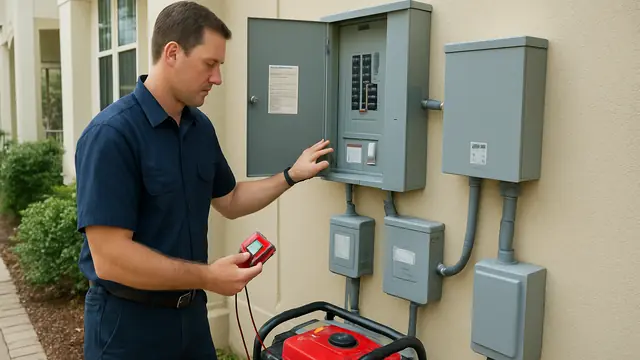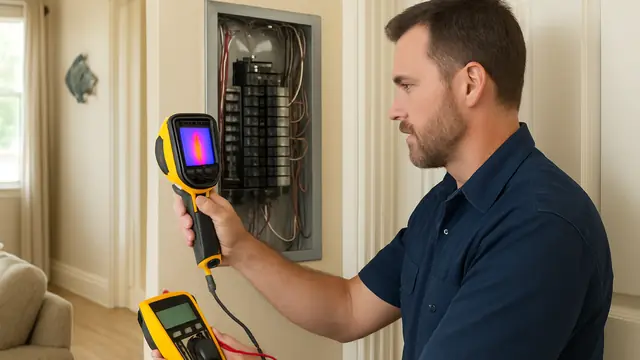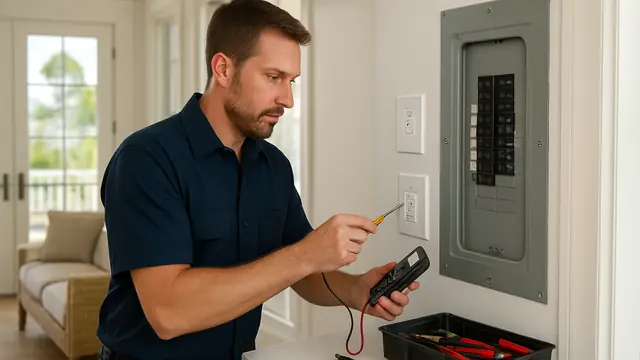
Do not remove an electrical panel cover, touch exposed conductors, bypass protection, or repeatedly reset a fault. Keep clear of smoke, sparks, burning odors, hot equipment, standing water near electricity, and downed lines, then call qualified help.
The utility power goes out, your standby generator starts, and the home continues operating. Later, the pool pump starts while the air conditioner, refrigerator, and electric water heater are already running. The generator slows, the lights flicker, or the system shuts down. In another home, the generator remains stable because a load-management control temporarily turns off the water heater or pool equipment. The first situation may indicate overload, a large motor-starting surge, inadequate fuel delivery, or a failed control. The safe immediate action is to switch off optional high-demand equipment and avoid repeatedly resetting a generator that continues to trip.
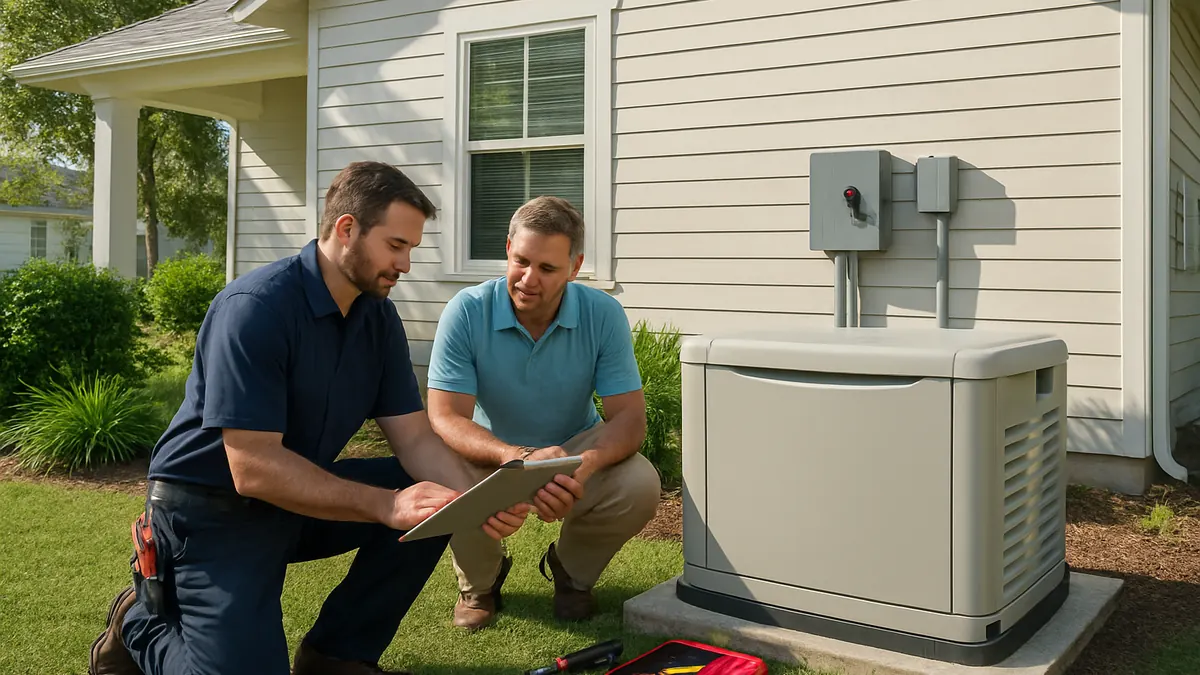
What size standby generator does your home need in WaterColor? The right capacity depends on the loads you expect to use, the extra power required to start motors, the transfer-switch arrangement, the available fuel supply, and the way large appliances are prioritized. A generator should not be selected from square footage alone.
Begin With a Detailed Equipment Inventory
Include every HVAC system, refrigerator, freezer, electric water heater, range, oven, clothes dryer, pool pump, pool heater, spa, sewage or lift pump, dehumidifier, garage appliance, and EV charger that may be present.
Then identify which loads are essential. Cooling, refrigeration, security equipment, internet-connected controls, selected lighting, and important pumps may receive the highest priority.
Essential Coverage Versus Managed Whole-Home Coverage
An essential-load system supplies selected circuits. This can reduce generator capacity and fuel demand while protecting the home's most important functions.
A managed whole-home system connects more of the electrical system but delays lower-priority loads when demand rises.
For example, the controls may allow the primary air-conditioning system to start while temporarily disabling an electric water heater or pool pump. Once demand falls, the delayed load can return.
Why Motor Starting Changes the Calculation
A motor needs a brief burst of extra current to start, then settles into a lower running demand.
Air-conditioning compressors, pool pumps, refrigerators, and other motor-driven equipment can create substantial starting surges.
The generator must support loads already operating while starting the largest required motor. This is why a simple total of appliance running watts may underestimate the correct size.
Multiple HVAC Systems Need a Control Strategy
Homes with several HVAC systems require careful planning. Even when the generator can run more than one system after startup, two compressors beginning at nearly the same time may create an excessive surge.
A licensed electrician may recommend staggered startup, priority settings, or approved load-management controls.
Compatible starting-assistance equipment may reduce the startup demand of certain compressors. It must match the equipment and should not be treated as a universal solution.
Pool and Spa Equipment Can Be a Major Factor
Pool and spa systems may include circulation pumps, booster pumps, heaters, controls, and other electrical equipment. Each load should be identified separately.
Some pool functions may be important during a prolonged outage, while others can remain off. The homeowner and electrician should decide which equipment receives backup power and which is automatically excluded.
Safe Checks You Can Perform
Create three categories: essential, preferred, and optional loads. Write down the equipment in each category.
Photograph accessible nameplates on HVAC condensers, pumps, water heaters, pool equipment, and the generator. Do not remove covers or open panels.
If the generator has a problem, record the fault code and note which equipment was operating or starting. Did the engine speed change? Did the lights dim? Did a breaker open? Did only one appliance shut off?
Do not repeatedly recreate the overload.
What the Homeowner Should Not Attempt
- Do not replace a tripping breaker with a larger breaker. The breaker may be protecting wiring and equipment from dangerous overheating.
- Do not bypass a load-management module because pool equipment, water heating, or another appliance is unavailable. The temporary shutdown may be protecting higher-priority loads.
- Do not modify the automatic transfer switch, move panel conductors, change grounding or bonding, or use an improvised backfeed cord.
- Do not adjust natural-gas pressure, propane regulators, fuel piping, or generator fuel settings. A fuel-delivery problem can make a generator appear undersized.
When the Problem Is Urgent
- Arrange prompt service when the generator repeatedly stalls, hunts in speed, trips its main breaker, displays overload warnings, or causes severe voltage fluctuation.
- Shut the system down if you see smoke, arcing, melted insulation, damaged conductors, or unusual heat around the generator, transfer switch, or panel.
- A gas odor, damaged fuel line, or liquid fuel leak requires immediate action according to the fuel supplier's emergency procedures.
If a carbon-monoxide alarm sounds or exhaust appears to enter the home, leave immediately and call emergency services. Do not restart the generator until the exhaust path and installation have been inspected.
How a Licensed Electrician Determines the Correct Size
The electrician begins by discussing what must operate during an outage and which loads can be delayed or excluded.
The inspection includes the main service, subpanels, transfer equipment, HVAC systems, water heating, cooking equipment, refrigeration, pool and spa systems, pumps, and future additions.
A load calculation identifies normal demand, realistic overlap, and the largest motor-starting event. The electrician then determines whether sequencing or load management can reduce required peak capacity.
Generator output is checked for the intended fuel. Natural-gas piping, propane storage, regulator capacity, pressure, and other fuel-burning appliances must support the engine at full demand.
The electrician also verifies breakers, conductors, grounding, controls, placement, permits, and inspections.
Repair and Installation Options
The least invasive option may be to keep selected equipment off during outages. Pool heating, EV charging, electric drying, or some cooking loads may be excluded.
If the system has load-management equipment, the electrician tests the modules, communication wiring, sensors, and priority settings. Repairing a failed controller may solve the problem.
- Additional approved controls can sequence HVAC systems, water heating, pool equipment, and other large loads. Circuits may also be moved to an essential-load panel.
- Compatible compressor-starting equipment may reduce HVAC startup demand. Fuel-system corrections may restore output when pressure or volume falls under heavy load.
- A larger generator becomes appropriate when measured required loads exceed present capacity and practical management cannot meet the homeowner's priorities.
Factors That Affect Cost
Cost depends on generator capacity, transfer-switch type, number of panels, conductor length, trenching, pad work, load-management equipment, fuel piping, permits, access, and restoration.
Pool and outdoor equipment can add circuits and controls. Existing panel defects, limited space, or incompatible transfer equipment may also increase the scope.
Prevention and Maintenance Guidance
- Follow the manufacturer's maintenance schedule for oil, filters, spark plugs, batteries, cooling airflow, and inspections.
- Keep the enclosure clear, confirm exercise cycles occur, and investigate recurring fault codes. A no-load exercise does not prove the system can start HVAC or pool motors.
- Arrange periodic transfer and load testing. Review the sizing plan before adding a new HVAC system, pool component, water heater, major appliance, or EV charger.
Build the Generator Plan Around the Home's Real Loads
What size standby generator does your home need in WaterColor? It needs enough capacity to carry essential loads, start the largest required motors, and remain stable when HVAC, refrigeration, pumps, and other equipment cycle. The transfer switch, controls, conductors, and fuel system must all support the same plan. A documented load calculation can determine whether better load management, system repair, fuel correction, or a larger generator is the right next step.
About this guide: This resource provides general homeowner education, not a remote diagnosis. Actual conditions, code requirements, equipment, and safe repair options must be evaluated at the property.