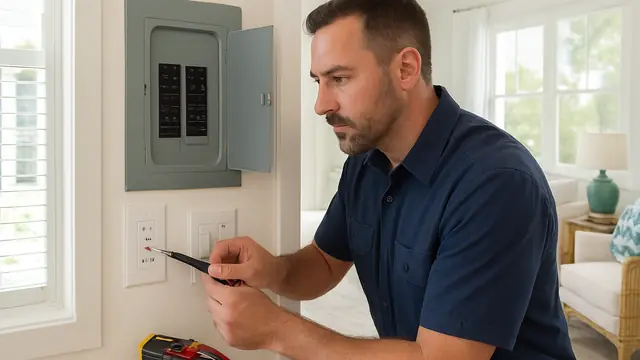
Do not remove an electrical panel cover, touch exposed conductors, bypass protection, or repeatedly reset a fault. Keep clear of smoke, sparks, burning odors, hot equipment, standing water near electricity, and downed lines, then call qualified help.
Imagine returning to your Alys Beach home after an outage and finding that the standby generator ran, but the interior never cooled properly. The refrigerator stayed on, yet the generator shut down when a second air-conditioning system tried to start. Or perhaps you are planning an installation and have been given two very different generator recommendations. The safe immediate response to an existing overload is to switch off nonessential circuits, allow the generator to stabilize, and avoid repeatedly restarting large appliances until the system is evaluated.
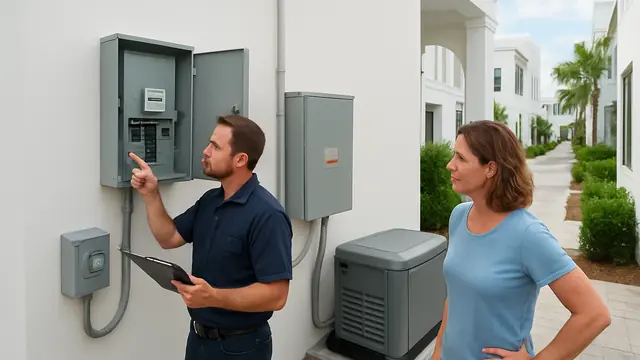
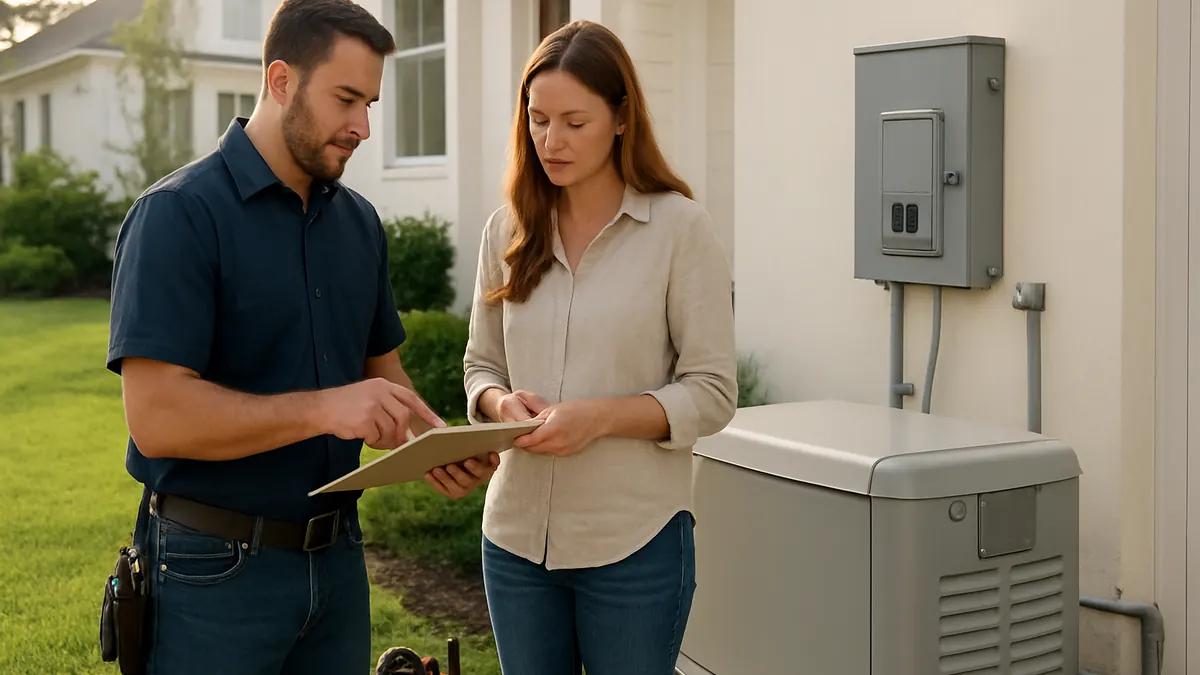
What size standby generator does your home need in Alys Beach? The reliable answer comes from an electrical load calculation and a clear decision about what must operate during an outage. Home size is only a rough clue. The decisive information is the number and type of electrical loads, their running demand, the brief surge required by motors, the fuel available to the generator, and the controls used to sequence equipment. Professional generator-sizing guidance likewise centers on a site survey and load assessment, not a single square-footage chart.
First Define the Outage Experience You Expect
A generator cannot be sized intelligently until the homeowner defines "normal" during an outage.
Some households want refrigeration, lights, internet, selected receptacles, and one air-conditioning system. Others expect most appliances to remain available. The central question is whether you are buying essential continuity, managed comfort, or near-normal operation.
Essential Continuity
An essential-load design backs up selected circuits. It is usually the most direct way to control generator size and fuel demand.
Managed Comfort
A managed system supplies many circuits but temporarily sheds lower-priority loads. Load-management controls are specifically intended to sequence or lock out selected loads when generator capacity is limited.
Near-Normal Operation
Near-normal operation requires enough capacity for loads that may reasonably overlap.
Why Air Conditioning Often Controls the Calculation
In Northwest Florida, cooling is commonly a high-priority outage load. Running demand is the power needed after the compressor is operating. Starting demand is the short burst needed to get the compressor moving. That burst can be much higher than the running load.
A generator may carry small loads comfortably, then stumble when a compressor starts. The correct calculation therefore considers both steady demand and the largest credible motor-starting event.
When a home has more than one HVAC system, the electrician must decide whether both need to run, whether they can be sequenced, and whether compatible starting-assistance equipment is appropriate.
Other Loads That Can Change the Required Size
Electric water heaters, ranges, clothes dryers, pool equipment, well pumps, sewage or lift pumps, dehumidification equipment, and EV chargers can materially change the calculation when present.
The electrician must determine whether each load will be available during generator operation and whether it may overlap with cooling. Disabling EV charging or pool heating during outages can materially reduce required capacity.
Safe Information You Can Gather
Walk through the home and create a written outage plan. Mark each major load as essential, preferred, or optional.
Take clear photographs of accessible nameplates on outdoor HVAC equipment, pumps, and other large appliances. Do not open electrical cabinets or remove covers.
For a system that is already malfunctioning, record the sequence. Which appliance started? Did a breaker trip? Did the generator display a fault? Did the problem occur immediately or after several minutes? These details can distinguish overload from fuel, control, or equipment problems.
What Not to Do
Do not increase breaker sizes to stop nuisance trips. A larger breaker can remove protection without correcting the overload.
Do not defeat a load-shed module or force an appliance to run when the control system has intentionally delayed it.
Do not alter transfer-switch wiring, generator output wiring, gas piping, propane regulators, or fuel settings. A standby generator combines high electrical energy, automatic switching, engine exhaust, and combustible fuel. Diagnosis and modification require qualified professionals.
Urgent Warning Signs
Prompt evaluation is needed when the generator repeatedly stalls, surges in speed, trips its main breaker, displays overload faults, or causes pronounced dimming whenever equipment starts.
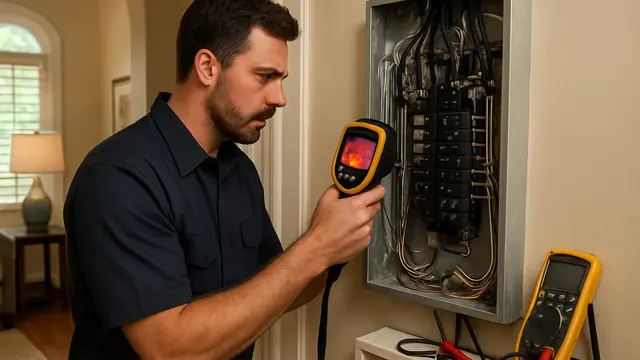
Stop operation for smoke, arcing, burning odor, melted insulation, unusual transfer-switch heat, fuel leakage, or a gas smell.
Treat a carbon-monoxide alarm as an emergency. Leave the structure, call emergency services, and do not restart the generator. CPSC staff has specifically identified exhaust infiltration from stationary generators as a carbon-monoxide hazard that installation requirements must address.
How a Licensed Electrician Sizes the Generator
The electrician begins by reviewing the homeowner's priorities. The next step is an inventory of connected loads and equipment data, including HVAC compressor information and the starting characteristics of pumps or other motors.
The electrician performs the applicable load calculation, identifies likely simultaneous loads, and compares those demands with generator ratings on the intended fuel. The review includes transfer-switch amperage, overcurrent protection, conductor sizes, grounding and bonding, and whether managed loads are controlled correctly.
Fuel delivery is evaluated too. Pipe sizing, pressure, regulator capacity, propane storage when applicable, and other fuel-burning appliances can affect performance.
The site assessment also considers placement, exhaust direction, service access, flood exposure, and the requirements of the authority having jurisdiction. For a property with community or design controls, equipment-location requirements should be confirmed before installation rather than assumed.
Least-Invasive Solutions Before Generator Replacement
An existing system that is slightly overloaded may be corrected by formalizing which optional loads stay off during outages.
If load-management modules are installed, the next step is to test and repair them. A failed control may allow two large appliances to start together.
The electrician may then revise load priorities, add approved load controls, or move selected circuits to an essential-load panel. Compatible motor-starting equipment may be considered for specific HVAC equipment after manufacturer and electrical requirements are checked.
Fuel-pressure or delivery corrections may restore a generator that was incorrectly blamed for being too small.
Replacement with a larger generator is appropriate when measured demand truly exceeds capacity and reasonable management cannot meet the homeowner's goals. It should be the conclusion of the diagnosis, not the starting assumption.
What Changes the Project Cost
Cost depends on generator capacity, transfer-switch type, panel configuration, load controls, conductor routing, trenching, equipment-pad work, fuel piping, permits, access, and restoration. Distance from the electrical service and fuel source matters, as do panel defects or service corrections discovered during planning.
Maintenance That Protects Available Capacity
Neglected filters, oil, batteries, cooling airflow, fuel delivery, or controls can reduce reliability.
Follow the manufacturer's service schedule and arrange professional maintenance at least as frequently as the model requires. Annual professional service is a common minimum recommendation for standby systems, even with limited outage use.
Confirm the weekly or scheduled exercise cycle occurs, keep the enclosure clear, and request periodic testing with meaningful connected load. Revisit the calculation after adding major appliances or replacing HVAC equipment.
Size the System for Your Actual Priorities
What size standby generator does your home need in Alys Beach? The right unit is the smallest properly designed generator that can start and carry your required loads, maintain stable power, and work with the chosen transfer and fuel systems. A documented assessment is more dependable than a square-footage estimate or a recommendation copied from another property.
About this guide: This resource provides general homeowner education, not a remote diagnosis. Actual conditions, code requirements, equipment, and safe repair options must be evaluated at the property.