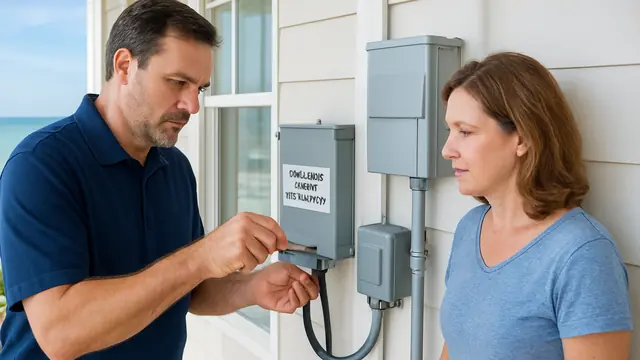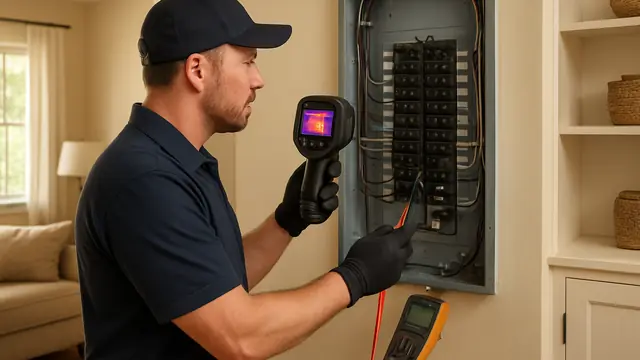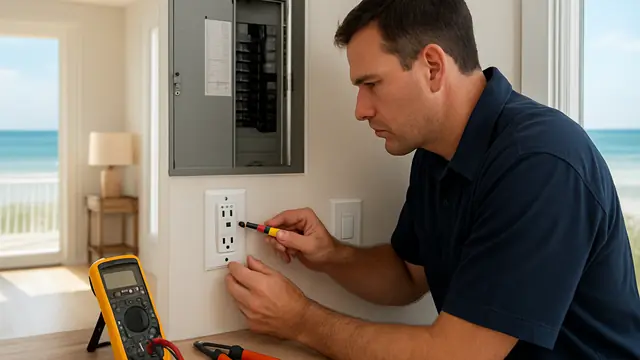
Do not remove an electrical panel cover, touch exposed conductors, bypass protection, or repeatedly reset a fault. Keep clear of smoke, sparks, burning odors, hot equipment, standing water near electricity, and downed lines, then call qualified help.
A Blue Mountain Beach homeowner may discover the sizing problem during the first extended outage. The generator starts automatically, the refrigerator and lights stay on, and then the system shuts down when the water heater and air conditioner overlap. Another clue is a generator that runs smoothly at first but surges, dims lights, or displays an overload fault as more equipment turns on. The safe immediate step is to switch off discretionary loads, leave the generator's protective breakers and controls intact, and arrange an evaluation before trying the same load combination again.
What size standby generator does your home need in Blue Mountain Beach? It needs enough kilowatt capacity to operate the loads you have chosen for backup and to start the largest required motors without unstable voltage or frequency. The decision must also account for fuel, transfer equipment, load management, and future electrical additions. Square footage can help describe a home, but it cannot replace a load calculation. Official sizing guidance from major manufacturers emphasizes running load, motor-starting demand, fuel choice, and a professional site survey.
Why a Simple Appliance List Is Not Enough
Every load has a running demand. Motors may also have a much higher, short starting demand. An air-conditioning compressor or pump can therefore burden the generator far more at startup than after it is running.
Timing matters. One large appliance starting alone may be manageable, while the same appliance starting beside an operating water heater, range, or second HVAC system may exceed capacity. The calculation must examine realistic combinations.
What Do You Really Need During an Outage?
Before selecting kW, decide which of these plans matches your household.
Critical Circuits Only
This plan keeps refrigeration, lighting, communication, selected receptacles, and other true essentials available. One cooling system may be included when the calculation permits.
Most Circuits With Automatic Priorities
This approach backs up broad areas of the home while controls temporarily delay selected high-demand appliances. Load-management devices can prevent several large 240-volt loads from operating at the same time, allowing a smaller generator to serve more of the house.
Full Convenience With Minimal Restrictions
This goal may require a larger generator and fuel system. It is especially important to identify electric water heating, cooking, clothes drying, multiple HVAC systems, pool equipment, pumps, or EV charging when those loads are expected to remain available.
Common Reasons Homeowners Receive Different Size Recommendations
Recommendations differ when contractors make different assumptions about simultaneous use or load management. A managed system may support broader coverage than an unmanaged system with the same rating because controls prevent harmful overlap.
Fuel ratings, HVAC starting data, future-load allowances, transfer-switch design, and incomplete equipment information also change the answer. A proposal should identify included, managed, and excluded loads.
Safe Checks the Homeowner Can Perform
Create a room-by-room list of equipment you would expect to use during an outage. Then highlight high-demand items such as air conditioners, electric water heaters, ranges, dryers, pumps, pool equipment, and vehicle chargers.
Photograph accessible nameplates on outdoor condensers and pumps. Include model numbers and electrical ratings when readable.
If the generator already has a problem, write down the fault code and what was operating immediately beforehand. Observe from a safe distance. Do not open the enclosure while the unit is running unless the manufacturer's owner instructions specifically direct a homeowner procedure.
What You Should Never Try
Do not hold a breaker on, replace it with a larger breaker, or defeat an overload shutdown. Protective devices are responding to a condition that must be identified.
Do not bypass the automatic transfer switch or connect a generator to home wiring through an improvised cord. The transfer equipment prevents the generator and utility supply from energizing the same conductors incorrectly.
Do not adjust gas pressure, propane regulation, or fuel conversion settings. Fuel starvation can resemble electrical overload, while incorrect fuel work can create fire, explosion, and carbon-monoxide hazards.
Signs the Issue Requires Immediate Attention
Call promptly when the generator repeatedly trips, stalls, surges, or cannot start a designed load.
Stop using the system for smoke, arcing, melted insulation, burning odor, abnormal heat, damaged conductors, liquid fuel leakage, or gas odor.
If a carbon-monoxide alarm activates, everyone should leave the home and call emergency services. Do not silence the alarm and continue operating the generator. CPSC staff has warned that stationary-generator exhaust can infiltrate occupied structures when installation and separation do not adequately control the hazard.
How a Licensed Electrician Finds the Correct Generator Size
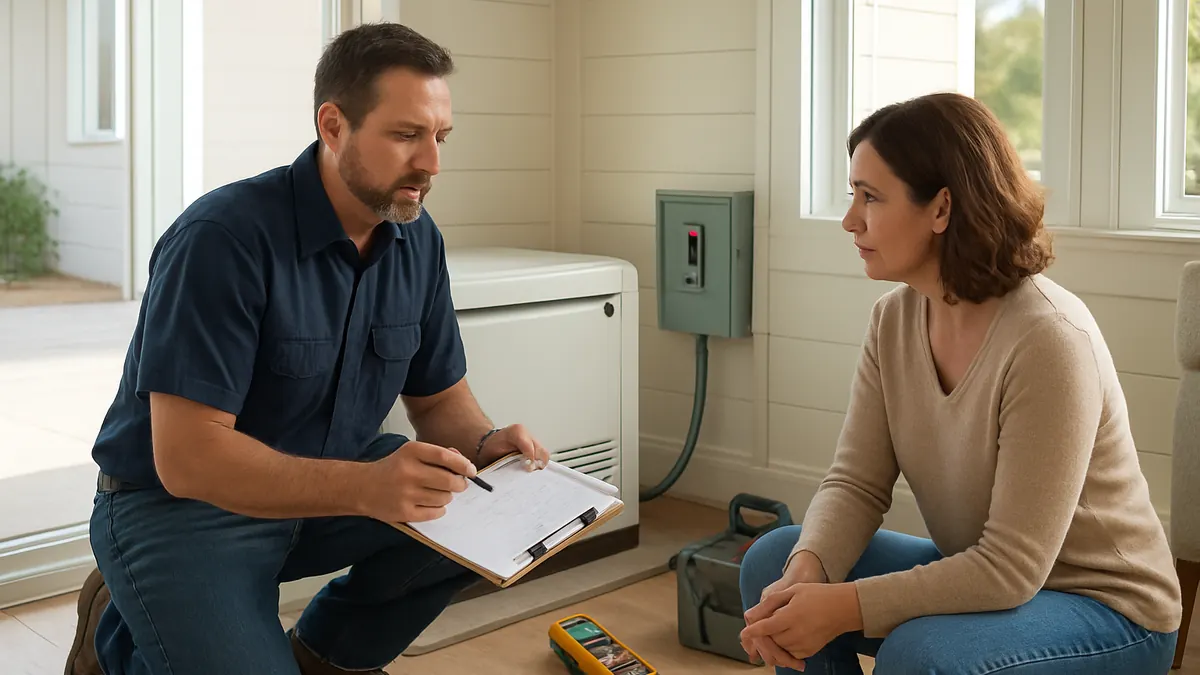
The process begins with an interview. The electrician asks what must remain available, which loads may be delayed, and whether future additions are planned.
Next comes a field inventory. The electrician examines panel schedules, service rating, subpanels, transfer equipment, large-appliance nameplates, HVAC compressor data, and motor loads. Existing generator fault history and load-control operation are reviewed when applicable.
The electrical calculation evaluates continuous and noncontinuous loads, likely demand, and motor starting. The generator's rating on the intended fuel is compared with both running and transient requirements.
The electrician verifies transfer-switch capacity, breaker protection, conductor size, grounding, bonding, controls, and fuel delivery.
The site review covers placement, exhaust direction, building openings, maintenance clearances, access, fuel routing, flood exposure, permits, and inspections.
Solutions From Small Adjustments to Replacement
For a mildly overloaded existing system, the first reasonable option may be a written load-use plan. Turning off EV charging, pool heating, or other discretionary equipment can restore reliable operation.
The next step is testing load-management devices and control settings. Repairing one failed module may stop simultaneous starts that overload the generator.
An electrician may add approved load controls, revise circuit priorities, or create an essential-load panel. Compatible HVAC starting-assistance equipment may be considered after confirming equipment and manufacturer requirements.
If the generator has adequate electrical capacity but fuel pressure drops under load, correcting the fuel system may solve the problem without replacing the generator.
A larger generator becomes reasonable when the measured and planned loads exceed current capacity even after practical management. Related transfer-switch, conductor, panel, pad, or fuel upgrades may be necessary.
What Affects Generator Project Cost?
Cost depends on capacity, transfer-switch configuration, panel count, load controls, conductor length, trenching, fuel work, permits, inspections, access, and restoration. Damaged equipment, limited panel space, or improper prior work can expand the scope.
Maintenance and Future-Proofing
Follow the manufacturer's maintenance schedule for oil, filters, battery, spark plugs, and inspection. Professional service at least annually is a common recommendation for standby generators, even when outage hours are low.
Keep the enclosure clear, confirm exercise cycles occur, and test the system periodically under meaningful load.
Tell the electrician before adding major electrical equipment. A new compressor, water heater, pool load, or charger may require revised load priorities or another sizing review.
Get a Calculation, Not a Guess
What size standby generator does your home need in Blue Mountain Beach? The right size is based on required loads, the largest motor-starting event, available fuel, transfer equipment, and the way high-demand appliances will be prioritized. A careful design may show that load management is enough, or it may justify a larger system. Either outcome should be supported by measurements and a documented calculation.
About this guide: This resource provides general homeowner education, not a remote diagnosis. Actual conditions, code requirements, equipment, and safe repair options must be evaluated at the property.