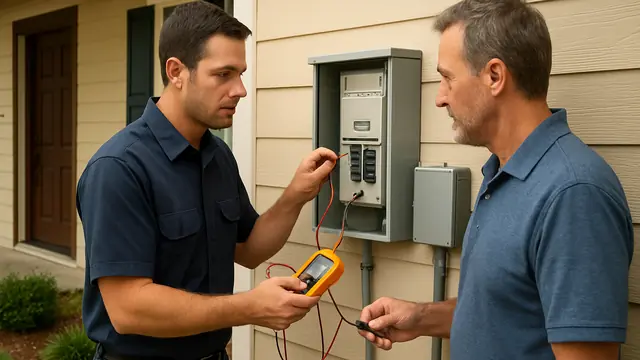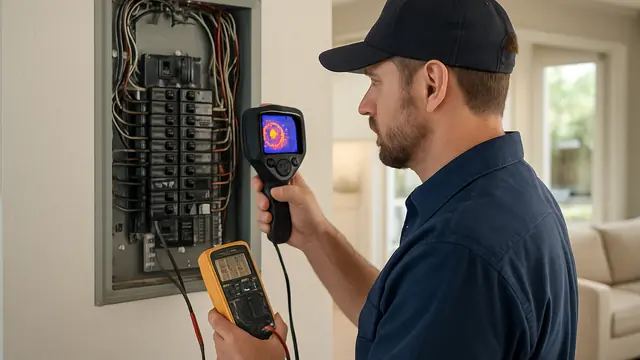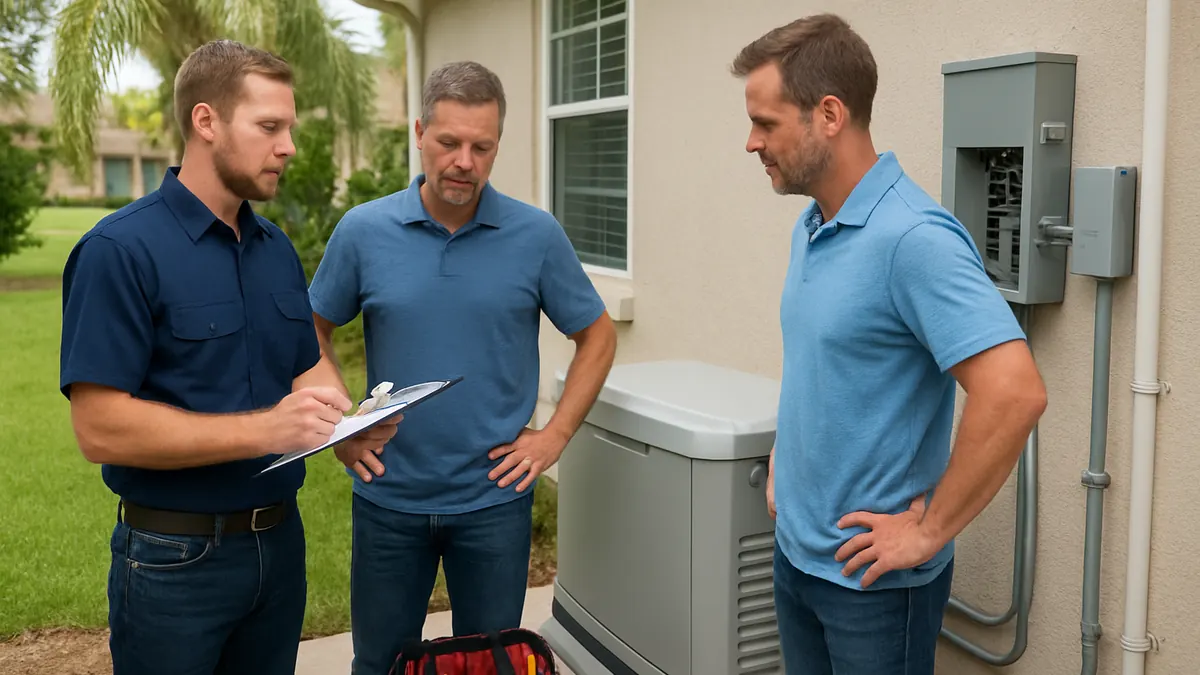
Do not remove an electrical panel cover, touch exposed conductors, bypass protection, or repeatedly reset a fault. Keep clear of smoke, sparks, burning odors, hot equipment, standing water near electricity, and downed lines, then call qualified help.
A summer storm moves through Camp Creek, utility power drops, and the standby generator starts as expected. The refrigerator stays cold and several lights remain on, but the moment the air-conditioning compressor tries to start, the lights dim and the generator sounds strained. In another home, the generator keeps running, yet the electric water heater or pool pump never comes back on because a load-management control has shut it off. These symptoms often mean the generator is reaching its available capacity, a motor is creating a heavy starting surge, or the fuel and control systems are not supporting the load correctly. The safe immediate action is to turn off nonessential high-demand equipment and avoid forcing the same appliance to restart repeatedly.
What size standby generator does your home need in Camp Creek? The correct size is not determined by square footage or the amperage printed on the main panel. It depends on which appliances must operate during an outage, how much power they use while running, how much extra power motors need to start, whether loads can be sequenced, and whether the natural-gas or propane system can supply the generator at full demand.
Start With the Outage Experience You Expect
Generator sizing begins with priorities. An essential-load plan may include one air-conditioning system, refrigerators, selected lighting, internet equipment, kitchen receptacles, garage access, and important medical or office devices.
A managed whole-home plan connects more circuits but automatically delays selected large loads. For example, the controls may prevent an electric water heater from operating while the air conditioner starts. When generator demand falls, the water heater can be restored.
A broad whole-home plan allows most normal loads to operate with fewer restrictions. That goal may require more capacity when the property has multiple HVAC systems, electric cooking, electric water heating, pool equipment, pumps, a clothes dryer, or an EV charger.
Why Air Conditioning Often Controls Generator Size
Air-conditioning equipment has a running demand and a larger starting demand. Running demand is the electricity needed after the compressor and fan motors are operating. Starting demand is the brief surge required to get those motors moving.
A generator may carry lights, refrigerators, and receptacles comfortably, then experience a voltage drop when a compressor starts. If two HVAC systems start together, demand can be much higher.
A licensed electrician reviews the equipment nameplates and determines whether both systems must operate simultaneously. Automatic sequencing, approved load controls, or compatible starting-assistance equipment may solve the problem without simply choosing the largest available generator.
Other Loads That Change the Calculation
Electric water heaters, ranges, ovens, clothes dryers, pool heaters, and EV chargers can consume substantial power. Pool, well, and sewage pumps also have motor-starting demand.
Many homeowners decide vehicle charging can wait until utility power returns. That choice should be built into the system through controls or circuit design rather than left to memory during an outage.
Safe Checks Before a Sizing Appointment
Create three lists: equipment that must operate, equipment you would prefer to operate, and equipment that can remain off. Photograph accessible labels on outdoor air-conditioning units, pumps, electric water heaters, and other major equipment. Do not remove panel covers or open electrical compartments.
For an existing generator problem, note any fault code and record which appliances were operating. Did the breaker trip? Did the engine change speed? Did the lights dim before shutdown? This information helps distinguish overload from fuel or control problems.
What You Should Not Attempt
Do not replace a tripping generator breaker with a larger breaker. The existing breaker may be protecting conductors and equipment from overheating.
Do not bypass load-management modules because they prevent an appliance from running. The module may be protecting the generator from overload.
Never connect a generator through an improvised backfeed cord. Do not adjust natural-gas pressure, propane regulators, transfer-switch wiring, grounding conductors, or generator output wiring. These systems involve automatic switching, combustible fuel, and dangerous electrical energy.
Signs That Make the Problem Urgent
Arrange prompt service when the generator repeatedly stalls, surges in speed, trips its output breaker, displays overload warnings, or causes pronounced dimming whenever a large appliance starts.
Shut the system down if you see smoke, arcing, melted insulation, damaged wiring, or unusual heat around the transfer switch or generator conductors.
A gas odor, liquid fuel leak, or damaged fuel line requires immediate attention. Follow the fuel supplier's emergency instructions and keep ignition sources away.
If a carbon-monoxide alarm activates or exhaust appears to enter the home, leave immediately and call emergency services. Do not restart the generator until the cause has been corrected.
How a Licensed Electrician Determines the Right Size
The electrician first asks how you want the property to function during an outage. This establishes which loads are essential, manageable, or optional.
Next comes an inventory of the main service, panels, transfer equipment, HVAC units, pumps, water heating, cooking equipment, refrigeration, pool systems, and future additions.
The load calculation considers normal operating demand and the largest likely motor-starting event. The electrician evaluates which loads can operate together and which can be delayed automatically.
The generator rating is checked for the intended fuel. Fuel pressure, pipe sizing, regulator capacity, propane storage, and other fuel-burning appliances matter because inadequate fuel delivery can make a properly sized generator act undersized.
The final review includes the transfer switch, conductors, breakers, grounding, equipment placement, maintenance access, permits, and inspections.
Repair and Installation Options
For an existing system that is only slightly overloaded, the least invasive solution may be a clear operating plan that keeps discretionary equipment off.
The next step is testing load-management modules. A failed control may allow two large appliances to start together.
An electrician may revise load priorities, add approved controls, or move selected circuits to an essential-load panel. Compatible motor-starting equipment may reduce the starting demand of certain HVAC systems.
Fuel-system correction may solve a problem when gas pressure or volume falls under load. A larger generator becomes appropriate only when measured demand exceeds current capacity and practical load management cannot meet the homeowner's goals.
Factors That Affect Cost
Cost is influenced by generator capacity, transfer-switch type, panel configuration, load-management equipment, conductor distance, trenching, equipment-pad work, fuel piping, permits, access, and restoration.
Panel repairs or long distances between the generator, electrical service, and fuel source can increase labor and materials.
Prevention and Maintenance
Follow the manufacturer's maintenance schedule for oil, filters, spark plugs, batteries, and inspection. A generator that exercises weekly can still fail under real load if maintenance has been neglected.
- Keep vegetation, stored items, and debris away from the enclosure. Confirm exercise cycles occur and investigate repeated fault codes rather than simply clearing them.
- Schedule periodic testing under meaningful load. A no-load exercise does not prove the system can start the air conditioner.
- Review the sizing plan whenever you add HVAC equipment, electric water heating, pool equipment, a major kitchen appliance, or an EV charger.
Choose Capacity for Real Outage Conditions
What size standby generator does your home need in Camp Creek? It needs enough capacity to carry your essential loads, start the largest required motors, work with the available fuel supply, and maintain stable power. The right design may use load management instead of unnecessary excess capacity, or it may justify a larger generator when several high-demand loads truly must operate together.
About this guide: This resource provides general homeowner education, not a remote diagnosis. Actual conditions, code requirements, equipment, and safe repair options must be evaluated at the property.