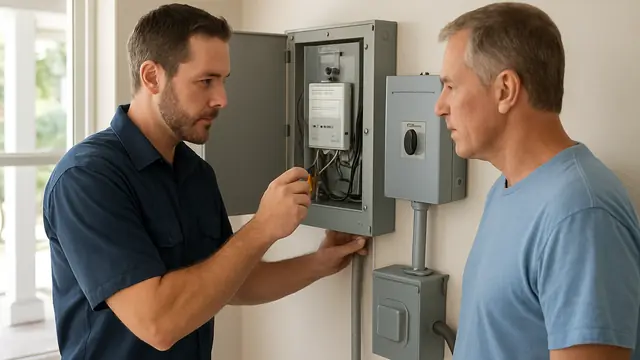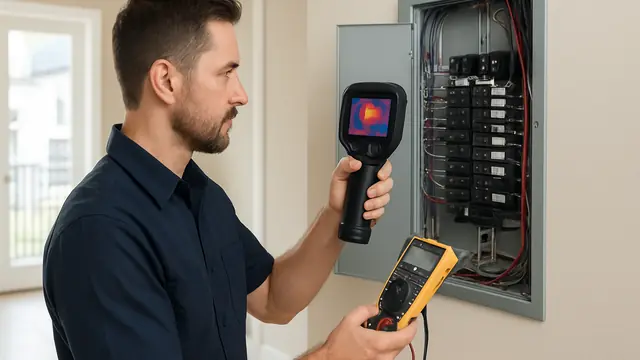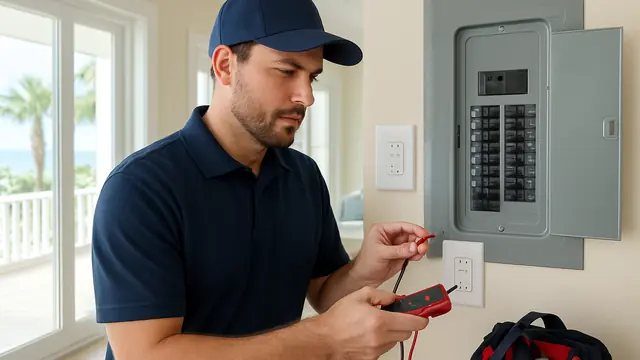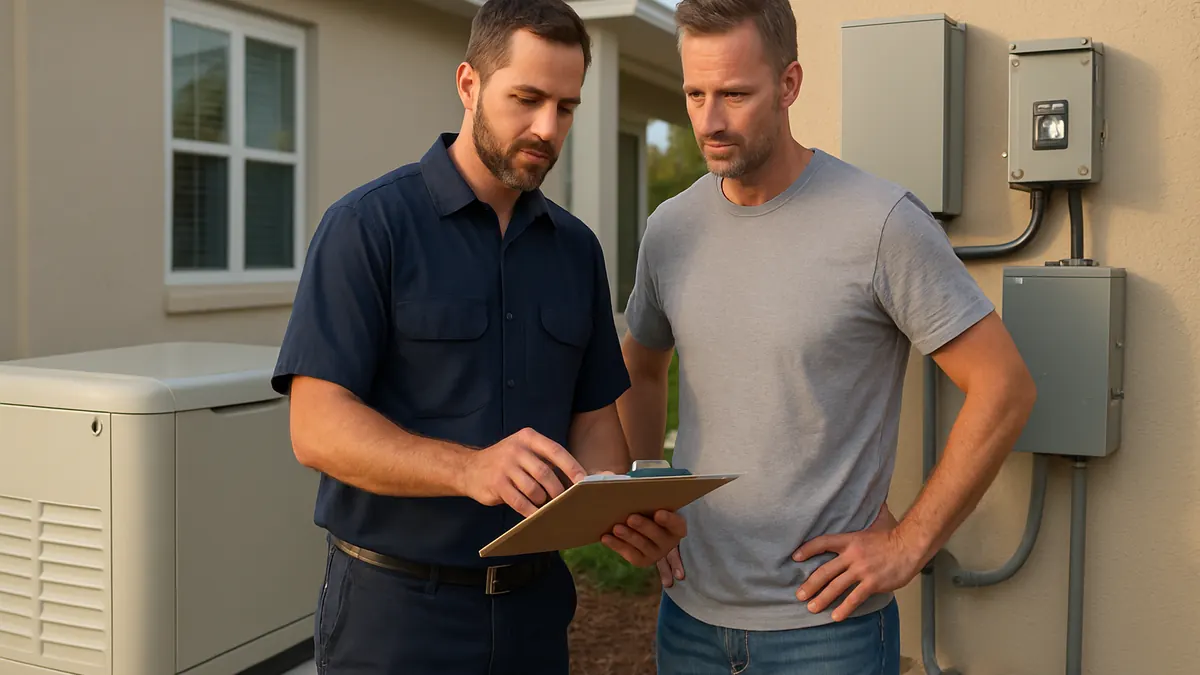
Do not remove an electrical panel cover, touch exposed conductors, bypass protection, or repeatedly reset a fault. Keep clear of smoke, sparks, burning odors, hot equipment, standing water near electricity, and downed lines, then call qualified help.
The power goes out, your standby generator starts, and everything seems normal until the air conditioner tries to come on. The lights dip, the engine strains, or the generator breaker trips. In either situation, the immediate safe action is to reduce unnecessary electrical loads and avoid repeatedly forcing a struggling generator to restart large equipment.
The answer to "What size standby generator does your home need in 30A?" is not based on square footage alone. Correct sizing depends on what you want powered, the running demand of those loads, the extra power motors need at startup, the available fuel supply, and whether large appliances will be managed automatically. Manufacturers recommend a professional load assessment because two similarly sized homes can have very different electrical demands.
What Generator Size Means
Standby generators are rated in kilowatts, or kW. One kilowatt equals 1,000 watts. The generator must carry the equipment operating during an outage while also handling brief starting surges from motors such as air-conditioning compressors, pumps, and refrigerators.
That starting demand explains why adding only appliance running watts can produce the wrong answer. A generator may look adequate on paper but experience voltage or frequency drop when the largest motor starts.
Decide What You Want to Power
Essential-Load Coverage
An essential-load system may support refrigeration, selected lights and receptacles, internet equipment, garage access, a few kitchen circuits, and one HVAC system. It can reduce generator capacity, fuel demand, and installation complexity.
Managed Whole-Home Coverage
A managed system connects broader portions of the home but prevents selected large appliances from operating together. For example, it may temporarily pause an electric water heater while an air conditioner starts. Load management can provide wider coverage without automatically buying the largest available unit.
Broad, Unrestricted Coverage
Some homeowners want nearly every normal load available without changing their habits. That may require more capacity when the home has multiple HVAC systems, electric cooking, electric water heating, pool equipment, or EV charging. "Whole home" should describe the actual operating plan, not simply a transfer switch connected near the main service.
Common Causes of Incorrect Generator Sizing
The first mistake is choosing by square footage. Floor area does not reveal whether a home has gas appliances, electric heat, multiple compressors, or specialty equipment.
The second mistake is ignoring starting watts. Motors can demand substantially more power for a short period when they begin operating.
The third is confusing service size with generator size. A 200-amp electrical service does not automatically require a generator capable of supplying the service's full theoretical capacity. The electrician evaluates selected loads, calculated demand, starting events, and load controls.
Fuel supply is also critical. Generator output may vary by fuel, and gas piping or a propane system must deliver adequate volume and pressure while other fuel-burning appliances may be operating. A correctly selected generator can still perform poorly if fuel delivery is insufficient.
Safe Checks Before a Sizing Appointment
Make a three-part list: loads that must run, loads you would like to run, and loads that can remain off. Include HVAC, refrigeration, water heating, cooking, medical or office equipment, pumps, pool equipment, laundry, and EV charging when present.
Photograph accessible equipment labels, especially exterior HVAC condenser nameplates. Do not remove panel covers.
Think through realistic combinations. Can EV charging wait? Can a pool heater remain off? Do you need both HVAC systems at once? Honest priorities often prevent unnecessary oversizing.
For an existing generator, record what was running before the problem. Note whether the engine changed sound, lights dimmed, or a breaker opened. Do not repeatedly recreate an overload.
What You Should Not Attempt
Do not alter breaker sizes, move panel conductors, bypass load-management controls, or connect a generator through a homemade backfeed arrangement. A standby generator requires properly designed switching, overcurrent protection, grounding, and bonding.
Do not modify natural-gas piping, propane regulators, or generator fuel settings unless qualified and authorized. An apparent electrical-capacity problem may actually be inadequate fuel supply.
Do not assume a soft-start device automatically fixes an undersized system. Compatible motor-starting equipment can help in some applications, but it must be selected and installed correctly and included in the complete load calculation.
When the Problem Is Urgent
Arrange prompt service if the generator repeatedly stalls, hunts in speed, trips its output breaker, or causes severe dimming whenever a large appliance starts.
Shut the unit down if you notice smoke, a burning odor, damaged wiring, unusual heat at the transfer switch, liquid fuel leakage, or a gas odor. Follow the fuel provider's emergency directions if a leak is suspected.
If a carbon-monoxide alarm sounds or exhaust appears to enter the home, leave immediately, call emergency services, and do not restart the generator. Stationary-generator exhaust can create a carbon-monoxide hazard when fumes migrate into occupied spaces.
How a Licensed Electrician Diagnoses and Sizes the System
The electrician begins with your outage priorities and inventories the loads that may operate together. The assessment includes the service and panels, HVAC nameplates, motor-starting requirements, electric water heating, cooking equipment, pumps, refrigeration, and planned future additions.
A load calculation then compares running demand with the largest likely starting event. The electrician evaluates generator ratings, transfer-switch capacity, breaker protection, conductors, grounding and bonding, and possible load-management controls.
The site survey also considers generator placement, exhaust clearances, maintenance access, fuel routing, and property-specific permitting and inspection requirements. The completed system should then be tested for transfer operation, load sequencing, and stable power.
Correction and Installation Options
If an existing generator is only marginally overloaded, the least invasive answer may be turning off discretionary loads during outages.
Next, the electrician may repair or reprogram load-management equipment. A failed module that no longer sheds a water heater or second HVAC system can make an adequate generator appear too small.
Other options include adding engineered load management, using compatible motor-starting equipment where appropriate, changing the backed-up circuit plan, or modifying the transfer equipment.
More extensive corrections may involve fuel-system changes, panel work, feeder replacement, or installation of a larger generator. The proper option solves the measured limitation without adding unnecessary capacity.
Factors That Affect Cost
Cost depends on generator capacity, transfer-switch type, number of controlled loads, conductor distance, trenching, equipment-pad needs, fuel type, gas or propane work, permitting, access, and surface restoration.
Panel condition also matters. A crowded, damaged, obsolete, or poorly configured panel may need correction before a safe generator connection can be made. Distance between the generator, fuel source, and electrical service can significantly affect labor and materials.
Prevention and Maintenance
Have the generator serviced at the manufacturer's required interval. Many standby systems should receive professional attention at least annually, even when outage use has been limited.
Keep the enclosure unobstructed, watch for corrosion or pest damage, and confirm scheduled exercise cycles occur. Periodic testing under meaningful load provides more information than hearing the engine run with little connected demand.
Review generator sizing whenever you add or replace an HVAC system, electric water heater, pool equipment, range, EV charger, or another large appliance.
Choose Capacity for Real Outage Conditions
What size standby generator does your home need in 30A? It needs enough capacity to carry the loads you choose, start the largest required motors, work with the available fuel supply, and maintain stable power under a realistic operating plan. It should not be selected from square footage, service amperage, or a neighbor's installation.
About this guide: This resource provides general homeowner education, not a remote diagnosis. Actual conditions, code requirements, equipment, and safe repair options must be evaluated at the property.