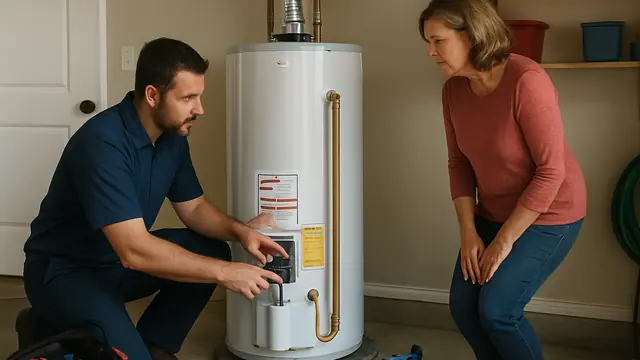
Stop and call for qualified help when plumbing water is near electrical equipment, sewage is entering occupied space, gas or burning odors are present, or a repair would require opening pressurized piping.
The first sign may not be a puddle. You may hear the water heater refill when no hot-water fixture is running, notice a damp smell near the utility area, or find that the flooring beside the heater feels soft. When you look closely, you see a slow drip from a connection or water appearing beneath the tank.
If your water heater is leaking in DeFuniak Springs, protect the area before trying to diagnose it. Stop using hot water and move stored items away. If water is spreading and the cold-water shutoff above the heater is accessible without crossing a wet floor, close it. Do not touch electrical controls while standing in water. If you smell gas, leave the building and call the gas utility or emergency services.
A small leak can come from a replaceable valve or fitting. Water from the tank body, however, often means the heater has reached the end of its serviceable life.
Begin With the Leak Pattern
The timing and location of the water can help distinguish one problem from another.
A constant drip usually indicates a pressurized connection, valve, or tank leak. Moisture that appears while the heater operates may involve thermal expansion, condensation, or pressure changes.
Do not rely on location alone. Water leaking at the top can run behind the outer jacket and appear at the bottom.
Common Causes of a Leaking Water Heater
Supply-Line or Outlet-Connection Leaks
Every tank-style heater has a cold-water inlet and hot-water outlet. The attached connectors, threaded fittings, and shutoff valve remain under pressure.
A worn washer, deteriorated connector, or corroded fitting may release only a few drops at first, then gradually soak nearby materials.
Temperature and Pressure Relief Valve Problems
The temperature and pressure relief valve protects the heater if water becomes too hot or pressure rises too high. Its discharge pipe directs released water downward.
A valve may leak because its internal seal has deteriorated. It can also open because the plumbing system has excessive pressure, the heater is overheating, or expanding heated water has nowhere to go. The cause must be identified before the valve is treated as the only problem.
Drain Valve Leakage
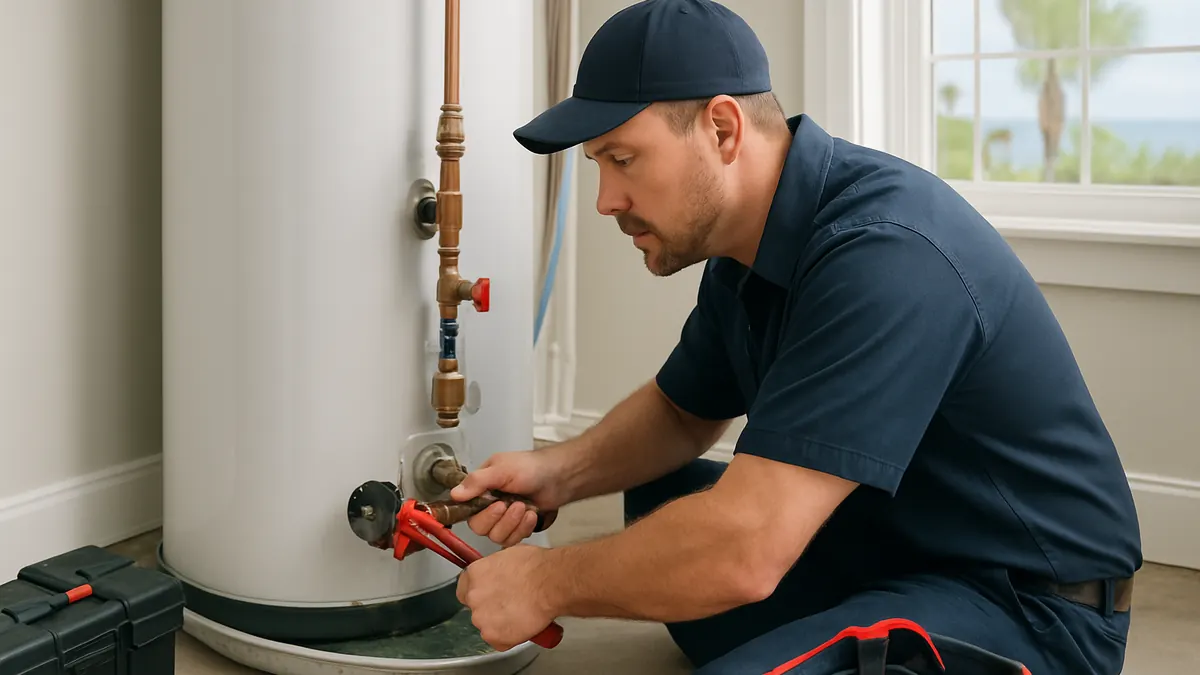
The drain valve near the tank bottom is used for flushing and service. It may drip if it was not fully closed after maintenance, if sediment is caught in it, or if its seal is damaged.
Heating-Element Gasket Leakage
Electric water heaters have heating elements that pass through the tank wall. A deteriorated gasket can allow water to seep behind the access cover or insulation.
This is not a safe place for homeowner inspection because energized wiring may be present.
Corrosion of the Inner Tank
The inner steel tank is protected by a lining and an anode rod. As those protections deteriorate, corrosion can eventually create a leak.
Water coming from beneath the jacket, around a tank seam, or from an area that cannot be traced to a removable component often suggests internal failure.
Safe Checks Before Scheduling Service
Look at the heater from several angles with a flashlight. Check the top connections, shutoff valve, visible piping, relief discharge pipe, drain valve, and pan.
Use dry paper towels to identify the highest wet point. Mineral crust, rust trails, or greenish staining around a joint can reveal a long-term drip.
Note whether the hot water has changed in temperature, color, odor, or duration. Check the surrounding area for another possible source, such as a pipe overhead, appliance hose, condensate line, or water-treatment component.
What Not to Do
- Do not plug the relief pipe, even temporarily. A safety valve must remain able to discharge.
- Do not remove a drain valve, heating element, thermostat cover, or gas control from a full, energized heater.
- Do not force a corroded shutoff valve. If it does not move with reasonable hand pressure, leave it for a plumber.
- Do not assume a bucket makes continued operation safe. Capturing drips does not correct pressure, electrical, or corrosion problems.
- Do not apply a surface patch to a leaking tank and expect a permanent repair.
When the Situation Is Urgent
A leak requires urgent attention when water flow increases, the shutoff does not stop it, or moisture reaches electrical equipment.
Treat repeated release of hot water from the relief pipe as urgent. The same applies to unusually hot tap water, steam, a distorted tank, loud popping accompanied by leakage, or burning smells.
For gas equipment, leave immediately if you smell gas. Soot around the heater or signs that combustion gases are not venting properly also require professional attention.
Water entering flooring, drywall, cabinets, or a ceiling below the heater should be addressed quickly even when the flow seems slow.
How a Licensed Plumber Diagnoses the Cause
- A plumber dries the equipment and traces fresh water to its origin. Connections and valves are inspected for active leakage and corrosion.
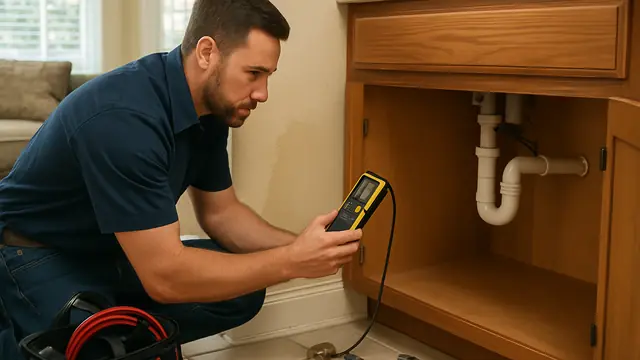
- The plumber may test incoming water pressure and observe how pressure changes while the heater operates. Expansion tanks and pressure-regulating valves are checked where present.
- After the energy source is made safe, electric element gaskets or gas controls and venting may also be evaluated.
The tank is examined for corrosion, seam leakage, and water beneath the jacket. The plumber then decides whether a focused repair is dependable or replacement is the safer long-term choice.
Repair Options in a Practical Order
The least invasive repair may be resealing a threaded joint or replacing a connector washer.
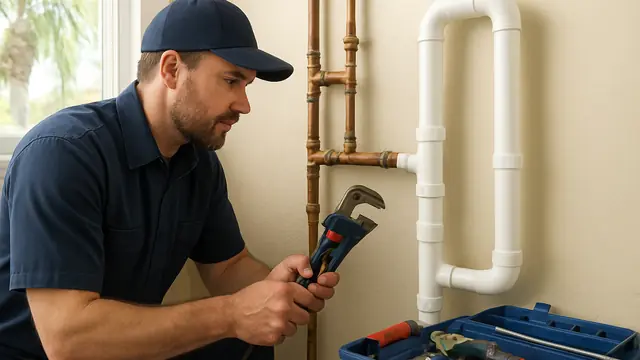
A leaking supply connector, shutoff valve, or short section of piping can often be replaced. A drain valve or heating-element gasket may also be replaceable if the tank remains sound.
A faulty relief valve can be replaced after the plumber confirms that pressure and temperature are safe. Expansion or pressure-regulating equipment may need service if it caused the discharge.
When the tank wall has corroded through, replacement is normally required. Options may include another storage tank, a higher-efficiency model, a heat-pump water heater where conditions support it, or a tankless system sized for the household's demand.
What Affects Repair or Replacement Cost?
- Cost varies with the failed part, heater type, fuel source, capacity, and access.
- Accessibility and the condition of the shutoff, pan, piping, venting, electrical service, gas supply, and pressure controls can affect the work.
- Water damage remediation is separate from repairing the source and may increase the total project scope.
Maintenance and Prevention
- Look around the heater regularly. Check for rust, mineral deposits, dampness, and water in the pan.
- Keep the area clear so the heater and shutoff remain accessible. Have household water pressure tested periodically, especially when several fixtures or appliance hoses have failed.
- Ask whether the anode rod, flushing schedule, and expansion control should be evaluated for your heater. Maintenance should be based on the equipment's design and condition.
- Consider a leak alarm or automatic shutoff system when early warning would reduce unattended damage.
Choose the Next Step Based on the Source
When asking, "Why is my water heater leaking in DeFuniak Springs?" remember that similar puddles can come from very different failures. A connector, gasket, or valve may be repairable. Water escaping through the inner tank usually calls for replacement. A licensed diagnosis helps avoid unnecessary replacement while making sure a serious failure is not mistaken for a minor drip.
About this guide: This resource provides general homeowner education, not a remote diagnosis. Actual conditions, code requirements, equipment, and safe repair options must be evaluated at the property.