Stop and call for qualified help when plumbing water is near electrical equipment, sewage is entering occupied space, gas or burning odors are present, or a repair would require opening pressurized piping.
You have found a Callaway home that fits your budget, but the walkthrough reveals a damp cabinet floor, inconsistent water pressure, or a toilet that keeps refilling after it should stop. Those symptoms may come from a small fixture repair, but they can also indicate a hidden supply leak, pressure problem, drain restriction, or worn component. The safest immediate action is to stop operating any fixture that is actively leaking, document the condition, and request a licensed plumbing evaluation before your purchase deadlines pass.
Buying a house means buying the systems behind the walls as well as the rooms you can see. A focused plumbing inspection explains how water enters the home, how wastewater leaves it, whether the water heater is dependable, and whether previous repairs appear sound. The exact utility arrangement and responsibility for a particular line must be confirmed for the address.
Begin With the Property's Plumbing History
Ask the seller for available plumbing records, including water-heater invoices, repiping documents, leak repairs, sewer work, permits, and remediation reports.
Ask whether the property has experienced repeated backups, unusually high water use, slab leaks, toilet overflows, or water-heater failure. Compare those answers with the visible condition of the home.
Locate the Main Shutoff and Check for Continuous Use
The buyer should know where the main water shutoff is located. It should be accessible and capable of stopping flow without excessive force. A buried, blocked, leaking, or seized valve can delay emergency response after closing.
A meter observation may help identify continuous water use. With fixtures and known automatic equipment off, movement can suggest leakage. Running toilets, irrigation, ice makers, and other equipment must be ruled out. A plumber may then isolate sections to locate the loss.
Test Pressure, Flow, and Hot-Water Performance
Water pressure should be measured rather than judged by feel. Low pressure at one faucet may be caused by a clogged aerator. Low flow throughout the home may involve a valve, regulator, service line, or internal piping. High pressure can shorten the life of hoses, toilet valves, faucet cartridges, and water-heater components.
The inspector should operate several fixtures together and note pressure or temperature changes. Hot-water testing should also consider heater capacity and expected household demand.
Inspect Accessible Supply Piping
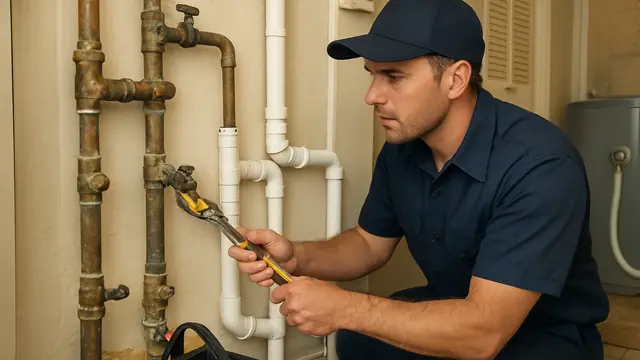
Supply piping may be visible under sinks, near the water heater, in a garage, crawlspace, attic, utility area, or exterior wall. The plumber looks for drips, staining, corrosion, poor support, stressed fittings, and repeated patches.
Pipe material matters, but material alone does not decide whether replacement is necessary. Condition, leak history, installation quality, accessibility, and the extent of questionable sections should guide the recommendation.
A targeted repair may solve one defect. Partial or whole-home replacement becomes more reasonable when failures are widespread or recurring.
Examine Toilets, Sinks, Tubs, and Showers
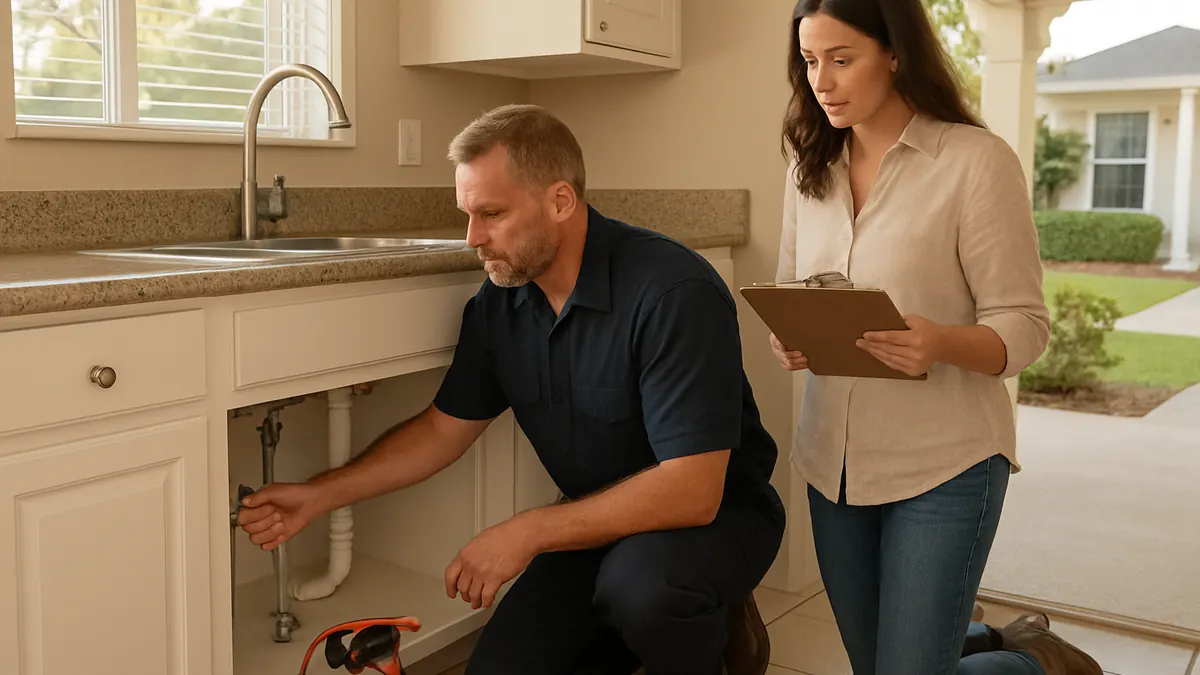
Every fixture should be operated and observed. Toilets should flush, refill, stop running, remain stable at the floor, and show no leakage at the base or supply connection. Sinks should drain without dripping into cabinets. Tubs and showers should be checked for drainage, valve operation, wall staining, and leakage into adjoining areas.
A rocking toilet may need resetting, but the flange and surrounding floor must also be evaluated. A dripping faucet may need a cartridge, while moisture under a sink may come from the drain assembly rather than the faucet.
Repairs should match the cause. Replacing an entire fixture is not always necessary when a seal, valve, connector, or internal component can be serviced safely.
Check Laundry, Kitchen, and Appliance Connections
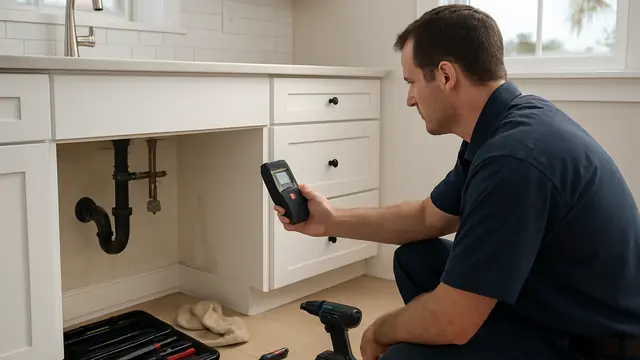
Laundry and kitchen areas contain several common leak points. Inspect washing-machine valves and hoses, dishwasher connections, refrigerator supply lines, disposal piping, and the drain arrangement below the kitchen sink.
Look for swollen cabinetry, stains, corrosion, unsupported hoses, and defective shutoffs. Permanent valves and drains matter even when an appliance will not remain.
Evaluate the Drain and Sewer System
A drain that empties once may still have a partial restriction. The plumber should run water long enough to observe performance and may operate several fixtures together. Gurgling, sewer odor, slow drainage, or water rising in another fixture can point to a venting issue or blockage farther downstream.
When evidence justifies it, a sewer camera may be used to inspect the accessible main line. It can reveal buildup, cracks, roots, separated joints, standing water, or obstruction. Locating equipment can help estimate where a defect lies.
Inspect the Water Heater and Safety Features
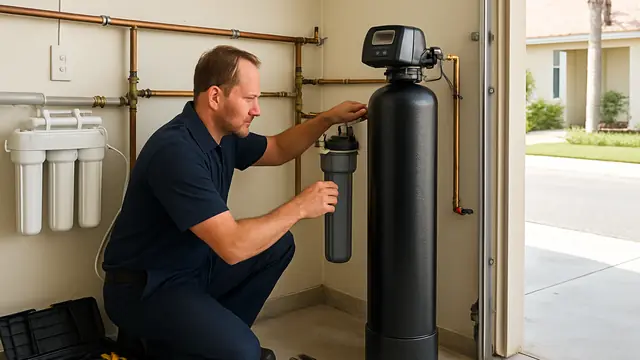
The plumber should identify the heater type, capacity, available age information, visible condition, and installation concerns. The inspection includes connections, shutoff valve, drain valve, temperature-and-pressure relief valve, discharge pipe, venting when applicable, and signs of leakage or overheating.
A leaking connector may be repairable, while leakage from the tank body generally points toward replacement. Other least-invasive options may include replacing a valve, correcting a connection, or servicing a component.
Do not remove panels, alter gas controls, force valves, or cap a relief discharge line.
Look for Water Damage Beyond the Fixture
Check cabinet bases, flooring around toilets, ceilings below bathrooms, walls near showers, and areas around appliances. Soft flooring, bubbling paint, swollen trim, patching, or musty odor justify further investigation.
The plumber identifies the source of active moisture.
Safe Checks and Actions to Avoid
A buyer may look under cabinets, run fixtures briefly, flush toilets, check for hot water, observe the meter, and ask for records. Use a flashlight and keep notes by room.
Do not force shutoff valves, dismantle traps, open heater panels, alter gas controls, cut walls, enter unsafe crawlspaces, or pour chemical cleaner into a slow drain. Never stand in water near energized equipment.
Urgent Plumbing Findings
Active leaks, sewage backup, gas odor, a leaking tank, wet electrical areas, rapidly spreading stains, and uncontrolled meter movement require prompt attention. Stop using the affected system and notify the seller or responsible property representative.
Timing also becomes urgent when the purchase contract gives you a limited investigation period. Obtain written findings and estimates early enough to make decisions.
How a Licensed Plumber Diagnoses Problems
Diagnosis may include pressure testing, fixture operation, meter analysis, moisture readings, leak isolation, drain evaluation, camera scoping, and water-heater checks.
The report should separate safety hazards, active damage, functional defects, maintenance items, and optional upgrades.
Cost Factors and Repair Choices
Cost varies with access, defect location, material, permits, excavation, wall or floor removal, finish restoration, and the number of affected fixtures. An exposed repair usually requires less work than a hidden line under concrete or behind a finished shower.
Ask what testing, permits, cleanup, and restoration are included.
Prevention After Purchase
Label shutoffs, repair known leaks, replace worn appliance hoses, keep grease and wipes out of drains, and respond quickly to changes in pressure or water use. Follow the manufacturer's water-heater maintenance guidance.
Keep the inspection report, photographs, estimates, and repair invoices as a baseline for future service.
Complete the Plumbing Inspection Checklist Before Buying in Callaway
A plumbing inspection checklist before buying a Northwest Florida home in Callaway gives you evidence you can use before accepting responsibility for the property. Treat visible symptoms as questions to investigate, avoid unsafe testing, and obtain a written licensed assessment before your deadline.
About this guide: This resource provides general homeowner education, not a remote diagnosis. Actual conditions, code requirements, equipment, and safe repair options must be evaluated at the property.