Stop and call for qualified help when plumbing water is near electrical equipment, sewage is entering occupied space, gas or burning odors are present, or a repair would require opening pressurized piping.
A vanity is removed or a small wall opening exposes gray plastic tubing. The pipe may look intact, yet the discovery raises an immediate question: Is this polybutylene plumbing, and what should you do before the wall is closed?
Polybutylene, abbreviated as PB, was used in residential water-supply systems from the late 1970s into the mid-1990s. Pause the renovation, avoid moving the tubing, photograph the pipe and fittings, and check for moisture. Active leakage, wet electrical components, or a sagging ceiling requires help and may require shutting off the water when safe.
The Most Reliable Ways to Identify Polybutylene Plumbing in Callaway
PB is generally a flexible plastic supply pipe. Supply piping is smaller than a drain and remains under pressure so water reaches faucets, toilets, showers, appliances, and the water heater.
Many PB lines are gray or silver-gray. Some are blue-gray, black, or white. Because other plumbing products can have similar colors, identification should not be based on color alone.
Search an exposed section for "PB" or "PB2110." The lettering may also include sizing information or a manufacturer's name. Use a flashlight and mirror rather than rotating the pipe. Old printed markings can be faint or positioned against framing.
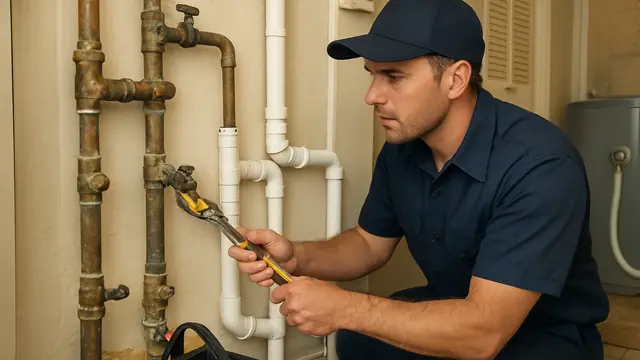
Next, look at the connections. PB installations often use plastic or metal fittings with crimp rings around the pipe. The rings may appear copper-colored or aluminum. A professional identifies the system by combining the markings, flexibility, diameter, fittings, and connection style.
Do Not Mistake These Components for PB
The flexible tube beneath a sink may be only a faucet connector. A toilet may have a short braided connector between the wall valve and tank. Washing-machine hoses are also separate components. These connectors do not reveal the material running inside the wall.
PEX can resemble older plastic piping, and a home can contain several materials. A remodeled kitchen may have PEX while bathrooms retain PB. Product markings and fittings are more useful than appearance alone.
A Room-by-Room Check You Can Perform Safely
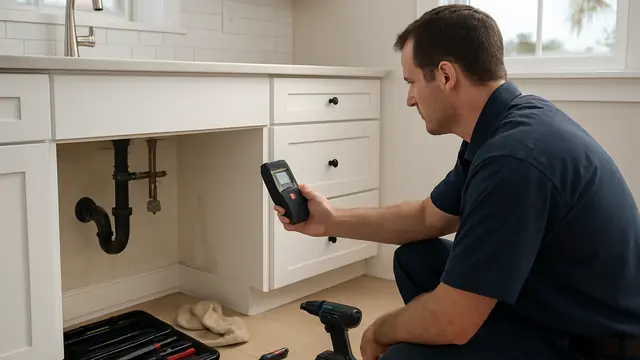
Begin under bathroom and kitchen sinks. Follow the permanent supply pipe entering the shutoff valve, not merely the short connector attached to the faucet.
Look behind toilets without disconnecting anything. Inspect the washing-machine box and visible piping around the water heater. In a garage or utility space, check exposed ceiling and wall runs.
Safely accessible unfinished spaces may show markings and transitions. Do not cross unsupported surfaces, move wiring, disturb insulation, or remove drywall. Record where each material appears so a plumber can evaluate whether the system was partially replaced.
Why Identification Matters Even When No Leak Is Visible
Polybutylene concerns are often related to deterioration that cannot be judged from the exterior. The inside surface can be affected by age, water chemistry, heat, installation stress, crimp quality, or movement. A line may remain dry for years and then develop a crack or fitting leak.
Small leaks can dampen cabinets, framing, or flooring before becoming obvious. A larger failure can release pressurized water until the main shutoff is closed. Identification does not prove failure is imminent; it supports a practical repair or replacement decision.
Safe Checks Beyond Looking at the Pipe
Check the cabinet floor, baseboards, wall surfaces, and ceilings beneath plumbing areas. Watch for discoloration, soft materials, peeling paint, unusual odors, mineral deposits, or corrosion around fittings.
With all faucets and water-using devices off, observe the water meter. Toilets, irrigation, ice makers, filtration equipment, and automatic appliances must be inactive. A moving leak indicator can suggest water use or leakage, but a plumber is needed to identify the source.
Review past repair records. Multiple supply-line repairs in different rooms can reveal a broader pattern.
What a Homeowner Should Not Do
Never cut the pipe for identification. Do not bend it away from a wall, sand off paint, or squeeze it to test flexibility. Disturbing older tubing can create the failure you are trying to avoid.
Do not attempt to "tighten" a crimp connection with pliers. Crimp systems require compatible fittings, rings, and calibrated tools. Tape, glue, epoxy, or a general-purpose clamp is not a dependable permanent repair for a pressurized water line.
Do not restore drywall over a questionable or leaking connection simply because the surface has dried. The source should be confirmed and corrected before the area is concealed.
When the Situation Becomes Urgent
Shut off the main water supply if a pipe is spraying or a leak cannot be controlled at a fixture valve. Call promptly for active dripping, rapidly spreading stains, wet flooring, a sudden pressure loss, or repeated failures.
- Water near electrical wiring, outlets, lights, panels, or appliances creates an additional hazard. Keep away from the wet area and do not operate affected electrical equipment.
- A ceiling that is swollen, sagging, or holding water may collapse. Keep people and pets clear. Do not puncture it while standing underneath.
- When walls are already open, confirm suspicious piping before finishes are restored to avoid duplicate demolition.
How a Licensed Plumber Evaluates the System
The plumber inspects multiple fixtures and exposed runs, checks printed codes and fittings, and traces likely hot- and cold-water branches. They document newer transitions and determine whether previous work replaced only visible sections.
If moisture is suspected, the plumber may use a moisture meter or another appropriate leak-detection method. A complete evaluation separates immediate leak repair from long-term strategy and identifies likely access routes.
Repair Choices Beginning With the Least Invasive
When the pipe is confirmed as another material and no defect exists, documentation may be all that is needed.
For an isolated, accessible leak, the immediate option may be removal of the damaged section and installation of an approved repair. This restores service but does not renew the remaining PB system.
Partial repiping can be appropriate when PB is limited to one bathroom, addition, or reachable branch. Whole-home repiping is considered when PB is extensive, failures have occurred in several locations, or the homeowner prefers one coordinated project. The least expensive immediate choice and the best long-term choice are not always the same.
Typical Factors Affecting Cost
Important factors include the number of plumbing fixtures, amount of PB, home layout, accessibility, number of stories, and chosen replacement material. Routing through an attic, crawlspace, cabinets, finished walls, or tiled areas changes the labor involved.
Shutoff upgrades, fixture connections, wall openings, permits when required, and finish repair also affect cost. Request a written scope showing which lines are included, what remains, and how restoration will be handled.
Prevention and Practical Planning
Label the main shutoff and keep tools or stored items away from it. Teach other responsible household members how to stop the water during an emergency.
Install water alarms beneath sinks and near the water heater and washing machine. Consider an automatic shutoff when the home is frequently unoccupied. Inspect accessible piping periodically, and create a repair or replacement timeline if PB is confirmed.
Homeowner FAQs
Can PB be present only in part of my house?
Yes. Repairs and renovations often create mixed systems. Several rooms should be checked before deciding how much PB remains.
Is black plastic supply pipe always polybutylene?
No. PB can be black, but other materials may also be dark. Markings and fittings are necessary for reliable identification.
Will a home inspection always find concealed PB?
Not necessarily. A visual inspection is limited to accessible areas. A plumbing-specific evaluation may trace the system more thoroughly.
Can I replace PB one room at a time?
Sometimes. Staged or partial repiping may be practical when branches are clearly separated and approved transitions can be installed.
Does an old dry stain prove the pipe still leaks?
No, but it indicates that moisture was present. The area should be checked to determine whether the source was repaired or remains active.
Make the Discovery Useful, Not Frightening
How to identify polybutylene plumbing in a Callaway home involves more than recognizing gray plastic. Look for PB markings, crimped fittings, and consistent piping at several fixtures. Avoid disturbing the tubing, document what you see, and have a licensed plumber determine how much remains. With that information, you can choose a focused repair, partial repipe, or complete replacement based on actual conditions rather than guesswork.
A vanity is removed or a small wall opening exposes gray plastic tubing. The pipe may look intact, yet the discovery raises an immediate question: Is this polybutylene plumbing, and what should you do before the wall is closed?
Polybutylene, abbreviated as PB, was used in residential water-supply systems from the late 1970s into the mid-1990s. Pause the renovation, avoid moving the tubing, photograph the pipe and fittings, and check for moisture. Active leakage, wet electrical components, or a sagging ceiling requires help and may require shutting off the water when safe.
The Most Reliable Ways to Identify Polybutylene Plumbing in Callaway
PB is generally a flexible plastic supply pipe. Supply piping is smaller than a drain and remains under pressure so water reaches faucets, toilets, showers, appliances, and the water heater.
Many PB lines are gray or silver-gray. Some are blue-gray, black, or white. Because other plumbing products can have similar colors, identification should not be based on color alone.
Search an exposed section for "PB" or "PB2110." The lettering may also include sizing information or a manufacturer's name. Use a flashlight and mirror rather than rotating the pipe. Old printed markings can be faint or positioned against framing.
Next, look at the connections. PB installations often use plastic or metal fittings with crimp rings around the pipe. The rings may appear copper-colored or aluminum. A professional identifies the system by combining the markings, flexibility, diameter, fittings, and connection style.
Do Not Mistake These Components for PB
The flexible tube beneath a sink may be only a faucet connector. A toilet may have a short braided connector between the wall valve and tank. Washing-machine hoses are also separate components. These connectors do not reveal the material running inside the wall.
PEX can resemble older plastic piping, and a home can contain several materials. A remodeled kitchen may have PEX while bathrooms retain PB. Product markings and fittings are more useful than appearance alone.
A Room-by-Room Check You Can Perform Safely
Begin under bathroom and kitchen sinks. Follow the permanent supply pipe entering the shutoff valve, not merely the short connector attached to the faucet.
Look behind toilets without disconnecting anything. Inspect the washing-machine box and visible piping around the water heater. In a garage or utility space, check exposed ceiling and wall runs.
Safely accessible unfinished spaces may show markings and transitions. Do not cross unsupported surfaces, move wiring, disturb insulation, or remove drywall. Record where each material appears so a plumber can evaluate whether the system was partially replaced.
Why Identification Matters Even When No Leak Is Visible
Polybutylene concerns are often related to deterioration that cannot be judged from the exterior. The inside surface can be affected by age, water chemistry, heat, installation stress, crimp quality, or movement. A line may remain dry for years and then develop a crack or fitting leak.
Small leaks can dampen cabinets, framing, or flooring before becoming obvious. A larger failure can release pressurized water until the main shutoff is closed. Identification does not prove failure is imminent; it supports a practical repair or replacement decision.
Safe Checks Beyond Looking at the Pipe
Check the cabinet floor, baseboards, wall surfaces, and ceilings beneath plumbing areas. Watch for discoloration, soft materials, peeling paint, unusual odors, mineral deposits, or corrosion around fittings.
With all faucets and water-using devices off, observe the water meter. Toilets, irrigation, ice makers, filtration equipment, and automatic appliances must be inactive. A moving leak indicator can suggest water use or leakage, but a plumber is needed to identify the source.
Review past repair records. Multiple supply-line repairs in different rooms can reveal a broader pattern.
What a Homeowner Should Not Do
Never cut the pipe for identification. Do not bend it away from a wall, sand off paint, or squeeze it to test flexibility. Disturbing older tubing can create the failure you are trying to avoid.
Do not attempt to "tighten" a crimp connection with pliers. Crimp systems require compatible fittings, rings, and calibrated tools. Tape, glue, epoxy, or a general-purpose clamp is not a dependable permanent repair for a pressurized water line.
Do not restore drywall over a questionable or leaking connection simply because the surface has dried. The source should be confirmed and corrected before the area is concealed.
When the Situation Becomes Urgent
Shut off the main water supply if a pipe is spraying or a leak cannot be controlled at a fixture valve. Call promptly for active dripping, rapidly spreading stains, wet flooring, a sudden pressure loss, or repeated failures.
- Water near electrical wiring, outlets, lights, panels, or appliances creates an additional hazard. Keep away from the wet area and do not operate affected electrical equipment.
- A ceiling that is swollen, sagging, or holding water may collapse. Keep people and pets clear. Do not puncture it while standing underneath.
- When walls are already open, confirm suspicious piping before finishes are restored to avoid duplicate demolition.
How a Licensed Plumber Evaluates the System
The plumber inspects multiple fixtures and exposed runs, checks printed codes and fittings, and traces likely hot- and cold-water branches. They document newer transitions and determine whether previous work replaced only visible sections.
If moisture is suspected, the plumber may use a moisture meter or another appropriate leak-detection method. A complete evaluation separates immediate leak repair from long-term strategy and identifies likely access routes.
Repair Choices Beginning With the Least Invasive
When the pipe is confirmed as another material and no defect exists, documentation may be all that is needed.
For an isolated, accessible leak, the immediate option may be removal of the damaged section and installation of an approved repair. This restores service but does not renew the remaining PB system.
Partial repiping can be appropriate when PB is limited to one bathroom, addition, or reachable branch. Whole-home repiping is considered when PB is extensive, failures have occurred in several locations, or the homeowner prefers one coordinated project. The least expensive immediate choice and the best long-term choice are not always the same.
Typical Factors Affecting Cost
Important factors include the number of plumbing fixtures, amount of PB, home layout, accessibility, number of stories, and chosen replacement material. Routing through an attic, crawlspace, cabinets, finished walls, or tiled areas changes the labor involved.
Shutoff upgrades, fixture connections, wall openings, permits when required, and finish repair also affect cost. Request a written scope showing which lines are included, what remains, and how restoration will be handled.
Prevention and Practical Planning
Label the main shutoff and keep tools or stored items away from it. Teach other responsible household members how to stop the water during an emergency.
Install water alarms beneath sinks and near the water heater and washing machine. Consider an automatic shutoff when the home is frequently unoccupied. Inspect accessible piping periodically, and create a repair or replacement timeline if PB is confirmed.
Homeowner FAQs
Can PB be present only in part of my house?
Yes. Repairs and renovations often create mixed systems. Several rooms should be checked before deciding how much PB remains.
Is black plastic supply pipe always polybutylene?
No. PB can be black, but other materials may also be dark. Markings and fittings are necessary for reliable identification.
Will a home inspection always find concealed PB?
Not necessarily. A visual inspection is limited to accessible areas. A plumbing-specific evaluation may trace the system more thoroughly.
Can I replace PB one room at a time?
Sometimes. Staged or partial repiping may be practical when branches are clearly separated and approved transitions can be installed.
Does an old dry stain prove the pipe still leaks?
No, but it indicates that moisture was present. The area should be checked to determine whether the source was repaired or remains active.
Make the Discovery Useful, Not Frightening
How to identify polybutylene plumbing in a Callaway home involves more than recognizing gray plastic. Look for PB markings, crimped fittings, and consistent piping at several fixtures. Avoid disturbing the tubing, document what you see, and have a licensed plumber determine how much remains. With that information, you can choose a focused repair, partial repipe, or complete replacement based on actual conditions rather than guesswork.
About this guide: This resource provides general homeowner education, not a remote diagnosis. Actual conditions, code requirements, equipment, and safe repair options must be evaluated at the property.