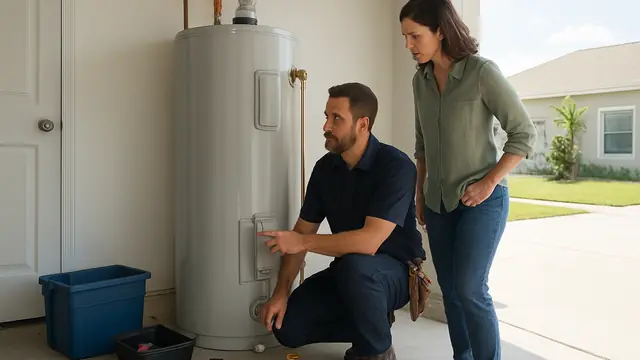
Stop and call for qualified help when plumbing water is near electrical equipment, sewage is entering occupied space, gas or burning odors are present, or a repair would require opening pressurized piping.
Your dishwasher finishes, but the glasses still look cloudy. The showerhead has a crusty ring, and someone in the family says the tap water tastes different. It is easy to assume that a whole-house filter will solve everything or that a softener is always the answer. These systems address different water problems.
For a Callaway homeowner, the safe first step is to write down exactly what changed and where it appears. Check whether the issue affects hot water, cold water, one fixture, or every fixture. Avoid buying treatment equipment until the water has been tested and the plumbing has been checked for a source inside the home.
Start With the Result You Want
A water softener reduces hardness, which comes mainly from dissolved calcium and magnesium. These minerals can leave scale on fixtures, interfere with soap, form deposits in water heaters, and create spotting on glassware.
A whole-house filtration system is a category, not one product. Sediment filters capture particles. Activated carbon may reduce certain tastes and odors. Other media target specific substances. The system must be matched to the tested condition.
This distinction matters because a carbon filter may improve taste while leaving mineral scale unchanged. A softener may reduce scale while doing little for sediment or a chlorine-like taste.
Is the Problem Hardness, Filtration, or Plumbing?
Clues That Suggest Hardness
White crust on faucet outlets, rough deposits on shower doors, poor soap lather, and scale around heating elements can indicate hardness. Testing is still necessary because detergent residue, dishwasher settings, or etched glass can look similar.
Clues That Suggest Filtration
A consistent objectionable taste or odor at every cold-water fixture may support evaluating carbon filtration. Visible grains or flakes may support sediment filtration, but the source should be identified first.
Whole-house filtration is most useful when the concern affects water throughout the property. When the only goal is better drinking water at the kitchen sink, point-of-use treatment may be more efficient.
Clues That Suggest an Internal Plumbing Issue
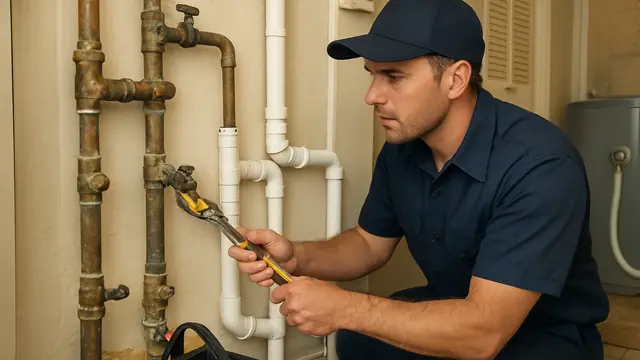
Particles at one faucet may come from the aerator or supply line. Rust-colored water only on the hot side may involve the water heater. Blue-green staining may indicate interaction with copper plumbing. Black specks can come from deteriorating rubber components.
A treatment system cannot repair a corroded pipe, failing water heater, or damaged fixture.
Safe Checks Before Calling
Run the cold water briefly, then fill a clean white bowl or clear glass. Look for floating material, settled sediment, color, or cloudiness. Do not taste water with a sudden unusual appearance or odor.
Compare water at several fixtures. Note whether the condition is the same at the kitchen, bathroom, and outdoor faucet. This helps separate a whole-home problem from a fixture-specific issue.
- Compare hot and cold water. A concern isolated to hot water may require water-heater inspection rather than a new whole-house system.
- If a softener is already installed, check whether it has power, displays an error, has salt, or was accidentally left in bypass. Do not disassemble the valve.
- Check the date on any existing filter cartridge. An overdue cartridge can reduce flow and allow taste or particles to return.
When the Water Problem Is Urgent
Mild spotting is usually not an emergency. Sudden changes require more caution.
Stop using the water for drinking or cooking and seek guidance when it develops a sewage, chemical, petroleum, or solvent-like odor; an oily sheen; unexplained color throughout the home; or material that appears biological.
Call a plumber promptly for a leaking treatment tank, sharply falling pressure, continuous drain discharge, standing water near electrical components, or a softener that will not stop cycling.
Follow official boil-water or do-not-use notices. Household equipment is not a substitute for public-health instructions.
What Not to Attempt
- Do not rely on one inexpensive test strip to design an entire treatment system. Screening tests can help, but accurate sizing may require better measurements.
- Do not install the finest cartridge available simply because a smaller micron rating sounds better. Very fine filters can clog quickly and restrict flow.
- Do not route a softener or backwashing-filter drain line into an unsafe location. Incorrect drainage can create flooding or backflow risks.
- Do not remove media from a pressurized tank. Service valves and tanks may retain pressure after the water is turned off.
- Do not assume salt-free scale-control equipment is identical to a conventional softener. Some products alter scale behavior rather than remove hardness minerals.
How a Licensed Plumber Diagnoses the Concern
The plumber asks when the problem began, whether it is constant, and which fixtures are affected. This history often narrows the cause before testing.
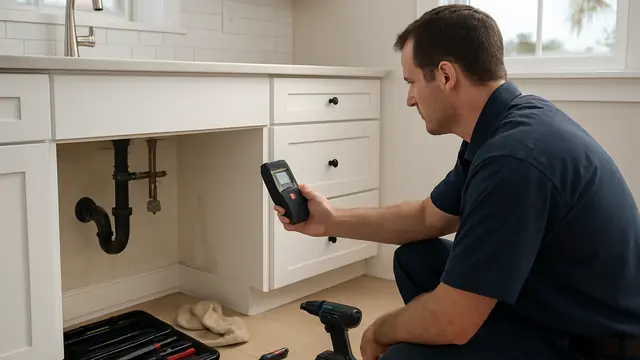
Testing may include hardness, pH, total dissolved solids, chlorine-related measurements, and indicators associated with sediment or staining. A certified laboratory may be needed for unusual or health-related concerns.
The plumber evaluates static pressure, flow, pipe size, and peak household demand. An undersized system may create weak showers when appliances are running.
Installation conditions are also checked: main-line location, drainage, electrical supply, service clearance, and whether outdoor faucets should remain untreated. The water heater and accessible plumbing may be inspected to rule out an internal source.
Treatment Options From Simple to Comprehensive
A fixture repair or aerator replacement is the first reasonable option when the problem is isolated.
An under-sink carbon filter can improve drinking-water taste at one location without treating toilets or every shower. Reverse osmosis may be considered for specific drinking-water goals after testing.
A whole-house sediment cartridge may suit a modest particle problem. Larger or self-cleaning filters may be considered when frequent cartridge replacement would be impractical.
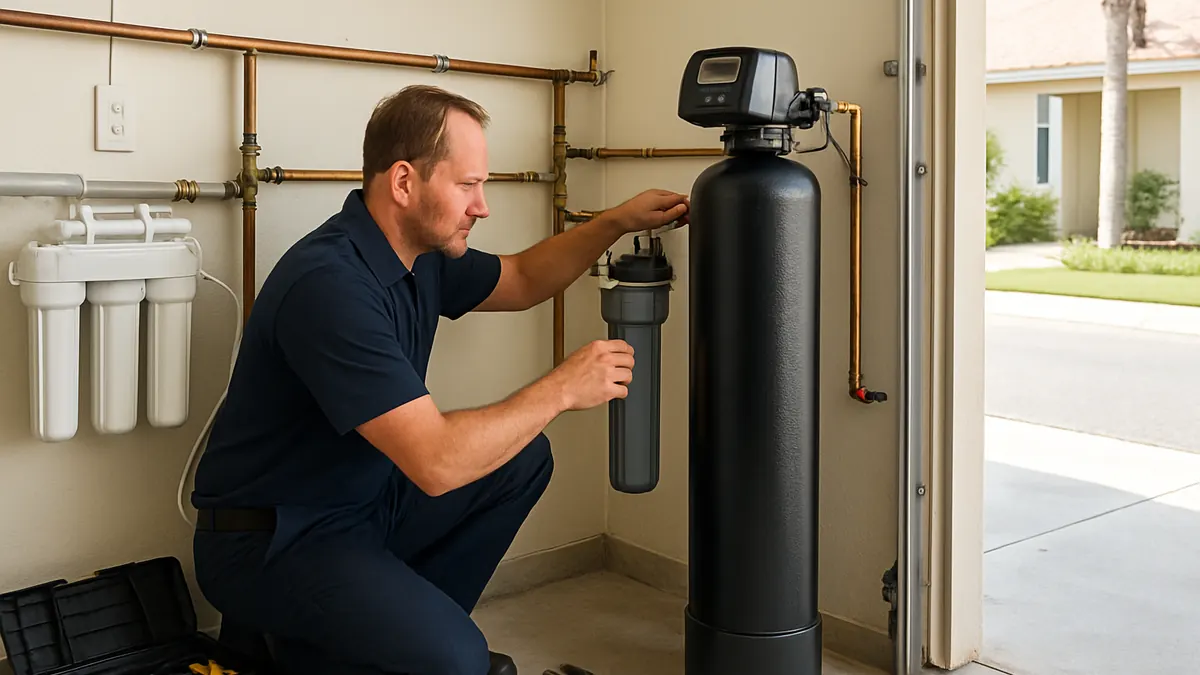
A whole-house carbon system may address taste and odor throughout the property. The design may use cartridges or a backwashing tank, depending on capacity and maintenance needs.
A conventional softener is commonly used for confirmed hardness. In a home with both hardness and taste concerns, sediment, carbon, and softening stages may be arranged in a sequence based on test results.
Existing equipment may only need reprogramming, cleaning, a valve repair, new seals, or replacement media. Complete replacement is not always the first answer.
Factors That Affect Cost
Cost depends on the number of treatment stages, equipment capacity, flow rating, media, pipe size, and installation complexity.
Access matters. A simple installation near the main line, drain, and electrical outlet differs from one requiring rerouting, wall access, or replacement of old valves.
Operating expense includes salt, regeneration water, cartridges, media replacement, sanitizing, and periodic service. Testing often reduces unnecessary cost by preventing installation of equipment the home does not need.
Maintenance That Protects Performance
Replace cartridges according to use, pressure drop, and manufacturer instructions. Record the replacement date.
Use the correct softener salt and watch for salt bridging, which is a hard crust that prevents salt from dissolving properly.
Check bypass valves, drain lines, and tank connections for leaks. Have the water retested after major plumbing work, a long vacancy, or a noticeable change in taste, odor, scale, or flow.
Water Softener Versus Whole-House Filtration in Callaway: The Practical Decision
Choose equipment only after identifying the problem. Hardness and scale call for softening or a clearly explained scale-control approach. Taste, odor, and particles call for appropriate filtration. Fixture-specific or hot-water-only symptoms may require plumbing repair instead.
About this guide: This resource provides general homeowner education, not a remote diagnosis. Actual conditions, code requirements, equipment, and safe repair options must be evaluated at the property.