Stop and call for qualified help when plumbing water is near electrical equipment, sewage is entering occupied space, gas or burning odors are present, or a repair would require opening pressurized piping.
A storm warning has been issued, and while preparing your DeFuniak Springs home you discover that the water pressure drops when two fixtures run, the kitchen drain gurgles, and the main shutoff has not been used in years. These symptoms may come from separate minor problems, but they can become difficult to manage during a power outage or while roads and service schedules are disrupted.
Your safest immediate action is to stop unnecessary water use and identify the main shutoff. If you find an active leak, close the nearest working fixture valve. Shut off the main supply only if the valve moves normally and doing so will not interfere with equipment that needs water. Never force a seized valve or enter standing water near electrical wiring, a pump, or a water heater.
This Northwest Florida hurricane plumbing checklist in DeFuniak Springs covers municipal and private water systems, drains, water heaters, and safe post-storm restoration.
Determine How Your Property Receives Water
Before deciding how to shut down plumbing, confirm whether the home uses a municipal water supply or a private well. The correct response during a power outage can differ.
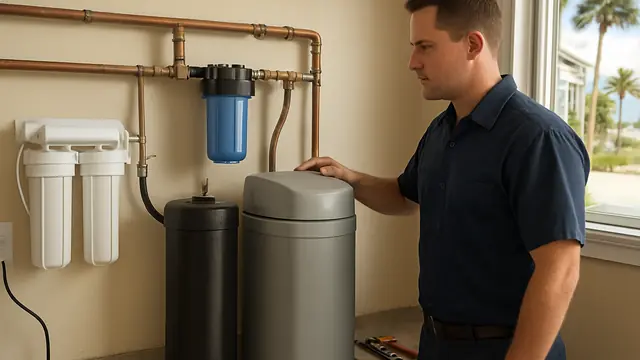
A municipal system receives pressure from the utility. A private well relies on a pump, pressure tank, controls, and piping. If power fails, the pump may stop even though some pressurized water remains.
Well owners should know the locations of the electrical disconnect, pressure tank, equipment, and plumbing shutoff. Do not open control boxes or work on pump wiring. Leave flooded equipment off until a qualified professional confirms it is safe.
Store emergency drinking water according to current public-safety guidance because tap water may become unavailable or temporarily unsuitable.
Confirm That the Main Shutoff Works
Locate the main valve, clear access, and label it. A ball valve usually closes with a quarter turn; a gate valve requires several turns.
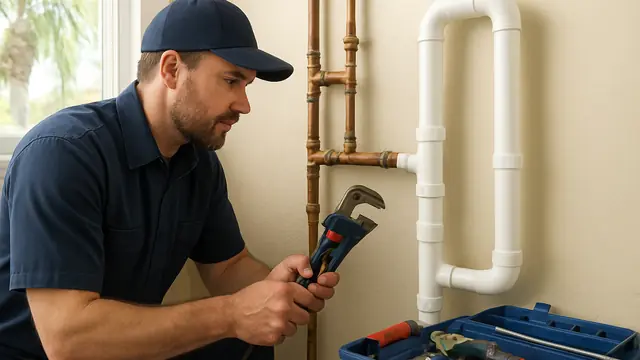
If the handle will not move, leaks when touched, or twists the piping, stop. Excessive force can break the valve or pipe. A plumber can determine whether it should be repaired or replaced.
Look for Pressure and Supply-Line Warning Signs
Run one faucet, then briefly operate a second. A sharp whole-home pressure drop can indicate a restriction, pressure-control problem, well issue, or leak.
Check visible pipes and connectors for corrosion, stains, dampness, bulges, or old patches. If fixtures are off but you hear water, see meter movement, or notice repeated well-pump cycling, a leak or equipment problem may be present. Do not adjust pressure controls yourself.
Check Fixtures and Appliance Connections
Flush each toilet once and verify that it stops running. Repeated filling often points to a worn flapper, fill valve, chain, or water-level problem.
Inspect faucet supplies, toilet connectors, appliance hoses, refrigerator lines, and dishwasher connections for rust, kinks, cracks, or droplets. Close appliance valves only if they move smoothly. Outside, disconnect and secure hoses.
Evaluate Drains and Wastewater Systems
Test sinks, tubs, showers, and toilets with normal-not excessive-water use. Gurgling, slow drainage, sewage odor, or water appearing in another fixture can indicate an obstruction.
One slow fixture may have a local clog; several affected fixtures suggest a larger obstruction. Stop using water if sewage appears.
If the home uses septic, avoid unnecessary water use before or after heavy rainfall. Never open the tank or service pumps and controls yourself. Chemical drain cleaners are a poor response to a multi-fixture backup because they may fail and leave hazardous liquid in the line.
Inspect the Water Heater
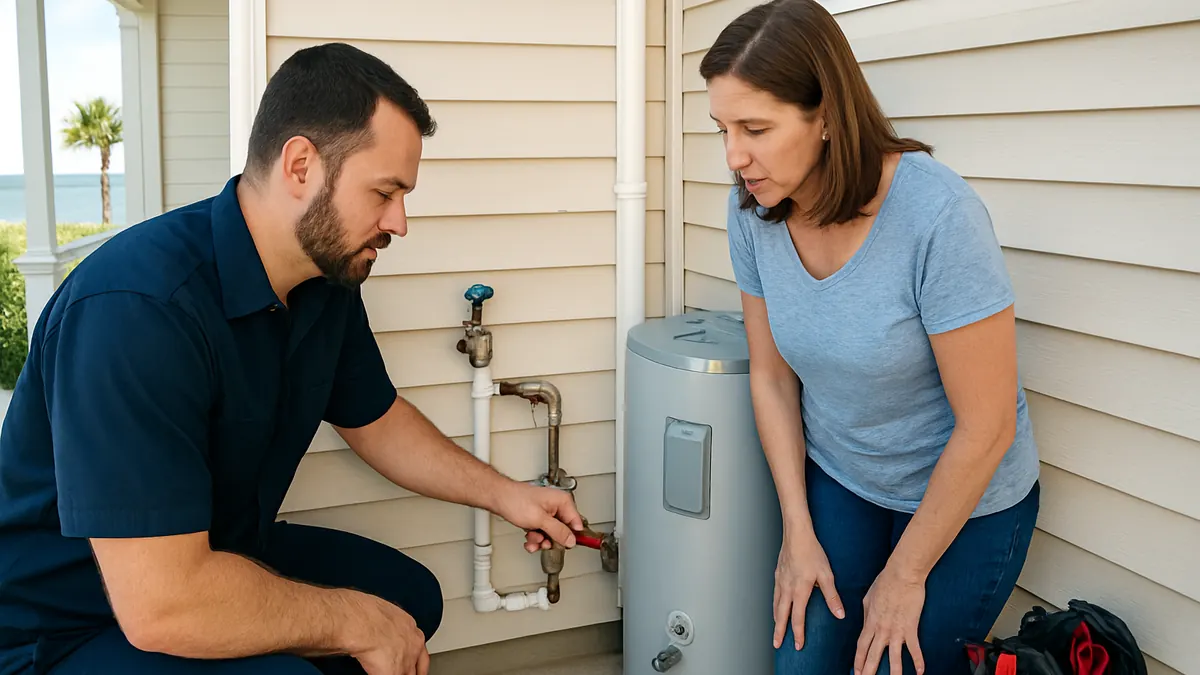
Inspect the floor, drain pan, connections, valves, and tank surface. Water may come from a connector, drain valve, relief valve, fitting, or failed tank. Component leaks may be repairable; a tank leaking through its body generally requires replacement.
Never plug the temperature and pressure relief valve discharge pipe. Do not drain the heater routinely. If an electric tank is emptied, power must remain off until it is full.
What Homeowners Should Not Attempt
Do not repair well wiring, enter a flooded pump area, force valves, open a pressurized cleanout, dismantle safety controls, or climb onto a wet roof. Avoid cutting walls without confirming the source. Keep generators outdoors and follow manufacturer and emergency-safety instructions.
Signs That Require Prompt Professional Attention
Urgent conditions include an active leak that cannot be stopped, sewage entering occupied areas, water near electrical equipment, a gas odor, a bulging water heater, or a broken main shutoff.
For a private well, flooded controls, a pump that will not stop, rapid cycling, or pressure loss with visible leakage also requires prompt attention. Keep people away from sagging ceilings and electrical hazards.
How a Licensed Plumber Diagnoses the Cause
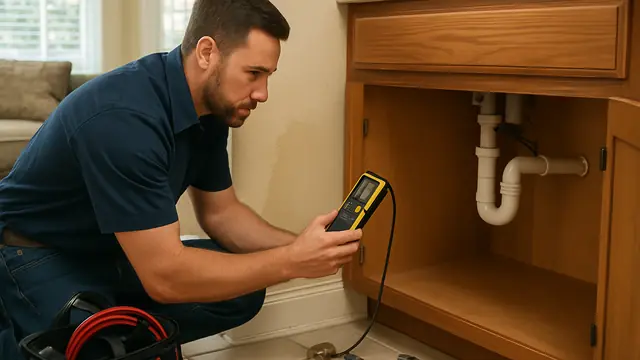
The plumber identifies whether the problem involves the supply, fixture, water heater, drain, or well-related plumbing. Testing may include pressure readings, meter observation, valve isolation, moisture detection, and visible-pipe inspection. Well diagnosis may require coordination with pump or electrical professionals.
Drain problems may be mechanically cleared, followed by a sewer camera to identify buildup, roots, displaced joints, foreign objects, or damage.
Repair Options Begin With Targeted Solutions
A running toilet may need a flapper or fill valve. A faucet may need a cartridge. A damaged connector or appliance hose can often be replaced individually.
A leaking shutoff may be repaired or replaced, and a localized pipe leak may permit targeted repair. Repiping is considered when failures are widespread.
A drain may need mechanical clearing before repair is discussed. Camera findings can support spot repair rather than full replacement. Water-heater repairs may involve a valve, connector, thermostat, element, or control; tank failure normally requires replacement.
What Affects the Cost of Plumbing Work?
Cost depends on access, pipe material, water-source equipment, diagnosis time, permits, failure location, and emergency scheduling. Well-related work may involve more than one trade when plumbing and electrical equipment are affected.
Prevention and Post-Storm Recovery
Exercise working valves periodically, replace deteriorated supply lines, and address recurring pressure changes or drain symptoms before hurricane season.
After the storm, inspect plumbing, well equipment, and the water heater before restoring power or water. Do not energize submerged equipment. Open the main slowly while watching for leaks, and follow official water-use or boil-water guidance.
Complete Your Northwest Florida Hurricane Plumbing Checklist in DeFuniak Springs
The most useful storm preparation identifies how the property receives water, confirms that valves work, detects leaks early, and protects drainage and water-heating equipment.
Use this Northwest Florida hurricane plumbing checklist in DeFuniak Springs before access becomes limited. Pressure trouble, pump cycling, a slow drain, or an unreliable valve should be diagnosed while the problem is still manageable.
About this guide: This resource provides general homeowner education, not a remote diagnosis. Actual conditions, code requirements, equipment, and safe repair options must be evaluated at the property.