Stop and call for qualified help when plumbing water is near electrical equipment, sewage is entering occupied space, gas or burning odors are present, or a repair would require opening pressurized piping.
You turn on a bathroom faucet during a showing in DeFuniak Springs and the water starts strong, then weakens when someone flushes a toilet. In another room, you notice a patched section of wall near a supply line or a drain that gives off an odor after sitting unused. These signs do not prove that the house has a major plumbing failure, but they may point to a pressure problem, an aging valve, a dry trap, an old leak, or a repair that needs closer examination.
The safe immediate step is to document the symptom and avoid altering the system. Do not force shutoff valves, open a well-control panel, remove a drain cap, or keep running water where moisture is appearing. Ask for a licensed plumber to evaluate the concern while your purchase agreement still allows time for inspections and decisions.
A plumbing inspection checklist before buying a Northwest Florida home in DeFuniak Springs should confirm the water source, shutoff locations, supply-pipe condition, fixture performance, drainage, water heating, and the type and condition of the wastewater connection.
Confirm the Water and Wastewater Systems
Do not assume how the property receives water or disposes of wastewater. Confirm whether it is served by public utilities, a private well, a septic system, or another approved arrangement. The inspection scope changes depending on the answer.
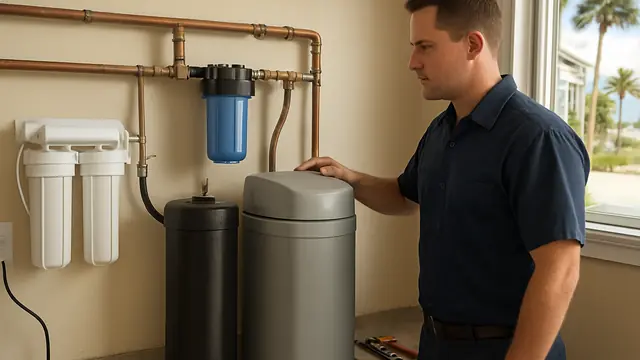
A plumber can evaluate accessible household plumbing, but specialized well or septic testing may require additional qualified professionals. Ask the seller for service records, permits when applicable, pump information, treatment-equipment documents, and the location of major components.
Review Repairs and Material Changes
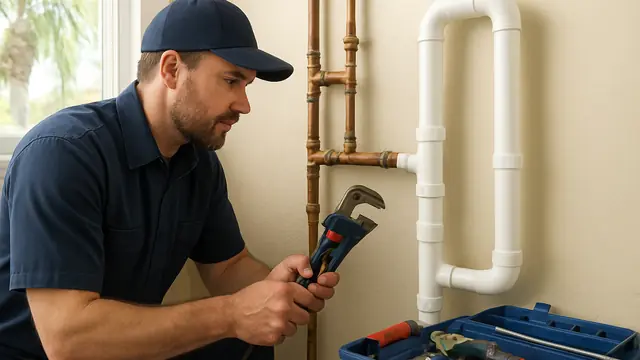
Look for visible transitions between pipe materials, capped lines, patched walls, abandoned valves, and newer fittings installed beside older components. Ask for invoices involving leaks, repiping, drain replacement, water-heater work, well equipment, septic service, or recurring stoppages. Repeated work in one location may reveal a symptom that was treated without correcting its cause.
Test Pressure, Flow, and Water Quality Symptoms
Pressure should remain reasonably stable during normal household use. The plumber may measure static pressure and compare it with pressure while fixtures are running.
Low flow at one faucet may be caused by a clogged aerator or cartridge. A whole-house pressure drop may involve a shutoff, regulator, restricted piping, pump equipment, pressure tank, filter, or source limitation, depending on the system.
Inspect Sinks, Toilets, Showers, and Laundry Connections
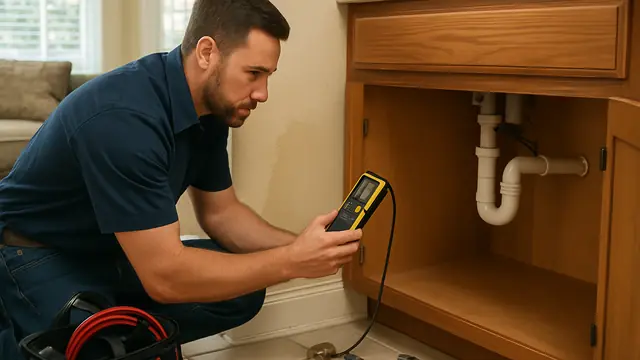
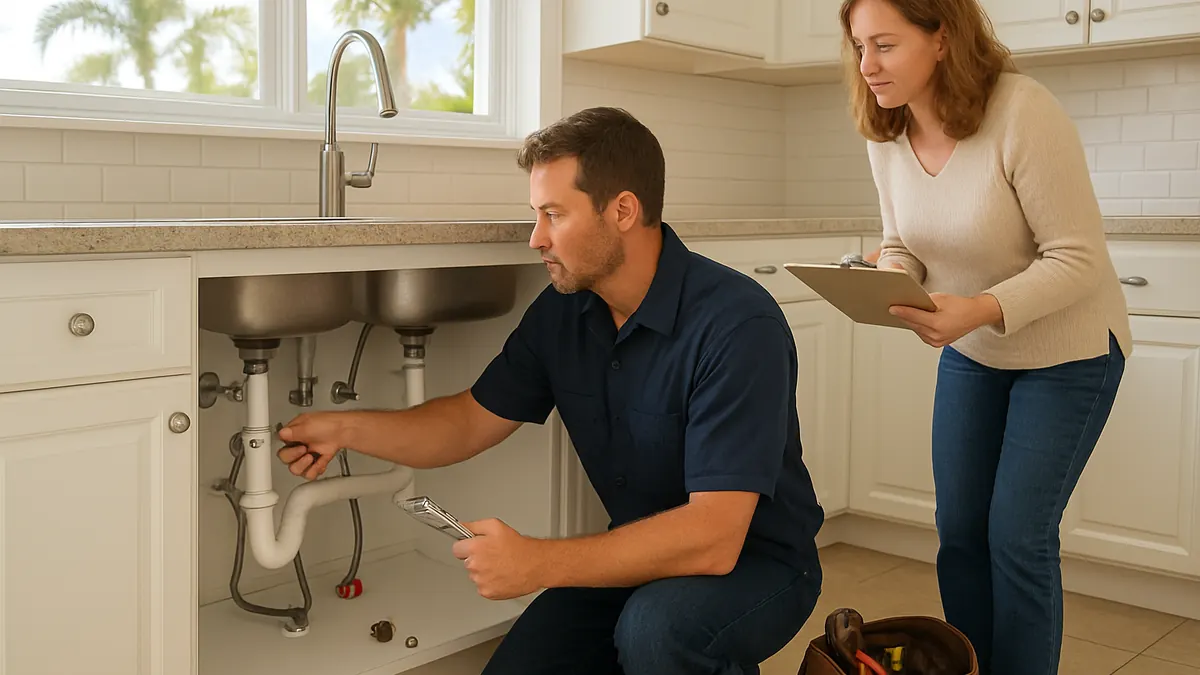
Run hot and cold water at each sink and inspect the faucet base, connectors, shutoffs, trap, disposal, and cabinet floor. Look for active drops, mineral deposits, rust, swelling, and previous patching.
Flush every toilet. It should clear the bowl, refill, and stop running. Check whether the fixture rocks or whether the flooring feels soft. A loose toilet can damage its seal and allow water or sewer odor to escape.
Operate showers and tubs while watching drainage and nearby surfaces. A slow drain may need simple cleaning, but several slow fixtures or gurgling can indicate a downstream restriction.
Inspect washing-machine hoses, valves, and the drain connection.
Evaluate the Water Heater Safely
Identify whether the property has a tank-style, tankless, or other approved water-heating system. Record its approximate age, capacity, energy source, visible condition, shutoffs, relief protection, venting or wiring, and service access.
Do not remove electrical covers or adjust gas components. Check for leakage, corrosion, unstable temperature, unusual noise, and inadequate service clearance.
Examine Drains, Vents, and the Main Line
An odor at a seldom-used fixture may come from a dry trap. Refill it with water and observe whether the odor disappears. Persistent odor, gurgling, recurring stoppages, or backup at a lower fixture warrants professional diagnosis.
When symptoms suggest a main-line concern, the plumber may recommend cleaning and a sewer-camera inspection. If the property uses a septic system, drain symptoms can involve household piping, the building sewer, or the onsite system, so the correct component must be identified before repairs begin.
Safe Checks a Buyer Can Perform
With permission, you can:
- Run faucets and compare flow at several locations.
- Flush toilets and watch whether they stop refilling.
- Check cabinets and accessible floors for moisture.
- Listen for pump cycling, water hammer, dripping, or gurgling.
- Note odors, discoloration, or particles without guessing at the cause.
- Locate the main water shutoff.
- Ask for utility, well, septic, and repair records.
- Confirm which equipment remains with the property.
What the Buyer Should Not Attempt
Do not force old valves, open pump controls, enter tanks, remove well caps, disconnect treatment equipment, or disturb septic components. Do not enter unsafe crawlspaces or lift toilets.
Avoid chemical drain cleaners. They can damage piping, create hazardous conditions, and temporarily move a blockage without identifying why it formed.
Do not accept "it has always done that" as a diagnosis. Recurring pressure loss, odor, leakage, or backup needs an explanation.
Signs That Make the Problem Urgent
Arrange prompt evaluation for active leaks, sewage backup, strong persistent sewer odor, water near electrical equipment, a rapidly cycling pump, no water supply, a leaking water heater, soft flooring, or a meter or pump operating when all fixtures are off.
How a Licensed Plumber Diagnoses the System
The plumber starts by confirming the water and wastewater arrangements, reviewing the symptoms, and inspecting accessible components. Testing may include pressure measurements, meter or pump observation, moisture readings, fixture isolation, flow tests, pressure testing, drain cleaning, or camera inspection.
The report should identify confirmed defects, possible causes that need more testing, immediate concerns, repair recommendations, and maintenance items.
Repair Options Beginning With the Least Invasive
A straightforward repair may involve cleaning an aerator, replacing a faucet cartridge, repairing a toilet, replacing a connector, installing a new shutoff, clearing a local blockage, or correcting an accessible pipe joint.
The next level may involve pressure-control service, pump or tank work by an appropriate professional, water-heater repair, branch-line replacement, targeted drain repair, or sewer cleaning.
More extensive options include rerouting, partial repiping, water-heater replacement, building-sewer repair, or coordinated septic work. Major replacement should follow evidence showing that isolated repairs are unreliable or uneconomical.
Factors That Affect Cost
Cost depends on the system type, access, pipe material, defect location, testing required, number of affected fixtures, equipment, permits, excavation, and restoration.
Work involving a private water or wastewater system may require coordination among several qualified professionals. Request written scopes so you know which contractor is responsible for each part.
Prevention and Maintenance After Closing
Label the main shutoff and any equipment disconnects. Keep well, septic, treatment, water-heater, and plumbing records in one place. Repair leaks quickly and replace deteriorated appliance hoses.
Keep grease, wipes, and foreign objects out of drains. Maintain water-heating and private-system equipment according to manufacturer and service-provider guidance. If the home will be vacant, arrange inspections and a reliable way to shut off water.
Use the Inspection to Make an Informed Decision
A plumbing inspection checklist before buying a Northwest Florida home in DeFuniak Springs should clarify both the visible fixtures and the systems supporting them. Confirming the water source, wastewater arrangement, pressure, pipes, drains, water heater, and repair history helps you understand what needs immediate attention and what can be planned after closing.
About this guide: This resource provides general homeowner education, not a remote diagnosis. Actual conditions, code requirements, equipment, and safe repair options must be evaluated at the property.