Stop and call for qualified help when plumbing water is near electrical equipment, sewage is entering occupied space, gas or burning odors are present, or a repair would require opening pressurized piping.
A plumber repairs a small leak under a bathroom sink in your DeFuniak Springs home and points out gray flexible piping disappearing through the cabinet floor. You may hear the word "polybutylene" for the first time and wonder whether the repair is finished or whether more of the plumbing needs attention. The immediate safe response is to leave the remaining pipe alone, confirm that the leak has stopped, locate the main shutoff, and arrange for a licensed plumber to identify the material and inspect other accessible areas.
Polybutylene, called PB, is a plastic water-supply pipe that was installed in properties from the late 1970s through the mid-1990s. It carries pressurized hot and cold water. It is not the larger drain or sewer pipe beneath a sink. Because supply lines often run inside walls, ceilings, floors, and cabinets, only a small portion may be visible.
How to Identify Polybutylene Plumbing in DeFuniak Springs
Look first for letters printed along the pipe. "PB" and "PB2110" are strong indicators of polybutylene. The pipe is often gray, blue-gray, silver-gray, black, or sometimes white. It is flexible and commonly curves between fixtures instead of remaining completely rigid.
Do not rely on color alone. PEX and other piping products may look similar. A plumber confirms the material by examining the printed designation, pipe dimensions, fitting type, connection rings, and installation method.
Polybutylene connections may use plastic, copper, or brass fittings. Metal crimp rings are commonly visible around the pipe at a fitting. A home may also contain transitions where a previous repair replaced a short section with PEX or copper while leaving polybutylene elsewhere.
Common Reasons Homeowners Discover It
Many homeowners find polybutylene after a leak, during a home inspection, or while renovating a kitchen or bathroom. Others notice it when replacing a water heater, washing machine, toilet, or shutoff valve.
A single visible section cannot tell you the full extent of the system. One bathroom may have been updated while another area still contains original pipe. Additions and previous repairs can also create a mixed plumbing system.
Why the Material Can Develop Leaks
Polybutylene can deteriorate internally over time. Oxidants in treated water may contribute to changes in the pipe wall that are not visible from the outside. A section that appears smooth and dry may therefore provide only limited information about its condition.
Physical stress can also contribute. Problems may develop around crimp connections, fittings, sharp bends, unsupported sections, or pipe installed under tension.
Not every polybutylene system fails at the same time. The important questions are how much is present, whether there is a history of leakage, and whether current symptoms suggest an active problem.
Safe Checks Around the Home
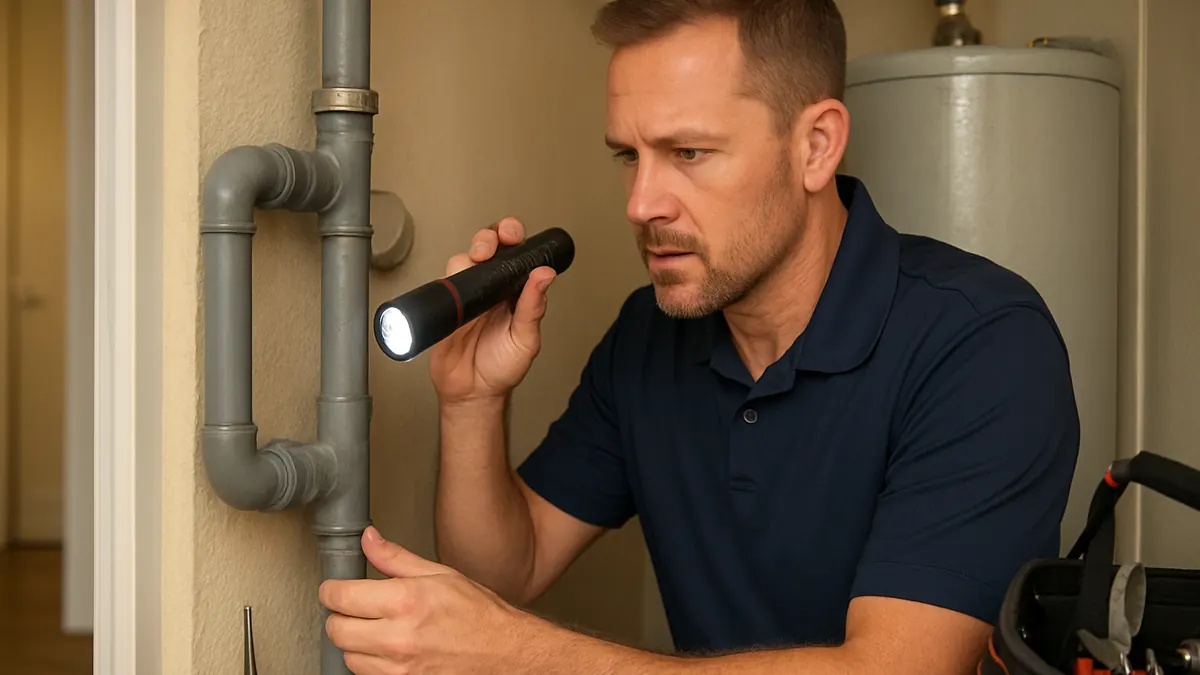
Use a flashlight to inspect only exposed piping. Under sinks, follow the supply line behind the shutoff valve rather than focusing on the braided connector attached to the faucet.
Check visible piping near toilets, the water heater, laundry hookups, utility spaces, and access panels. Photograph markings and fittings without twisting or moving the pipe.
With all known water use turned off, observe the water meter if it is accessible and you understand the display. Movement may indicate water is still flowing, although it does not identify the source. A running toilet or appliance may also cause movement.
Look for damp cabinet bottoms, stains below bathrooms, peeling paint, swollen trim, soft drywall, musty odors, or flooring changes. Use a dry paper towel to confirm moisture at an exposed connection without disturbing it.
What a Homeowner Should Not Attempt
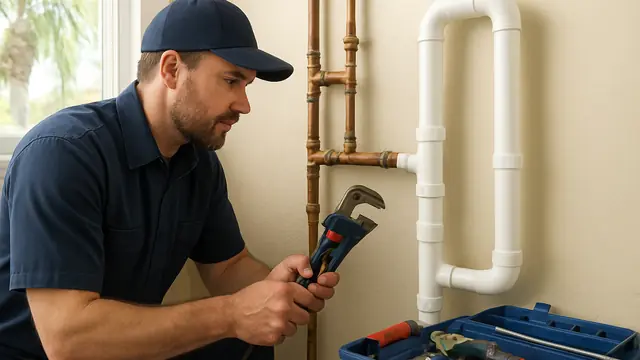
Do not cut the pipe to identify it or bend it to find printing. Aged material can crack when disturbed. Do not tighten crimp rings or fittings with household tools unless a plumber has identified the connection and directed the work.
Avoid glue, heat, tape, or improvised clamps. Polybutylene repairs require compatible fittings and approved transition methods. A temporary patch on a pressurized line can fail unexpectedly.
Do not assume that a new shutoff valve or a short PEX section means the house was repiped. Ask what piping remains behind the wall and request a written scope.
Signs the Situation Is Urgent
Active spraying, water running from a ceiling, rapidly spreading stains, wet electrical equipment, buckling flooring, or a sagging ceiling requires immediate action. Shut off the main water supply if it can be done safely and request urgent plumbing service.
Fast meter movement when fixtures and appliances are off may indicate a larger hidden leak. Repeated leaks in different areas or several repairs involving the same material also justify prompt evaluation.
How a Licensed Plumber Diagnoses Polybutylene
The plumber examines exposed markings, fittings, crimp rings, pipe flexibility, and transitions between materials. Accessible areas may include cabinets, utility rooms, service panels, attics, crawl areas, or previously opened walls.
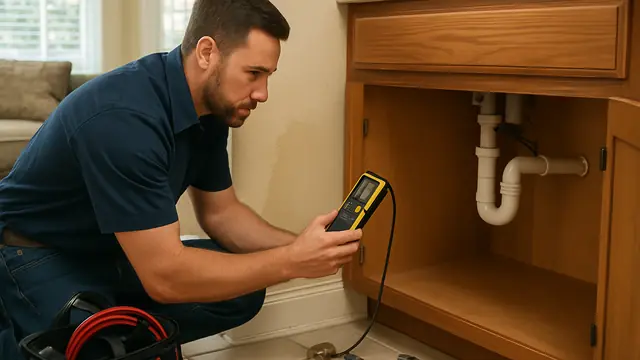
Moisture meters, thermal imaging, inspection cameras, or limited access openings may help trace hidden piping or locate damp materials. The plumber may also evaluate water pressure, shutoff operation, and the history of prior repairs.
A useful assessment distinguishes between one isolated segment, several remaining branches, and a system that is largely polybutylene.
Repair Options Beginning With the Least Invasive
A localized repair may be appropriate when one fitting or short segment is damaged and the surrounding pipe can reasonably remain in service. The failed section is removed and connected to an approved modern material using a compatible transition.
A partial repipe can replace a defined branch serving one bathroom, kitchen, laundry area, or other group of fixtures. This approach may be practical when polybutylene is limited or much of the home has already been updated.
A whole-house repipe replaces the pressurized supply piping with approved modern material, often PEX or copper depending on the property and project requirements. New routes and access points are planned to limit unnecessary damage.
Leak sensors, automatic shutoff devices, and pressure regulation can be included as protective upgrades. They may reduce damage but do not repair aging pipe.
Factors That Affect Cost
The cost depends on the amount of piping, number of fixtures, home layout, number of floors, access conditions, routing choices, selected material, permits, inspections, and restoration needs.
Wall, ceiling, flooring, cabinet, or tile access can affect labor and coordination. A written estimate should state what piping will be replaced, where openings may be needed, who handles restoration, and what permits, inspections, warranties, and exclusions apply.
Prevention and Maintenance Guidance
Keep the main shutoff visible and accessible. Make sure everyone responsible for the property knows how to use it. Test leak alarms as directed and place them near the water heater, washing machine, dishwasher, and sink cabinets.
Have a plumber check pressure when you notice banging, forceful flow, or repeated failures of connectors and valves. Keep a record of every leak and repair location. Several small events viewed together may reveal a pattern that was not obvious after the first repair.
Get a Clear Answer About What Is in the Home
Knowing how to identify polybutylene plumbing in DeFuniak Springs requires more than seeing one gray pipe under a sink. Confirm the markings, inspect multiple accessible locations, review past work, and determine whether the material is isolated or widespread. A licensed assessment gives you the facts needed to compare a limited repair, partial repipe, full replacement, and protective upgrades without making decisions based on assumptions.
About this guide: This resource provides general homeowner education, not a remote diagnosis. Actual conditions, code requirements, equipment, and safe repair options must be evaluated at the property.