Stop and call for qualified help when plumbing water is near electrical equipment, sewage is entering occupied space, gas or burning odors are present, or a repair would require opening pressurized piping.
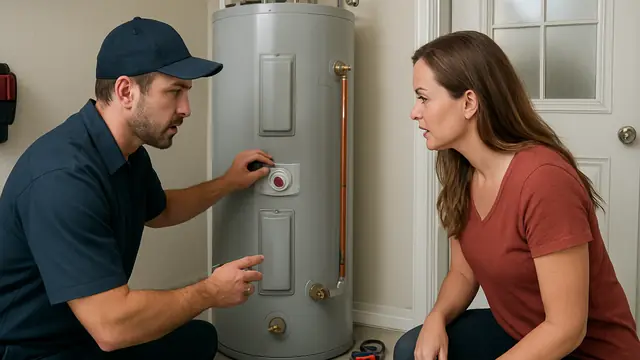
You may discover the problem during an ordinary morning: someone reports that the shower turned cold, the garage floor is wet, and the water heater is running more than usual. When you look closer, you find water in the drain pan or a slow stream coming from beneath the unit.
If your water heater is leaking in Hammock Bay, stop using hot water while you determine whether the leak is controlled. Move boxes, tools, and other belongings away from the water. If the cold-water shutoff valve is accessible from a dry area, close it. Do not touch the heater's electrical components if water is nearby. For a gas-fired heater, leave the building and contact the gas utility or emergency services if you smell gas.
What the Leak's Location May Mean
Moisture Around the Top Connections
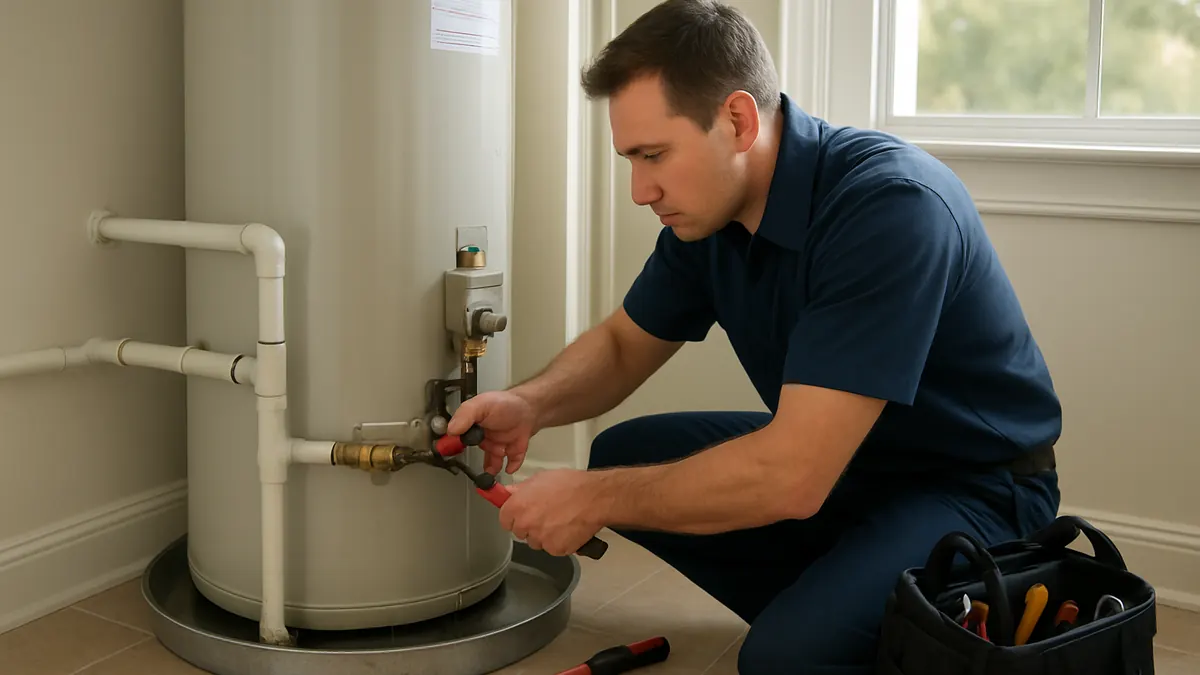
The cold-water inlet and hot-water outlet are attached to the top of most tank-style water heaters. A connector, threaded fitting, shutoff valve, or union can begin leaking as a seal wears or metal corrodes.
Water may run down the side of the tank and collect underneath it. Before assuming the tank bottom has failed, the top connections must be checked carefully.
Dripping From the Relief Discharge Pipe
The temperature and pressure relief valve is commonly called the T&P valve. It is designed to open if heat or pressure inside the tank becomes unsafe.
A dripping valve may be worn, but it may also be responding to high water pressure, overheating, or thermal expansion. Thermal expansion occurs when water increases in volume as it heats. If the plumbing system cannot absorb that increase, pressure can rise and force the valve to release water.
Water Around the Drain Valve
The drain valve is located near the bottom of a storage heater. It is used to empty or flush the tank during service.
A deteriorated seal, damaged valve, or debris inside the valve can produce a slow drip. Leakage can also develop where the valve threads into the tank.
Water Escaping From the Tank Jacket
The steel storage tank is protected by a lining and an anode rod.
If water is emerging from beneath the outer jacket, an internal tank seam, or an area with significant rust, the inner tank may have failed. That condition generally requires replacement rather than an exterior patch.
Why Is My Water Heater Leaking in Hammock Bay?
The immediate cause may be a loose fitting, failed connector, worn valve, leaking heating-element gasket, excessive pressure, condensation, or internal corrosion.
Safe Checks You Can Make Without Disassembly
Use a flashlight to inspect top fittings, the shutoff valve, visible pipes, the T&P discharge pipe, the drain valve, and the pan. Look for droplets, rust trails, damp insulation, or white mineral deposits.
If it is safe, dry the visible surfaces and place a paper towel below a suspected joint. Watch where moisture returns.
Write down whether the leak is constant or appears only after showers, laundry, or dishwasher use. Also note whether the hot water is unusually hot or running out faster.
What a Homeowner Should Not Attempt
- Do not block or cap the T&P discharge line. Preventing a safety valve from releasing water can create a dangerous pressure condition.
- Do not remove a heating element, drain valve, gas control, or relief valve while the tank is full and pressurized.
- Do not open electric access panels while the circuit is energized. Water may be behind the cover even when the outside looks dry.
- Do not use excessive force on a corroded shutoff or fitting. A weakened part can break and release water rapidly.
Signs the Problem Needs Urgent Attention
Treat the leak as urgent when water flow is increasing, the shutoff valve does not stop it, or water is entering flooring, walls, cabinets, or a ceiling below.
Repeated discharge of hot water from the relief pipe needs prompt evaluation. Steam, scalding tap water, a swollen tank, loud banging, electrical arcing, or a burning odor are also serious warning signs.
If gas is suspected, leave immediately. Do not turn lights on or off, use a phone inside, or attempt to inspect the burner.
How a Licensed Plumber Diagnoses the Cause
- The plumber first controls the water and energy source when necessary. The heater and surrounding surfaces are then dried so fresh moisture can be traced.
- All visible fittings and valves are inspected. The plumber may test static water pressure and observe how pressure changes when the heater operates.
- Rust patterns, water beneath the jacket, and the overall tank condition help determine whether repair is practical.
Repair Options Beginning With the Simplest Reasonable Fix
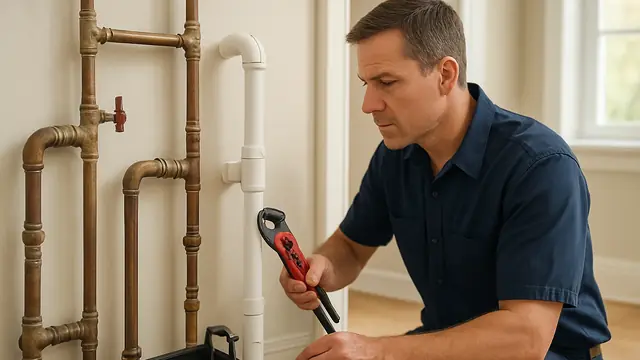
A loose connection may be tightened or resealed. A worn connector, union, or shutoff valve can often be replaced without changing the heater.
A drain valve may be serviced or replaced if the tank connection is sound. A leaking electric-element gasket may also be replaceable.
A faulty T&P valve can be replaced after pressure and temperature have been checked. If high pressure or thermal expansion caused the discharge, the pressure-regulating or expansion-control equipment may need correction.
If the internal tank is leaking, replacement is usually the appropriate choice. Options can include a similar storage heater, a higher-efficiency tank, or a properly sized tankless system.
Typical Factors Affecting Cost
Cost depends on the leak source, heater type, capacity, fuel source, and accessibility.
A connector replacement is usually less involved than removing a tank from a confined space. Venting changes, electrical work, gas-line capacity, drain-pan replacement, pressure controls, shutoff replacement, and piping corrections may change the scope.
Preventing Future Water Heater Leaks
- Inspect the heater area several times a year. Look for rust, moisture, mineral deposits, and water in the pan.
- Keep the shutoff valve visible and accessible. Have water pressure checked if connectors, valves, or appliance hoses fail repeatedly.
- Ask a licensed plumber whether flushing, anode-rod evaluation, or expansion-tank service is appropriate for the unit's type and condition.
- A leak alarm or automatic shutoff device can add protection, especially when water damage might go unnoticed.
Get a Clear Diagnosis Before Making the Decision
If you are asking, "Why is my water heater leaking in Hammock Bay?" first determine whether the water comes from a serviceable component or the storage tank. A focused repair may solve a fitting, valve, or pressure problem. An internally corroded tank requires a different plan. Prompt professional diagnosis helps protect the home and prevents a manageable leak from becoming extensive damage.
About this guide: This resource provides general homeowner education, not a remote diagnosis. Actual conditions, code requirements, equipment, and safe repair options must be evaluated at the property.