Stop and call for qualified help when plumbing water is near electrical equipment, sewage is entering occupied space, gas or burning odors are present, or a repair would require opening pressurized piping.
A Lake Lorraine homeowner may have a drain problem that never seems dramatic enough to explain. The toilets still flush, but one empties more slowly than it used to. The shower occasionally gurgles, and a sewer odor appears after several fixtures are used. Then, during laundry or a busy evening, water rises briefly in the lowest tub.
That pattern can point to a partial restriction in a shared drain or sewer line. The pipe may still move some wastewater, but not enough to handle normal use.
Reduce water use until the cause is identified. Avoid laundry, dishwashing, long showers, and repeated flushing if water is rising in another fixture. If sewage enters the home, stop using the plumbing system and keep people and pets away from the affected area.
What Happens During a Sewer Camera Inspection in Lake Lorraine?
A licensed plumber first asks when the symptoms occur and which fixtures are involved.
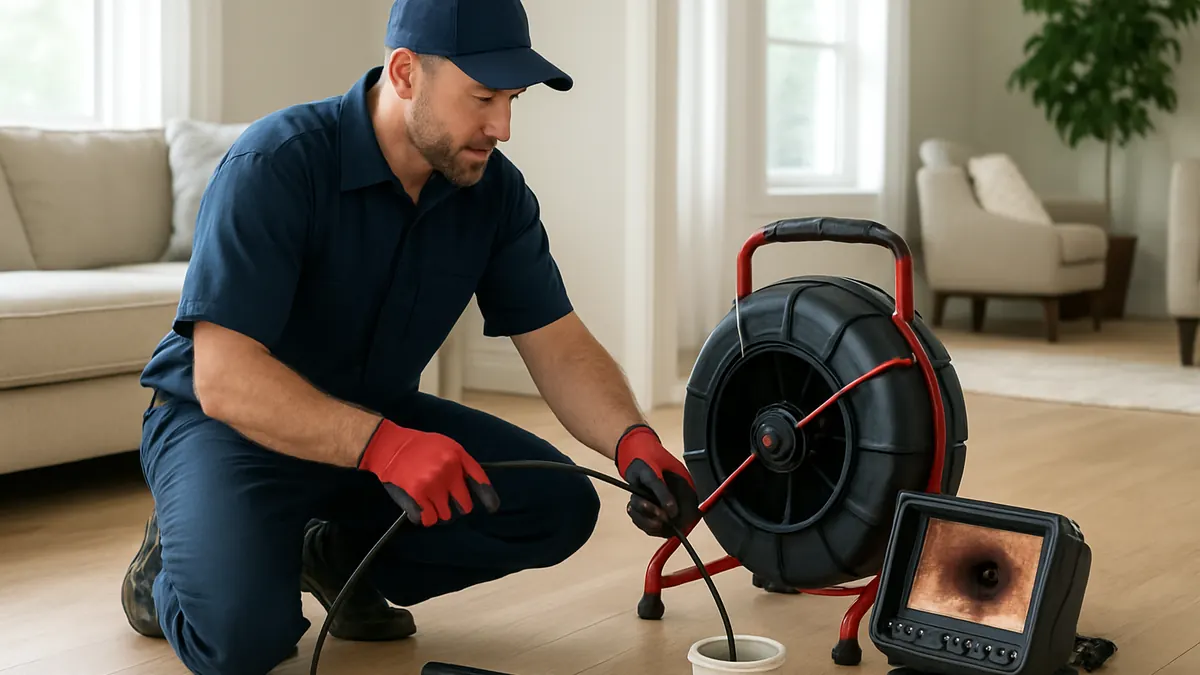
The plumber chooses an appropriate access point, usually a cleanout when one is available. A flexible cable with a waterproof camera and light is guided into the pipe. Video appears on a monitor as the camera moves through the line.
The plumber watches for obstructions, buildup, roots, open or offset joints, cracks, corrosion, standing water, and collapsed areas. A transmitter built into the camera head may be detected above ground to estimate the location and depth of a significant finding.
A camera inspection is diagnostic. It does not clear or repair the line, but it helps prevent decisions based only on symptoms.
Why a Partially Working Drain May Still Need Inspection
A narrowed pipe may pass water from one sink but struggle when a washing machine or bathtub drains quickly. Loose debris can shift, making the system appear normal before the obstruction reforms. A damaged joint can also catch waste inconsistently.
Common Conditions Found During Camera Inspection
Buildup and Soft Obstructions
Grease, paper, wipes, sludge, and other debris can reduce the open space inside a pipe. Cleaning may solve the problem if the pipe remains structurally sound.
Foreign Objects
A small object can lodge at a bend or joint and collect additional material. Camera footage may guide removal through an existing access point.
Root Entry
Roots can enter through a crack or failed connection. Cutting them may restore flow, but the opening should be evaluated because roots can return.
Misaligned or Separated Pipe
An offset joint creates an interior edge that catches solids. A separation can also allow surrounding material to enter the line.
Standing Water
Water remaining in the pipe may indicate a low section, inadequate slope, or restriction farther downstream. It must be interpreted with flow testing and the rest of the inspection.
Structural Damage
Cracks, deformation, or collapse may require repair. Their extent helps determine whether a spot repair or broader replacement is reasonable.
Safe Observations a Homeowner Can Make
Note which fixture showed the first symptom and what activity causes it. Check whether the issue affects one room or the whole home. Record whether gurgling follows a toilet flush, shower drain, or washing machine cycle.
Look for an exterior cleanout, but do not remove the cap during an active backup. A full line can release wastewater suddenly when opened.
What Not to Do During a Suspected Sewer-Line Problem
- Do not continue running water to see whether the problem clears. Additional wastewater may turn a partial restriction into an indoor overflow.
- Do not mix or repeatedly apply chemical drain cleaners. Chemicals can remain trapped and create a hazard for the homeowner and plumber.
- Do not insert a pressure washer hose, metal rod, or rented drain cable without the training and equipment needed to control it.
Do not assume that every visible crack requires full replacement. Diagnosis should consider the location, severity, surrounding pipe condition, and whether the defect is causing the symptoms.
When the Situation Becomes Urgent
Treat sewage entering a living area as urgent. Stop using fixtures, avoid direct contact, and prevent contaminated water from spreading.
Call promptly if no toilet can be used normally, wastewater appears in a tub or shower whenever another fixture drains, or the backup threatens flooring, cabinets, walls, or electrical equipment.
A stoppage that returns shortly after professional cleaning also deserves prompt investigation. The line may contain roots, a failed joint, a low section, or damage that was not corrected by removing the clog.
How a Licensed Plumber Confirms the Cause
The plumber begins with fixture testing and symptom mapping. This may show whether the restriction is in a local branch or the main drainage path.
If the camera cannot pass because the line is blocked, professional cleaning may be performed first. Cleaning may also be necessary when buildup covers the pipe walls and prevents a reliable visual assessment.
The plumber advances the camera slowly, pauses at significant findings, and may record images or video. Cable distance provides an approximate measurement. A locating receiver can then help identify the camera's position from above ground.
The plumber should explain which finding is confirmed and whether another test is needed. A camera cannot diagnose every leak or inspect inaccessible piping.
Repair Options Beginning With the Simplest Reasonable Choice
- A soft blockage in sound pipe may be removed with professional cabling. Attached grease or sludge may require a more thorough cleaning method appropriate for the pipe's condition.
- A foreign object may be retrieved without excavation when access and location allow. Roots can be cut to restore flow, but the opening that admitted them may still need attention.
- A damaged joint or short defective section may be repaired locally. Depending on the line's condition and layout, a trenchless repair method may be considered.
Partial replacement can address several related defects without replacing the entire run. Complete replacement becomes appropriate when the pipe is extensively deteriorated, repeatedly failed, severely deformed, or collapsed.
Typical Factors Affecting Cost
The cost of inspection depends on access, pipe length, bends, blockage severity, and whether the line must be cleaned first. Removing and resetting a toilet may be necessary when no suitable cleanout is available.
Repair cost depends on the location, depth, and length of the defect; the existing material; the chosen method; and the surfaces that must be opened and restored.
Permits, locating, cleanup, restoration, and post-repair inspection may also affect the scope. A written estimate should identify what is included.
Prevention and Maintenance Guidance
- Flush only toilet paper and human waste. Wipes, paper towels, hygiene products, cotton swabs, floss, and household trash should go into a waste container.
- Keep cooking grease and oil out of drains. Use strainers where appropriate and address gradual slowing before the line completely stops.
- Retain camera footage and repair records. They can help a plumber compare future conditions and avoid repeating unnecessary diagnostic work.
Find the Cause Before the Next Backup
What happens during a sewer camera inspection in Lake Lorraine is an effort to connect intermittent symptoms with a visible condition inside the line. The plumber evaluates the drainage pattern, establishes access, cleans the pipe when necessary, records important findings, and presents repair choices from the least invasive reasonable option upward. If the plumbing works only part of the time, reduce water use and arrange an evaluation before a partial restriction becomes a complete sewage backup.
About this guide: This resource provides general homeowner education, not a remote diagnosis. Actual conditions, code requirements, equipment, and safe repair options must be evaluated at the property.