Stop and call for qualified help when plumbing water is near electrical equipment, sewage is entering occupied space, gas or burning odors are present, or a repair would require opening pressurized piping.
You finish washing dishes and hear a toilet bubble. Later, someone showers and the water pools instead of disappearing. When the washing machine drains, dirty water rises in another fixture. That pattern means the trouble is probably larger than one clogged trap. Multiple drains backing up in a Lower Grand Lagoon property usually indicate that a shared branch, building drain, or main sewer line is restricted.
Stop using water as soon as you recognize the pattern. Turn off any appliance that is discharging and avoid flushing, bathing, or running sinks. Additional wastewater may escape through the lowest fixture. If sewage has reached a floor, tub, or shower, keep people and pets away and avoid direct contact.
Why Several Fixtures Can Fail Together
Small fixture drains join larger branches, and those branches connect to one main path leaving the building. A clog close to a sink may affect only that sink. A restriction farther downstream can affect every fixture connected above it.
Water often appears in the lowest shower, tub, or floor drain because it offers an easy escape route. A toilet may gurgle when another fixture drains because air and water are being pushed backward by the obstruction.
The Most Likely Causes
A Partial Main-Drain Blockage
Paper, waste, hair, soap film, grease, and food debris can reduce the pipe's open area. Small flows may pass, but a washer, bathtub, or several fixtures can overwhelm the remaining space.
Materials That Do Not Belong in a Toilet
Wipes, paper towels, feminine hygiene products, cotton items, diapers, and other household waste may remain intact inside the line. They can catch at a bend or damaged joint and collect more debris.
Grease Deposits
Grease can cool farther down the drain and coat the pipe. Food particles and detergent residue stick to that layer, gradually forming a stubborn restriction.
Roots Entering an Existing Opening
Roots may grow through a crack, separated connection, or failed joint. Once inside, they catch paper and waste. Removing them restores flow but does not close the opening that allowed entry.
A Belly, Offset, or Broken Section
A sewer line needs a continuous downhill slope. A low section can hold wastewater, while an offset joint creates a ledge that catches debris. Cracks or collapse may reduce the opening further.
A Septic-System Restriction
Where a property uses septic service, a full tank, blocked outlet, or another system condition can cause widespread slow drainage. Diagnosis must separate an interior clog from a problem beyond the building.
Safe Checks Before Scheduling Service
List the affected fixtures and the order in which symptoms appeared. Note whether the backup follows a toilet flush, laundry cycle, shower, or ordinary sink use. Do not repeat the test once the pattern is clear.
Look for standing water in the lowest fixture and leakage around toilet bases. If you know where the sewer cleanout is, tell the plumber, but leave its cap closed because wastewater may discharge suddenly.
Review earlier plumbing invoices or camera reports. A history of roots, recurring stoppages, or damaged pipe can shorten the diagnostic process.
What Not to Attempt
Do not use repeated chemical drain cleaners. They cannot repair roots, a damaged line, or a distant obstruction and may remain concentrated behind the clog.
Do not keep flushing toilets or filling sinks to see whether the problem improved. A partial passage can close again, and every test adds water.
Avoid small hand snakes in several fixtures and do not rent a large sewer cable without training. The wrong equipment can become stuck, damage porcelain or piping, and injure the operator. Do not open a backed-up cleanout or remove a toilet without proper protection.
When the Backup Is Urgent
Seek prompt help when sewage rises into a tub, shower, or floor drain; every toilet is unusable; or wastewater spreads onto flooring. The situation is also urgent near electrical receptacles, appliances, wiring, cabinets, drywall, or HVAC equipment.
Call quickly if wastewater is surfacing outside near the structure or a strong sewer odor develops. A backup that disappears and returns also needs attention. Receding water may only mean a small amount passed through the obstruction.
How a Licensed Plumber Diagnoses Multiple Drain Backups
The plumber identifies which fixtures share a drainage path and considers the lowest backup point, cleanout locations, and the water volume that triggers the problem.
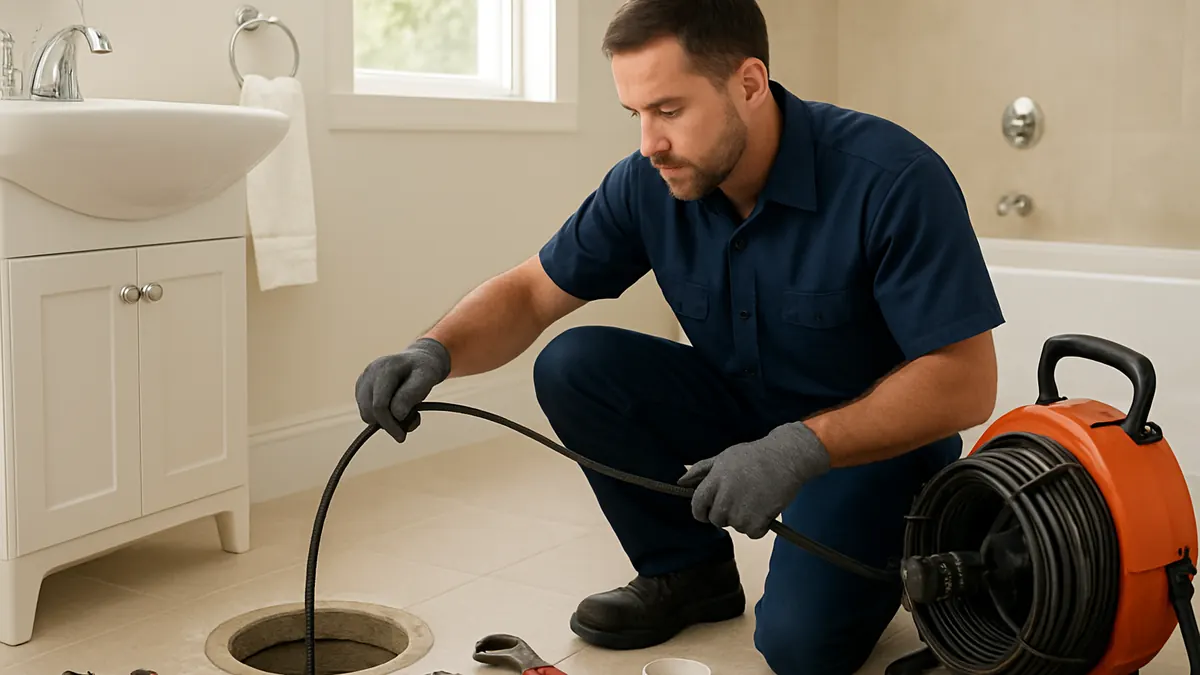
A professional cable machine may be used to open the line. Resistance and materials recovered on the cable can provide clues, including roots or grease.
Hydro jetting may be appropriate when residue coats the pipe rather than forming one isolated clog. Controlled high-pressure water cleans the interior, but the line should be evaluated first if severe damage is possible.
After flow is restored, a sewer camera can document roots, cracks, shifted joints, low sections, foreign objects, and standing water. It shows whether cleaning solved the problem or only opened a temporary path.
Repair Options Starting With the Least Invasive
Professional cabling is often the first option for an ordinary obstruction. If the pipe is intact and the clog is removed, no additional repair may be needed.
Hydro jetting can clean a longer section affected by grease, sludge, or residue. Root cutting may restore drainage, although future maintenance or repair may still be necessary.
A localized crack, offset, or failed joint may qualify for a spot repair. Depending on access and pipe condition, trenchless lining or replacement may reduce excavation. Complete replacement is considered when damage is extensive, the pipe has collapsed, or smaller repairs cannot provide dependable service.
Typical Factors That Affect Cost
Cost varies with the obstruction's location and severity, pipe length and diameter, access, and equipment. A usable cleanout can simplify service, while reaching piping beneath a slab may add labor.
Other factors include camera inspection, hydro jetting, root cutting, underground locating, excavation, permits, materials, and restoration of concrete, landscaping, or finishes. Ask whether the work is intended to clear, diagnose, or permanently repair the line.
Prevention and Maintenance Guidance
Use toilets only for human waste and toilet paper. Place wipes, hygiene products, paper towels, and household trash in a wastebasket. Keep grease and cooking oil out of kitchen drains, and use strainers to catch food and hair.
Do not ignore a toilet that bubbles when the shower drains, a recurring sewer odor, or a low fixture that slows during laundry. If inspection identifies roots, a low section, or buildup, follow a maintenance or repair plan based on that finding.
Respond Before Another Fixture Overflows
Multiple drains backing up in Lower Grand Lagoon indicate that wastewater is restricted in a shared part of the plumbing system. Stop water use, protect the affected area, and obtain a professional diagnosis. Many problems can be solved with cleaning, while recurring or structural conditions may require a targeted repair. Acting before the next heavy discharge can help prevent contaminated water from spreading.
About this guide: This resource provides general homeowner education, not a remote diagnosis. Actual conditions, code requirements, equipment, and safe repair options must be evaluated at the property.