Stop and call for qualified help when plumbing water is near electrical equipment, sewage is entering occupied space, gas or burning odors are present, or a repair would require opening pressurized piping.
The first sign may seem minor: a slow toilet, a gurgling sink, or water appearing in the shower when the washing machine empties. Then another fixture begins acting the same way. When multiple drains back up in a Callaway home, wastewater is not leaving normally.
Stop using plumbing fixtures as soon as you recognize the pattern. Avoid flushing toilets, taking showers, washing clothes, running the dishwasher, or emptying a full sink. Reducing water use may prevent an overflow. Keep children and pets away from contaminated water.
What Multiple Drain Backups Usually Tell You
Small branch pipes serve individual fixtures, and those branches connect to a larger building drain and sewer line. A clog close to one sink generally affects only that sink. When fixtures in different rooms react together, the restriction is usually in a pipe they share.
If an upstairs sink drains but a downstairs shower fills, the blockage may be below the point where those pipes connect. If a toilet bubbles whenever the washing machine pumps out, a large volume of water is pushing air and wastewater against a restricted line. If every fixture is slow, the obstruction may be close to the home's main outlet.
The Most Common Causes
A Main Sewer-Line Obstruction
Paper, waste, grease, soap residue, food debris, and other materials can narrow a line over time. The system may appear normal during light use but fail when several fixtures discharge together.
Wipes and Other Non-Dispersible Products
Many household products can travel through a toilet without breaking apart. Wipes, paper towels, feminine products, cotton items, and excessive paper can lodge at a joint or rough area. More waste then collects around the original obstruction.
Grease and Kitchen Waste
Liquid grease cools and sticks to pipe walls. Food particles and soap can attach to that coating, creating a thick restriction. A garbage disposal does not make grease or fibrous food safe for the drain; it only makes some material smaller.
Roots Entering a Damaged Line
Roots do not normally break into an intact sewer pipe. They enter through an existing crack, opening, or separated joint and expand inside the line. The roots catch paper and may create repeated backups until the damaged area is addressed.
Pipe Settlement or Structural Failure
A shifted joint, crushed section, crack, or low area can interrupt normal flow. Solids collect where water sits. Repeated cleaning may reopen the passage, but the trouble often returns because the pipe no longer has a continuous downhill path.
Checks You Can Make Without Creating More Damage
Walk through the home and make a simple list of affected fixtures. Note any sewage odor, bubbling toilet, or unusual sound.
Check whether the problem occurs only when a high-volume appliance drains. Washing machines and bathtubs release a large amount of water quickly, so they often expose a partial blockage before ordinary sink use does.
Look for an accessible cleanout outside or near the home. It may be a capped pipe at ground level or along an exterior wall. Tell the plumber where it is, but leave the cap in place if the line is backed up.
What Not to Do During a Multi-Drain Backup
- Do not continue flushing in hopes that pressure will push the obstruction away. Added water usually escapes through the lowest drain.
- Avoid mixing chemical cleaners. Chemicals also do little for roots, broken pipe, large foreign objects, or a blockage far from the fixture.
- Do not insert an unprotected cable through a toilet. Improper equipment can scratch porcelain, damage a trap, or become tangled.
- Never enter a crawlspace or contaminated area where sewage is spreading near electrical wiring. Shut off the affected water use and wait for qualified help.
When the Situation Requires Urgent Attention
A backup is urgent when sewage is rising, more than one toilet is unusable, or wastewater is spreading onto finished surfaces.
Watch for water emerging from a floor drain, toilet base, tub, or shower after another fixture is used. A strong sewer odor or wastewater near electrical equipment also requires prompt attention.
A backup that clears and returns should not be ignored. Temporary improvement may mean the obstruction shifted rather than disappeared. Repeated episodes can damage finishes and signal a defect that deserves inspection.
How a Licensed Plumber Finds the Cause
Diagnosis begins with the symptom pattern. The plumber determines which fixtures share piping, locates cleanouts, and evaluates whether the problem is inside the home, under the building, or in the line leading away from it.
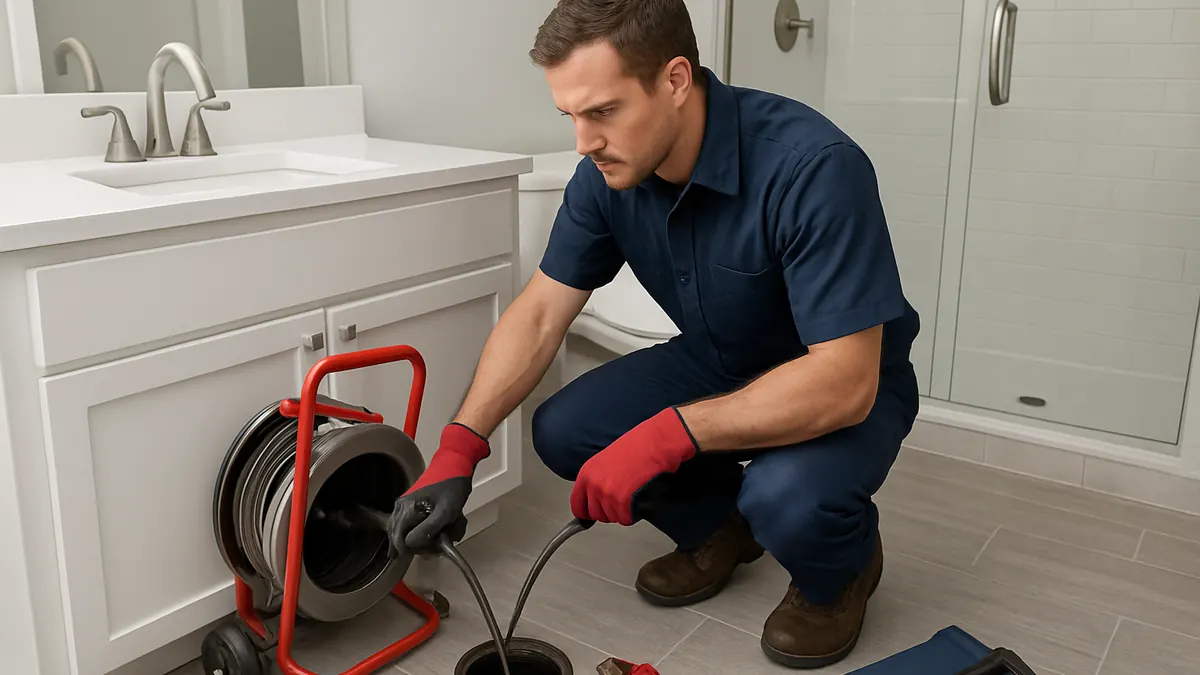
The technician may open the line with a professional cable machine. Different heads are used for soft stoppages, roots, or heavier obstructions.
Hydro jetting may be recommended when the pipe contains grease, sludge, or heavy residue. Jetting is not automatically appropriate for every old, broken, or fragile line.
A sewer camera can then travel through the cleaned pipe. It allows the plumber to document root entry, cracked sections, offsets, foreign objects, low spots, and areas where water remains.
Repair Choices That Do Not Automatically Mean Replacement
The least invasive option is usually mechanical drain cleaning. If the cause is an ordinary stoppage and the line is sound, no excavation may be needed.
Hydro jetting is another cleaning option when residue extends along the line. For isolated root intrusion, cutting roots may restore service, followed by monitoring or a planned repair.
A damaged cleanout, short cracked section, or separated joint may be corrected with a spot repair. Depending on the pipe, layout, and access, a trenchless lining or replacement method may reduce excavation.
Full sewer-line replacement becomes reasonable when deterioration is extensive, the pipe repeatedly fails, or several sections cannot maintain proper flow. The recommendation should be supported by clear evidence.
What Affects the Cost of Service?
The final cost depends on access, blockage depth, line length, pipe diameter, required equipment, and the time needed to restore flow. A readily accessible cleanout can simplify the work, while removing a toilet or reaching a difficult pipe can add labor.
Camera inspection, hydro jetting, root removal, locating underground defects, excavation, permits, replacement materials, and surface restoration are separate factors.
Ask whether an estimate covers cleaning, permanent repair, or both.
Preventing Future Drain Backups
- Keep wipes, paper towels, hygiene products, diapers, cat litter, and household trash out of toilets. Products marketed as flushable can still contribute to a blockage.
- Collect cooking grease in a container rather than pouring it into the sink. Use strainers to catch food and hair.
- Respond to early warning signs. A recurring slow drain, bubbling toilet, or sewer odor may provide time to act before an overflow.
- If inspection shows roots, a low pipe, or recurring buildup, follow a maintenance plan based on that condition rather than waiting for another emergency.
Respond Early When Multiple Drains Back Up
Multiple drains backing up in Callaway are more than an inconvenience. They usually indicate that a shared drain cannot carry the home's wastewater. Stop water use, avoid risky do-it-yourself methods, and obtain a diagnosis that distinguishes a removable clog from a damaged line. The right solution may be straightforward cleaning, targeted maintenance, or a focused repair rather than automatic replacement.
About this guide: This resource provides general homeowner education, not a remote diagnosis. Actual conditions, code requirements, equipment, and safe repair options must be evaluated at the property.