Stop and call for qualified help when plumbing water is near electrical equipment, sewage is entering occupied space, gas or burning odors are present, or a repair would require opening pressurized piping.
You may first notice one toilet flushing slowly, a nearby shower gurgling, and the kitchen sink hesitating before it drains. Then the washing machine empties and water rises in a tub or shower. When several fixtures react to one another, the problem is usually larger than a clog in one sink. Multiple drains backing up in a Latitude Margaritaville Watersound home often mean wastewater is meeting resistance in a shared drain or the main sewer line.
The safest immediate step is to stop using water throughout the home. Do not flush toilets, run the washer or dishwasher, shower, or empty full sinks until the drainage system has been evaluated. Additional water may reappear through the lowest fixture. If wastewater is present, keep people and pets away and avoid direct contact.
What the Symptom Usually Means
Each plumbing fixture connects to a branch drain. Those branches join a larger building drain and sewer line that carries wastewater away. A blockage close to one sink usually affects only that sink. A blockage after several branches join can affect toilets, tubs, showers, sinks, and appliances in different rooms.
The lowest fixture often becomes the first overflow point. A shower may fill when a toilet is flushed because wastewater cannot move forward. A toilet may bubble when the washing machine drains because trapped air is being pushed backward through the restricted pipe.
Common Causes of Multiple Drain Backups
A Main-Line Clog
A main drain can become restricted by toilet paper, waste, soap residue, hair, grease, food particles, and other debris. The pipe may work during light use but fail when laundry, several showers, or multiple fixtures release water quickly.
Flushed Wipes and Household Products
Wipes, paper towels, feminine hygiene products, cotton items, and excessive paper do not break apart like toilet paper. They can snag at a fitting or rough pipe surface, allowing more waste to collect around them.
Grease and Kitchen Buildup
Cooking grease can cool against the pipe wall. Food debris and detergent residue then attach to the coating, gradually reducing the opening available for drainage.
Root Intrusion
Roots can enter through a crack, separated joint, or damaged underground pipe. They grow inside the line and catch paper and waste. Cutting them may restore flow, but the entry point can cause another backup later.
A Shifted, Cracked, or Sagging Pipe
Drainage depends on a continuous downhill slope. If a pipe settles, separates, cracks, or develops a low spot, water and solids may remain inside. Cleaning may reopen the passage, but a structural defect can keep causing stoppages.
A Downstream or Septic-System Problem
If the property uses septic service, a full tank, blocked outlet, or another system problem can affect drains throughout the home. With sewer service, the restriction may be in the private lateral or farther downstream.
Safe Checks You Can Perform
Identify every affected fixture and note whether the symptoms occur in one bathroom, throughout the home, or only when a high-volume appliance drains. This pattern helps the plumber locate the restriction.
Look at the lowest shower, tub, or floor drain for standing water, but do not keep flushing or running faucets to test it. If an outdoor sewer cleanout is visible, note its location and leave the cap closed because wastewater may spill when it is removed.
Review any records of earlier drain cleaning, root intrusion, or camera inspection. Previous findings can help distinguish a new obstruction from a recurring condition.
What the Homeowner Should Not Attempt
Do not pour chemical drain cleaner into several fixtures. It may not reach a main-line blockage, cannot repair roots or broken pipe, and may remain trapped where it can expose the technician.
Do not continue flushing, plunging, or running water to force the clog through. Avoid rental sewer machines unless you are trained to use them; a large cable can twist, bind, damage piping, or cause injury. Do not remove a toilet or open a backed-up cleanout without proper tools and protection.
Signs That Make the Problem Urgent
Arrange prompt service when sewage rises into a shower, tub, toilet, or floor drain. The situation is also urgent when multiple toilets cannot be used or contaminated water approaches flooring, cabinets, electrical outlets, appliances, or HVAC equipment.
A strong sewage odor, dark water emerging from a drain, or wastewater appearing outside near the home also requires attention. If the backup recedes and returns during the next heavy use, the line has probably not corrected itself. Repeat backups may indicate roots, heavy buildup, or structural damage.
How a Licensed Plumber Diagnoses the Problem
The plumber begins with the symptom pattern. The affected fixtures, lowest backup point, and activity that triggers the problem help identify which pipes are shared.
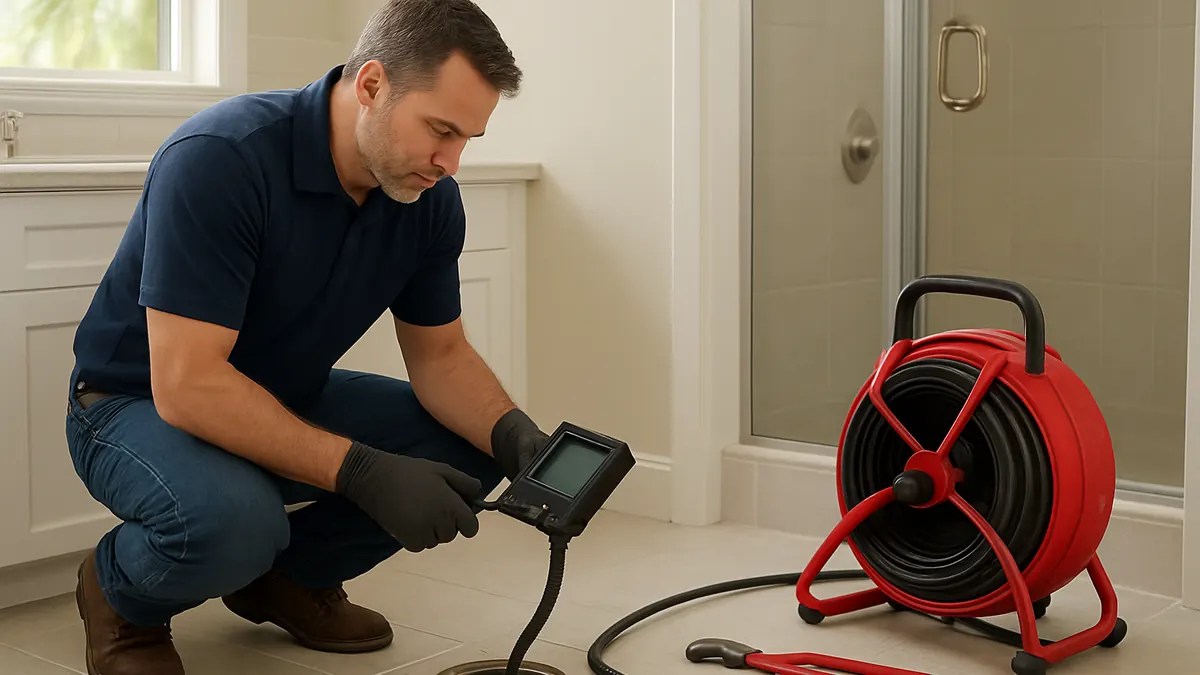
The technician locates accessible cleanouts and may use a professional cable machine to restore flow. Hydro jetting may be recommended when grease, sludge, or residue coats a significant length of pipe. It uses controlled high-pressure water to clean the interior, but the pipe's condition should be evaluated first.
After flow is restored, a sewer camera can reveal root entry, separated joints, cracks, offsets, standing water, foreign objects, and other conditions that drain cleaning alone cannot confirm.
Repair Options From Least to Most Invasive
Mechanical drain clearing is often the first reasonable repair. If the obstruction is isolated and the pipe is sound, no excavation may be necessary.
Hydro jetting can clean buildup extending along the line. Root cutting can reopen a root-filled pipe, although it may be maintenance rather than a permanent repair.
If inspection identifies one damaged section, a targeted spot repair may be enough. A suitable line may qualify for a trenchless method that reduces digging. Full replacement is generally reserved for widespread deterioration, collapse, severe misalignment, or repeated failures that smaller repairs cannot correct reliably.
Factors That Affect Cost
Cost depends on the blockage location, line length and diameter, cleanout access, obstruction severity, and equipment required. Camera inspection, hydro jetting, root removal, underground locating, excavation, permits, materials, and restoration of landscaping or finished surfaces also affect cost. Ask whether an estimate covers restoring flow, permanent repair, or both.
Prevention and Maintenance
Flush only human waste and toilet paper. Put wipes, paper towels, hygiene products, and household trash in a wastebasket. Allow cooking grease to cool in a container and place it in the trash. Use drain screens to catch hair and food debris.
Pay attention to recurring gurgling, a toilet bowl that changes level, or a shower that slows when another fixture runs. Homes with documented roots, buildup, or structural defects may benefit from an inspection-based maintenance plan.
Take Action When Multiple Drains Back Up
Multiple drains backing up in Latitude Margaritaville Watersound usually mean a shared drainage path is restricted. Stop using water, avoid unsafe chemical or mechanical attempts, and have the line diagnosed before more wastewater enters the home. The proper solution may be simple clearing, more complete cleaning, a focused repair, or replacement only when inspection supports it.
About this guide: This resource provides general homeowner education, not a remote diagnosis. Actual conditions, code requirements, equipment, and safe repair options must be evaluated at the property.