Stop and call for qualified help when plumbing water is near electrical equipment, sewage is entering occupied space, gas or burning odors are present, or a repair would require opening pressurized piping.
A homeowner in Lower Grand Lagoon may first suspect a sewer problem when the toilet bubbles while the shower is running, the kitchen drain slows down at the same time as the laundry drain, or wastewater appears in the lowest tub after several fixtures are used. Those symptoms usually mean the problem is not limited to one sink or toilet. A restriction may be developing in a shared drain or in the main sewer line serving the home.
The safest action is to stop or reduce water use. Do not run the washing machine, dishwasher, or several showers while the system is struggling. If wastewater is already backing up, stop using every plumbing fixture until the line is evaluated. Adding more water can increase the amount of sewage entering the home.
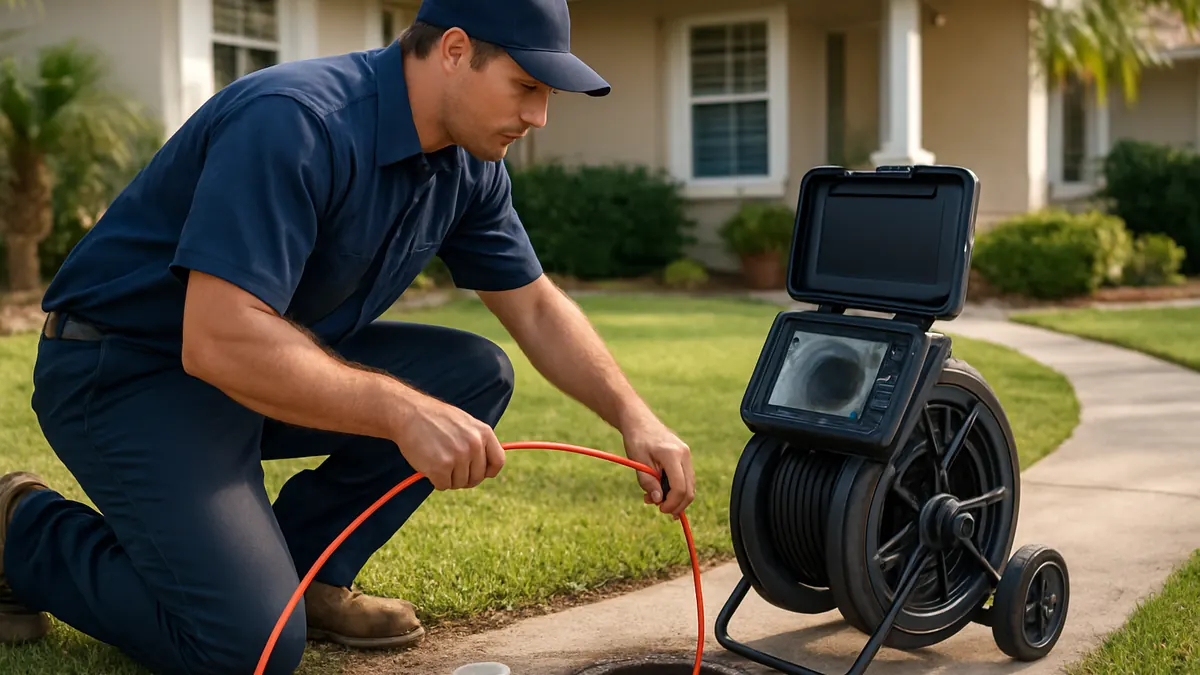
A sewer camera inspection lets a plumber view the accessible drain line and compare the video with the system's symptoms.
When a Sewer Camera Inspection Is Appropriate
A camera inspection is often recommended when a clog keeps returning, multiple drains are slow, a toilet gurgles when another fixture drains, or sewage odors continue without an obvious source.
One slow bathroom sink may have hair or soap near the fixture. A shower, toilet, and laundry drain acting up together points downstream.
What Happens During a Sewer Camera Inspection?
The plumber starts by asking questions about the problem. You may be asked which fixture showed symptoms first, whether the issue occurs continuously or only during heavy use, and whether the line has been cleaned before.
Next, the plumber identifies a suitable entry point. The preferred opening is often a sewer cleanout, which is a capped fitting designed for inspection and drain-cleaning equipment. If a usable cleanout is not available, another approved access point may be required. In some cases, a toilet can be removed to reach the line.
The camera is mounted to a flexible push cable and connected to a monitor. As the plumber advances the cable, the camera sends live video from inside the pipe. The plumber watches the pipe walls, joints, fittings, water level, and any material that narrows the passage.
Conditions that may appear on the screen include grease deposits, soap residue, mineral scale, wipes, foreign objects, roots, cracked sections, separated joints, offsets, deformation, and collapse. Standing water may indicate that part of the line is holding water instead of draining at the intended slope.
Distance markings and a transmitter can help the plumber estimate a defect's location and depth from above ground, narrowing the repair area.
The plumber may save video or images and review the pipe again while withdrawing the camera.
Why a Camera May Not Go Through Immediately
A camera is not a drain-cleaning tool. If the line is completely blocked, the camera may reach only the face of the obstruction. Greasy water, heavy debris, or standing sewage can also make the picture too cloudy to interpret.
The plumber may need to open or clean the drain before continuing. After professional cleaning, a second camera pass can show whether damage contributed to the blockage.
Safe Checks Before Scheduling Service
Determine whether the problem affects one fixture, one room, or the entire home. Note what happens when a toilet is flushed or the washing machine drains.
Look for a visible cleanout without removing its cap. Report any wastewater, moisture, or odor around it.
What a Homeowner Should Not Attempt
Do not repeatedly use chemical drain cleaners. They may fail to reach a main-line obstruction and can leave corrosive liquid in the line where a plumber must work.
Do not operate a powered sewer cable unless you are trained and properly equipped. The cable can twist, strike, become tangled, or damage the pipe. Do not push rods, hoses, or improvised tools into a cleanout.
Never remove a cleanout cap when sewage may be pressing against it. The cap can release suddenly and expose you to contaminated wastewater. Do not keep flushing or running faucets to test an active backup.
Signs That Require Prompt Attention
The problem is urgent when raw sewage is entering the home, several fixtures cannot drain, wastewater is rising through a floor drain or shower, or liquid is escaping around a cleanout. A toilet that overflows because another fixture is used also suggests a serious downstream restriction.
Keep people and pets out of contaminated areas. If wastewater is near electrical outlets, appliances, or equipment, avoid the area and do not touch electrical devices while standing on a wet surface.
How a Licensed Plumber Reaches a Diagnosis
The plumber does not rely on one image alone. Camera footage is compared with the symptoms, the measured distance, the behavior of water, and the resistance encountered during cleaning or inspection.
A discolored pipe wall may be harmless. A root mass or separated joint at the same location where equipment repeatedly stops is more meaningful. A section of standing water can suggest a low spot, but the plumber must consider how long and deep that section is.
The plumber should explain what was found, where it is located, and which repair options the evidence supports.
Repair Options Beginning With the Least Invasive
If the line contains removable buildup or a soft obstruction, professional cleaning may be all that is required. Root cutting may restore flow when roots have entered the pipe, although the entry point may still need a lasting repair.
A small, isolated defect may be corrected with a targeted excavation and spot repair. Trenchless rehabilitation may be possible when the pipe is suitable and the damaged section can be prepared correctly.
Traditional excavation may be necessary for a collapsed, severely misaligned, or badly deformed pipe. Full replacement is generally reserved for widespread deterioration, repeated failures, or damage that cannot be corrected reliably with a smaller repair.
Factors That Influence Cost
Inspection and repair cost can be affected by access, line length, blockage severity, cleaning needs, pipe depth, material, and the location of the defect. A line beneath concrete, a driveway, landscaping, or a finished area may involve additional access and restoration work.
The camera helps establish whether the problem is localized or affects a longer section.
Prevention and Maintenance
Keep cooking grease, wipes, paper towels, hygiene products, food scraps, and other durable materials out of drains. Even products labeled flushable may remain intact long enough to catch on rough joints or existing buildup.
Respond to recurring slow drains instead of waiting for a complete stoppage. If a camera documents roots, grease, or repeated deposits, ask the plumber whether periodic cleaning or follow-up inspection is reasonable.
Lower Grand Lagoon Homeowner FAQs
Can a sewer camera identify every type of leak?
It can show cracks, openings, or separated joints inside the pipe, but it does not directly show the surrounding soil. Additional testing may be required to confirm leakage outside the line.
Does the camera inspection damage the pipe?
A properly selected and operated camera is designed for inspection. Existing severe damage or obstruction may limit how far it can safely travel.
How long does the inspection take?
The time depends on access, pipe length, blockage conditions, and whether cleaning is needed first. A clear line with a usable cleanout is usually simpler than a blocked line without direct access.
Should the line be inspected after it is cleaned?
A post-cleaning inspection can confirm that flow has been restored and may reveal the reason the clog developed.
Does finding roots mean the entire line must be replaced?
No. The extent, location, pipe condition, and root entry point determine whether cleaning, a spot repair, rehabilitation, or replacement is appropriate.
Arrange a Sewer Camera Inspection in Lower Grand Lagoon
What happens during a sewer camera inspection in Lower Grand Lagoon is a systematic review of symptoms, proper access to the drain, live examination of the pipe, location of important defects, and selection of the least invasive reasonable solution. The process helps homeowners understand why the problem is happening and what should be done next.
If wastewater is backing up or several fixtures have stopped draining, stop using water and seek professional diagnosis promptly. Early action can reduce indoor damage and keep a developing restriction from becoming a larger emergency.
About this guide: This resource provides general homeowner education, not a remote diagnosis. Actual conditions, code requirements, equipment, and safe repair options must be evaluated at the property.