Stop and call for qualified help when plumbing water is near electrical equipment, sewage is entering occupied space, gas or burning odors are present, or a repair would require opening pressurized piping.
You may be in a Bid-A-Wee home with a toilet that gurgles, a shower that drains slowly, or a kitchen sink that backs up even after it has been cleared. Those symptoms can mean the problem is farther down the drainage system than a plunger or small hand snake can reach. A sewer camera inspection lets a plumber look inside the pipe and identify the likely cause before recommending a repair.
The safest immediate step is to reduce water use. Do not run the washing machine, dishwasher, or several fixtures at once. If wastewater is coming up through a tub, shower, or floor drain, stop using plumbing fixtures until the line is evaluated. Continued use can force more wastewater into the home.
Common Reasons a Bid-A-Wee Home Needs a Camera Inspection
A camera is often recommended when several fixtures drain slowly, toilets bubble when another fixture is used, sewage odors persist, or clogs return after cleaning. Water backing up in a shower or tub can also point to a restriction in a larger drain or the main sewer line.
A single slow sink may have a clog in its trap or branch drain. When several fixtures are affected, the obstruction is more likely to be downstream where those drain lines connect.
Recurring clogs deserve attention because cleaning may open a path without correcting roots, pipe damage, or a low area that collects waste.
What Happens During a Sewer Camera Inspection?
The plumber begins by asking which fixtures are affected, when the trouble started, and whether the problem has happened before. This symptom history helps identify the best access point and the section of pipe most likely involved.
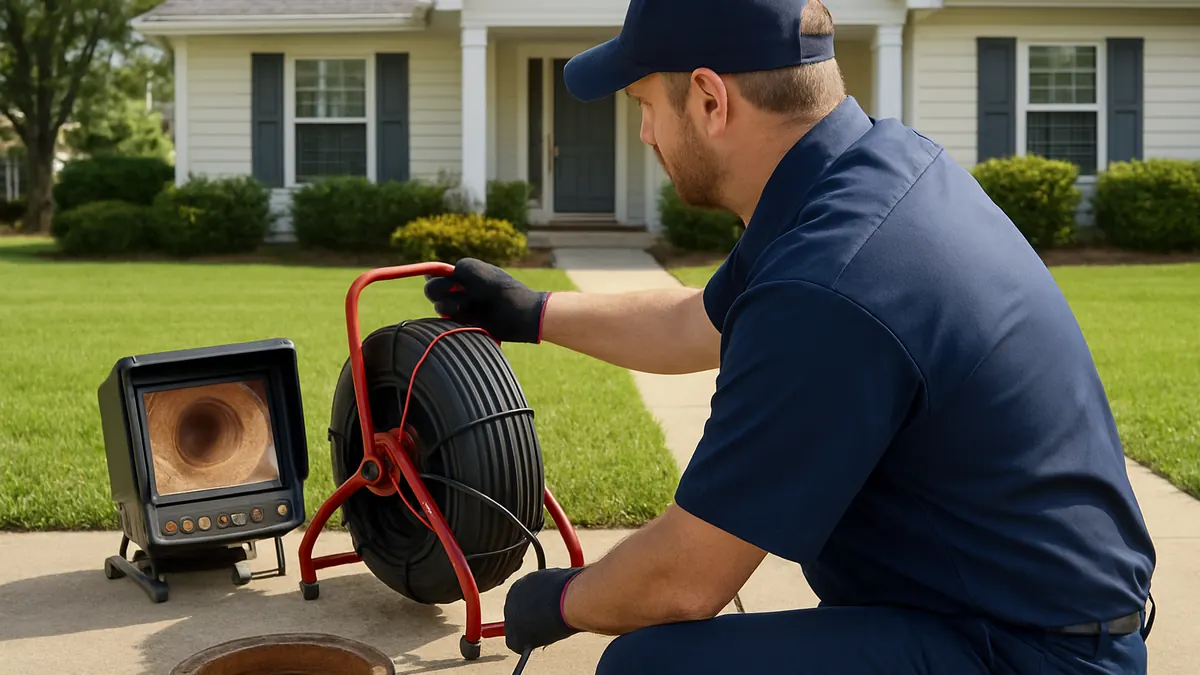
Next, the plumber locates a cleanout or another approved opening. A cleanout is a capped fitting that allows service equipment to enter the drain system. If no usable cleanout exists, access may sometimes be obtained through a removed toilet or another appropriate point.
The camera is attached to a flexible cable. As it moves through the pipe, it sends a live image to a monitor. The plumber watches for standing water, heavy buildup, foreign objects, cracks, root intrusion, separated joints, corrosion, deformation, or collapsed areas.
Many camera systems include a transmitter that helps estimate a defect's location and depth from above ground. This focuses repair planning on a specific area rather than guesswork.
The inspection may be recorded. The key is determining whether the condition explains the symptoms and what should happen next.
What a Sewer Camera Can and Cannot Confirm
A camera can show the accessible inside surface of the pipe. It may reveal roots entering a joint, a lodged object, heavy scale, a cracked section, or water sitting in a low area.
It cannot see through solid blockages or dirty standing water. A fully blocked line may need cleaning before inspection can continue. The video must be interpreted with the drain's behavior and location.
Safe Checks Before the Plumber Arrives
- Determine whether the problem affects one fixture or several. Note whether it appears after the washing machine drains, a toilet is flushed, or multiple people use water.
- Look for an accessible cleanout, but do not remove its cap if sewage may be under pressure. A loosened cap can release wastewater suddenly.
- Record how often the clog returns, what work was performed, and how long any improvement lasted. Mention recent remodeling or digging near the drain route.
What Homeowners Should Not Attempt
Do not repeatedly pour chemical drain cleaner into a slow or backed-up system. It may not reach a main-line obstruction and can create a chemical hazard for anyone who later opens the drain.
Do not force a rented sewer machine through the line without training. The cable can injure hands, damage fittings, become stuck, or punch a small opening through a clog without identifying broken pipe.
Do not open a cleanout that is leaking or surrounded by wastewater. Avoid repeatedly running water to test a serious backup. Every gallon entering the system may return through the lowest fixture.
Signs the Problem Is Urgent
Prompt service is needed when sewage enters the home, several fixtures become unusable, or wastewater rises through a shower, tub, or floor drain. Strong sewage odors, water around a cleanout, or a toilet overflowing without a local bowl clog also require attention.
In an occupied rental, stop water use and keep people and pets away from affected surfaces.
How a Licensed Plumber Diagnoses the Line
The plumber compares the camera image with the symptoms and the point where equipment meets resistance. A visible mark is not automatically the cause. Minor staining may be harmless, while a root mass at the exact location where flow stops is significant.
The plumber may mark the ground, measure the camera distance, and explain the appropriate repair. Ask what was seen, where it is located, and why the work is necessary.
Repair Options From Least to Most Invasive
If the camera shows a removable obstruction, professional drain cleaning may be enough. A cable machine or water-jetting equipment may be selected according to the pipe and material involved.
If roots have entered through a joint, removal can restore flow, but the opening may need repair to reduce recurrence. A small isolated defect may qualify for a targeted spot repair.
Trenchless rehabilitation may be considered when the existing pipe is suitable. It can reduce excavation but is not appropriate for every collapsed, badly misaligned, or severely deformed line.
Traditional excavation may be necessary when a section has failed structurally. Complete replacement is usually considered when deterioration or repeated failures affect a substantial portion of the sewer line.
Factors That Affect Inspection and Repair Cost
Cost depends on access, pipe length, blockage severity, cleaning needs, depth, location, and the defect found. A reachable cleanout generally makes inspection simpler than access requiring fixture removal.
Repair cost also changes when piping runs under concrete, landscaping, a driveway, or part of the structure. Permits, restoration work, material, and the length of damaged pipe can affect the scope. Camera findings help reduce unnecessary work by showing the likely location and extent of the issue.
Prevention and Maintenance
Keep grease, wipes, paper towels, hygiene products, and foreign objects out of drains. Products labeled flushable may not break down quickly enough for every sewer line.
Address recurring slow drains before they become complete backups. If a line has a history of roots or buildup, ask whether periodic inspection or cleaning is appropriate. Consider an inspection before major remodeling when a sewer line has an uncertain history or repeated problems.
Homeowner FAQs
Does a sewer camera clear the clog?
No. The camera identifies conditions inside the pipe. Cleaning equipment removes the blockage, and cleaning may be necessary before the camera can complete its inspection.
Can the plumber locate damage from above ground?
Often, yes. Many cameras have transmitters that help estimate location and depth, although site conditions can affect precision.
Should I inspect a sewer before buying a home?
It may be useful when there are recurring drainage symptoms, an unknown sewer history, or concerns that a standard visual home inspection cannot evaluate.
Will I see the camera footage?
Many plumbers can show the live image or provide documentation. Ask what is included before the inspection begins.
What if the camera cannot pass?
The line may need cleaning first. If it still cannot pass, the stopping point helps direct further investigation.
Schedule a Sewer Camera Inspection in Bid-A-Wee
What happens during a sewer camera inspection in Bid-A-Wee is a careful process of accessing the drain, viewing the pipe, locating abnormalities, and matching the findings to the least invasive reasonable repair. It replaces guesswork with evidence and helps determine whether the line needs cleaning, a targeted repair, or a larger correction.
Do not continue using water when multiple drains are backing up or sewage is entering the home. Prompt diagnosis can reduce damage and help restore safe drainage.
About this guide: This resource provides general homeowner education, not a remote diagnosis. Actual conditions, code requirements, equipment, and safe repair options must be evaluated at the property.