Stop and call for qualified help when plumbing water is near electrical equipment, sewage is entering occupied space, gas or burning odors are present, or a repair would require opening pressurized piping.
A Callaway homeowner may first notice that the toilet flushes slowly, the bathtub makes a bubbling sound, and water rises in the shower when the washing machine drains. When several fixtures react to one another, the trouble is often beyond the individual fixture. It may involve a shared branch drain or the main sewer line.
Stop using high-volume appliances and avoid repeated flushing. If sewage is already backing up, discontinue water use throughout the home. This is the safest immediate action because additional water can push contaminated wastewater through the lowest drain opening.
What happens during a sewer camera inspection in Callaway is a structured diagnosis: the plumber reviews symptoms, accesses the drain, inspects the pipe, and uses the findings to recommend an appropriate repair.
Why Plumbers Recommend a Sewer Camera
A camera is useful for recurring stoppages, several slow drains, sewage odors, or backups that return after cleaning. Possible causes include grease, wipes, roots, cracked joints, a collapsed section, or a pipe belly-a low area where water and waste collect. It may also be helpful before a major renovation or property purchase.
The Inspection Begins With the Symptoms
The plumber asks which fixture showed trouble first, whether symptoms appear during heavy water use, and whether previous cleaning helped. One slow sink may have a local clog, while a toilet that gurgles when the washer drains suggests a downstream restriction. Flow testing is limited during an active backup.
Finding a Safe Access Point
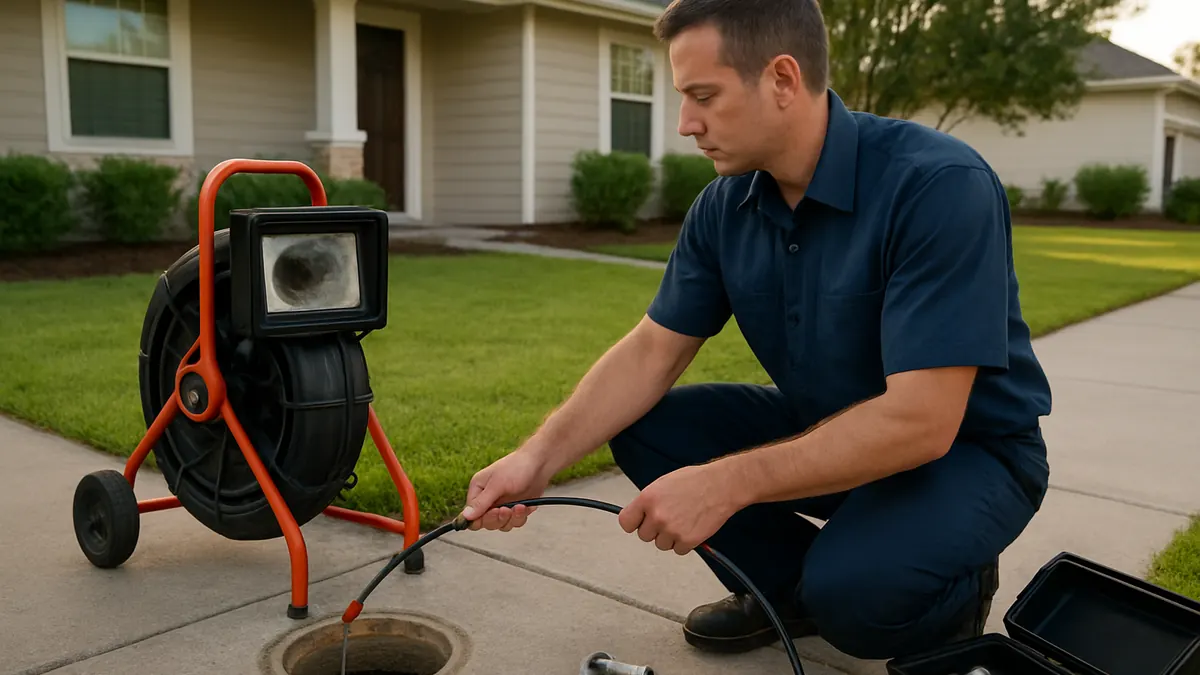
The preferred entry is a cleanout, a capped fitting that provides direct drain access. If no usable cleanout exists, a toilet may sometimes be removed. Equipment must match the pipe size and access point.
What Happens During a Sewer Camera Inspection?
The plumber feeds a flexible camera cable into the drain while watching a live monitor. The camera advances through bends and fittings as far as pipe conditions allow.
During the inspection, the plumber looks for:
- Accumulated grease, sludge, or scale
- Wipes, objects, or compacted debris
- Roots entering through joints or cracks
- Open, offset, or separated connections
- Standing water that suggests poor slope
- Crushed, deformed, cracked, or collapsed pipe
- Signs that one pipe material transitions to another
The plumber notes the camera distance, and a transmitter may help estimate the location from above ground. The video must be connected to the actual flow problem; an imperfect-looking pipe does not automatically require replacement.
The plumber also watches how water sits and moves inside the line. A short area of moisture is not automatically a defect, but a long section of standing water may indicate poor slope or a low spot. Deposits along the upper part of the pipe can show that the line has been running unusually full. Camera images are most useful when they are viewed in context, because reflections, dirty lenses, and water movement can make a normal fitting look damaged.
If the camera reaches the connection point or another planned endpoint, the plumber slowly withdraws it while reviewing the pipe again. Pulling the camera back can reveal joints or defects that were less visible while moving forward. Important locations may be marked, measured, photographed, or recorded for the repair discussion.
Why the Line May Need Cleaning First
Greasy water, debris, or a complete obstruction may prevent inspection. The plumber may clean the line with suitable cable or water-jetting equipment, then make another camera pass to confirm flow and look for structural damage.
Safe Observations a Homeowner Can Make
Note which fixtures are affected, what triggers the symptom, and how quickly a slow drain becomes a backup. Look for wastewater near a cleanout without opening it. Gather records from earlier cleaning or repairs and mention recent construction near the drain route.
What Not to Do
Do not mix chemical drain products, remove a toilet, cut into a drain, or operate powered sewer equipment without training. Rotating cables can cause injury or pipe damage. Do not keep running water to test the line or push a garden hose into a cleanout; either action can worsen a backup.
When a Drain Problem Becomes Urgent
Sewage in the living space, a whole-home stoppage, wastewater around a cleanout, or repeated toilet overflow requires prompt attention. Stop water use and keep people away. If electricity is near wastewater, avoid the area and never handle equipment while standing on wet surfaces.
How the Findings Guide Repair Decisions
The plumber interprets video, distance, flow, and symptoms together. Cleaning may resolve removable debris. Root cutting can restore flow, but an entry point may still need repair. A localized break may qualify for a spot repair. Trenchless rehabilitation may reduce surface disruption when the pipe is suitable. Excavation or replacement may be necessary for collapse, severe offset, or widespread damage.
Factors That Influence Cost
Cost depends on access, pipe length, cleaning needs, defect location, depth, material, damaged length, permits, and restoration. Work beneath concrete, landscaping, or finished areas can change the scope. Request an explanation of the findings rather than comparing options by price alone.
Preventing Future Sewer Problems
Keep grease, wipes, paper towels, hygiene products, litter, food, and hair out of drains. Investigate recurring slow drainage before a complete backup. If roots or deposits are documented, ask whether condition-based maintenance is appropriate.
Callaway Homeowner FAQs
Is a sewer camera inspection messy?
The plumber works through a controlled access point, but opening a backed-up system can involve wastewater. Protecting the work area and handling equipment safely are important parts of the service.
Can a camera detect a sewer-line belly?
Standing water across a section can suggest a low area. The plumber may need additional measurements or testing to determine its extent and significance.
Can the camera inspect every drain in the home?
A main-line inspection follows the route accessible from the chosen entry point. Smaller branch lines may require different equipment or separate access.
Do I need cleaning and a camera inspection?
Not always. If the line is open and visible, the camera may proceed directly. A blocked or heavily coated line often needs cleaning first.
Does one crack mean the entire sewer must be replaced?
No. The location, severity, pipe condition, and number of defects determine whether a spot repair, rehabilitation, or replacement is reasonable.
Arrange a Sewer Camera Inspection in Callaway
What happens during a sewer camera inspection in Callaway is a structured diagnosis: the plumber reviews the symptoms, enters through a suitable access point, examines the pipe, locates meaningful defects, and explains repair choices from least to most invasive. The purpose is to identify the real cause rather than repeatedly treating the same symptom.
Stop using water if sewage is backing up or several fixtures have stopped draining. A timely inspection can help limit damage and direct the repair to the correct location.
About this guide: This resource provides general homeowner education, not a remote diagnosis. Actual conditions, code requirements, equipment, and safe repair options must be evaluated at the property.