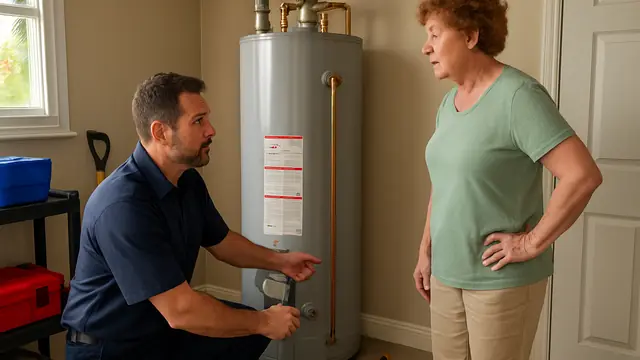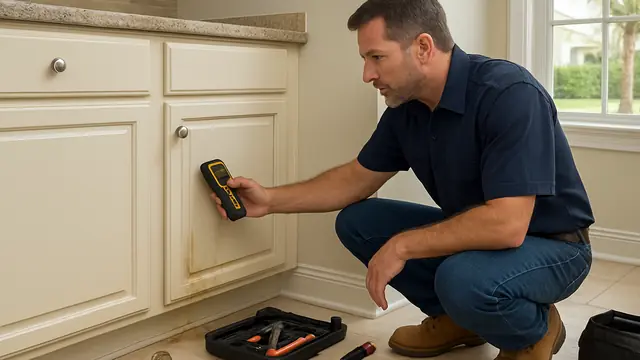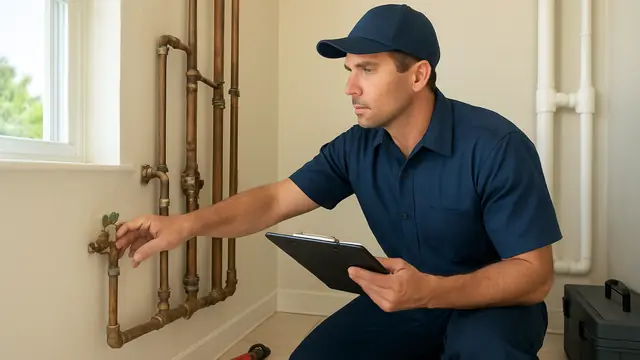
Stop and call for qualified help when plumbing water is near electrical equipment, sewage is entering occupied space, gas or burning odors are present, or a repair would require opening pressurized piping.
You may notice that a toilet flushes normally in the morning but begins to gurgle after the washing machine drains. When more than one fixture is affected, the problem may be in a shared drain or the main sewer line.
The safest immediate step is to reduce water use. Do not run the dishwasher, washing machine, or several fixtures at the same time. If wastewater is rising through a shower, tub, or floor drain, stop using all plumbing fixtures until the system is evaluated. Continuing to add water can turn a partial restriction into an indoor sewage backup.
A sewer camera inspection gives a plumber a direct view inside the accessible drain line. It helps determine whether the trouble is caused by a removable blockage, buildup, a damaged connection, standing water, or another condition that requires repair.
Why a Sewer Camera Inspection May Be Recommended
A camera inspection is often recommended after repeated clogs, unexplained sewage odors, several slow drains, or a backup that returns soon after cleaning. It may also be useful when a homeowner wants to understand the condition of a sewer line before remodeling, purchasing a property, or repairing a section of yard or flooring above the suspected route.
Possible causes include grease and soap buildup, wipes or other foreign material, roots entering through a joint, a cracked or separated pipe, or a low section that allows waste to settle. The camera helps connect visible pipe conditions with the symptoms inside the home.
What Happens During a Sewer Camera Inspection?
The inspection begins with questions. The plumber will ask which fixtures are affected, when the symptoms started, and whether the problem becomes worse during heavy water use. A single slow sink may have a local clog, while several fixtures reacting together suggest a restriction farther downstream.
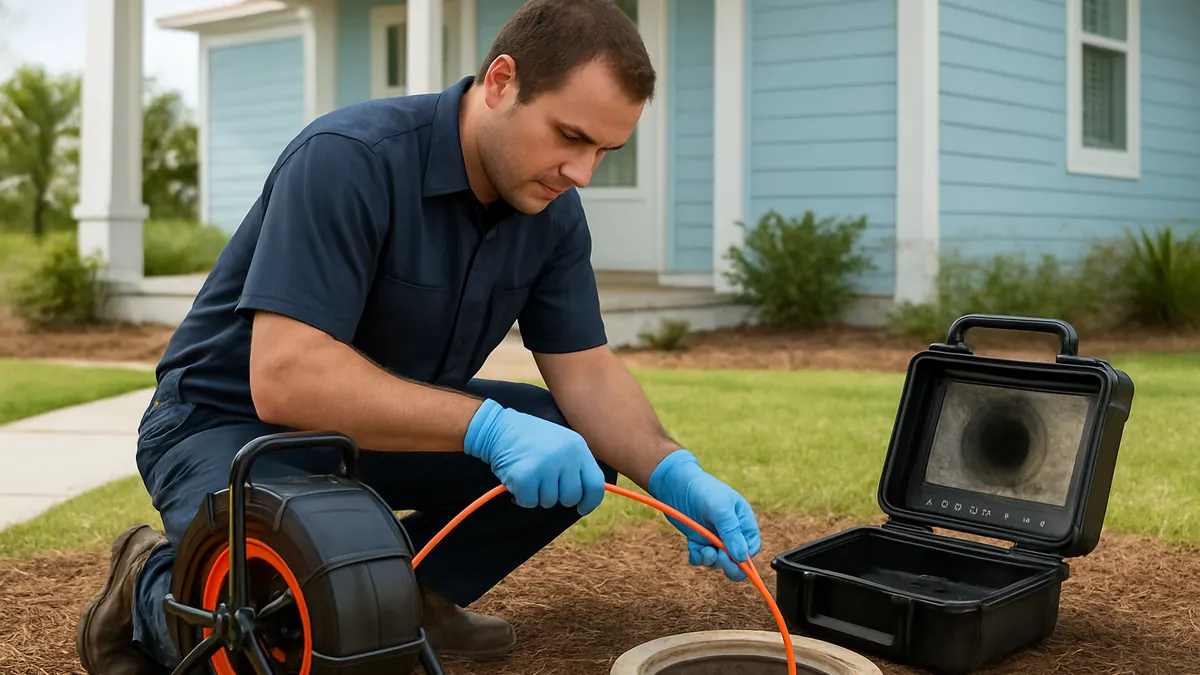
The plumber then locates a suitable access point. The preferred access is usually a cleanout, which is a capped fitting installed specifically for drain and sewer service. If a usable cleanout is not available, another approved opening may be needed. In some situations, a toilet may be removed to provide access.
A waterproof camera mounted on a flexible cable is fed into the pipe. The plumber watches a live video monitor while advancing the camera through the line. The camera can reveal the shape and condition of the interior surface, along with material that is blocking or narrowing the flow path.
During the inspection, the plumber looks for grease, sludge, scale, wipes, foreign objects, roots, cracks, separated joints, deformed pipe, standing water, and collapsed sections. The plumber also watches how the camera moves through bends and transitions because unexpected resistance can help identify a damaged or obstructed area.
Many camera systems include a transmitter. A locating device used above ground can detect the signal and help estimate where the camera is positioned and how deep the pipe may be. This does not eliminate every uncertainty, but it can focus repair planning on a smaller area.
The plumber may record the inspection or save still images of important findings. The line is often reviewed again while the camera is withdrawn because joints and defects can sometimes be seen more clearly from the opposite direction.
Why the Sewer Line May Need Cleaning First
A camera needs a reasonably clear view. Thick grease, murky standing water, or a complete blockage can prevent the camera from passing or hide the pipe wall. In that situation, the plumber may recommend professional drain cleaning before completing the inspection.
After the obstruction is removed, the camera can be sent through again to determine whether the clog was the only problem or whether damage contributed to it.
Safe Checks a Homeowner Can Perform
You can identify which fixtures are slow and whether one fixture causes another to gurgle. Note whether symptoms appear after laundry, showers, or several toilet flushes. This information helps the plumber understand how the system behaves under greater flow.
Look for an accessible cleanout without removing the cap. If the area around the cleanout is wet or has a sewage odor, report that observation.
What You Should Not Attempt
Do not repeatedly pour chemical drain cleaner into the system. These products often do not solve a main-line obstruction and may create a chemical exposure hazard when the line is opened.
Do not operate a rented sewer machine without proper training. Rotating cables can injure hands, become tangled, damage fittings, or lodge inside the pipe.
Do not remove a cleanout cap when a backup is active. Wastewater may be under pressure and can discharge suddenly. You should also avoid running large amounts of water merely to see whether the line has improved.
Warning Signs That Make the Problem Urgent
Stop water use and request prompt service when sewage enters the home, several fixtures stop draining, or wastewater rises through the lowest shower, tub, or floor drain. Water or sewage around a cleanout is another urgent warning.
How a Licensed Plumber Interprets the Findings
- A camera image is only one part of the diagnosis. The plumber compares the video with the symptoms, the camera distance, the flow of water, and any resistance felt during cleaning.
- A visible defect matters most when it matches the symptoms and the location where flow is restricted.
- The plumber should explain what was found, where it is located, and why the recommended work fits the evidence.
Repair Options From Least Invasive to Most Extensive
When the problem is removable buildup or debris, professional cleaning may restore normal flow. If roots are present, cutting them may open the line, although the entry point may still need repair.
A localized crack, separation, or damaged fitting may qualify for a targeted spot repair. Trenchless rehabilitation may be considered when the existing pipe is structurally suitable and access conditions allow it.
Traditional excavation may be necessary for a collapsed, severely offset, or badly deformed section. Complete replacement is generally considered when damage is widespread or repeated failures affect a large portion of the line.
Factors That Affect Cost
Cost depends on the accessibility of the line, the length inspected, whether cleaning is required, the depth and location of the defect, the pipe material, and the type of repair. Work beneath concrete, finished flooring, landscaping, or another structure may require additional labor and restoration.
A camera inspection can limit unnecessary work by identifying the likely location and extent of the problem.
Prevention and Maintenance Guidance
Keep grease, wipes, paper towels, hygiene products, food scraps, and other non-dissolving materials out of drains. Products marketed as flushable may not break down quickly enough to move safely through every sewer line.
Address recurring slow drainage before it becomes a complete stoppage. If the camera documents roots or recurring buildup, ask whether scheduled cleaning or a future follow-up inspection is appropriate.
Homeowner FAQs
Does a sewer camera inspection clear the clog?
No. The camera is a diagnostic tool. Cleaning equipment is used to remove the obstruction.
Can the camera inspect the entire sewer line?
It can inspect the portion that is accessible and open enough for the camera to pass. A blockage, sharp transition, or damaged section may limit travel.
Will the plumber show me the video?
Many plumbers can show the live view or provide recorded footage. Ask what documentation is included.
Can the camera locate the exact repair area?
A transmitter can often help estimate the location and depth. Site conditions and pipe layout may affect precision.
Does standing water always mean the pipe is broken?
No. A small amount may be normal in some situations. A longer or deeper section can suggest poor slope or a low spot and should be interpreted with the symptoms.
Schedule a Sewer Camera Inspection in Latitude Margaritaville Watersound
What happens during a sewer camera inspection in Latitude Margaritaville Watersound is a careful process of reviewing symptoms, accessing the line, viewing the interior, locating meaningful defects, and recommending the least invasive reasonable correction. The inspection helps replace guesswork with evidence.
If several fixtures are backing up or sewage is entering the home, stop using water and arrange service promptly. Early diagnosis can help limit property damage and direct the repair to the correct area.
About this guide: This resource provides general homeowner education, not a remote diagnosis. Actual conditions, code requirements, equipment, and safe repair options must be evaluated at the property.