Stop and call for qualified help when plumbing water is near electrical equipment, sewage is entering occupied space, gas or burning odors are present, or a repair would require opening pressurized piping.
You arrive at a Laguna Beach property after it has been vacant, turn on several fixtures, and discover that the guest-bath toilet bubbles while the shower drains slowly. Or a renter reports that the kitchen drain works until the washing machine empties, then water appears in the tub. These are signs that wastewater may be meeting resistance in a shared drain or the main sewer line.
Reduce water use immediately. Do not run appliances, take showers, or repeatedly flush toilets to test the problem. If sewage is entering a fixture or spreading onto the floor, stop all plumbing use and keep people and pets away from the affected area.
What happens during a sewer camera inspection in Laguna Beach is a step-by-step examination that helps locate the cause and determine whether cleaning, targeted repair, or larger work is justified.
Symptoms That May Lead to a Camera Inspection
A camera is most valuable when symptoms suggest a deep or recurring problem: several slow fixtures, repeated main-line clogs, gurgling toilets, water rising in a tub, sewage odor, or a blockage returning after cleaning. Possible causes include grease, wipes, roots, cracked joints, a low section, deformation, or partial collapse. The inspection helps separate a removable blockage from structural damage.
Preparing for the Inspection
The plumber asks which fixture showed symptoms first, whether heavy water use triggers the problem, and what work was previously performed. Reports from occupants or property managers can help. A cleanout-a capped fitting made for drain access-is usually preferred. If none is usable, another approved access point may be needed, sometimes through a removed toilet.
What Happens During a Sewer Camera Inspection?
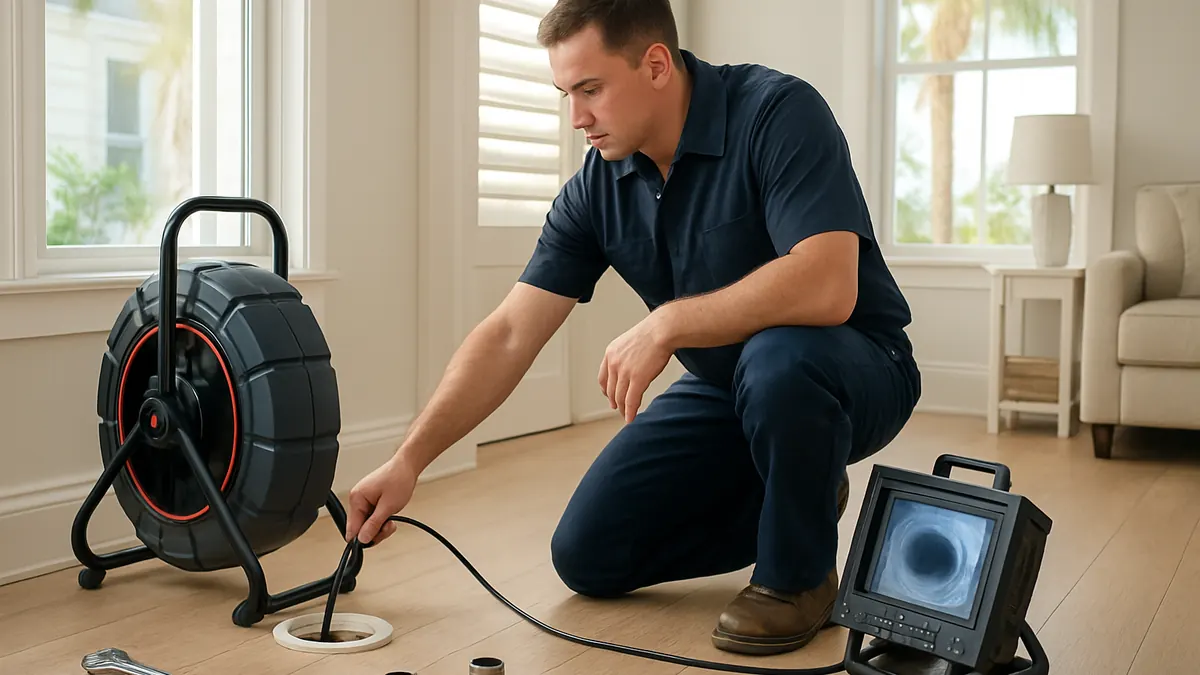
A small waterproof camera is mounted on the end of a flexible push cable. The plumber feeds it through the drain while watching live video on a monitor.
The plumber examines walls, joints, bends, deposits, roots, offset connections, cracks, deformation, and standing water. Camera distance is recorded, and a transmitter may help estimate the location and depth from above ground. The line is often reviewed again as the camera is withdrawn, and useful footage may be saved.
Why Cleaning May Be Part of the Process
Thick grease, dirty water, scale, or a solid clog can stop the camera or hide the pipe. The plumber may first use appropriate cable cleaning or controlled water jetting. A second camera pass can then show whether cleaning solved the problem or exposed roots, a crack, or a low area that may cause recurrence.
What the Camera Does Not Prove by Itself
A camera cannot see through a solid blockage or inspect the soil outside the pipe. It may show an opening where leakage is possible, but additional testing can be needed to confirm conditions beyond the pipe wall. Dirty water, reflections, and the camera angle can also affect the image.
For that reason, a responsible diagnosis should not rely on one dramatic-looking frame. The plumber should connect the footage to the homeowner's symptoms, equipment resistance, water level, and the measured location. When visibility is poor, cleaning and reinspecting may be more reliable than making an immediate repair decision.
Safe Checks for the Homeowner
List affected fixtures, the order symptoms appeared, and whether laundry or simultaneous water use triggers them. Look for moisture near a cleanout without opening it. Gather earlier invoices or recordings. In a rental, ask occupants to stop using water and describe what happened without recreating the backup.
What You Should Not Attempt
Do not use repeated chemical cleaners, operate powered sewer equipment without training, or remove a cleanout cap when wastewater is present. Do not enter confined areas containing sewage or sewer gas. A drain that accepts a little water may still overflow once a partial blockage reaches capacity.
Urgent Warning Signs
An active sewage backup, property-wide drainage loss, wastewater around a cleanout, or repeated overflow from the lowest fixture is urgent. Stop plumbing use and keep occupants away. Avoid electrical equipment near wastewater. In an occupied rental, clearly instruct everyone not to use sinks, toilets, showers, or appliances until evaluation.
How the Plumber Interprets the Video
The plumber compares video with symptoms, flow, distance, and location. A minor irregularity may be harmless, while a dense obstruction where flow stops is meaningful. You should receive a plain-English explanation of what was found, where it is, whether the line is open, and why the repair matches the evidence.
Repair Options From Least Invasive Upward
Cleaning comes first when buildup or an object can be removed. Roots may be cut, but the entry point may still need repair. An isolated defect may qualify for a spot repair. Trenchless rehabilitation can reduce digging when the pipe is suitable. Collapse, severe offset, deformation, or widespread damage may require excavation or replacement.
Factors That Affect Cost
Cost depends on access, pipe length, cleaning needs, damage type, depth, material, permits, and restoration. Work below concrete or finished areas may be more involved. The camera helps show whether the problem is localized or widespread.
Prevention and Maintenance
Keep grease, wipes, paper towels, hygiene products, food, and other non-dissolving materials out of drains. Explain disposal rules to occupants. Investigate repeated slow drainage, and ask about planned cleaning when roots or recurring deposits are documented. Consider inspection before remodeling over a line with a history of trouble.
Laguna Beach Homeowner FAQs
Does the camera show leaks outside the pipe?
The camera shows the inside surface. It may reveal an opening or defect, but it does not directly show surrounding soil. Additional testing may be needed in some cases.
Can a camera pass through a complete clog?
Usually not. The line may need to be opened or cleaned before the camera can inspect beyond the blockage.
Will the inspection tell me whether I need replacement?
It provides important evidence, but the recommendation also depends on pipe condition, location, flow, and whether a less invasive repair is practical.
Can I use the plumbing before the appointment?
Limit use when several fixtures are slow. Stop all use when sewage is backing up or the main line appears blocked.
Is a camera useful after drain cleaning?
Yes. A post-cleaning inspection can confirm that the line is open and reveal damage or buildup that contributed to the blockage.
Schedule a Sewer Camera Inspection in Laguna Beach
What happens during a sewer camera inspection in Laguna Beach is a careful process of collecting symptoms, obtaining proper access, viewing and locating the problem, and selecting the least invasive reasonable correction. The inspection can distinguish a clog that needs cleaning from a defect that requires targeted repair or replacement.
Do not wait while wastewater continues entering the property. Stop water use and arrange professional diagnosis so the problem can be addressed based on evidence instead of guesswork.
About this guide: This resource provides general homeowner education, not a remote diagnosis. Actual conditions, code requirements, equipment, and safe repair options must be evaluated at the property.